
Translated material
The gift of the poor
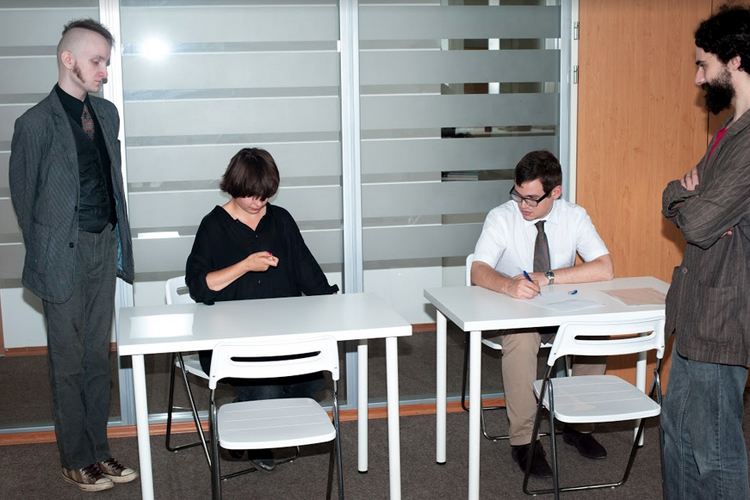
“A work of art” is the visionary story of Anton Chekhov, in which he describes the function of an object of art as an uncomfortable gift. The poor young man saved by the doctor from a dangerous illness, not having the opportunity to pay money, gives him a bronze candelabr in gratitude, and brings him a “excavatory statement” wrapped in the newspaper. Candelabr with naked female figures is so inappropriate that the doctor with the speaking surname of the Koshelkov, being a family person, does not dare to leave him at home and tries to get rid of him, passing on to his friend. Turning from one owner to another, at the end of the story, the “work of art” again overtakes the doctor.
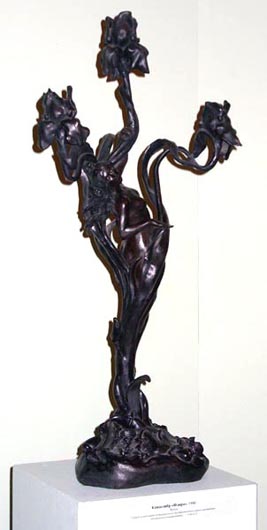
Already in the details - in the names of Koshelkov and in the “Exchange Vedomosti”, which serve as a wrapper for the work of art - you can see the contrast of a market exchange of goods and services, as well as financial operations, an act of gift, which falls beyond their limits and scandalously violates their decent business move.
In Chekhov’s story, a work of art is that the recipient who exists in the world is not obligatory to accept, not having the opportunity to refuse, but cannot just leave it: the gift forces the accepting side to adapt the conditions of his existence to this new object or come up with a way to get rid of it, which is shown in the story - not so simple.
The failure of the gift is equivalent to the declaration of war.
In the story “Proven Friend”, written in 1888, two years later “works of art”, Oscar Wilde describes another type of gift-the gift of charity. The rich miller Hugo gives the poor Hans his old car. Constantly recalling his generosity, Melnik endlessly uses the services of his friend, who eventually dies, providing the miller with another courtesy. Melnik regards his death as ingratitude. The insignificant gift of the rich becomes a way to take more than more from the poor than was sacrificed. In this socialist parable, Wilde exposes the sins of the charity that he despised. In the text “The Soul of a Man under Socialism”, he wrote about his aversion to her already without metaphors: “They often tell us that the poor are grateful for mercy. Some of them are certainly - yes, but the best among the poor are not. They are ungrateful, unhappy, naughty and rebellious. And they are completely right. They consider mercy to a clumsy attempt to compensate for the inferiority of their existence with a sentimental bite, usually accompanied by arrogant intervention in their personal life. ”

These two stories that arose at the same time - about the gift of the poor and the gift of the rich - set the arch of relations that exist simultaneously with the transformation of human life into a total market, which is often considered the main problem of capitalism. Following Marseille Moss with his “Essay on the Gift” and relying on him, David Greber writes in his book (“Debt: the first 5000 years of history”) that there was never a pure relationship between the natural exchange of goods and blessings. Natural exchange is a kind of myth of origin, historical seeding, which allows Marx to switch to how modern capital functions. In fact, any commercial, and after it, the commodity-money exchange is intertwined with debt systems, obligations, coercion and gratitude that allow society to exist as a system of relations, including relations of inequality, no matter how it may seem that a modern person is alienated and completely lonely in infinitely tautological relations for salary and salary for consumer goods.
Why would the idea of gratitude to the employer for “workplaces” and “the opportunity to do their job” come from? Such a personal attitude towards the capitalist would be superfluous if there was enough simple labor exchange for money, when employees do their job, and the capitalist pays the employees for work only a little less than this work is, exactly so much that the surplus value is enough to maintain and expand the enterprise and create new jobs. Gratitude goes beyond the scope of such an allegedly almost equivalent exchange: this is an attitude that allows you to take more work than to pay for this work, and even more than you need to create new jobs. It is needed to take immeasurably more. This is the meaning of the gift of a rich man to the poor - for this there are systemic patronage and charity. They are the same old car.
The gift forces the accepting side to adapt the conditions of its existence to this new object.
In the “Essay on the gift”, Marseille Moss shows that in “primitive” societies, the exchange of gifts is friendly only apparently, being the sublimated equivalent of aggressive rival actions. The failure of the gift is equivalent to the declaration of war. The gift is obliged. Gift - an act of dominance, leading to an instant imbalance in the relations of the parties requiring a response. Having committed an act of charity, the rich man casts the poor man into the abyss of unpaid duty and endless gratitude. Can a poor man give something rich in such a way as to turn this imbalance? Not in order to cause the richness of the rich man, but in order for the load that would begin to shift the balance in the opposite direction? This is answered by the work-art-kak-crooked-darling. The gift as an vengeful fee and a hidden act of ingratitude.
* * *
Together with the consolidation of “fundamental distribution” as a generic feature of the post -conceptual, that is, in general, modern, art in its globalized form (there is a lot of Peter Osbourne about this) criticism of exchange relations, which underlies most of artistic reactions to the current situation, clearly experiences problems.
The imaginary abstraction of capital, in which everything - including art - boils down to the exchange value, additionally wraps up financial speculations according to the mysterious laws (see Goldin+Senneby’s work), over and over again leads artists. Criticism by the formula “Art → Money → Art (→ Money)” (here you can insert an additional black box of some mysterious financial and symbolic factors and get an additional link in the chain) no longer gives interesting results. Just as the translation of the drawing into a photograph, photographs into the sound track, sound track into a binary code, binary code in any vibrations and so on do not give interesting results, and so on-that the same Osborn calls the equivalence of mediums united by the concept, and what students of the faculties of media art are infinitely entertained.
Artists make a project in which once again they change money for money, without creating any shortage.
The fundamental convertibleness of mediums, multiplied by the demonstrative transformation of everything in the world into the same - that is, into money - this is that Wittgenstein, criticizing the tautologicity of formal logic, called "trivial and uninteresting." After the "treatise", Wittgenstein revised his view of his tongue. The judgments of formal logic, implying that the true statement simply gives the right projection (tautological equivalence) of a certain existing state of affairs, now seemed insufficient to it.
The expression “trivial and uninteresting” is perfectly shown by the limit of the thinking of conceptualists, who, from chamber existence in intimate communities, where the exchange was a way of democratization and internationalization of curatorial and artistic practice, as well as the elimination of the pretense and appropriate psychologism of art, moved into the category of authors recognized by large institutions.
 The Hugo Boss Prize 2010: Hans-Peter Feldmann
By the nature of their method, they are forced to accelerate and convert already the situation in large institutions and the experience of their clash with capital in the person of corporate or other patronage and other economic systems for supporting contemporary art. This leads to the most uninteresting results. Artists make a project in which once again they change money for money, without creating any shortage and not burdening the institution of any load of obligations. An example of such executive uninteresting is the work of Hans-Peter Fieldman. Having received the Hugo Boss prize at $ 100,000 and a solo exhibition in Guggenheim, he put his $ 100,000 in the form of one -dollar pieces of paper that covered the walls of the exhibition space, once again reproducing and so well -known formula for exchange and without entering into any problematic relations with the fund that awarded him a bonus. They simply wrote about work that she continues his long -term passion for the “game of the sameness and differences”. Irony did not help him not remain in debt. “The discourse of art as a conflict of interests is built into the own institutional history and curatorial practice of Guggenheim - in the museum, monetary and aesthetic values are constantly competing with each other” (David Hiki) - so one could not even try.
An ambiguous joke of access to the gift to the goods in this exchange, of course, fades away.
* * *
Unlike exchange, which excludes the establishment of relations with a person and the institution and underlies the design activity, the gift is engaged in the law in a different way. In this sense, in the relationship of the museum and the artist, the museum becomes a rich man, and the artist becomes poor. In the case of a capitalist institution, how it exists in today's form, a patronage artist and an employee artist are different things: an employee artist can do a project for the institution and thus carry out his work, the museum can pay this artist a fee-this will end, unless the injustice in payment arose. The museum can accept or purchase a work at the meeting. The artist can no longer influence this. Another thing is a gift.
* * *
The rules for the adoption of the Gifts of the Museum of the Metro describes all types and procedures of gift. So, the types of gifts that are easier to make include cash and other gifts that easily converts into money (real estate, shares, and so on, but only after the lawyer assesses the profitability and ease of their conversion into money).
You can give the museum cash, securities or insurance payments after your own death. For this, there are a number of officials who are authorized to accept gifts. All these are loud gifts, since they are an important form of increasing symbolic capital. This is not the gift of the poor as a rich man, but the gift of a rich man is the gift of the one who has accumulated, to the one who retains. Gifts and other benefits like tax benefits and advertising brands promise: then the gift is the gift of the capitalist to the capitalist, and it is already about the cross -multiplication of capital. Gifts vary in size, and especially generous donors can count on the fact that their name will be captured on the walls of one or another hall or museum corps.
The museum considers the gifts of art much more meticulously, since he least wants to be in the position of Dr. Koshelykov. The decision on their adoption is made by a whole curatorial commission. After all, these gifts, unlike temporary projects, will have to be taken into the collection - they cannot be directly converted into money. The gift of art must be accepted and preserved as such. And one wrong gift can devalue everything that is already in the storage. Therefore, the museum seeks to accept only those gifts that do not create stress in its basic law.
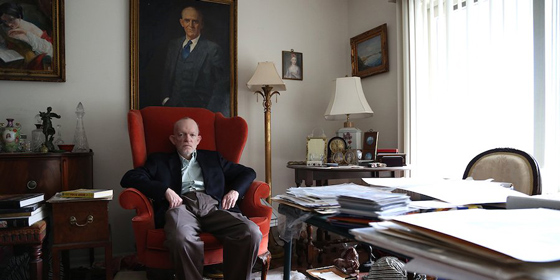 Falsifier Mark Landis
A few years ago, the history of the falsifier Mark Landis became known. He faked mainly a modernist schedule, but did not sell it, but brought it as a gift - for example, under the pretext of giving out a collection of his late mother. Sometimes he just sent his fakes by mail. Many American museums with amazing frivolity received his gifts and even included them in their expositions. In one museum, for the sake of one of his fakes, he had to be removed from the exposition of Renoir. When the story was revealed, nothing threatened Landis - he did not inflict financial damage to museums and, in essence, was not a fraudster. Nothing prevented him from continuing his gift practice - it was enough not to come to museums in person. But people in the art system felt that this case could not be left like that. Then they decided to collect the maximum number of his fakes and arrange his exhibition, which was carried out at the Museum of the University of Cincinnati. It seemed to make the artist a way to neutralize him and to close up a gap, which suddenly formed in the wall, which museums are enclosed by uncomfortable gifts - everything began to appear as a kind of project. Another thing is that Landis himself (in the personal history of which there were, for example, things such as the episode of Catatonia and the period when he lived on disability benefits) wanted only one thing-so that somewhere on the museum wall or at least on the Wikipedia page it was recorded that Mark Landis is a famous philanthropist and donor. Recognition as an artist was not interested in him. He was interested in the gift of the poor rich.
* * *
Artists who worked during the first, historical, conceptualism brought personal relationships as an object as an object - the relationship of mutual influence and friendship, even love, they sprinkled and made an object and an exchange model itself.
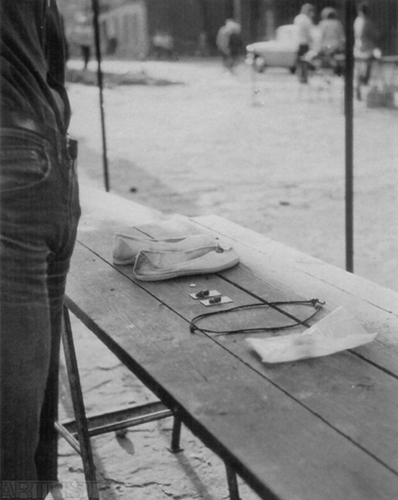 Jan Mlchokh. Memories. 1975
It was a huge democratic revolution, on the other hand, all this looked like a joke that did not destroy this life matter itself. But thanks to bureaucratization and putting on the market, what was in vain was in vain, although it looked jokingly, as a result began to bring surplus value: when on October 7, 1975, Yan Mlchokh sold commemorative objects belonging to his relatives within an hour, or when Yuri Albert provided economic services on October 22, 1979, the act of bureaucracus himself Documentation, of course, was a mechanism for clarifying the exchange value of personal gifts (whether it is services or expensive memories) when they are converted into an object of art.
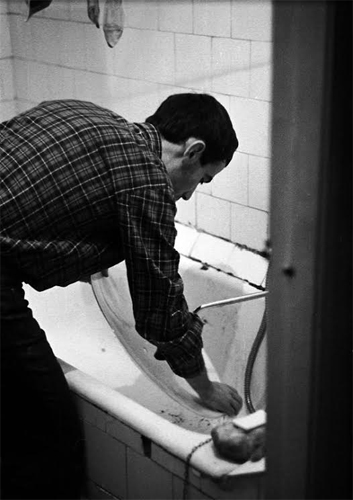 Yuri Albert. Help on the household. 1979
We can say that Mary Kelly, who was engaged in the removal of the first gifts of her child, stained diapers and saliva, making them in a map of the relationship of his mother and baby, was engaged in the same. This was a huge critical fuse, at the same time it was an impressive artistic drama, although very cold -blooded.
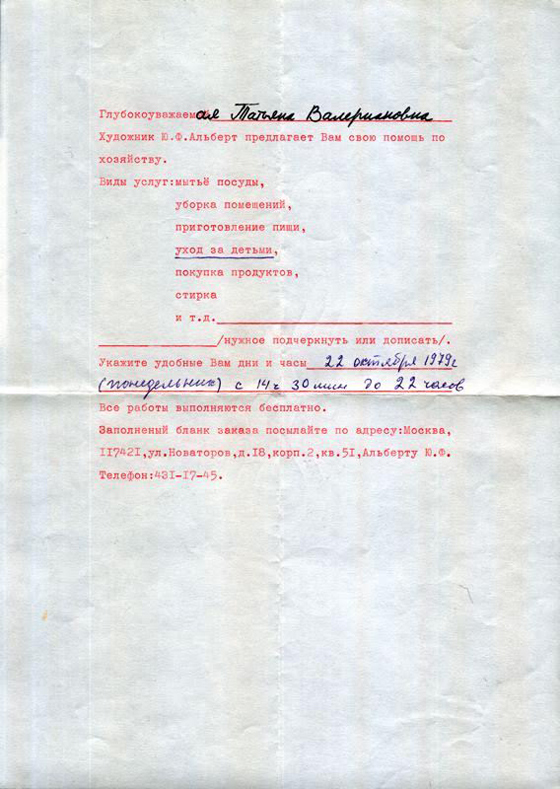 Yuri Albert. Help on the household. 1979
Together with the collapse of the social unit and as the horizontal international conceptualisms are institutionalized, personal relations turn into a trivial object of art involved in a global design exchange. An ambiguous joke of access to the gift to the goods in this exchange, of course, fades away. Personal was objectified as an art, a gift-as a product-democraticity turned into globalization and the same fundamental distribution of a work that does not have more weight-not in the banal sense of material dematerialization, but in the sense that it does not shift the balance of relations: this is the example of the Hans-Peter Feldman described above. Dematterization should be understood precisely in the sense of zero gravity and trouble-free object of art: if the gift challenges and creates an advantage to which, in order to avoid conflict, there must be an answer, then the dematerialized networks of personal converting into art ensure the smooth glide of the design and exchange activities of artists with institutions.
* * *
In his still unfinished work “Case of“ knocking on someone else's table ”, made in 2016 for the Moscow Museum of Contemporary Art, Anastasia Ryabova tries to do what she herself calls“ an uncomfortable gift ”. Especially for the transfer to the gift to the Ryabova Museum, she constructed (in her terms) “problematic artifact”, which is a knock on the table. This artifact is fundamentally intangible-its problematicity and weight are not in its material properties (in such a purely material sense, uncomfortable gifts are Irina Korina, which are destroyed due to the fact that almost no Russian museum is able to accept them even for free due to technical inconvenience), but in its very symbolic structure. It is deliberately designed like this (sound, fist, alien (that is, which one?) The table) so that the adoption of it by the museum creates tension in the law of the museum. The museum law - the 1984 storage instructions studied by Ryabova - cannot cope with the adoption of this artifact. Thus, in order to launch the process of transmitting a problematic artifact as a gift to the museum, the museum must reconsider its legislation (about 15 documents in total). So the artist is trying to make a law creative process.
Especially for transferring to a gift to the Ryabova Museum, she constructed a “problematic artifact”, which is a knock on the table.
На самой выставке была представлена документация юридически продуманного реэнактмента передачи стука по чужому столу в присутствии нотариуса и свидетелей (сама передача еще не состоялась) и проведен «Экспресс-конгресс» с участием музейных сотрудников, юристов и теоретиков. По итогам конгресса музей, как предполагалось, должен был расшифровать и выставить в том же помещении документацию, на основании которой Рябова собиралась вынести резолюцию. Эта резолюция, в свою очередь, должна была лечь в основу совместно составленных Рябовой и музеем рекомендаций для Министерства культуры по изменению принятой инструкции музейного хранения. Эти шаги сделали бы возможным запуск передачи в дар музею «Стука по чужому столу».
ММСИ — муниципальный, а не частный музей, хотя по западной модели он и пытается привлекать корпоративных спонсоров. Еще с советского времени сохраняется связанность музея с общегосударственным законодательством — хранение и принятие объектов регулируются обязательной для всех музеев инструкцией. Таким образом, к закону этого музея легче подобраться, и он куда более универсален и всеохватен, чем законы частных музеев, но его труднее зацепить, поскольку сложно понять, чье именно желание за ним стоит: музей просто унаследовал свой закон от забытого всеми порядка и пытается растягивать его для своих нужд, но никак не изменять — это потребовало бы обращения к слишком опасным, но и слишком равнодушным стоящим вверху инстанциям, и кто знает, как повлиял бы пересмотр инструкции на все музеи России. С другой стороны, работа с этим законом не осложняется мотивами благодарности меценату, то есть частному лицу, устанавливающему свой закон с личной жесткостью — то есть по праву завоевателя благ и благотворителя.
Судьба «Стука» складывается пока драматично. Реэнактмент и конференция были сделаны для новой версии постоянной экспозиции MМСИ, которую делала куратор Елена Яичникова под названием «Взаимодействие: взгляд современных художников на коллекцию ММСИ» и в которой современные художники, в основном достаточно молодые, должны были совершить проектную работу с вещами, находившимися в собрании.
Не глупо ли требовать от институции любви?
Уже название — «Взаимодействие» — отсылает к той практике обмена, что описывается как постконцептуальная. Противопоставление тех, кто делает проектную работу, вступая с куратором в отношения субподрядчиков на музейной площадке, и объектов, находящихся внутри музейного закона, внутри коллекции, как и сам термин «взаимодействие», предполагает то самое невесомое проскальзывание проектно-меновой деятельности — сеть без обязательств, личное как объект.
С помощью дара Рябова пыталась развернуть эту ситуацию в сторону художника как бедняка, который обязывает богача, но музей пока оказался не вполне готов принять ее неудобный дар. Реэнактмент и документация были выставлены, конгресс проведен, но дальнейшие шаги музей совершать не торопился. Он был готов выставить временный и как будто партиципаторный «проект» и, конечно, организовать в его связи яркое событие («Экспресс-конгресс»), но этот проект интересовал его лишь как видимость, то есть буквально как артефакт — но не как проблематичный артефакт. Музей не готов был начать работать над своим законом. Расшифровка конференции и видеодокументация запаздывали — у музея были другие дела, а «работа» уже была выставлена.
«Халатность» музея в отношении ее неудобного дара — вероятно, музей тогда не понял еще, что непринятие дара равносильно объявлению войны, — заставила Рябову совершить непозволительный с точки зрения деловых отношений художника и институции акт. Она лично сняла работу из экспозиции. Есть обидчивые любовники, которые после разрыва забирают все, что они дарили. Вместо того чтобы делать личное объектом искусства, Рябова поступила так, как будто исключительно личным был объект искусства, произведение искусства как неудобный дар, который все же нельзя не принять, если любишь. Не глупо ли требовать от институции любви? Конечно, дар Рябовой был изначально даром с обременением — тем обременением, что выходит за рамки простого «взаимодействия» и проектной видимости. Но принять на себя весь неудобный вес ответственности, содержащийся в даре, — еще открытая перспектива для музея, которому все же нужно оставить шанс восстановить разорванные отношения с искусством.
Все тексты Александры Новоженовой на COLTA.RU
Скачать весь номер журнала «Разногласия» (№10) «Кто платит за культуру?»: Pdf , Mobi , Epub