
Translated material
David Greber: "Trump talks about turning the imperial program"
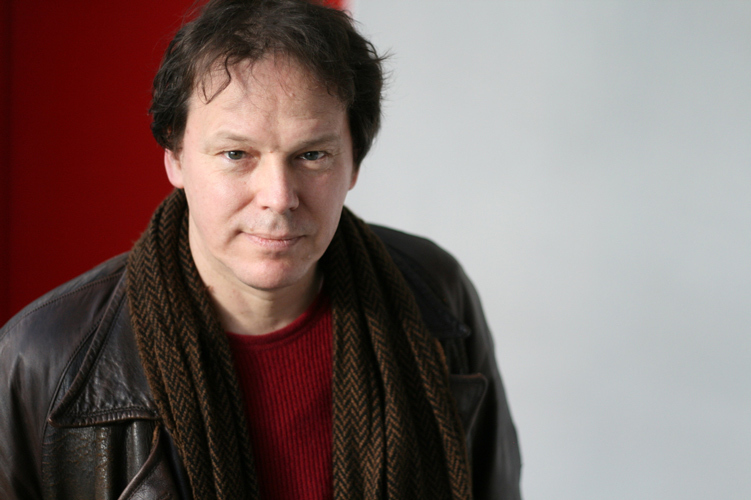
At the Non/Fiction Fair, which begins tomorrow, November 30, David Greber will be sold, published at the AD Marginem, “The Utopia of the Rules. About technology, stupidity and secret charm of bureaucracy. ”
“The question that many continue to ask themselves is how it turned out that the Americans chose President Donald Trump?”
- As you know, most Americans are suspicious of their elites and believe that the elites are corrupt, do not represent the interests of the people and do not care about it. Perhaps Hillary Clinton is the only candidate in the history of the American elections, positioning himself as a representative of consolidated elites.
Clinton actively insisted on maintaining the status quo and represented himself as a conservative candidate, while Trump positioned himself as a candidate radical. It is not surprising that she was not elected. Trump, it seems, with the same success could all the way convinced the citizens to vote against him. He insulted all possible social groups that he could only find. But even this did not help. It is clear why the American working class votes for the Republicans. The working class is trying to get rid of neoliberalism. And the democrats really believe in liberalism. This is their ideology. Republicans do not believe in anything.
- Does Trump's victory mean a threat to the American Global Empire, the Debt Empire? In the book “Debt: the first 5000 years of history” you describe how it was built. In particular, you give an example of the connection between the form of the existence of money and the war.
- If you look at the history of Eurasia, we will see replacing each other in which credit money dominates first, and then cash come to the fore. In the era when cash dominate, we are more often observed by the spread of violence, the deployment of empires that pay their soldiers with coins. Gold and silver were more suitable in order to accompany the military rather than trade operations.
Democrats really believe in liberalism. This is their ideology. Republicans do not believe in anything.
- We just live now in the time of loans. In the 1970s, the United States canceled the binding to the gold standard.
- In his book, Michael Hudson notes that the American Empire exists at the expense of rent using financial instruments that look like ordinary economic contracts, and not as the actual removal. For example, during the Cold War, the largest holders of the securities of the US Treasury were countries that were under the American military protectorate: West Germany, Japan and others, which were in a similar position. The US Treasury Papers have become an analogue of gold and reserve money for the banking system as a whole: for central banks and the most important financial institutions. At some point, West Germany decided to diversify the financial portfolio and get rid of some American treasury obligations, to which the American government immediately threatened to withdraw its troops from the territory of Germany. The Germans thought better of it.
The treasury obligations themselves were arranged in such a way that their holders were losing and not earned money. They made it possible to redistribute wealth from the country that bought them to the country that sold them. In the 1960-1970s, other countries were bought in the 1960-1970s, but its holders paid interest less inflation. In the 1980-1990s, a new way to withdraw resources was found using another type of debt: this time, the third world countries became debtors. This was called the "Baker's plan." The poor and dependent countries have now become debtors of the countries of the rich and successful. In fact, this was a way to replace an unpleasant military operation to privatize natural resources and transfer them to the control of international corporations to a much more elegant operation - financial.
-Instead of sending a army somewhere, seizing plants, oil storages and mines, you can simply write out debt receipts to someone, and people themselves will send you money, formally remaining the owners of their resources and their territories.
- This is not done directly, but with the same effect. In addition, an important moral advantage arises: most people would not agree to support the capture and robbery of another country. But there is a convenient trick that the winners in relation to the defeated have been practiced since ancient times: they retain their lives in exchange for a dependent form of relations, in which the winner can remove something. To this we need to add that paying debts in principle is considered a matter of honor, and not pay on debts - deeply immoral behavior.
It was previously impossible to carry out the same reforms in the first world countries that were carried out in the third countries. And now the empire began to destroy itself from the inside.
-It turns out that debts are in a sense the replacement of ancient confiscation in the loser or dependent side. From the side it looks like the United States not only protects the countries for free, but also borrows money to them.
- (Laughs.) Exactly! In this regard, it is curious to listen to how Trump plans to stop “free” to defend Saudi Arabia, Japan, Germany ...
-And yet: Trump's victory-what is it? The sunset of the American Empire? Or - with or without Trump - will we wait for the continuation of the empire?
-Personally, I believe that the United States entered during the sunset in the early 2000s. In particular, thanks to the active activity of the worldwide movement for justice. These were mass performances that were able to unveil the mechanisms of the internal work of the American "long" imperialism. As a result, global financial institutions lost their support. In a short time, the debts of the World Bank decreased by 97%, that is, almost disappeared. The IMF was thrown out of East Asia, from Latin America and from most countries of Africa. On September 11, the United States cost the loss of prestige. And the war with terror undermined the moral authority of the States around the world. Well, now the empire itself began to restructure its own social mechanisms. It was previously impossible to carry out the same reforms in the first world countries that were carried out in the third countries. And now the empire began to destroy itself from the inside. I do not think that Trump or someone else will be able to restore the American empire. Because all that Trump says is a completely coherent narrative. In fact, we are talking about turning the imperial program.
- It is strange that anti -imperial policy can even potentially begin to conduct a right -winging candidate.
- In fact, to ruin the empire, not left, but right ones. It was necessary that Democrat Clinton came to power, so that America will turn out the programs of the state of universal well -being. Therefore, who else, if not conservatives, could really cancel the imperial agenda? Who else, besides Trump, will be able to turn the network of military bases around the world and military agreements? At least this is what he himself is talking about. It is not a fact that he will be allowed to do what he plans, but if this happens, then, most likely, a character like Trump is better suited for such a mission.
Til, one of the creators of PayPal, supports Trump and opposes the free market. From the inside of capitalism a direction appears that contrasts itself with a global financial elite.
-The example of Peter Til, an innovator billionaire, who entered the Trampus transition administration, is interesting here. Why do people like Til support Trump?
- Yes, Til is one of the creators of PayPal and Tesla investor. He calls himself a Libertarian. Although this is a little strange, because at the same time he opposes the free market. His arguments are as follows: during the period of innovation it is impossible to work in the structure of the free market. Competition reduces the profit so that no error cannot be made.
Innovation is a difficult matter. She needs to leave the space for the maneuver, namely, it destroys the free market. I think that from the inside of capitalism a new direction appears, contrasting itself with a global financial elite. These people are different than financiers, relate to production.
By the way, it is interesting that Trump himself is a developer and is engaged, first of all, real estate. And real estate sellers are dealing with a specific product that is difficult to export, that is, they are interested in the local rather than a global agenda (and therefore historically supported the left candidates). For the same reason, they are partly interested in at least some universal well-being. True, all this does not mean that they want Wall Street to collapse.
- Anxiety - and even panic - many of my friends and friends experience in connection with the election of Trump. Some consider the results of the elections almost a revolution or at least a right -wing coup, others are afraid of the beginning of the war.
- The classic definition of the revolution is a violent change in the regime, which leads to radical changes. But often, on the contrary, radical changes happen without any violence. Whether Trump's presidency will lead to something exclusively new-now it is difficult to predict.