
Translated material
Memory of Leonid Mikhailovich Batkin (1932-2016)
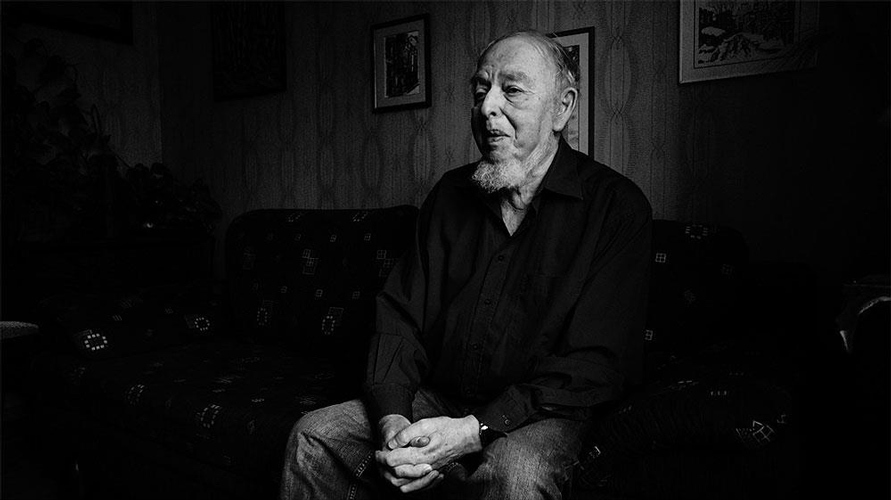
“Batkin? !! - Yuri Mikhailovich jumped in a chair. - It cannot be! Are you confusing anything? " Lotman went to Munich for a scholarship a few months earlier than me, and in 1989 he walked every day in a year, and he, moreover, had a long time in the hospital, hopelessly lagged behind the rushing of the Soviet situation. “Yes, I assure you, it was him! I insisted. - He led in Luzhniki a rally for two hundred thousand! " But I myself would not have believed if I had not been in that crowd. Then, on May 21, 1989, a lot of things could be admired: and the fact that so many people are for the first time! - It came to support democratic changes, and the fact that the only time on the rostrum stood nearby Sakharov and Yeltsin. But no less than this was amazed at Leonid Mikhailovich, who was standing next to them at the microphone: it seemed that he was born a political speaker and, even more important, the skillful leader of the crowd. Everything was the first time, and no one knew if Khodynka would happen From the spontaneous cluster of such a mass of people. Batkin led this rally Easy and artistically: he slightly besieged, when he went through, he watched, so as not to push, mischievously and slightly tearing himself - but command: “Take all three big steps back!” And the giant crowd was unquestioningly obeyed. It was especially shocked by how Batkin regulated the completion of the rally: so that the tiger would not be created, it was necessary that those who stood closest to the rostrum would still remain in place while the rear ones diverge, and Batkin cheerfully suggested: “Stand, stand still! And you want - sing songs! " Perhaps he spied the role of a scribbler in the role of the tribune in his beloved Renaissance Florence (Dante And his time: a poet and politics. - M., 1965)?
Leonid Mikhailovich Batkin was a specialist in the Italian revival. An all -winging delight before culture, especially acutely experienced in that stuffy atmosphere of Kharkov, where he grew up and worked until 1967, Batkin He carried through his whole life. But at the same time, a paradoxically, Leonid Mikhailovich’s perception of culture was quite radically different from how many intellectuals perceived it. All the then discussions, even about the Renaissance, were a form of philosophical understanding of the fate of Russia. In the same 1978, “Italian humanists appeared: Life, style of thinking” by Batkin - and “Aesthetics of Renaissance” by Losev. To what extent these two Renaissance differed from each other! On the surface, it was about both works of old -manner Italy, but in fact two forms of criticism of the Soviet project were faced: Losev attacked him for godless progressism, and Batkin, on the contrary, for the violation of a proud independent personality.
These were the Azopovs, the abode of discussions, but in the 79th Leonid Mikhailovich took a decisive step that led him out of the usual circle of the liberal intelligentsia. We all then instinctively felt where the lazy Brezhnev regime passes the border of the permitted, and Batkin deliberately stopped, taking part in the Almanac of Metropol. There was nothing dissident in his article “The Infinement of Culture” - but it is characteristic that, although there were many writers in the collection, scientists there, in addition to Batkin, were published only by the mathematician Viktor Trosnikov, who became a religious philosopher (the confrontation between two forms of anti -Sovietism, a young and religious, continued, thus, in Samizhzdat).
Naturally, since 1979, Batkin became “leaked”, he was dragged into the KGB, they did not print for a long time, and he published his next Italian Renaissance in search of individuality in 1989. The mid-80s is the beginning of a stormy academic discussion about when the “personality” appears in history. This dispute, which lasted more than ten years, brought Batkina in an acute conflict with our largest medievalist Aron Gurevich. In essence, the confrontation came down to whether progress exists and whether history is important to us as a sample. This was perhaps the last humanitarian discussion, which became a real intellectual event and went beyond the terrible circle of specialists (see: see: see: Batkin L.M. Leonardo da Vinci and the features of the Renaissance creative thinking. - M., 1990; To disputes about the logical-historical definition of individuality // Odysseus. Man in history. 1990. - M., 1990; "Don't dream of yourself." About the cultural and historical sense of the "I" in the "confession" bl. Augustine / RSU. Ivgi. - M., 1993; A European man is alone with him. - M., 2000; etc.). However, then the awakened society answered all impulses incredibly violently.
The blowing winds of change revealed many talents in Batkin. To someone, probably, his brilliant, fabulously-building article “Dream of reason. On the socio-cultural scale of the personality of Stalin "in the journal" Knowledge-Power "(1989, No. 3, 4), where he gracefully fools the reader, interspersing the real direct speech of Stalin, reported by Simonov’s memoirs, the speeches of the Zoshchenkovsky characters to their completely indifference. Then it seemed that the aphoristic finale of that article - “Stalin - is Brezhnev yesterday” - would become a sentence of Stalinist nostalgia. Alas, later it turned out that the formula is quite suitable for this very, only unheard of overgrown, nostalgia as a slogan.
However, it was especially amazed, as already mentioned, the talent of a political thinker and organizer in Batkin. He was the co -founder of the Moscow Tribune club (1988-1991), who played a gigantic role in crystallization of liberal, as they say, agendas. Batkin was in the thick of events, met with the interregional deputy group I congress, gave advice to Yeltsin, clearly formulated current tasks, commented a lot, so that some deputy even demanded to deprive him of accreditation. To this, Leonid Mikhailovich noted that no one could deprive him of his own TV, and he never had another. And it is true: he never became a deputy or a member of the “pool”, for all his passionate involvement in events, remaining a little away from them. Batkin did not take any post (his co -chairman in the Moscow rostrum Gabriel Popov became the mayor of Moscow), and the only form of the engaging that he allowed himself (and then for a while) to become a member of the Coordinating Council of the Democratic Russia movement.
Looking from today, it is simply impossible to believe that all this happened to us! It was indeed a unique moment in domestic history. But miracles do not last long. The authorities (very) quickly began to feel strangers and, first gradually, reject them. Already in 1992, Batkin moved away from active participation in politics, and Although he continued to be a political thinker (cf.: Batkin L. There is still a chance: political impressions and thoughts of three years after August. - M., Kharkov, 1995; episodes of my social life. - M., 2013), and 2013) He showed an acute interest in politics until the last days of his life, nevertheless, in the new reality he had no place.
Working in IVGI, a special oasis for outstanding humanities, created by the founder of the Russian State Humanitarian University, Yuri Afanasyev, Batkin, leaving the Renaissance (Italian Renaissance: Problems and People. - M., 1995), expanded the horizon of his interests (Batkin L. Bruskest. Selected Essays and articles about culture. - M., 1994; thirty -thirds of the letter; The reader's notes of the poems of Joseph Brodsky. He thought about the things of deep and complex - “about the movement of history into the future”, about “renewal of history”, but also about the burning modernity: “Is the opposition Putin possible?” (report January 21, 2001!).
I did not talk about the most important gift of Leonid Mikhailovich - his brilliant possession of the word. In a situation of monstrous late -Soviet flamelessness, with the complete murder of speech (not to mention rhetorical) skills, in domestic humanities, only two figures rise in lonely unattainable peaks - Averintsy and Batkin. Both spoke and wrote implausively, delightfully, and yet I would give the palm of Batkin in this “syncrisis”. For the sparkling surprise of the phrase with the unchanged clarity of its frame.
And this obituary would write this best of all, and not because he knew himself better than others. And because in the genre of necrologists he did not know equal.