
Translated material
Myths and history schemes
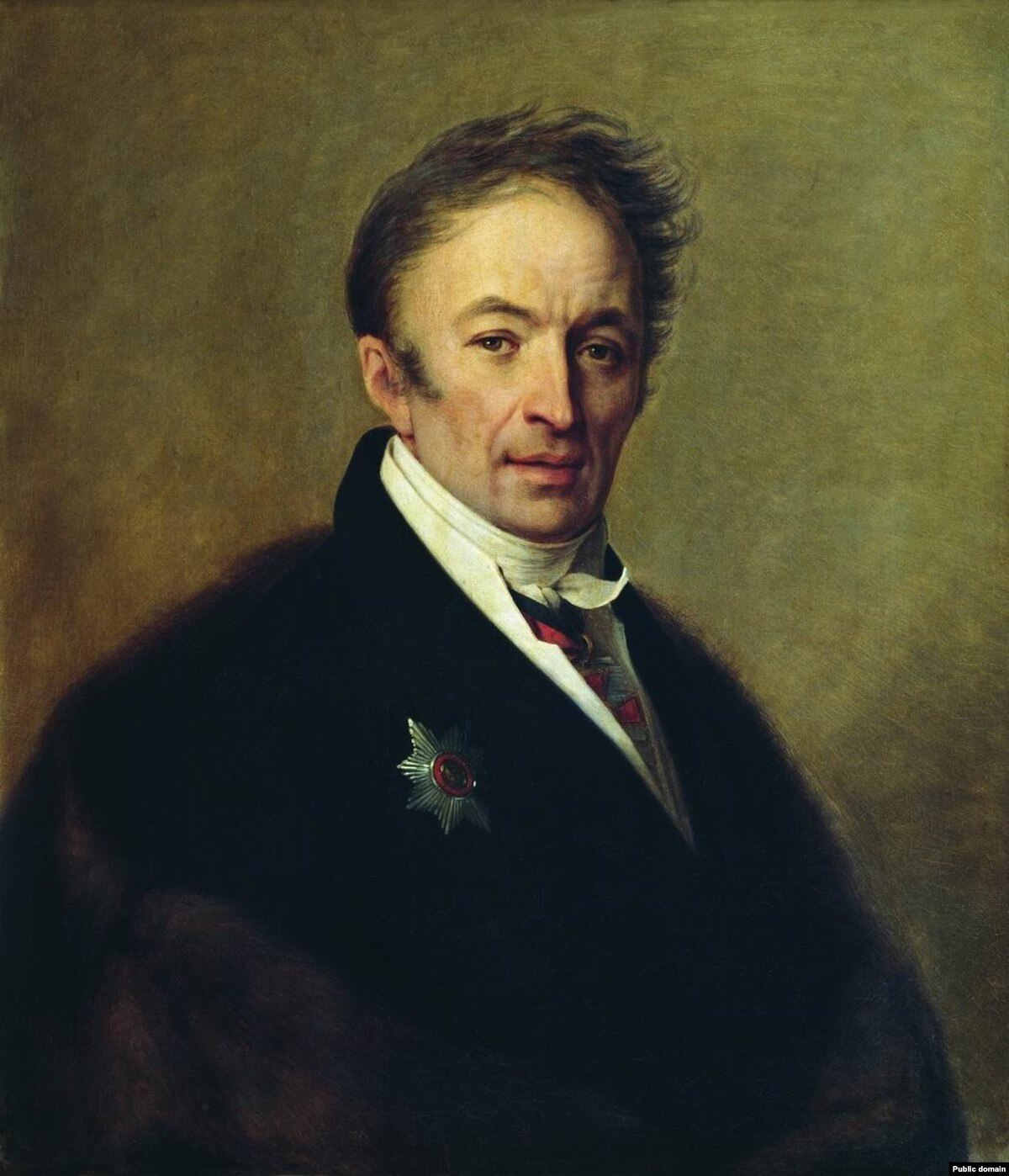
On the 250th birthday of Nikolai Karamzin
It is difficult to consider Nikolai Mikhailovich Karamzin and today a living of Russian literature. The opposite is rather true: there was no example in Russian literature on how the writer, who was considered the head of the advanced literary school, the leader of the literary process, has come to naught so quickly: literally for one generation. Pushkin appeared - and Karamzin disappeared. And Russian literature, the great literature of the 19th century naturally lead from Pushkin. Karamzin moved back to the eighteenth century, stood in a series of respectable, but outdated writers, like Lomonosov, Kheraskov or Sumarokov; Derzhavin, for example, is much more alive. And this despite the fact that the main array of Karamzin’s works dates back to the nineteenth century and despite the fact that it is considered the creator of the Russian literary language in which Pushkin began to write. Very soon, Karamzin from the innovators moved to the archaists, and in Pushkin’s poetics one of the living branches became precisely Derzhavinsky archaism.
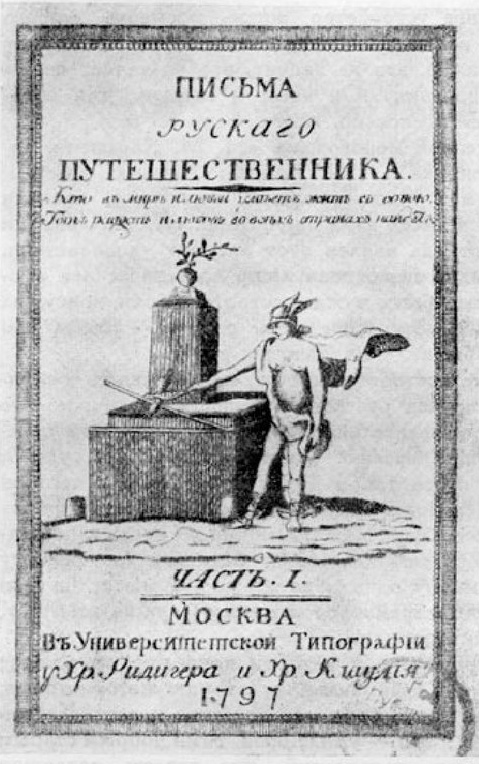
Meanwhile, Karamzin began to write precisely in the eighteenth century, in his last decade, and the monument of this work was the wonderful “letters of the Russian traveler”, who described his trip to Europe (Germany, Switzerland, France, England). And he ended up in Europe at the most interesting time: at the beginning of the Great French Revolution. True, he saw neither the overthrow of the monarchy, nor the Jacobin terror, but nevertheless he managed to notice and capture rather gloomy paintings. And undoubtedly, under this influence, a very significant spiritual breakdown occurred in Karamzin. He arrived in Europe as a frowning European, the bearer of the latest at the same advanced ideology of education, and rather in its Roussean head. Nature is reasonable, and, focusing on nature, people will be able to build a reasonable society. For man is kind by nature, here is the cornerstone of Rousseism. And it was this ideological myth that crashed in the events of the Great Revolution. In it, it was not the mind that defeated, but the furies of the infuriated human nature. The Union of Mind and Furies - this formula for the revolution was later given by Pushkin; But it is at Karamzin that we meet this word - Furia.
In France, Karamzin met with Academician Leveck, a specialist in Russian history, and recorded his words: “All the people's nothing before human . The main thing is to be people , not the Slavs. What is good for people, it cannot be bad for the Russians, and that the British or Germans invented for the benefits, benefits of man, because I am a person!” These French words can be considered the shortest and most expressive formula of Russian Westernism, and Karamzin went to Europe just a Westernik, in general, a European, which was a lot and pleasantly surprised his European interlocutors, including Kant. But just the events of the French Revolution undermined this historical optimism, and at the same time the West’s monopoly on the possession of truth. Moreover, there was a doubt about the existence of this indisputable all -human truth. Karamzin went to Europe an optimist, and returned to a clear pessimist, rode with faith in progress, and returned, to put it mildly, by a skeptic. And this is what a resume he gives to his European impressions:
"Every civil society, approved for centuries, is a shrine for good citizens, and in imperfection itself it is necessary to be surprised at the miraculous harmony, improvement, order." Utopia "will always be a dream of a good heart or can be fulfilled by an inconspicuous action of time, through the slow, safe successes of reason, education, education, kind morals ... all sorts of violent shocks are fatal, and each The rebel is preparing a scaffold ... Easy minds think that everything is easy, the wise knows the danger of any change and live quietly ... New Republicans with vicious hearts! Expand Plutarch, and you will hear from the ancient great, virtuous Republican of Caton, which is worse than any power! "
Russian history has become a vivid illustration of the meaning of European events and wider - to some all -human historical laws
And here is another, much stronger formula from the later works of 1794: “Who more than ours praised the advantages of an axial and fifth centuries; the light of philosophy, the softening of morals, the subtlety of reason and feelings, the reproduction of life pleasures, the very spread of the spirit of the public, the closest and friendly connection of the peoples, the meekness of the boards? But instead of this delightful phenomenon we see ... Furies with formidables flames!
Where are the people we loved? Where is the fruit of science and wisdom? Where is the elevation of meek, moral creatures created for happiness? - Age of Education! I do not recognize you - in the blood and flame I do not recognize you - among the murders and destruction I do not recognize you ... Heavenly beauty disappeared - snakes hiss in her place! "
These words, as already mentioned, were written in 1794, when revolutionary events in France were already fulfilled in a complete measure. But in 1802, Karamzin writes an article under his magazine "Bulletin of Europe" entitled "pleasant views, hopes and desires of the present time." What does he see this pleasantness? In the Amiens world, in the calm of France, caused by Napoleon during his consulate. Without looking far into the future, Karamzin is in a hurry to formulate the most important historiosophical formula for him:
"The French revolution, threatening to overthrow all the governments, approved them. If the disasters of the human race in a sense can be called beneficial, then we, of course, owe a good deed to the revolution. Now the civil authorities are strong not only by military force, but also by the internal conviction of the mind."
Bonaparte's monarchical creeps were quite clear for Karamzin, but they caused him not anxiety, but rather satisfaction (of course, before Napoleonic power and militancy spoke out fully). And the scheme of the latest history now introduced Karamzin in this form: the monarchy and order - anarchist decomposition in the revolution and the fall of power - the restoration of monarchical power and order.
And now the most important thing: Karamzin transferred this development scheme to Russian history. Russian history has become a vivid illustration of the meaning of European events and wider - to some kind of all -human laws. Let us recall another Karamzin formula, which was reacted directly to Russia: "Russia was founded by victories and unity of command, died from multi -virus, and was saved by a wise autocracy." This is nothing more than extrapolation on the centuries -old history of Russia of the results of several years of the French Revolution.
Here, in fact, is the main thing that you need to know about the Karamzin history of the Russian state, here is its flint, lesson and meaning. Everything else in it is literature.
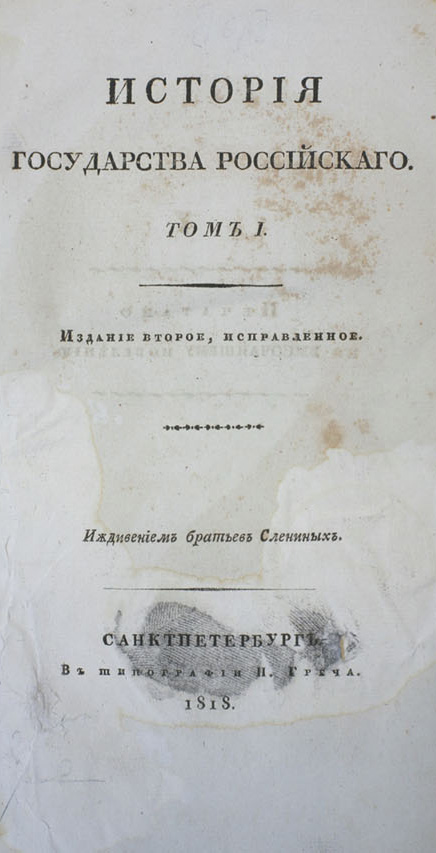
This is the composition of Karamzin, the first eight volumes of which came out in 1819, became a bestseller. Karamzin history was even read by secular ladies. Pushkin’s judgment remains in force: Karamzin discovered ancient Russia as Columbus America. From his story they made a bunch of opera libretto, and Pushkin wrote “Boris Godunov”, focusing, however, more on Shakespeare than on Karamzin.
The scientific dignity of Karamzin’s history has been rejected for a long time - along with the destruction of the myth of it as the first Russian historian: before him were Tatishchev, and Shcherbatov, and boltin. The most valuable in his history are notes in which some important annalistic sources were introduced into historical circulation.
But, as the ancients said, books have their own fate. Karamzin, his story was unexpectedly resurrected in the current post -Soviet Russia. For propaganda purposes, the Karamzin manner of fiction -colored history, its appeal to the myth, was picked up. Karamzin himself wrote: "Feeling: we, ours - revive the narrative ... Love for the Fatherland gives brushes heat, strength, charm. Where there is no love, there is no soul." This is one to one what the current Minister of Culture Medinsky says. At Karamzin, he most likely read this - not at all with Nietzsche, as it could seem to be well -read to people.
And here you can recall a funny detail. The eighth volume of Karamzin’s history - the last one, published during his lifetime - ended in a description of the first years of the reign of Ivan the Terrible, bright, as is commonly believed, of his period. The second, dark period of all kinds of atrocities of formidable Ivan, the ninth volume opened. And now it’s interesting: did the cultural minister have read the Medine history of Karamzin to the ninth volume? If I read it - you look, I would not approve the opening of the monument to Ivan the Terrible in Orel.