
Translated material
Another dimension
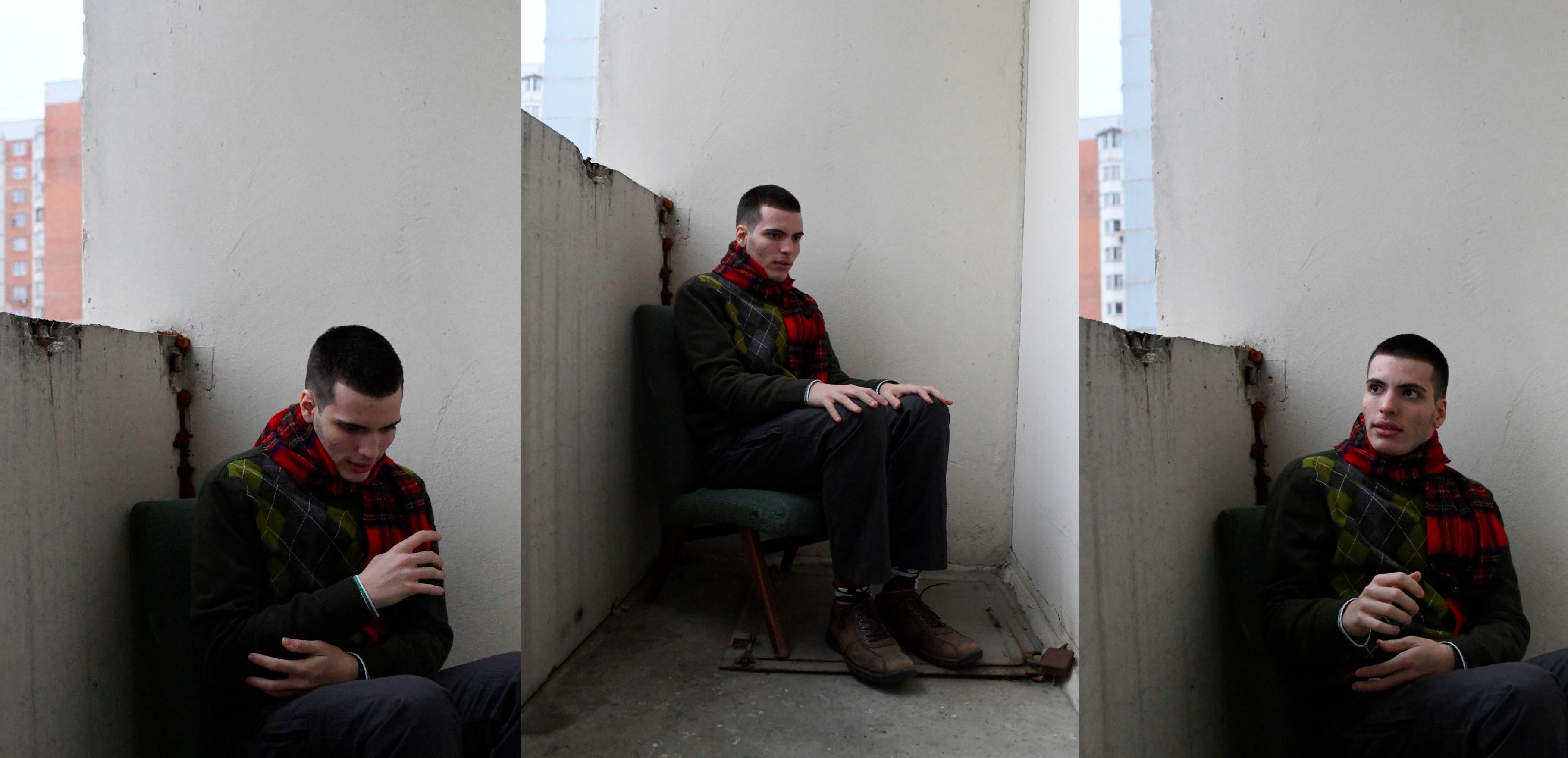
Gosha writes poetry, loves the porches very much and knows everything about light bulbs. Nikita speaks quotes from Soviet comedies, and Lerik - by quotes from cartoons. All three have an autistic spectrum disorder, and specific hobbies have become a way to know the world for them.
Imagine that you came to China. You were not particularly preparing for a trip, in Chinese you cannot say a word. You are in the center of Beijing: there are a huge number of people around who do not look like you behave differently, they say differently, laugh at other jokes. You have a phone, and you are trying to understand how to get to the airport, in order to finally return to normal life, cursing your carelessness, but you cannot find the way: the map does not tell you about anything, the signs are confused, but from the explanations of passers-by (with which it is terrible to speak) it does not become better. Finally, you are terribly hungry, but nowhere can you find what you are used to eating. All food seems very sharp, incomprehensible to you, and you are not at all sure that you will stay alive if you eat something.
This is how people with races (an autistic spectrum disorder) feel like this. ASD is a lot of various developmental disorders, from the most difficult ones, to those cases when the features are even visually invisible, but all of them unites one thing - problems in interaction with the outside world. These are not just difficulties in communication, but also difficulties with the perception of the world: contact with the external environment for many people with bds is dramatic.
Unlike a tourist who is crazy in Beijing, people with a race cannot just sit on the plane and be in the world that they are used to. Therefore, they often create their own world, consisting of stereotypical, specific actions, classes and interests: from constant swinging right and right to memorization in alphabetical order of all metro stations.
Gosha: entrances and bulbs
“ Chucha Karp died a year ago. It was too old and worried a lot of what could you do. But Ira Polakaryev is alive. All his life he dreamed of singing in the opera. And recently, the director of the opera accepted it. True, only after Io read the first book, before that he watched only cartoons. You can’t sing in the opera if you are uneducated. ”
Gauche is sixteen years old, and he has an autistic spectrum disorder. He invented a scam, Irei and other characters with beautiful names. All of them live in Gosha in their heads, and also in his poems, drawings and fairy tales. There is also Kokok Marshtyn, who sheltered thirteen dogs, and then they declared war on him. About Kokok, Gosha wrote a poem, and Goshina friends made a short cartoon.
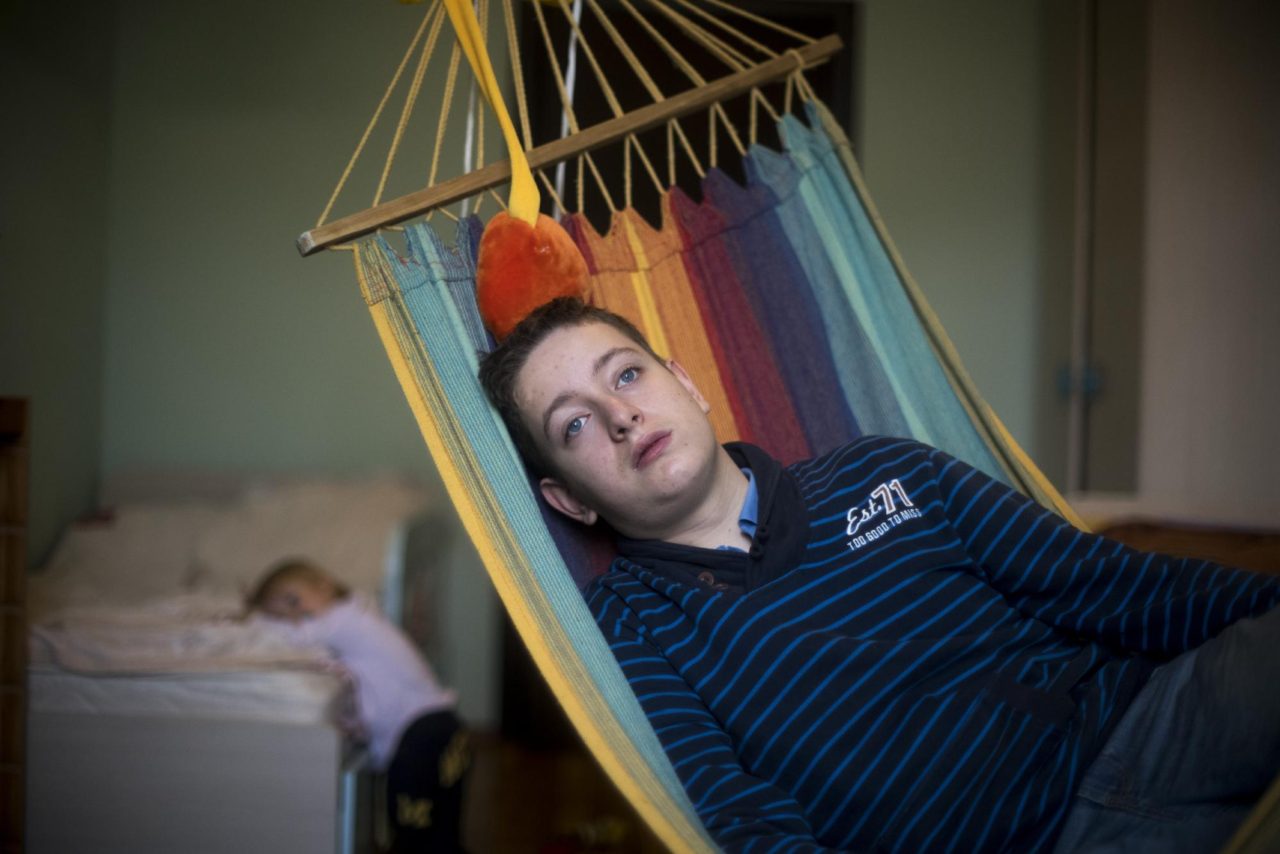 Gosha photo: Daria Kozyreva for TD
“What is your name? How old are you? Are you already old? What is your dad's name? And grandfather? When is his birthday? "
Gosha, like many other guys with races, does not understand what irony, metaphors and ambiguous expressions are. He asks all questions seriously and does not understand why people are embarrassed or begin to giggle.
In childhood, Goshi had very clear stereotypes. He needed to swing on the same swing at the same time and sing the same song at the same time. Despite the snow, rain and mother's fatigue. Go for a walk on the same route every day. Once, while walking along a familiar route, the boy asked his mother to go into an unfamiliar entrance with him. In the center of medical pedagogy (TsLP), Tatyana explained that if the son is interested in something, then you need to go through it with him. And they began to walk around the porches, draw entrances, talk about entrances. At the same time, of course, Gosha could not explain to his mother why he was interested in the entrances. No one ever knows exactly how the stereotype is developing. Over the next two years, Gosha and his mother Tatyana:
- went around all the entrances in their area;
- We went inside each of them. After the explosions of residential buildings in Moscow, the intercoms became an obligatory attribute of almost every entrance, so Tatyana and Gosher had to wait a long time until one of the residents would let them into the house. But Tatyana realized that a woman with a child could freely penetrate anywhere, without causing suspicion. (If the employees of the special services followed Gosha and his mother, then they would go crazy);
- compiled a classification of access;
- compiled a classification of objects that people put out the door of the apartment (most children's strollers, in second place empty cardboard boxes);
- We turned several albums for drawing into an “interactive entrance museum”: many paper doors had bent glued parts, and the cut windows of the first floor opened and closed.
Then Gosha got a new interest - light bulbs. In the TsLP, where Gosha and his mother continued to walk, Tatyana explained that this stereotype, as in the case of entrances, should first be thoroughly formed, and then begin to shake. Therefore, Gosh and mother began to classify light bulbs. A separate album was also instituted for them, it was portrayed:
- Stagnes bulbs;
- bulbs-wagons;
- Blunt bulbs;
- Tarnish bulbs;
- bulbs-bulbs;
- Blocks-strips
* and other bulbs of all colors of the rainbow and any other colors.
At some point, Gosha decided. He said to his mother that he likes only yellow bulbs in the subway, so in those trains where there are no yellow bulbs, he would not ride.
The mother of an ordinary child would take this as a whim, but Tatyana knew for sure that if Gosha is standing in front of the wagon doors opening and does not see yellow bulbs, then you can’t stuff the boy with force on the train. And persuasion will not work. You just need to tolerate and wait. A few years later, the stereotype with bulbs managed to shake, and Gosha began to invent fairy tales. At first, these were fairy tales where light bulbs constantly met, then in fairy tales the same plot was repeated about the dachshund of Goshi Chink, which the crows abducted, then new plots began to appear. Three years ago, Gosha came up with Cocock.
The first rule of the club - you cannot completely abandon the stereotype. You can turn it into something more, make it so that it does not interfere or become interesting not only to the child, but also to those who surround him, try to develop him or transform him, offer something in return. Now Gosha feels quite comfortably, communicating with other people, everyone likes his stories, sometimes old fixations are returning, but then they leave.
Goshi’s mother very much asked to say thanks to the Foundation “Exit” for supporting the class for children as Gosha, the Foundation “I am” Ksenia Alferova and Yegor Beroev for help in organizing an integrative summer camp and the center of medical pedagogy for inspiration.
Nikita: Quotes from Soviet films and television programs
Nikita has been taking a thick notebook with him for a couple of years, on the first page of which it is with a neat handwriting: “Quotes from Soviet film comedies”. This is the first edition, the most complete, it included about thirty films: “Pokrovsky Gate”, “Gentlemen of Good luck”, “Caucasian captive”, “Diamond hand” and others. Nikita writes quotes themselves in capital letters, and indicates the names of the actors in print, as if they were scored on a printing machine. Nikita rewrites quotes mainly from the book "So they said in Soviet film comedies." Now Nikita, in addition to the Kinopittea collection, has the stitched dolls of Andrei Alexandrovich Mironov - a wonderful artist and the legendary Vladimir Pavlovich Basov - they, like all other characters, were sewn by Katya, Nikita's mother. “Sticking” began after he watched several films in the country of his grandparents.
This year, Nikita entered the Ippolitov-Ivanov Musical and Pedagogical Institute and is learning to play on the faculty there. A year ago, I passed the final exam from the ninth grade. Nikita is one of the few children in Moscow who, instead of presentation, was allowed to write a dictation. In 2015, the Russian language exam for students with autistic spectrum disorders was allowed to be carried out in the form of a dictation. For this, Nikita's parents needed to get around more than one commission. Nikita’s memory is arranged in such a way that he can remember huge pieces of text, while the meaning is completely unimportant for him, but he cannot read the text twice and he cannot state it.
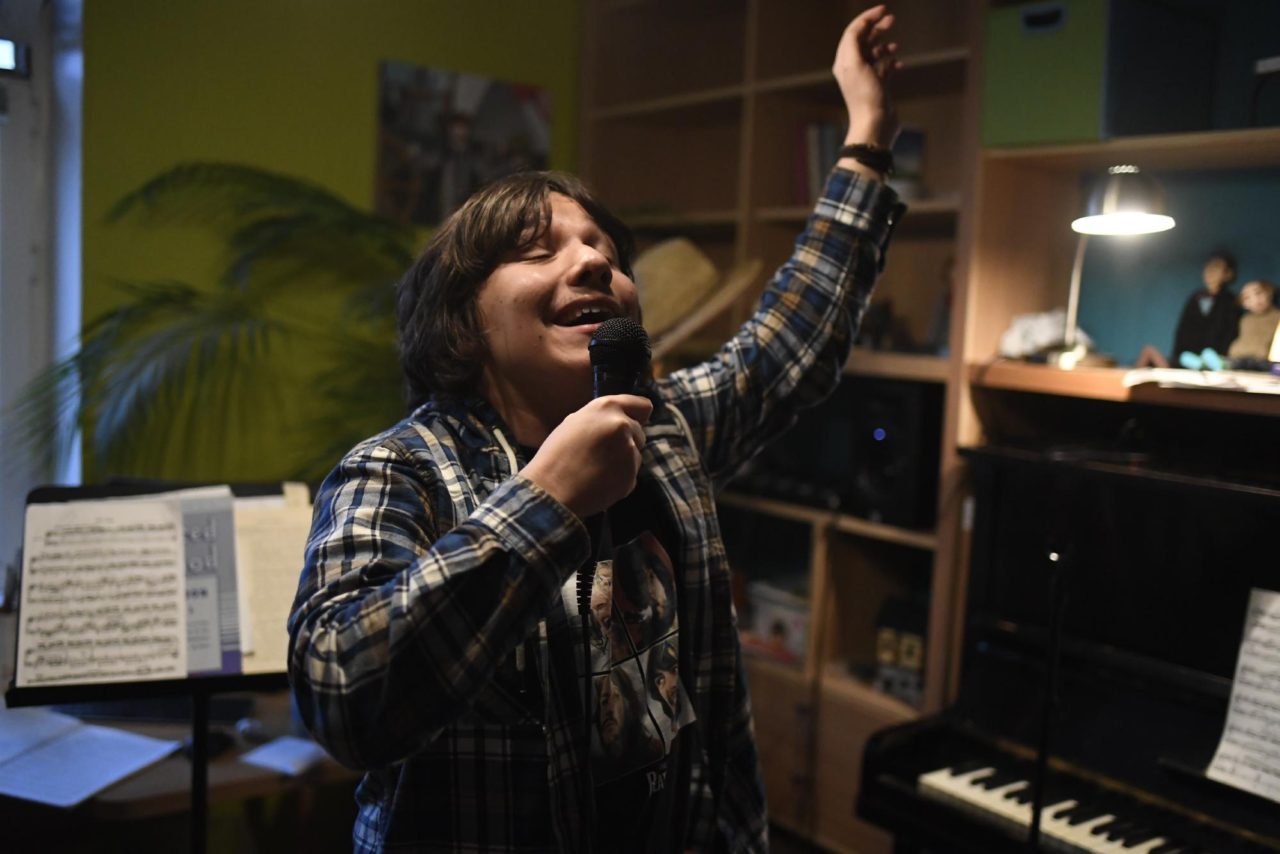 Nikita photo: Daria Kozyreva for TD
Nikita's autism was diagnosed at about three years old. His first hero was the rubber crocodile of Gene, which he dragged with him everywhere. The earth rotated around the genes, because Gene helped solve any household problems: “Gene eats porridge - Nikita eats porridge”; "Gene goes for a walk - Nikita goes for a walk." After the genes, the characters and dominant interests were replaced once every two to three years, and each era left behind artifacts: plastic figures, dolls sewn with mom, paintings that Nikita himself painted. During the hobby of Nikita Aibolit, his parents gathered a collection of 25 different publications of this fairy tale at home. Nikita began to speak, however, this is the merit of not a fairy -tale doctor, but a speech therapist who was engaged with the boy for a long time. But the text of the fairy tale Nikita still remembers by heart. Even thanks to this story, parents Misha and Katya learned about Nikita's main talent.
Misha: Nikita, why did you decide to play the violin in childhood?
Nikita: I just did not know.
Misha: I didn't know what?
Nikita: I got fun!
Misha: Why did you have fun on the violin, and not on the drum? Because Dr. Aibolit played?
Nikita: Yes! Aibolit! Played on the violin.
With the violin, Nikita still did not work out. The teacher said that it will be difficult for Nikita. But a piano teacher appeared, who discovered Nikitin absolute hearing. It was decided to learn how to play a rare instrument in order to play in the orchestra in the future, and Nikita agreed to the faculty.
Nikita studied at a comprehensive school in which the inclusive class self -organized: 15 people, one boy for home schooling, three more boys with features in development and Nikita. When Evgeny Onegin passed, Misha turned on Nikita an audio recording performed by Innocent Smoktunovsky (this was before the hobby of Soviet actors). And all. Nikita hangs on Onegin. This, of course, was very successful for the educational process, Nikita learned two -thirds by heart, and indeed, the “encyclopedia of Russian life” is sometimes useful in everyday life. Nikita, of course, associates himself with Lensky, hence the “black curls to the shoulders”, which cannot be cut.
Now, besides Soviet cinema, Nikita has several new favorites.
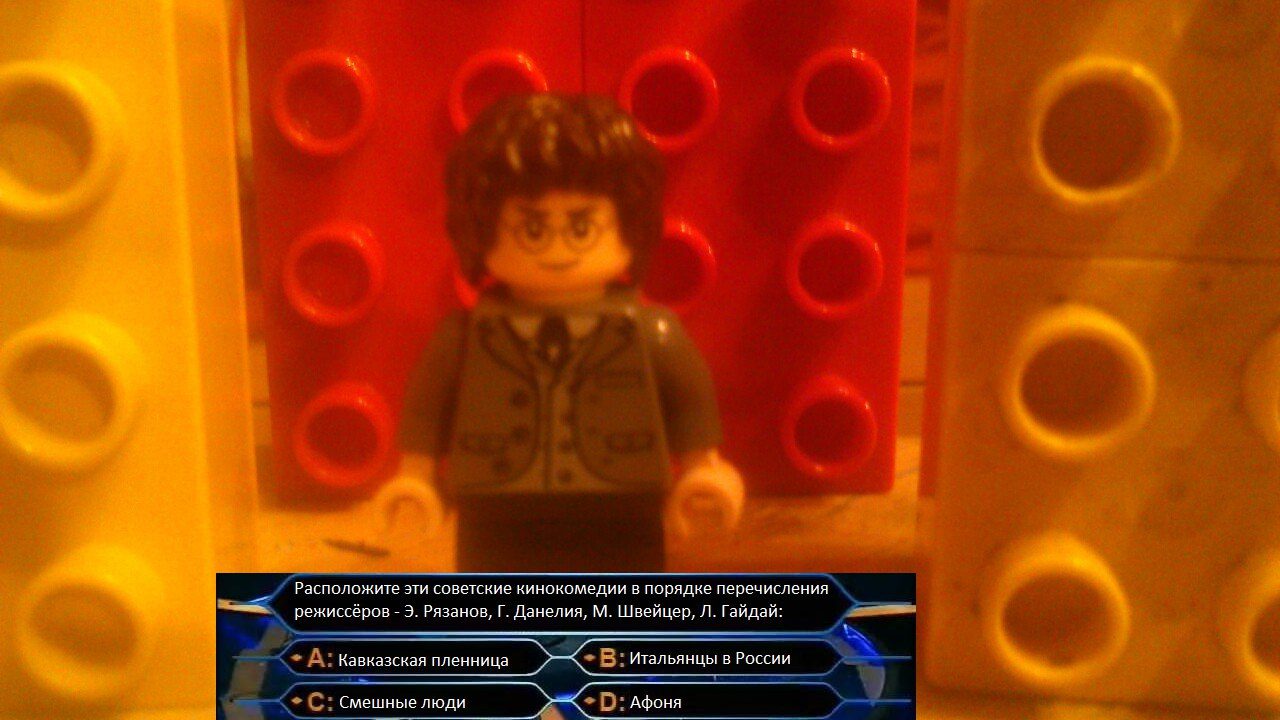 Nikita comes up with questions for transmission, based on his interests, and then manually makes a stopmader
" Who wants to become a millionaire?" - Money quiz! I am more than her presenters Maxim Aleksandrovich Galkin more. Such a wonderful person! And you want me to show you his portrait? I saw him on TV. I also made a model of the studio where the program is going on. And now it is leaded by Dmitry Alexandrovich Dibrov. Apparently, it is not bad. He is just courageous. I began to make the head of Maxim Galkin myself. Would not forget his glasses and hair long, as it was six years ago.
The principle by which Nikita chooses his idols is impossible to understand. All his interests and hobbies are a way to return to a state of psychological comfort, fencing off the surrounding reality. At the expense of something familiar, he tries to catch a balance, in any unfamiliar situation he acts according to the scheme: he speaks with schematic phrases, sings the usual songs to an unfamiliar person, plays some kind of performance.
Lerik: Cartoons and Lego
Lerika is 17 years old, and cartoons have always meant a little more for him than for many other children. As a child, he sat down at the TV closely and tried to merge with what was happening on the screen.
Lerik did not talk to five years. He did not look into his parents. If I wanted to eat, then he took his mother or dad's hand and led to the refrigerator. At two years old, Lerik's parents learned that their son had early children's autism. His mother Nailya understood that her son simply perceives the world differently, that he wants to talk about it, but could not.
The first words of Lerik were random phrases of cartoons, which he watched many times. He spoke them, intoned the same way as characters. Over time, some phrases became part of the usual speech, new ones appeared.
Throughout his life, Lerik associated himself with cartoons. Now his main character is Nick Wilde from Zerolis. As a child, he liked Stuart Little most of all, then there were Shrek, Sid and many other heroes. In each cartoon, he concentratedly seeks his character. Basically, these are heroes who are difficult to get into something to get involved, but if this happened, then they will go to the end.
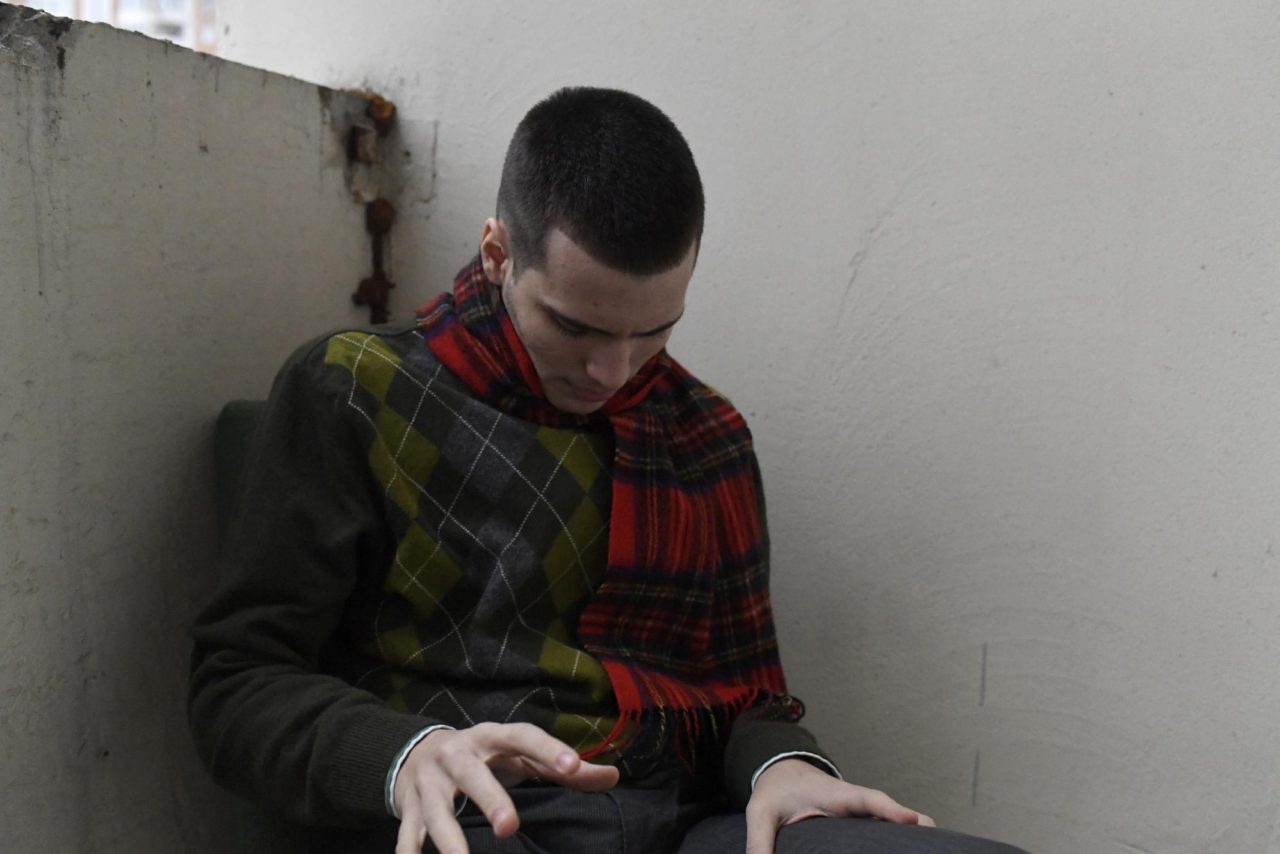 Lerik photo: Daria Kozyreva for TD
Passion for cartoons, although vividly, is still significantly inferior to love for Lego, which Lerik taught the whole family to collect. Nail no longer remembers how the first time her son saw Lego, but it was definitely love at first sight. Since Lerik Estete and admires any miniature objects, Lego-Grace of Lego captured him completely. He saw them, they became part of his world. Such that can be collected according to the instructions without fear of mistakes, and then, if anything, disassemble and collect as you want.
NAYALA: “Before this whole story began with Lego, for Lerik, objects were of greater interest than people. With the help of Lego, relations with the real world began to build. After all, Lego is essentially a set of attributes. And through these attributes, thanks to Lego , Lerik learned to see a person. ”
Around the same time, Lerik mastered the computer himself and found the Lego Digital Design website , which was not translated into Russian, but allows you to build absolutely any structures from the designer online.
Lerik: When I was small, when I was seven, perhaps seven, I found a site that I did not understand, but I grew up and three years later I found out how these letters are designated, and now I have grown up, and I know what English is. This is what is located in Britain in Australia, and in America, and so on, and some are everywhere. He looks like Latin. In general, to Russian, but in the mirror. English has Latin, which also has German, Italian, French. ”
Nobody pushed to the study of English Lerik. “He learned everything that he can,” Nail explains. In addition to the free ownership of English, it still has a good job, makes illustrations for vinyl records and depicts characters of your favorite cartoons, and then puts it on its blog.
NAYAL: Lerik, what is your password there?
Lerik: Super Interactive Awesome Artist.
NALA: (dials a password on the keyboard, wants to go to Lerik’s account): It does not fit.
Lerik: (With a calm look, he gains himself).
NAYALA: How competent are you, Lerik, I myself sometimes make a mistake in the word "AWESOME".
For Lerik, the main thing in the figure is the form. One of Lerik’s last drawings was his attempt to understand eroticism, which is expressed through the same cartoons: in the drawings they have a huge chest, drawn with the help of two spent glasses. Lerik asked anyone not to show them, because he was a little shy.
Lerik also likes to draw covers for musical albums. Recently, he likes only disco and synth-pop, because they have “repeated movements of tools”. Nailya believes that Lerik is listening to disco to escape from the crazy number of sounds surrounding him, which he perceives too sharply.
Goshi, Nikita and Lerika high -functional autism (Asperger syndrome), but this is only one of the possible manifestations of races. Some children do not speak at all, others are aggressive, you can list the symptoms for a very long time, because, as experts say: “If you know one person with autism, you know only one person with races.” You can learn more about autism here .
On December 1, with the support of the Foundation for Documentary Cinema, the film “Animated Life” was released about Owen Saskinde, who, like the guys, learned to perceive life through Disney cartoons. Owen speaks quotes from the “King of the Leo” and “Mermaid”, and he has an autistic spectrum disorder. Cartoons became his guide to the real world, thanks to them he learned to talk, communicate with people and understand life.
Do you want us to send the best texts of “such cases” to you by e -mail? Subscribe to our weekly newsletter!