
Translated material
"Artdokfest-2016": Choice COLTA.RU
Today in Moscow and St. Petersburg, Artdokfest begins, the largest festival of Russian -speaking documentary cinema - its program, as always, is so extensive and heterogeneous that it is almost impossible to cover it in one material. The horizon of works here extends from poster journalism like the ARTE TV shows “Pavlensky: Man and Power” and the fascinating political biography of Boris Nemtsov “too free person” (more about the film can be read here ) until silent filmpoesia. Here is a list of what needs to be seen by someone who wants to have a relatively objective idea of modern Russian -language documentary, today's Russia and the world in general.
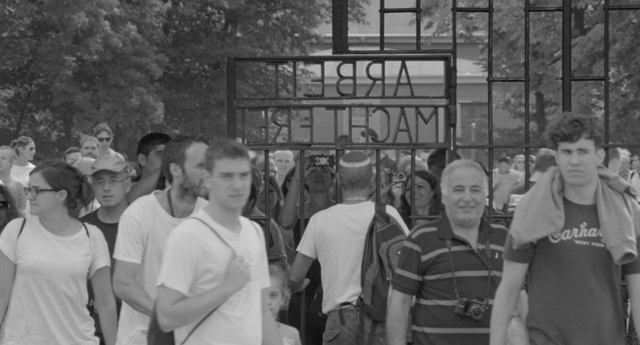 "Austerlitz" director Sergei Loznitsa
Starting like a sketch to the game picture about Babi Yar, Sergey Loznitsa’s observations after the movement of human masses suddenly turned from the sphere of film -documentary to the sphere of Council with his intentional refusal to articulate a clear message in favor of the direct transmission of the experience of a clash with reality. Austerlitz is already a full -fledged videoart, plasma with gray crowds of flankers, bewildered by Zakenhausen or Dachau, it is easy to imagine in a gallery next to the works of Sharon Lockhart, for example. The name of the film refers to the last novel by Zebald, whose hero, a Jew by the name of Austerlitz, in particular, visits a desert memorial at the site of the concentration camp. The memorial in the place of Sachsenhausen, in which the luster removes, on the contrary, is full of crowds of tourists completely confused from the heat and fatigue. Together with visitors, the camera gradually moves from the gate to the Z sector And back to the gate, from where the human stream rolls out in relief. The author’s misanthropic surprise-which generally makes people come here and wanders among the stoves and ditches, posing from desperate boredom against the backdrop of shooting pillars or the inscription “Labor releases”-remained somewhere behind the scenes. On the screen, only a strange, inexplicable, with incredibly picturesque scales picture: ordinary, like on any street of a megalopolis, a summer crowd - only transferred to the laconic locations of the film "Shoa". The notorious "work of sorrow" is as mechanical and impersonal as the Nazi Holocaust machine. However, the patient viewer will nevertheless be rewarded: in the end, one among a thousand equally impassive faces will appear, the one on which the movement of thoughts and emotions will still appear.