
Translated material
The Ministry of Energy of the Russian Federation: Mongolia can reduce the cost of energy imports from Russia
The Russian authorities are working on the development of alternative construction of the hydroelectric power station in the Selenga River basin options for providing Mongolia with electricity, Taiga.info told the Ministry of Energy of the Russian Federation. You can reduce the cost of energy by optimizing the supply schedule.
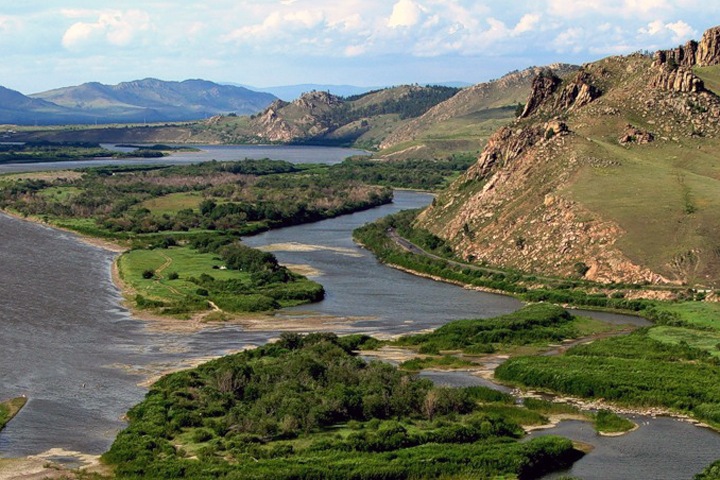
According to the #SPALIKAL project in the press service of the Ministry of Energy of the Russian Federation, various options are considered from the existing possibilities of providing Mongolia in electric energy. But the main one is the dloading of power lines, according to which the supply of electricity to Mongolia has been going on for 40 years. First of all, we are talking about a double -circuit power transmission line of 220 kV "Selenum - Darkhan" (deliveries to the Central Energy of Mongolia, with the Hussionoozersky State Institution in Buryatia).
According to the power transmission line of 110 kV “Chadan - Handagayt - Ulang”, supplies are carried out to the western node isolated from the central node; The volumes there are not large and do not play a big role for Mongolia. The priority for her is the development of the central node, which includes the capital-Ulan-Bator. The existing interstate power lines between the Russian Federation and Mongolia, according to the Ministry of Energy, allow us to increase export supplies of electric energy to 400 million kW per year “without the implementation of additional measures for the construction of energy facilities”.
The maximum supplies from Russia to Mongolia - 414 million kW/hours - was recorded in 2013. But since then, the export has been constantly reduced, to 284 million kW/hours in 2015. According to the “Eastern Energy Company” (“Daughter” “Inter RAO”, the only operator of contracts for the supply of Russian electricity to China and Mongolia), in the nine months of 2016, the volume of electricity exports to Mongolia amounted to 237 million kWh, which is 7.7% higher than for the same period of 2015.
“The increase in the supply of electricity to Mongolia is associated with increased demand for electricity in the country in the third quarter of 2016,” the company explained.
The stumbling block in the issues of export-import is the cost of a kilowatt, which has not been satisfied with Mongolia for a long time. According to some estimates, in 2014-2016, the price of buying electricity for Mongolia increased by about 88%, instead of the usual 12-13% per year.
“The growth occurred due to the dependence of the purchase price of electric energy for export to Mongolia on the economic situation that develops in the Russian electric energy market and power,” the Ministry of Energy of the Russian Federation explained.
According to various sources, Mongolia spent up to $ 30 million per year on the purchase of electricity in Russia. These deliveries went to cover the peak loads in the central energy node, the generation of which is based on coal TPPs. At the same time, not only their specifics affect the cost of the procurement (peak capacities are more expensive), but the fuel component - export from Russia comes from coal GRES in Gusionoozersk, and not from the Angarsk Cascade of the hydroelectric power station in the Irkutsk region.
Nevertheless, the Ministry of Energy believes that everything is in the hands of a neighboring state.
“The Mongolian side, in accordance with the foreign trade contract, has the ability to reduce the price of electric energy imported from Russia, provided that the supply schedule (reducing the share of electric energy supply during power controls and its increase in the rest of the hours, the hourly deviations of the actual balance of electric energy from planned values),” said #Spasibaikal in department.
Questions about discounts and “mechanisms for the formation of the price of buying electric energy and power acquired for further export to Mongolia”, another task of the working group. But earlier, the head of the Ministry of Energy of the Russian Federation, Alexander Novak, said “the price should be market”, since “electricity production, like any product, has its own cost”: “The economy of these projects should be considered. No one will sell electricity at a loss. ”
In general, the Ministry of Energy of the Russian Federation believes that the implementation of projects for the construction of the SHUREN hydroelectric power station, the HPP “Egin-Gol”, the HPP “Orchon”, the Dalgar-Muren hydroelectric power station and others, as well as the water transfer projects from the Orkhon River (Selngeni Pritte) into the Gobi desert, and will really “create excessive high-revolutionary adjustment capacities”.
“But they are unlikely to be in demand in the Mongol energy system. Therefore, the emerging situation with the energy supply of Mongolia, taking into account the experience of the energy markets of Russia, Kazakhstan and the countries of the far abroad, perhaps it allows you to design the further development of the energy system of Mongolia on fundamentally new approaches, expressed in the use of the experience of the use of distributed generation, renewable energy, including small hydroelectric power stations, intellectual energy management of the energy system. These approaches will allow you to create an optimal in power and composition a park of the generating and network complex, which will minimize the costs of its maintenance and restrain the growth of electricity tariffs for end consumers of Mongolia, ”the department said.
The ministry recalled that at Kon - the preservation of Lake Baikal, which is the object of the UNESCO World Heritage, and therefore falls under the corresponding international convention.
It should be noted that the working group includes a whole pool of representatives of energy companies, design institutes, industrial enterprises and scientific institutions. Among them are OJSC System Operator EEC, Rosseti, FSK, Inter RAO, RusHydro, En+Group, Rosatom and NP “Market Council”. The composition of the Hydroproekt Institute (part of RusHydro), ISEM SB RAS and JSC power grid, technoprom export, Ural turbine plant, RETEK LLC, NPO NPORAL and other structures and other structures are also included.