
Translated material
Mowgli syndrome
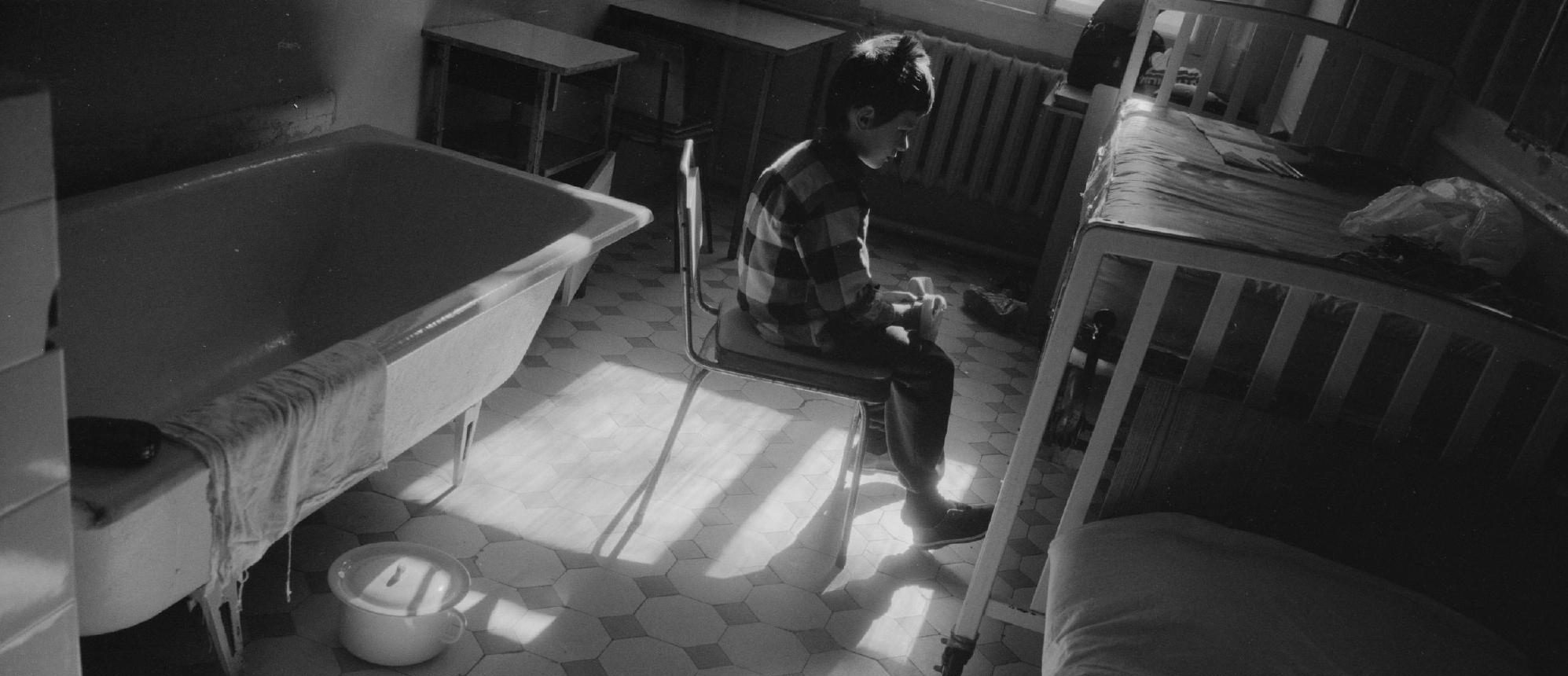
Children cannot stay in hospitals alone, they definitely need nannies
We help hospital orphans collected 4 917 342 R required 4,709,000 rThe collection of funds is over
Once my son had to spend almost a day in hospital boxing.
One. At four years old.
It was an infectious department, and I was not supposed to stay in it in any way. In the box there was a crib with a red rubber mattress and a descending grate, another bed, covered with a diaper “Ministry of Health”, a chair, upholstered in black dermatin, a table and a nightstand. There was a bathtub along the wall opposite, and a large enameled pot, covered with a lid, hid under the bathroom. There were no toys. The huge window, behind which the courtyard and life were noisy, was smeared from below to half the white paint, so there was no court or life out the window.
“Go home,” the doctor told me in a tired voice. -Nothing will happen to him, certainly someone will suit, although we are not paid for this.
- You want to say that there is no nanny for children in the children's hospital? I asked as if it had grown in some other country.
- Want. There is no such position in the state-a nanny, we ourselves somehow get out.
The son cried.
“Go home,” the doctor repeated. - Boy, stop crying, you're big, and cry! There, ”she waved her hand somewhere to the side,“ the refuseniks lie in our country and never cry, and you ...
The word "refusal" scratched the heart, but at that time did not linger - the son, of course, was most important.
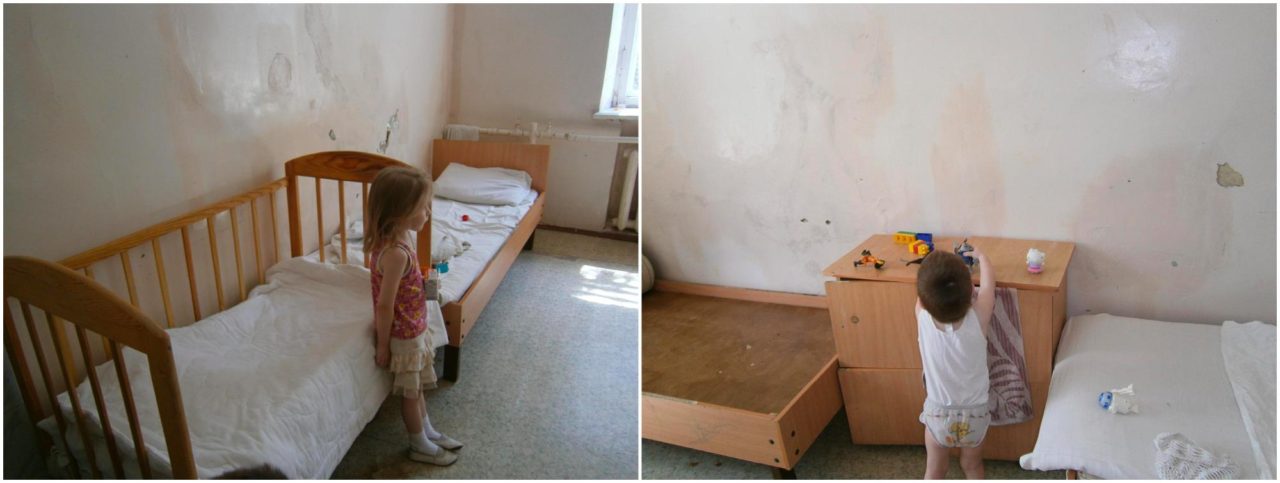 This is how the chamber looked at the Kopeisk hospital before the program “Hospital orphans” came there : public association “Women of Eurasia”
The box was between two exactly the same boxes that were empty. It turned out, for the first time in a life small-yes, small, there are no big ones at four years old! - Not quite a healthy boy was left alone in an unfamiliar treasury room, and even at night. Dysentery and all E. coli in the world seemed to me complete nonsense in comparison with the plague of loneliness.
In the morning, having learned that the diagnosis was not confirmed, I rushed to take the child. The son was still alone in three boxes, looked into the smeared window and howled quietly. He did not cry, namely, howled in a thin voice, and then pressed into me as if a whole life had passed, and not one night, and did not even want to dress so as not to unclench the arms.
He has long grown up and forgot, of course, about this case, and I have long known who the “refusenits” are, only outside the window it changes almost nothing: the nanny (namely nanny, and not nurse!) In children's hospitals, are still not provided for in Moscow or Kamchatka - anywhere in the Russian Federation. I wrote “almost does not change”, because there is still some movement: since last year, children when entering orphan institutions have been examined not in the hospital, as before, but in an ordinary clinic, outpatiently. True, this is far from being carried out in all regions and, in any case, the nanny does not completely solve the problem - there are always sick babies. So the doctors, nurses and naivers continue to "get out".
Sometimes caring people help them. Here's how in Chelyabinsk.
The son was still alone in three boxes, looked into the smeared window and howled quietlyOnce, about ten years ago, Chelyabinsk woke up in the morning to see that unusual billboards hang throughout the city - not about the party and clothes, but about orphans. “There are only a hundred of them, and we are a million! We can help them! " - the advertising shield told the Chelyabinsk residents. In fact, one hundred and thirty -seven babies without mothers were at that time in the children's hospitals of the city ... These were unhappy children, seized from dysfunctional families, refusal from maternity hospitals, pupils of the child’s houses and founding.
Doctors and nurses, of course, treated them, but children had no nannies. None of them played and picked up in his arms to graze, none of them smiled and not agile none of them. They lay with little old men in their dull cribes silently and unearthly and from complete loneliness sucked their own hands, hair, slobbed the stray bed diapers and swayed, swayed, swinging, buttering themselves ... The custody at that time was not very in a hurry with paperwork, and the hospital, it turned out, was the only place where the children could not be sick.
The advertising shield was the result of the joint activities of the Polestory Orphans program to the Public Organization “Women of Eurasia” and the city administration. And he worked. Prior to this, however, the social activists offended the thresholds of different cabinets for two months, whose owners did not notice them point blank, even had to convene a press conference, show photos of children lying on rubberized mattresses without diapers.
But the very first movement towards the hospital orphans was the private initiative of the young mother Yana Zakharova:
“I remember, the first time they collected for children that no one came to, two baggage of diapers, diapers, toys of all kinds - they had nothing in the hospital at all - the heater was bought in the ward, taken, transferred. And the next day, one mother calls from there and says-you are well done, but only the heater at the head doctor in the office, and the nurses took themselves to the scalches ... "
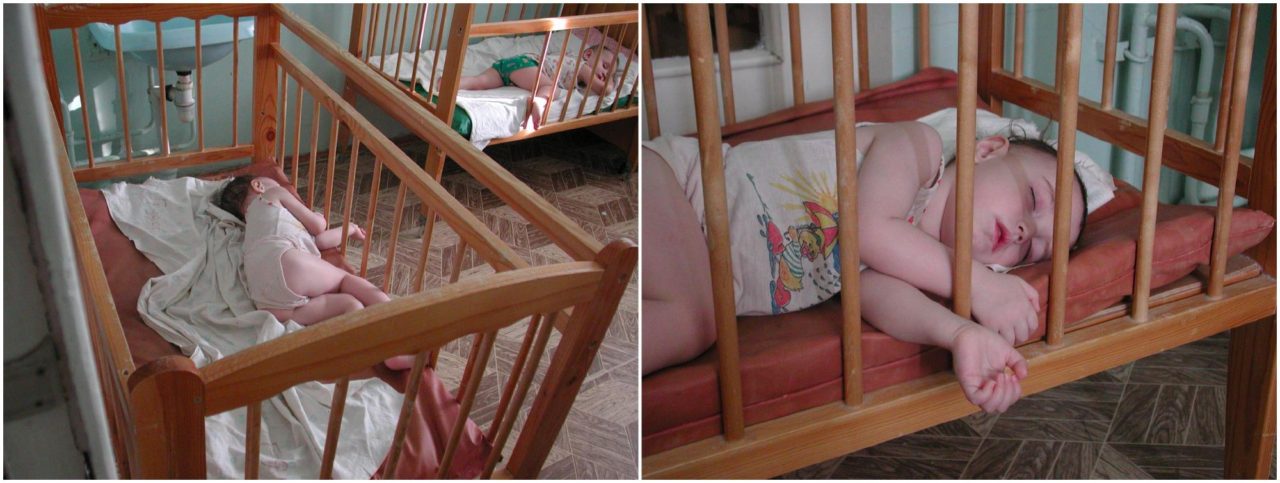 Hospital of the Chelyabinsk Tractor Plant. From these children the program "Hospital orphan" began. They did not sleep on naked oilcloths anymore : public association "Women of Eurasia"
It became clear here that this business was impossible, with the head physician I had to meet and talk, then they decided to identify such children in other children's hospitals in Chelyabinsk, it turned out that some, completely healthy, just lived in hospitals almost a year, such a red tape with documents.
Since this was not provided for the state, not a single hospital had the right (and still does not have!) To hire a full -time nanny, so it turned out that there was no one to engage in normal care, nor the development of children with social status in medical institutions. They were treated as some kind of burden, and even more often-they did not apply to them at all. No one needed them, these sovereigns of children, except, perhaps, medical students who learned to make injections and put droppers on them.
Yana:
“We came and just cried, standing over their cribs, thinking about how nightmare the life of these children begins. I remember someone said: “Well, why do you need these children? They are all missing, let the state help them ... ”And someone also plunged indifferently:“ Why mess with them? Anyway, everyone will go to the organs. ” From such conversations, I only rose a wave of energy, born of pity, empathy and sympathy. And then pity was transformed into the case, because I really wanted to change something. ”
Tatyana Schur, project manager:
“Our unexpected advertisement worked, and the food began to bring to the fund and the Normal food, and diapers and toys. We tried to come to the children as often as possible, waited in the evening when they fell asleep, only then left. And you know, we were not very complained at first. After all, thanks to us, the child began to change, hesitated to be alone, bloomed, emotions appeared - and, of course, when we left, he began to cry, demanding attention. The staff was unhappy, and by and large it turned out to be complete nonsense - the more human we brought to the lives of the kids, the more we interfered with the doctors. And it became clear that it was necessary to organize constant nannies, with volunteers one cannot do. The first money for the salary was given by our English friends ... Then they received several grants, so to this day they brought the project. The authorities of the hometown, alas, took a minimum participation in it ... "
They lay with little old men in their dull cribes silently and unearthly and from complete loneliness sucked their own handsNow in the project "Hospital orphans" there are six day nannies on an ongoing basis.
Here are excerpts from my conversations with them:
“I see once, for a long time: there is a baby on the windowsill, looks at the window. The nurse goes past, asks: "What are you looking at?" He babysit her in response: “I'm waiting for my mother.” And she suddenly likes him down with the words: “There is nothing to watch, you have no mother!” Now, of course, no one is talking to our children. "
“The number of children is greatly fluctuated, now there are eighteen of them, and all in different hospitals, and after a few days it can become several times more. Today I am rushing from the floor to the floor between the Sonya with pneumonia and the stepka removed from the family ... It is ideal, of course, we have a mobile nanny brigade, but these are unrealizable dreams. ”
“We have a special contingent of children, they are all injured. Once they brought a boy of about four years old, dad killed his mother in his eyes. The kid was so afraid that he did not leave because of the curtain. "
And she suddenly likes him down with the words: "There is nothing to watch, you have no mother"“Most of the refusal children are disabled, they are especially sorry for them, and you need to care for them more thoroughly than for an ordinary child, but it turns out the other way around. Life has not spared them anyway, they need to caress and cares a hundred times more, especially when they get sick and get to the hospital, but where is it here ... "
“After all, why did the still hospital staff treat this? Because they understood that there was no one to intercede for them, these are not domestic babies. And we began to complain-both about the attitude, and in which children are often brought from children's institutions, we did not fix before if the child entered the hospital with bruises. Well, who needs extra control? "
“At first, I cried with pity for them, then I set the barrier, saying to myself like this:“ I worked all day, giving them love, care and affection. Now I go home to my children. ””
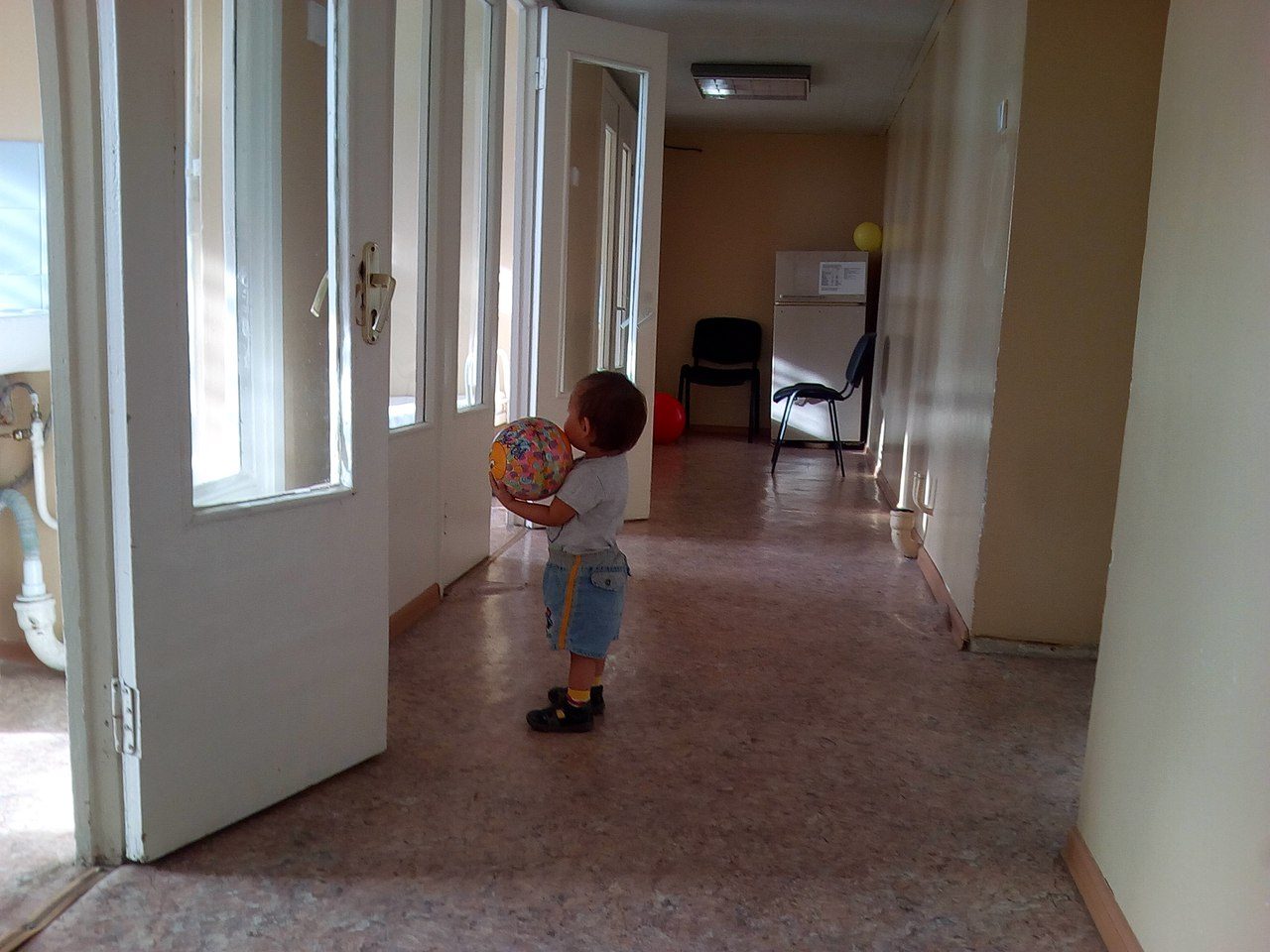 Little Ildar, withdrawn from the family. With him were the nanny Valentina, Rimma Ivanovna and Sasha photo: public association "Women of Eurasia"
“The most beautiful is to see how the child learned something. He didn’t know how to suck - and suddenly you see how he does it for the first time! This is indescribable! And the first words! Steps! I'm fuel from them. I give them care and love, and they are children's spontaneity to me. I am learning to fight for life. Somehow I wandered out because of the failures of the household, and then looked at the children, and I say to myself: “Why are you worried about? In front of you is a child who has neither mom nor dad, but you are an adult aunt. It's funny.” ””
“We had a girl Pauline, very heavy, with cerebral palsy. And she also did not have a sucking reflex. She was fed in the child’s house through the probe, she was launched catastrophically. We removed the probe and just sat near her for an hour, fed. And she began to suck. Herself. And it was a victory. "
“In 2012, I worked as a public nanny in the pathology department of premature and newborns. When I first came to the hospital and saw the kids, a lump stood in my throat. In the ward lay eight refusal, everyone needed a mother’s warm word, affection, love, mother's tender hands, but there was no mother nearby, doctors fought for the life of the kids, nurses, in general, all, except for the most important person ... There are 20-25 children in the care of one nurse, and each needs to give medicines, someone to feed them through the probe or make a pressure. But the largest amount of time takes to fill out the documentation. I know that nurses are trying to devote at least a little time for children, but, unfortunately, this does not always work out. Not because they are so cruel, but because there is simply no time. "
“Once we have one lady in the city administration, refusing subsidies, said that our project is harmful, because the children are accustomed to their hands and then do not give educators in the house of the child of peace. For some reason, state-owned people do not know how to think about children that they dispose of as their own. They would have known - half of the problems would have gone by itself and forever. "
Not so much at first and it is necessary, but they do not receive this either“Honestly, I will not like abandoned children in hospitals. I see this because they do with the children when we are not - on weekends, holidays and at night. In the morning I come to a shift, I shoot a diaper from the baby, and he weighs one hundred and sixty grams and flows from it - it means that they have not been put on in the evening and have never changed it. ”
“The most difficult thing for me was at first to get used to their psychological and physical characteristics. Children from the child’s houses are non -normally crying, but often stand on all fours and sway, calming themselves. Several days pass - they come to life, look - already his eyes burn and smiles! Not so much at first they need, but they do not receive this either. I love them all, I didn’t get burnt out professionally, I have my own approach to each, I know who loves something - put one on a barrel, and sing a song to another. ”
“Some are very tiny, even with a clothespin on the navel. And the most pleasant thing when they are adopted directly from the hospital. This is indescribable. "
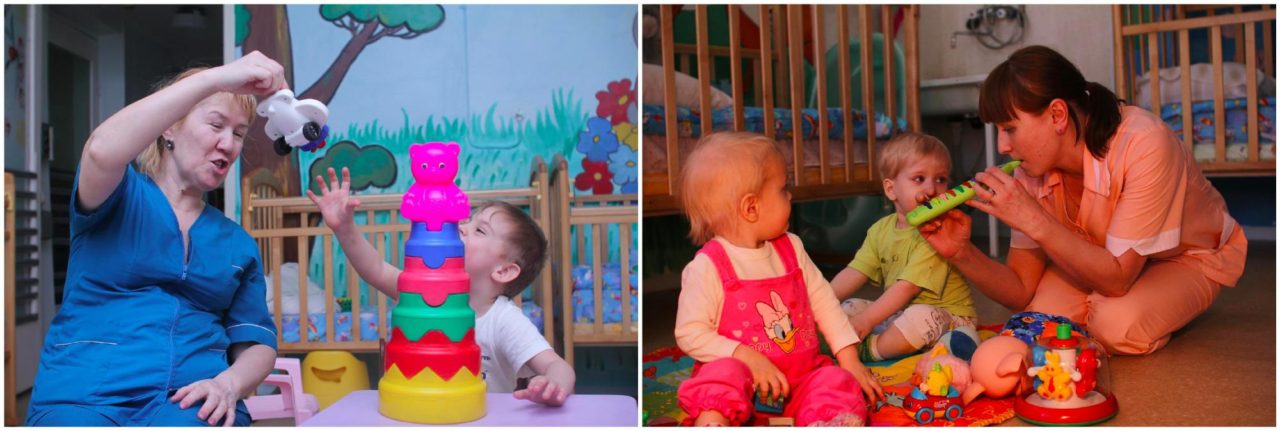 Left: Rimma Ivanovna with a baby with cerebral palsy
Right: nanny Julia, Hospital ChTPZ photo: Zhenya Kozikova
Tanya Schur at the end of our conversation says:
“” You are engaged, ”they threw them in the face several times in high offices as an accusation. And I do not argue, we are really engaged by hospital orphans! Do you know why? Because the baby, who has not received his share of parental hugs, lullabies and kisses, grows up with an almost incurable injury, earns a kind of “Mowgli syndrome” - pathological emotional deafness, huge difficulties in communicating with other people, a complex of fears and spiritual callousness. Any psychologist will tell you this without hesitation. "
It will still seem to someone that the presence of a nanny in the hospital is more from the area of lyrics, pink snot and pampering. But you only imagine for a second that it is your baby after surgery and dressings that there is no one to take in his hands, press, kiss, reassure in order to somehow alleviate the pain, and that this is your baby lies alone in a bed with a lost sheet, and this is your little blue-eyed cries and swing himself from side to side and reassure. Only human, uncontrolled by the state, can help here.
With its kindness, the state is somehow not very in a hurry: public organizations have tried many times to achieve changes to the law on medical care so that the nanny in the hospital was put a little man without a mother, just as he was supplied with air, water and medicines. But the state does not notice these attempts, the lonely children's crying, rushing from all hospitals of our great country through the black darkness of the night and the icy loneliness of the day, does not hear these attempts. The state of the state is deaf.
Please become engaged and you are engaged, help the project, extend kindness. Without it, hospital orphans will become completely bad. 100, 200, 500 rubles - any amount is very important. More important - monthly donations. In January, New Year's lull will come when charity activity decreases. If you arrange a regular donation right now, the project will continue to work in the new year.