
Translated material
Not knowing either pity or right
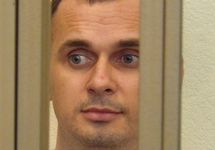
President Vladimir Putin refused to release the Ukrainian director Oleg Sentsov, sentenced to 20 years in the fabricated case of the Crimean Terrorists. It is reported by Fontanka.ru.
At a joint meeting of the Council for Culture and Art and the Council of the Russian Language, Kingorezhiser Alexander Sokurov addressed the president. "I have a heartfelt request - let's solve the problem of Oleg Sentsov. He is convicted of 20 years of camps. The director must fight me at the film festival, but not sitting in our northern prison," Sokurov said.
The president refused. “We must proceed from the fact that we live in a legal state, and issues of this kind should be decided by the judicial system. Sentsov is not convicted of creativity. But because he took on completely different functions, he actually devoted his life to terrorist activities,” Putin noted. “It’s not in his position, not what he thinks about the events in the Crimea. The matter is in his intentions and the preparation of illegal actions.”
Sokurov in response said that Sentsov can be forgiven "in Russian, Christian and emphasized that" there are no deaths on it. "
“Thank God there isn’t, but they could be. I know that the question is sensitive and I will keep in mind,” Putin said.
On August 25, 2015, the collegium of the North Caucasus District Military Court sentenced Sentsov to 20 years in a strict regime, passing with him in the same case of Alexander Kolchenko - by 10 years ( 
On October 21, it became known that the Russian Ministry of Justice refused Ukraine to issue Sentsov and Kolchenko. Officials referred to the fact that both political prisoners after the annexation of Crimea became citizens of Russia, and therefore, according to Russian laws, even if they have citizenships of other states, they are not subject to time to retire to these countries. In fact, however, neither Sentsov nor Kolchenko became citizens of Russia. Both political prisoners have repeatedly emphasized that only Ukrainian citizenship have.
Thus, the legal procedure for transferring the political zones to their homeland was failed. Moreover, it remains the opportunity to use political mechanisms. It was their involvement that allowed another Crimean prisoner to return to their homeland - Gennady Afanasyev, as well as the prisoner of war, Nadezhda Savchenko and the defendant of the “spy” case Yuri Soloshenko.
Sentsov is serving a term of IK-1 strict regime in Yakutsk. The administration of the colony repeatedly placed the political prisoner in a schizo .