
Translated material
Enjoyable torture
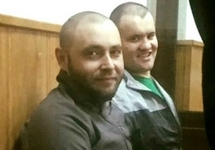
The judge of the Central District Court of Simferopol Sergey Demenok refused to return the main “February 26 case” to the prosecutor’s office, fabricated against the Crimean Tatar activists. It is reported by "Crimea. Realities."
Lawyer Alexander Solodkov substantiated his petition that the investigation could not explain the "essence of the accusation." “The indication that the side of the defense is not clear the essence of the prosecution actually indicates the contest of evidence and the circumstances of the case,” the judge Demenok found.
The judge also refused the media representatives to conduct photography during the meeting. “In connection with the tense relations of Ukraine and Russia, this may create a danger to them (participants in the process. - Ed.), If they want to get into the territory of Ukraine,” said the state prosecutor Yegor Ivantsov.
At the next meeting, the court listened to two witnesses who formed in 2014 by members of the pro -Russian organization "People's militia of Crimea". “The police did not beat me with me, they were simply squeezed. So that the Crimean Tatars were destroyed or captured by the buildings, I didn’t see,” one of them showed. The second witness stated that he had not seen any of the accused on a rally on February 26, 2014.
The next court hearing will be held on December 6. During the process, the parties expect to interrogate more than 100 witnesses and victims.
On November 18, at the first meeting on the merits of the case, Ivanov announced the indictment in the case. Part 2 of Article 212 of the Russian Criminal Code (participation in riots), which provides for from 3 to 8 years of the colony, is charged with all the defendants. Demenok asked the defendants the question of the attitude of the charges. Ali Asanov said that he was not clear to him the essence of the accusation, he does not admit guilt, but refuses to testify in the process.
Mustafa Degermendzhi also acted in a similar way. He noticed that he does not understand the qualification of an incriminated crime, in particular, a violation of the order of which country is imputed. In addition, the Political Zayk pointed out a number of statements that are indicated in the indictment in general and unknown. During the first process in the case, Degermmenji noted, he was precisely such an accusation, but it was precisely because of his incompleteness that the Supreme Court of the annexed Crimea returned the case to the prosecutor's office . However, no adjustments were made to the text of the conclusion, Politzek emphasized.
The remaining three of the defendants - Eskender Kantemirov, Eskender Emirvaliev and Arsen Yunusov - admitted that they fought with the anti -Maidan people from the Russian Unity and the People’s Militia party, but did not agree with the qualification of their actions as "riots."
During the first process in the case, Degermmenji also denied guilt. Meanwhile, Asanov was reported to take the same position as the rest of the accused .
The “case of February 26” was fabricated in the first half of 2015 on the fact of a protest campaign at the Verkhovna Rada of Crimea on February 26, 2014. Then the protests of the Maidanovites, most of whom made up the Crimean Tatars, tore the vote planned in the region’s parliament on the appointment of an illegal separatist referendum. The reason for the initiation of the case was clashes between the supporters of the Euromaidan and the participants in the rally of pro -Russian forces, at the same time passed by the parliament. According to the Russian prosecutor's office of the peninsula, during these clashes, "two people died, 79 bodily harm of varying severity were caused."
Initially, there were eight defendants in the case. The affairs of the Escender Nebiev and the Yunusov Taleta were allocated in separate proceedings. They were convicted by conditional terms.
The eighth defendant is the deputy chairman of the Mejlis of the Crimean Tatar people Akhtem Chiygoz. He became the first arrested in the case and is the main accused - unlike the rest of the defendants, he was charged with part 1 of article 212 (organization of riots), the sanction of which is from 8 to 15 years of the colony. It is known that Asanov and Degermmenji offered the release from the pre -trial detention center in exchange for the conspiracy of Chiygoz, but both Politsyk rejected the proposal.
Initially, Chiygoz also took place in the main "case of February 26". The first process in the case began in December 2015 in the Russian Supreme Court of Crimea, but a month and a half later, the judicial board, chaired by Viktor Zinkov, returned materials to the prosecutor's office. Such a decision was made at the request of Chiygoz, who indicated the vague of the charge against him.
On July 20, preliminary hearings were held as part of the repeated process. Judge Zinkov divided the "case on February 26" on them, highlighting the materials in relation to Chiygoz in a separate production. He explained his decision by the fact that according to Article 31 of the Russian Code of Criminal Procedure of the case under Part 1 of Article 212 of the Criminal Code, the courts of regions, while cases in part 2 of the same article belong to the jurisdiction of district courts. The defense appealed the division of the case, but on September 13 lost an appeal .
Hearing on the merits of the Chiygoz case, the new collegium, chaired by Zinkov, began before consideration of this paper. The testimonies of the "victims" interrogated in the process indicated for the fraud in the case . The trial of Chiygoz continues.