
Translated material
The head of the Central Bank warned the State Duma against the illusion of "rapidly returning well -being" with an increase in oil prices
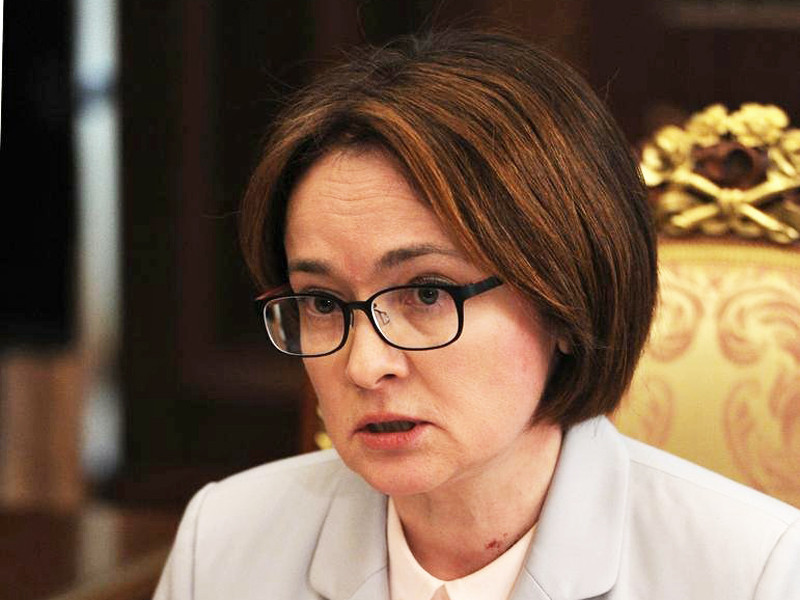
The head of the Central Bank Elvira Nabiullina warned the State Duma against the risk of illusions of well -being in case of growth in oil prices. At the same time, she admitted that these prices would continue to exert pressure on the Russian economy, and predicted the preservation of the low rates of its growth. She stated this on Friday, December 2, speaking in the State Duma.
"The dynamics of oil prices will continue to be a serious risk to the Russian economy due to the low diversification of the Russian economy," Nabiullina said (quote for TASS).
“I would like to especially focus on the fact that the increase in oil prices, according to our calculations, will not cure the internal problems of our economy, but can create the illusion of rapidly returning well -being. Therefore, we do not call this scenario optimistic,” she warned, referring to the increase in oil prices related to the OPEC agreement on reducing its extraction.
Nabiullina noted that without changing the structure of the economy, the resumption of growth will be uneven and can not affect all sectors of the economy. As a result, potential growth rates will be limited 1.5-2% per year, while it is necessary significantly more. “There are no easy recipes for restoring the ability of the Russian economy by rapidly, but you cannot put up with a ceiling of 1.5-2%,” she said.
At the same time, as Interfax reports, the head of the Central Bank does not expect quick changes in the structure of the economy and predicts that its growth rate will remain low. "Sharp changes in the structure of the economy have not yet occurred, it takes time. The growth rate will be in a positive area, but will remain low, unfortunately," Nabiullina said.
As noted by RBC , here Nabiullina repeated the warning in mid-2016, the ex-Minister of Economy Alexei Ulyukaev, which was now arrested, was not managing to fit into the “new normality”, Russia risks getting stuck at the average annual GDP growth rate of 2% (the “new normal” ex-minister called the “Crisis as an element of the business cycle”, “This The new normality is in the sense that this is a very long time, ”he explained this term back in 2011).
"These pace for the Russian economy is unacceptable, as they lead to a decrease in our share in the global economy, loss of competitiveness, a fall in the standard of living of the population relative to most countries," said Ulyukaev, calling a very real task "to the trajectory of four percent growth of GDP."
Russian President Vladimir Putin, in the 13th message to the Federal Assembly, connected the inhibition of the economy with the internal problems of the country - a shortage of investment resources, modern technologies, professional personnel, insufficient development of competition and "flaws of business climate". He instructed the government to develop a plan for the development of the economy until 2025 so that at the turn of 2019-2020 the Russian economy reaches the growth rate of "above the world."
Nabiullina spoke about a decrease in inflation and stock of bank capital
Nabiullina said that inflation in annual terms slowed down to 6% and will continue to decline until the end of the year. "Inflation has already decreased significantly. The growth rate of consumer prices has now slowed down to annual terms of up to 6% and, according to our estimates, will decrease a few more by the end of the year. Let me remind you that last year the peak of prices in annual terms reached 16.9%," she said (quote for TASS).
The head of the Central Bank also said that the regulator in 2016 expects inflation in Russia 2.5 times lower than in 2015. "According to the results of the year, we expect that inflation will be 2.5 times lower than at the end of last year. It is already comparable with the low level that the inflation reached in 2011-2013, but we have examples when inflation dropped and then rose. The volatility of inflation is also a factor of uncertainty for business projects, so we need not only to achieve its one-time reduction, we need to be low to be low Inflation has become a long -term base of price stability, ”said the head of the Central Bank of the Russian Federation.
According to Nabiullina, Russian banks have a stock of 2.3 trillion rubles in order to increase the lending of the economy. “The capital of the banks increased by 1%, and the capital adequacy indicator is 12.7%in a comfortable zone with a minimum level of 8%. This means that banks have a reserve of capital in order to increase lending - we estimate it at about 2.3 trillion rubles,” the head of the Central Bank said.
At the same time, she noted that in January - October 2016, lending to the Russian economy decreased. "The economy lending is not yet stable for now. Over 10 months in general, it has decreased by 1.5%, taking into account cleansing of the influence of the foreign exchange rate," said Elvira Nabiullina.
In November, speaking at a joint meeting of the State Duma committees on the financial market and the budget and taxes, Nabiullina predicted three more complex years, during which there is no need to expect significant restructuring of the economy and increasing its potential.