
Translated material
Viktor Shenderovich - about freedom of speech, satire and politics
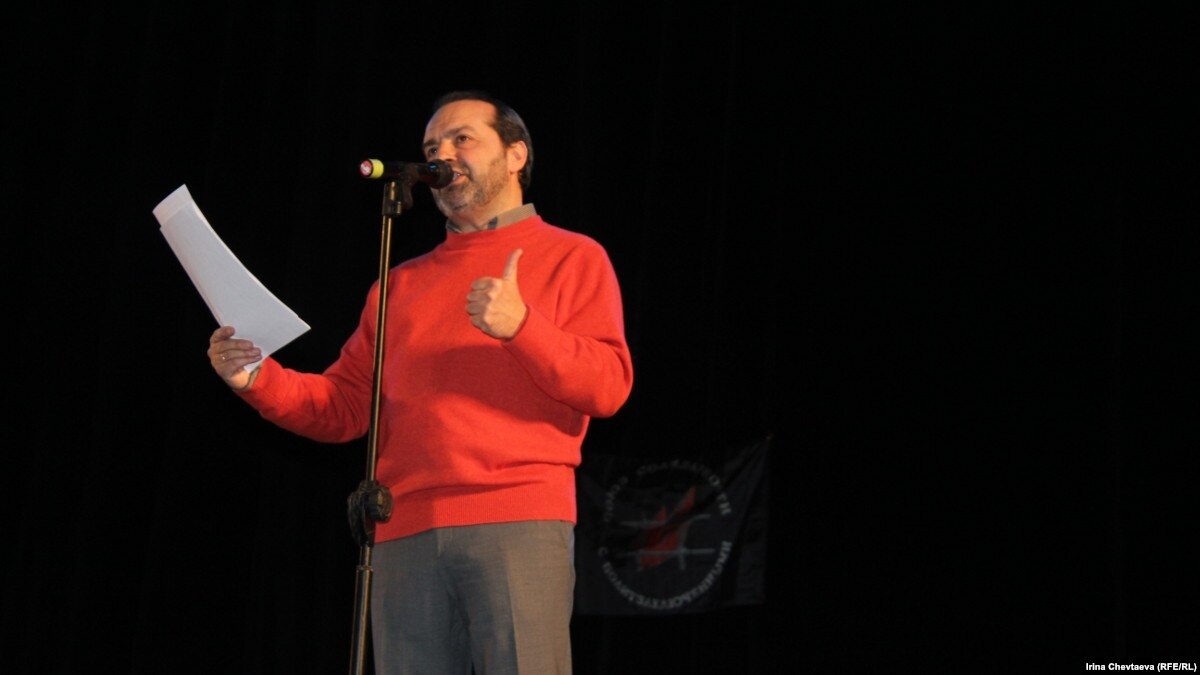
Excerpts from the program.
Conversation from the cycle " Artist and Politics ." Satir writer Viktor Shenderovich:
- In the USSR it was impossible to say: you know that, you go with your communism, I will write about love. It was impossible to declare this as a declaration. Today, the authorities even welcome this - this is such a good tone. Ah, you know, this is such a dirt, this is your policy, fu, fu, fu. Well, how can we, we are artists. And when the “artists” say, they declare: Ah, we are artists, so we don’t need to do with the political prisoners, with the murders, with the regime, with the Nazis, we don’t need, we write, we are artists, I remember that there were such artists by little things: Swift, Tolstoy, Chekhov, who were not shy about the current political problems and I couldn’t call it “I can’t call it Silence. " It seems to me that this is one of the biggest vulgarities of today, this is the rolling of the eyes and the reasoning that I am a big artist and “go away - what a peaceful poet cares before you!
A completely interview with Viktor Schnderovich here.
In the second part of the program:
From the history of the musical avant -garde in Russia.
Vladimir Tarnapolsky (composer):
- Here, in Russia - a breakdown, a break. Here the artist lives like a volcanologist next to a hill. This is inspiring. The fact is that the concept of beauty is changing. What become beauty, automatically transferred from the 18th century to the XX century? They become kich. The art moves up. What stands still moves down. Composers who are now repeating Vivaldi are very popular. As for the Russian avant -garde, it is almost gone. This is the problem. Here his nationality is difficult to feel. Several outcomes occurred. In the early 90s of the last century, all my generation and people are a little older, left. This is a 10-12 person. Prior to this, starting from the 70s, one of here left one at a time: Pyart, Shnitka, Denisov, Gubaidulina, Shchedrin. The strongest composers live in the West. It turns out that at least two generations have left. Then there was even more tragic. I have been teaching at the Moscow Conservatory since 1992. 99% of my graduates - in the West. Why? There is nothing for them here. None of them can play here. They do not have a festival, they have no public. If our country someday live according to global laws, we will not be able to play Symphony Schnita, nor Gubaidulin, or Denisov, nor Pyurt, nor now Shchedrin, because they all belong to other publishers and we need to pay a lot of money for execution.
"My favorite records" with the poetess Ekaterina Gorbovskaya