
Translated material
Everything will be fine
Mark Zakharov fulfilled his dream - he set the "Oprichnik Day" based on Sorokinsky prose
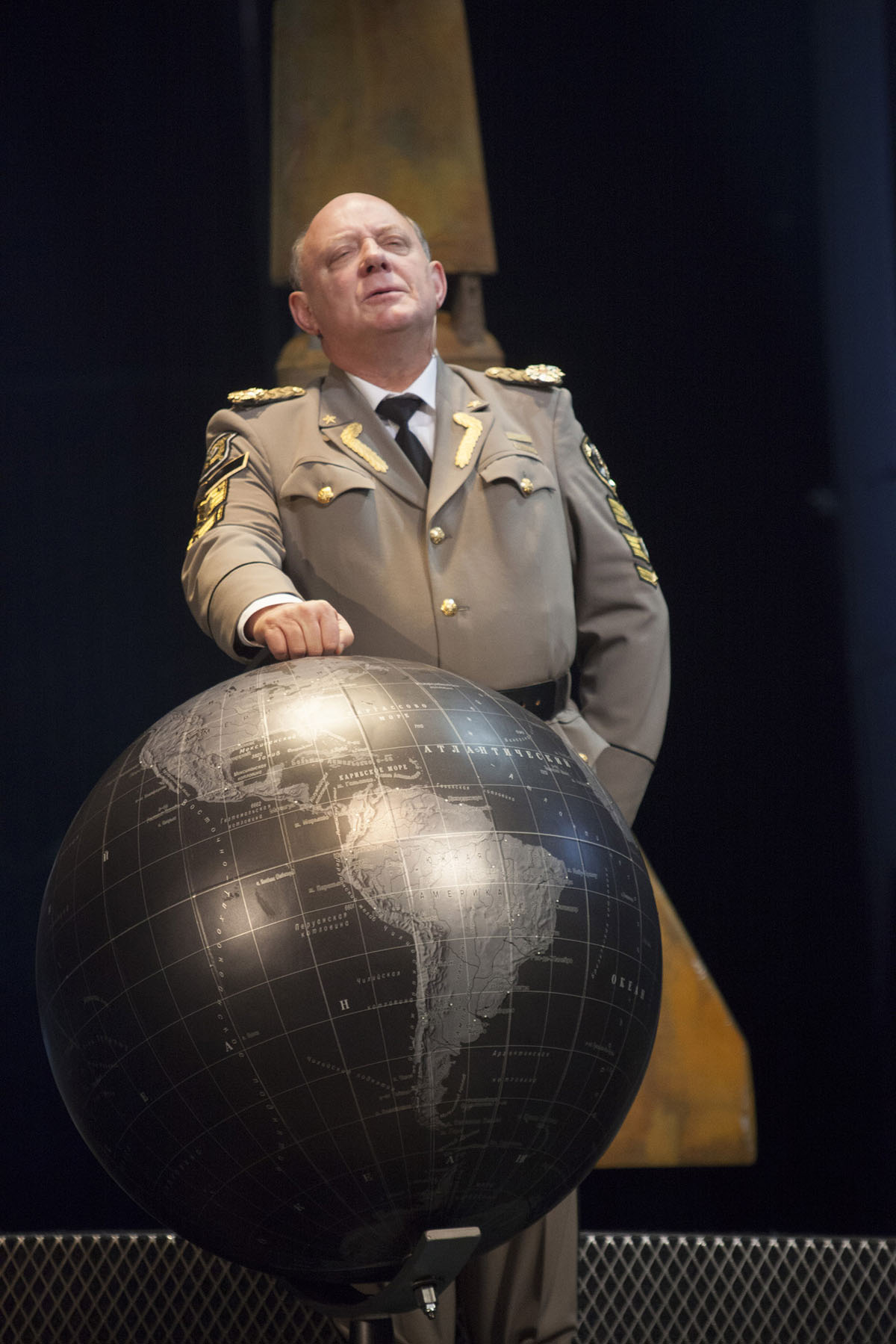
The famous anti -utopia Vladimir Sorokin, who has become the Bible of our time, celebrates his decade this year. And all these ten years we have been living inside the “Oprichnik Day”, experiencing some masochistic pleasure from murderous coincidences with reality and now and then crying: “How he guessed!” For all these ten years, Mark Zakharov was obsessed with the idea of transferring the “Oprichnik Day” to the stage of the Lenkom, he wrote and rewrote the staging, consulted with the author, but still could not come up with an accurate stage form, which would be congenial to the book. It turned out that it did not need any special form: Mark Zakharov read Sorokin with his own eyes, the eyes of a man who created “Tilya” and “Juno and Avos”, “Blue Horses” and “Barbara and heretics”, “Memorary Prayer” and “The Jester of Balakirev”.
Irony and hope
After the departure of Grigory Gorin, a long -standing co -author and like -minded person, Mark Zakharov composes all his performances himself, without resorting to the help of other playwrights. The director was accustomed to treating literary material freely, connecting different works, and different genres, and even different writers in one performance. Mark Anatolyevich does not recognize any illustrative, sofa film adaptations, each of its performances based on classical literature is an author’s statement, independent and self -sufficient, created without any obligations to the author and certainly in no way serving the source. And although the basis of anti -utopia - this is how the genre of this performance is determined on the poster - two novels by Vladimir Sorokin (fragments of "telluria" are added), the Lenkomovsky "Oprichnik Day" is a completely new theatrical text, written by Zakharov over Sorokinsky prose, rejection and re -phantasis.
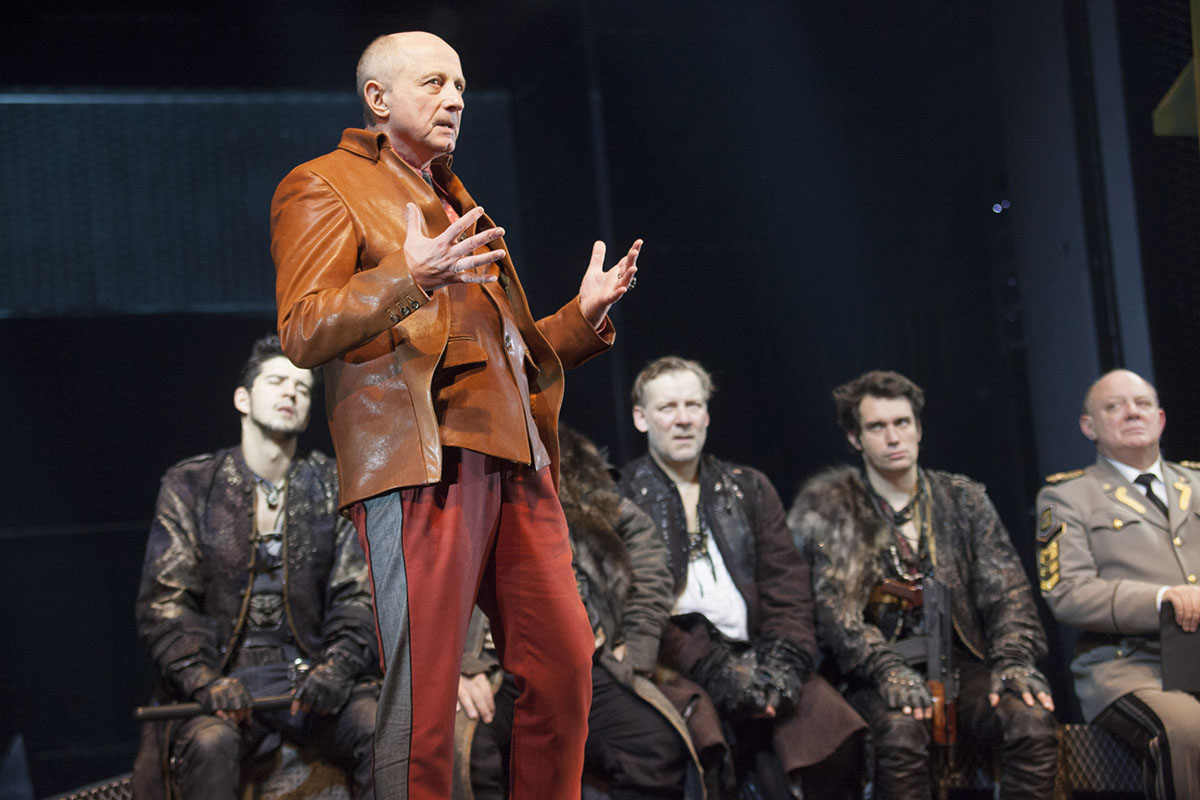
The future froze in rusty winged missiles, depending in the air, like giant phalluses, in Chinese hieroglyphs on a huge gas pipe stretched through the stage, in bear skins scattered in the royal chambers, and in smoke from book conflagrations
Irony and hope - perhaps the main thing that distinguishes the stage version from the literary source. Sorokin acts as a pathologist, he reveals the dead body to establish the cause of death. Zakharov prefers to deal with living people - even if weighed down by a deadly diagnosis, but alive and warm -blooded, vulnerable, doubt. He gives them a chance of survival, gives time for repentance, gives a corridor to escape.
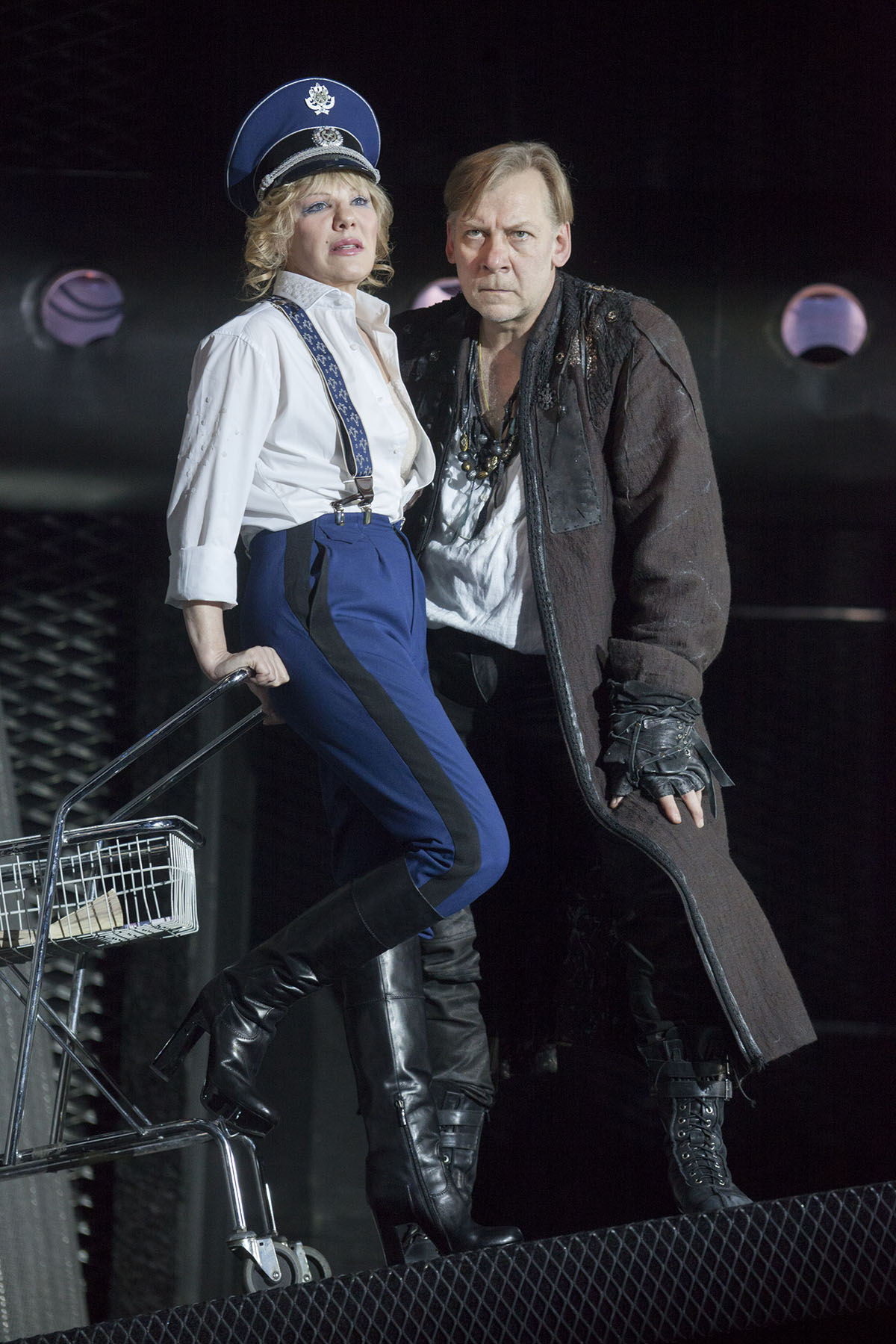
Therefore, the main character - the “indigenous” oprichnik Andrei Komyaga (Victor Rakov), a ruthless punisher, killer, rapist, looter, corruption, addict and lecher - appears before us in a romantic image of a repentant sinner, an epic hero, transformed by love for a bold rebel, the wife of the enemy of the people Kunitsyna (Alexander Zakharov).
Love wins everything - one of the main motives of the performance, as the same “Hallelujah of love”, executed as an act of repentance and forgiveness in the final “Juno and Avos”. The lyrical heroine of Alexandra Zakharova is almost a Madonna, the Virgin, a star, a guardian angel that has lost the hero who has lost his vice. She returns to him the lost feelings, selected by the sovereign service, she clarifies his mind and warms his heart, she gives him strength and courage and leads him out of darkness, as a captive lanzelot from the paws of the dragon. For the sake of love, for the sake of a crying baby born for the future, which is not, but which is not yet too late to change.
Tsar and nail
The future is difficult - and even the clairvoyant Praskovya Mamontovna (Tatyana Kravchenko) confuses in the visions between the end of the world and its beginning, asserting, however, that all heresy is in the works of Russian classics and plays of modern playwrights, who were still outraged by the apple -fingered. The future froze in rusty winged missiles, hanging in the air, like giant phalluses, in Chinese hieroglyphs on a huge gas pipe stretched through the stage, in bear skins scattered in the royal chambers, and in smoke from book conflagrations. This future does not carry any threat to the world, it only testifies to self -destruction, self -destruction, like a loop of suicides.
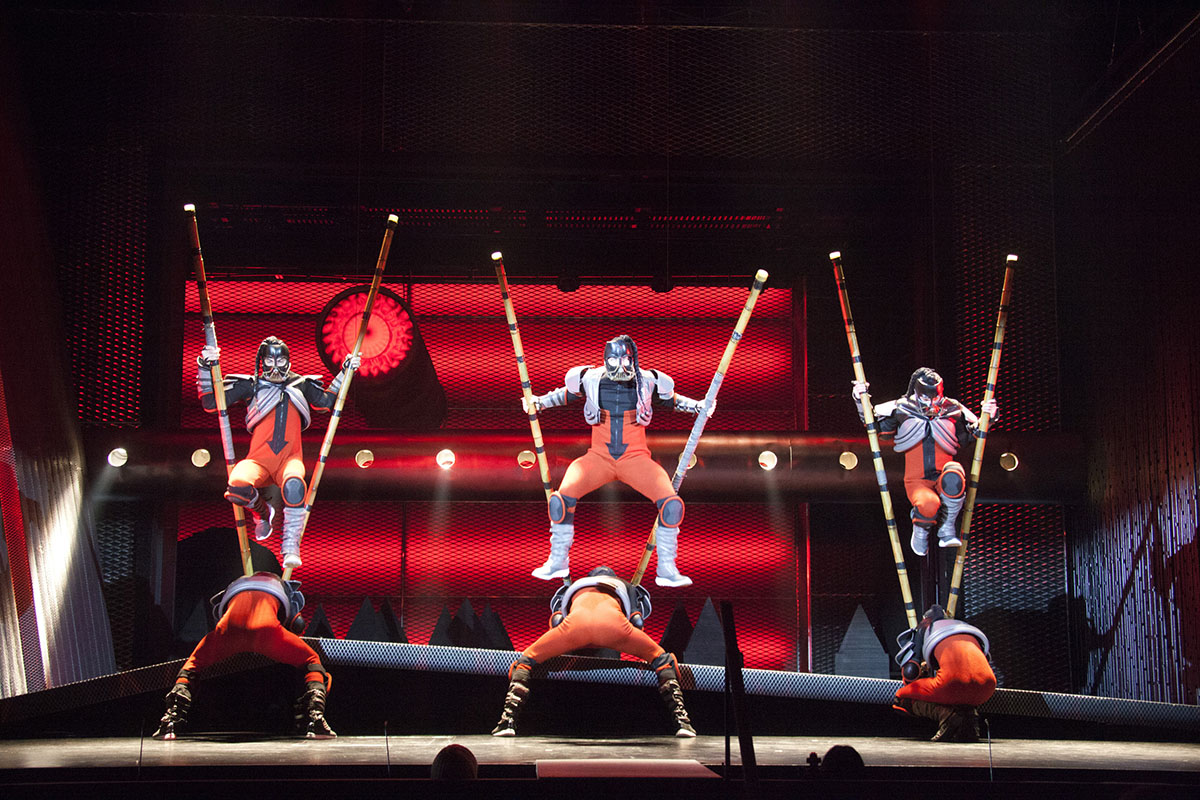
But can there be a different future of the country that is ruled by a fool who surrounded himself with even greater fools?
Sovereign Plato Nikolaevich performed by Dmitry Pevtsov is a libsical, fairy -tale character, a mixture of King Gorokh with Kashcheye Immortal, who does not cause fear or squeamishness. The boyars-instruments pretend that they are afraid of him, and tremble, stuttering and even fainted very funny. The head of the oprichnikov Batya (Sergey Stepanchenko) - a good -natured fat man - recoups at journalists, whom he calls “packets”, chasing them like an ensign on a parade ground, and dreams of a nail to tellurium as a higher award. The tellurium nails - another sign of the future - symbolize eternal pleasure and liberation from all possible chimeras: conscience, shame, morality. Citizens with a nail driven into their heads do not notice how huge arrows of the Kremlin chimes are frantically spinning back, their future rushes into the new Middle Ages with the speed of a cruise missile that has lost its target.
The great comforter
Mark Anatolyevich, of course, regretted us. He turned into laughter everything that was terrified in Sorokin’s novel. And he does not writhe, and does not wheeze at the loop the hanged on the gate Ivan Kunitsyn, and does not force his white -born wife to half death. And the whole Russian people do not sit on the drugs, driven over a huge great Russian wall that fenced off Russia from the whole world. And the guardsmen of Count Urusov do not kill by a Chinese drug. And do not quilted with rods in the frontal place of enemies of the people. And they do not please each other in the bath, lined up with a shameful caterpillar, the servants of the sovereign. No sex, no drugs, no rock and roll. Neither gold sterlets that bite into the veins and explode the brain, stupefied from round -the -clock torture, executions and glory.
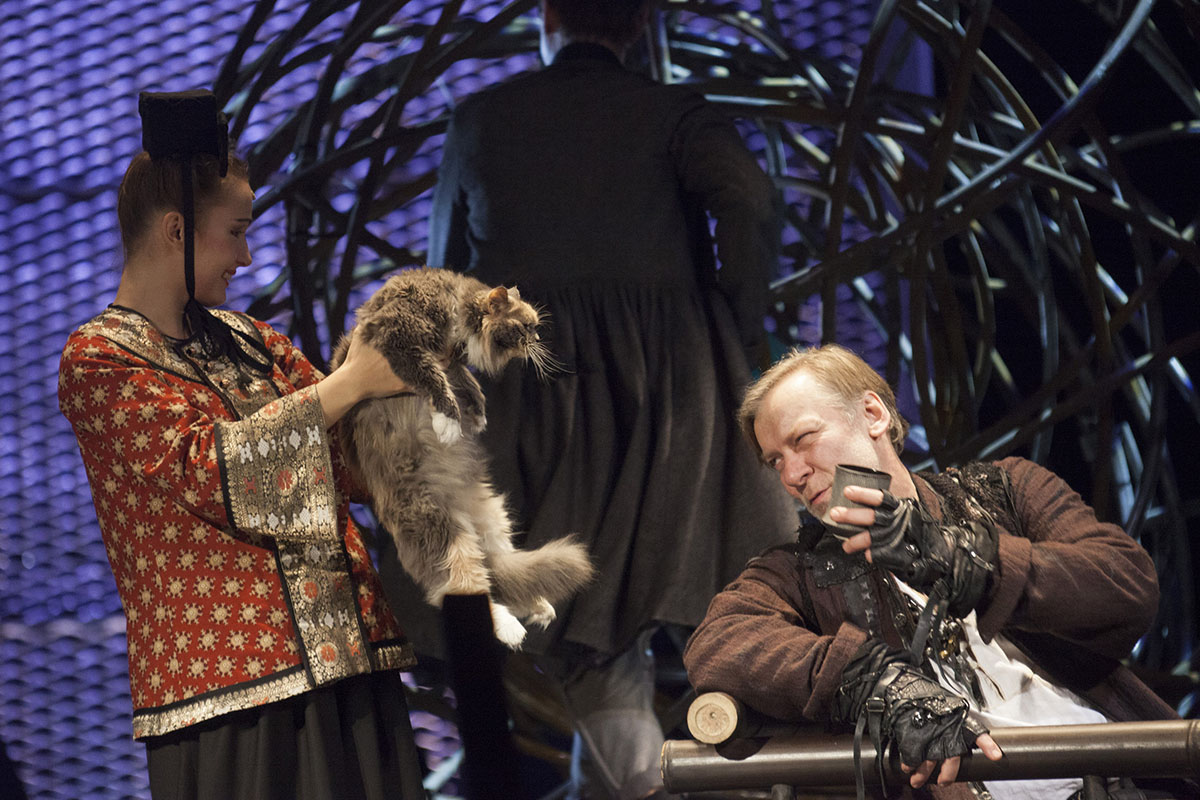
Russia Sorokina is the revived the world of Bosch, it is an epic horror, this is the Arcanar that Alexei German was not afraid to reproduce in his cinema, "it is difficult to be a god." The world that is unbearable to look at, and not everyone is able to withstand such a reflection in the mirror.
Generously furious Zakharov in his "day of the oprichnik", the power looks miserable, stupid, caricatured. Deprived of sacredness and demonism, she is not able to inspire real respect or fear
Mark Zakharov set Sorokin as a Schwartz, like Gorina, choosing a laughter against the dragons with the main weapon. In his warning to the performance, the director himself calls Sorokin a new and wonderful comedographer, and his prose is an evil shocking satire. Generously furious Zakharov in his "day of the oprichnik", the power looks miserable, stupid, caricatured. Deprived of sacredness and demonism, she is not able to inspire real respect or fear. In this mocking attitude, even some disappointment is guessed - both in the celestials themselves, and in the people demonized them.
Mark Zakharov shot the gloomy film enthusiasm “Kill the Dragon” in 1988, and as it seems now, this was still not written by Sorokin, the very “guest day”. Thirty years later, Zakharov again records the future, which in front of his eyes becomes the past.
Auto: Flagzander sterine