
Translated material
Paints on oilcloth
The Pushkin Museum for the first time in Russia will present a large -scale exhibition of the Georgian avant -garde of the first third of the twentieth century
The exhibition opening the other day in the department of personal collections of the museum on Volkhonka is more than 200 works of painting and graphics from museum and private collections of Russia and Georgia: the works of Niko Pirosmani (Pirosmanishvili), Lada Gudiashvili, David Kakabadze, Alexander Bazhbeuk-Melikova (Melikeyana), Elena Akhvdian, Irakliy Gamreklya, Irakli Peter Otsheli and Zigi Valishevsky, as well as materials related to other outstanding figures of Georgian culture, rare books, newspapers, posters, sketches of scenery and films. The exposition covers the first thirty years of the XX century - the most vivid and at the same time tragic era in the artistic life of Georgia. These were the years of the close relations of the two cultures, when young figures of the Russian avant -garde could be found in Tiflis almost more often than in St. Petersburg. The future futurist Vladimir Mayakovsky is traveling to Moscow from Kutaisi, the Brothers Zdanevichi, graduates of St. Petersburg University and the Academy of Arts, and the freeist poets Alexei Kruychy and Igor Terentyev inspire the Georgian avant-garde artists, the supporters of Zauma in poetry-throughout the last century, Georgia were made for Russian poets, and for Russian poets, and Igor Terentyev. artists, philosophers by their home, where they resorted to in difficult times and always found understanding and support: Mandelstam, Pasternak, Zabolotsky, Yesenin ...
Naive genius
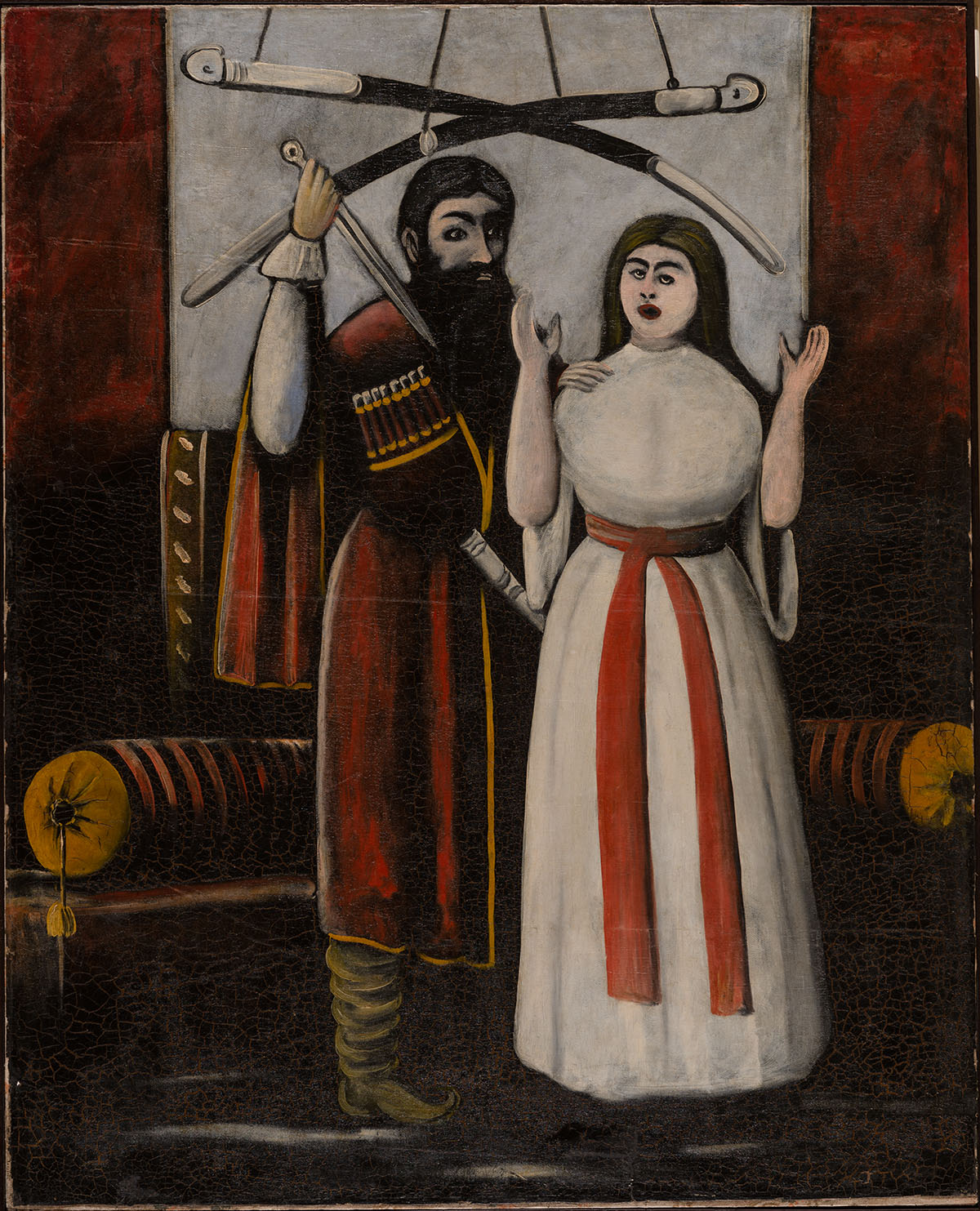
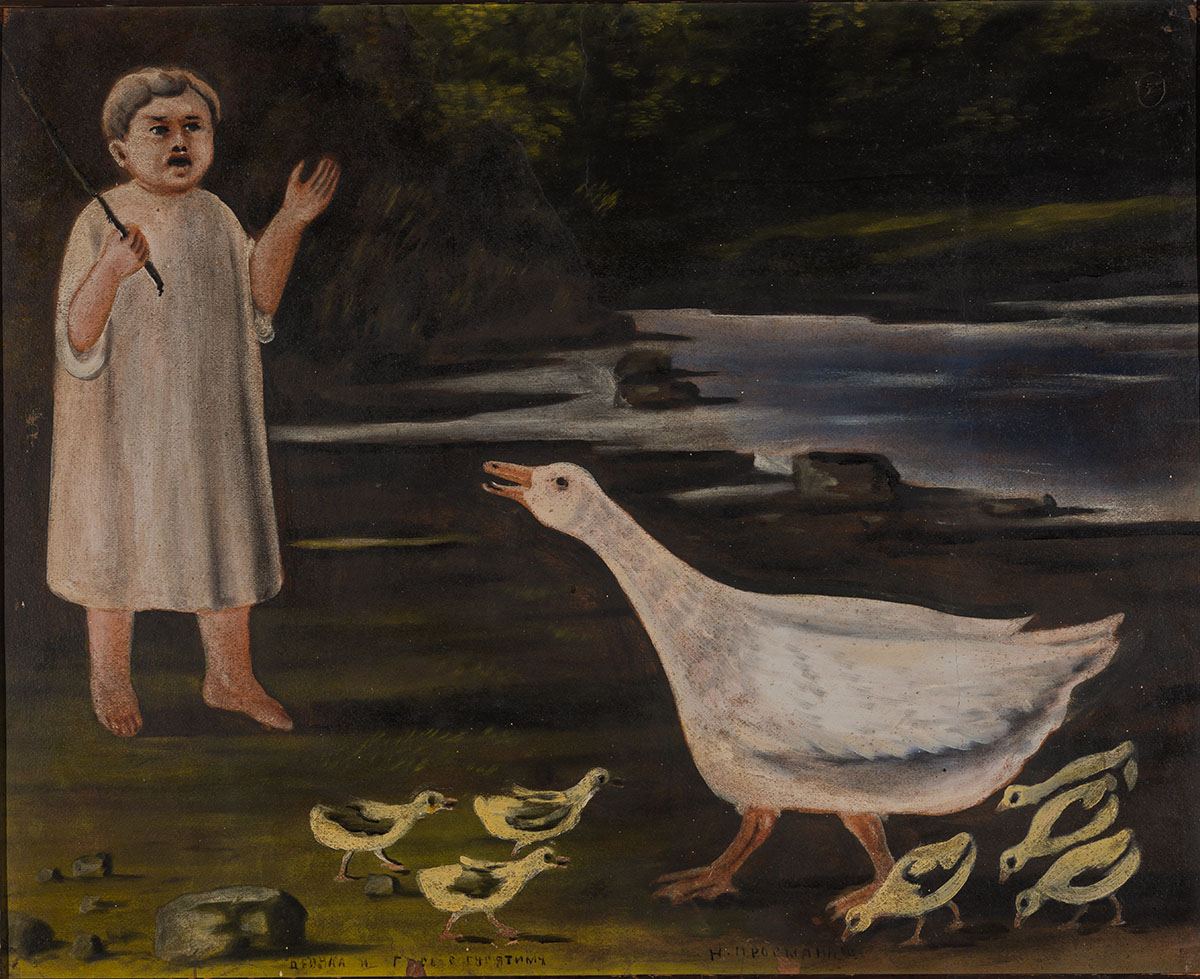
The official name of the exhibition is “Georgian avant -garde. 1900-1930. " In fact, we are talking about 10–20 years of the last century. Perhaps the brightest history of this period was the opening of the great painter Nico Pirosmani, a man who has become a legend during his lifetime. Among its masterpieces at the exhibition will be represented by “Shepherd in the Burke”, “Girl and Husry with the Gusytes” (1917), “Brother and Sister”, “Portrait of Ilya Zdanevich” (1913). In 1912, artist Mikhail Le Dantu, Tifliser, Futurist Ilya Zdanevich (NT wrote about him in No. 42 of December 14, 2015) and his brother Kirill opened the work of Pirosmani first Russian and then the European public. They were the first to compare the work of Pirosmani with the works of the famous primitive, Frenchman Henri Russo, around whom in the beginning
The 1900s united Pablo Picasso, Henri Matisse, Andre Deren and many others. For Georgian artists, the “new” generation of Pirosmanni’s painting became, if not a source of inspiration, then an example of pure art free from “academic inertness”.
The history of the discovery of Pirosmani resembles a detective and is quite poorly known. If at first the paintings of Pirosmanni, which the Brothers Zdanevichi were looking for and bought everywhere, cost almost nothing, then later the spiritualists began to demand significant amounts for them. Konstantin Paustovsky said that with him there was a case when buying a picture of Pirosmani put the whole family of Zdanevichi on bread and water.
In his midst, Pirosmanishvili enjoyed a stable reputation of a mentally unstable person with whom it is impossible to deal. This was partly facilitated by his allegations that he sees saints, and his brush “writes itself”. The main epithets addressed to him were depressingly: “Seven Fridays in the week”, “Not from this world”. For the most part, Pirosmani wrote his own manufacturing paints. There was no material, and therefore he began to write on the only one that was always at hand in every, even cheapest, dukhan - on a simple oilcloth removed from the table. The oilcloths were black and white. Pirosmanni wrote, leaving where it was needed, unnecessary pieces of oilcloth.
And then another time came. In 1918, Pirosmani, despite his fame, no one bought it - there was a revolution in Georgia, and there was no money. Of the more than two thousand works of Pirosmani, about 300 were preserved, not a single wall painting survived. Of the signs that Niko wrote for the dungeons, in winter they made pipes for the bourgeois - eyewitnesses recalled that on these pipes it was possible to see the inscriptions or the remnants of the paintings.
Pirosmani died in poverty, from hunger. For several days he lived in a cold basement with a friend, they forgot about him, and when they caught himself, the artist almost did not breathe. In the hospital, where he was taken, they made an unnamed record: “On April 7, 1918, a man of unknown title was taken to the emergency room, the poor man, in the view of the age of 60. The policeman Ivan Cheadupzze from Antonovskaya Street delivered ... in serious condition, with edema of the whole body, with a weak pulse, unconscious, and after a few hours, without entering consciousness,” died. The body was buried in the Kuki cemetery of St. Nina, in the far corner, designated for the homeless. The exact place is never defined.
Methods of belief
The exhibition in Pushkinsky was conceived as picturesque, although for those years the combination of painting, poetry, prose, theoretical texts, and book publishing was very characteristic. Mayakovsky was a poet and artist, the Brothers Zdanevichi-artists and writers, Mikhail Le Dantu-the inspirer of the literary and artistic group of the futurists "Besteen murder." During the war, Le Dantu was drafted to the front and on August 25, 1917 fell from the steps of the train, which fell under fire. His bride later wrote to Ilya Zdanevich in Paris: “He was not killed in battle, but leaving the whole series of battles in which he commanded the regiment, became a victim of an accident with the train ...” In August 1918, in the premises of the Bohemian Tiflis “Fantastic Kabbak”, Ilya Zdanevich read a report on the late friend and later. Emigrations, devoted him to his memory his most important Dadaist book - Lidantu Faram, published in Paris in 1923 under the head of “41 °”. The vulture, by the way, did not come out of nowhere.
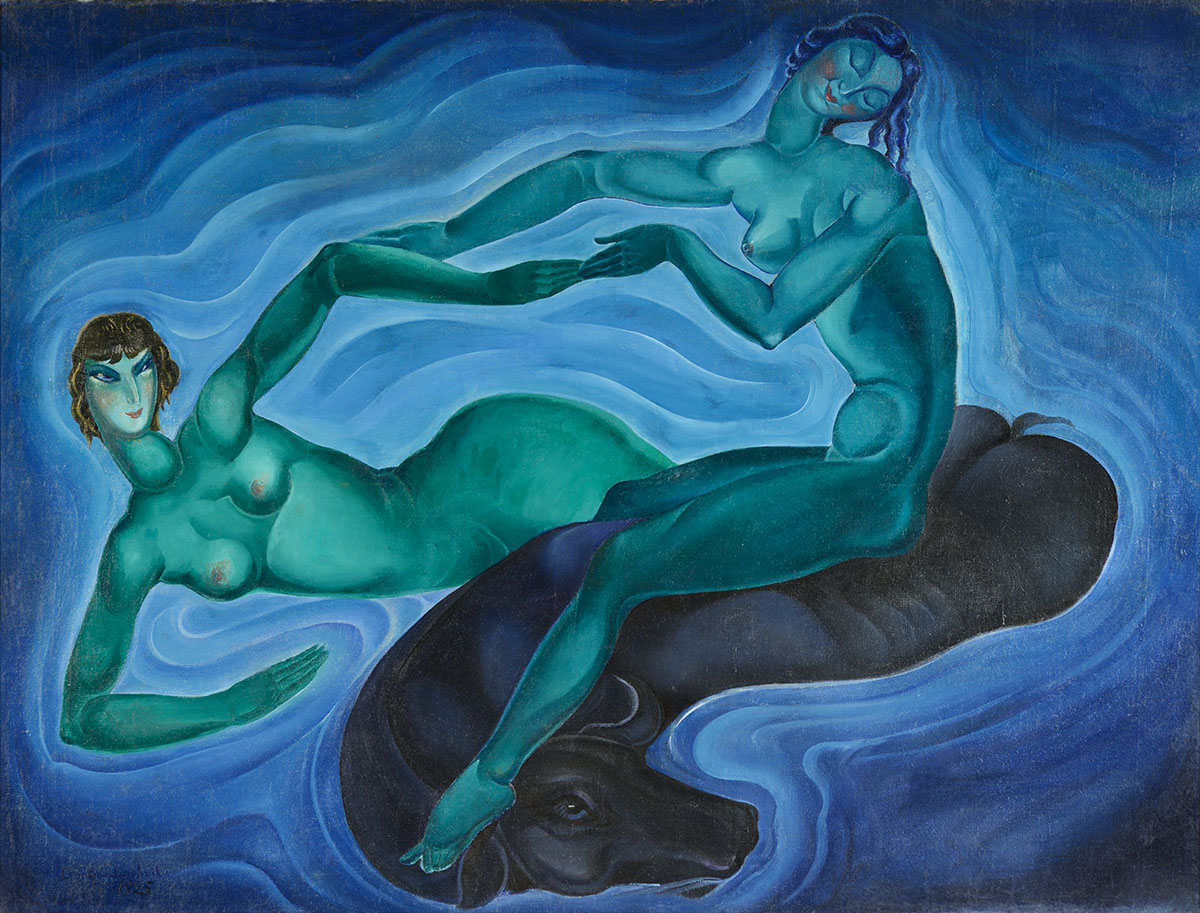
The 1920s in Georgia was the time of futurists who replaced the Symbolists. Many exhibits of the exhibition are devoted to this topic. “Forty -first degree” was the name of the avant -garde group of futurists, formed in Tiflis in early 1918 by Moscow poets and existed until 1920. Its members - Pucks, Terentyev, Ilya Zdanevich - called themselves "the ironic duet of three idiots."
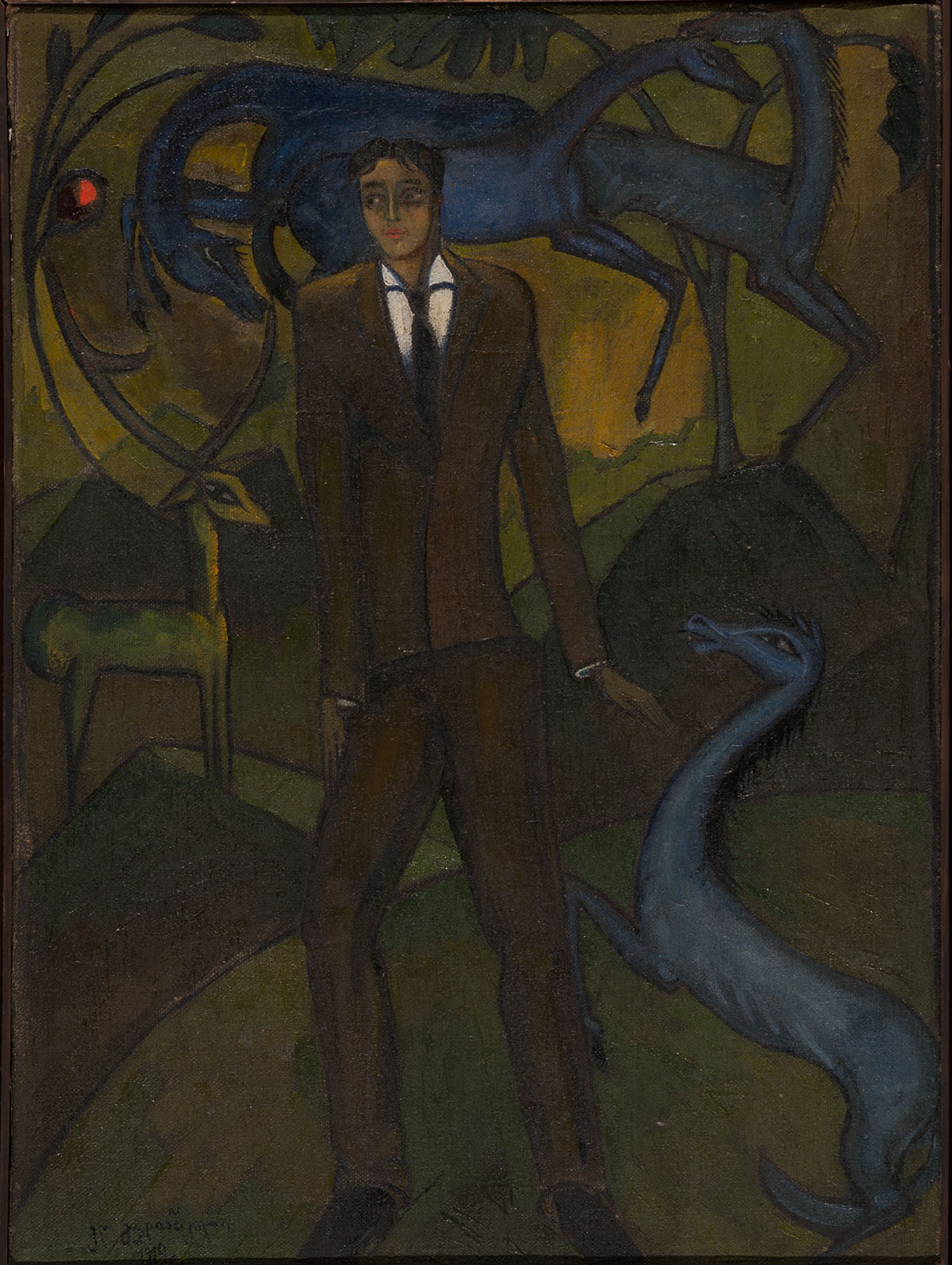
And in March 1924, another group of futurists was created - “H2SO4”. Its participants chose the opponents of the symbolic poets from the association “Blue Horns”, created by the poet Paolo Yashvili. At their concerts, they arranged actions that sometimes openly echoed with the “chemical” name of their group. It all started with the fact that on May 5, 1922, at the evening of poetry “Bolshabitsa”, dedicated to the national holiday of Georgia-the Day of Poetry, the poet Semyon Chikovani announced the manifesto of the futurists “Georgia-Fenix”-this was the beginning of the movement for new art. In response to Chikovani’s performance, the “Bolshaders” tried to resort to physical “methods of persuasion” - in young futurists, who were then 19–20 years old, tables and chairs flew, but the “young” stood.
The view of the futurists was to match the manners: instead of ties, they wore fish or radish, folds on trousers were smoothed out on the side
However, the futurists themselves did not disdain shocking, on the verge of hooliganism, shares. So, for example, one of the evenings, the poet Nikolai Chachava carried bottles with fetid liquid. He hid the bottles in different places of the hall and opened them during the evening. When he was arrested and delivered to the police, he began to read his futuristic verses there. At the other evening, futurists ruined air with hydrogen sulfide. When they were kicked out of the hall, they climbed into the trees and began to recite from there. The view of the futurists was to match the manners: instead of ties, they wore fish or radishes, folds on trousers were smoothed out on the side, the chachaba often wore a jacket backwards. Lilia stuck out of his boot, the other was drawn on the poet's cheek. In general, everything is like Moscow futurists, where Mayakovsky, Kamensky, Krushenkhi, Larionov set the tone.
Native Mountains
However, despite the historical offensive of the futurists in the early 1920s, symbolist poets could also be reckoned with the avant-garde-in any case, they relate to the same era in art, which is indicated by the Pushkin Museum at the Poster of the exhibition. Yes, and the political repressions that began soon equalized in the rights of both. The poet-symbolist Titian Tabidze was shot in 1937-he was then 47 years old. That is, at the beginning of the Georgian futuristic paper he was not yet thirty - like most futurists.
In 1937, Tabidze's creative evenings were very successful in Moscow and Leningrad, and at the end of the same year he was arrested. It is significant that the reason for the poet’s arrest was his refusal to testify against a friend of childhood and youth, poet Paolo Yashvili (1895–1937), who was accused of espionage in favor of foreign intelligence. By that time, Yashvili himself was no longer alive - he shot himself, unable to withstand bullying and mental stress from the expectation of arrest. Tabidze had a choice: on the one hand, Beria personally, at that time, the first secretary of the Central Committee of the Communist Party (B.) of Georgia, offered him his protection if he signed paper with prosecution testimonies, on the other hand - inevitable arrest and execution. To Beria’s proposal, the poet answered this way: “If I sign, nothing of what has already been done and written is made of me.”
10 years before his death, Tabidze wrote the following lines:
... Sing the native mountains in chorus, -
They went to death now -
I even then reproach
I will not blame the native land.
Do not demand more from the poet,
All bullets to I have to spend on me
And I will be from the sky for you
Call the blessing.
(August 1927, Kobuleti. Translation of Boris Pasternak)
Photo: Private collection; Assembly of Iveta and Tamaz Manasharovs/Press Service of the Pushkin Museum. A.S. Pushkin