
Translated material
Confiscation in the law
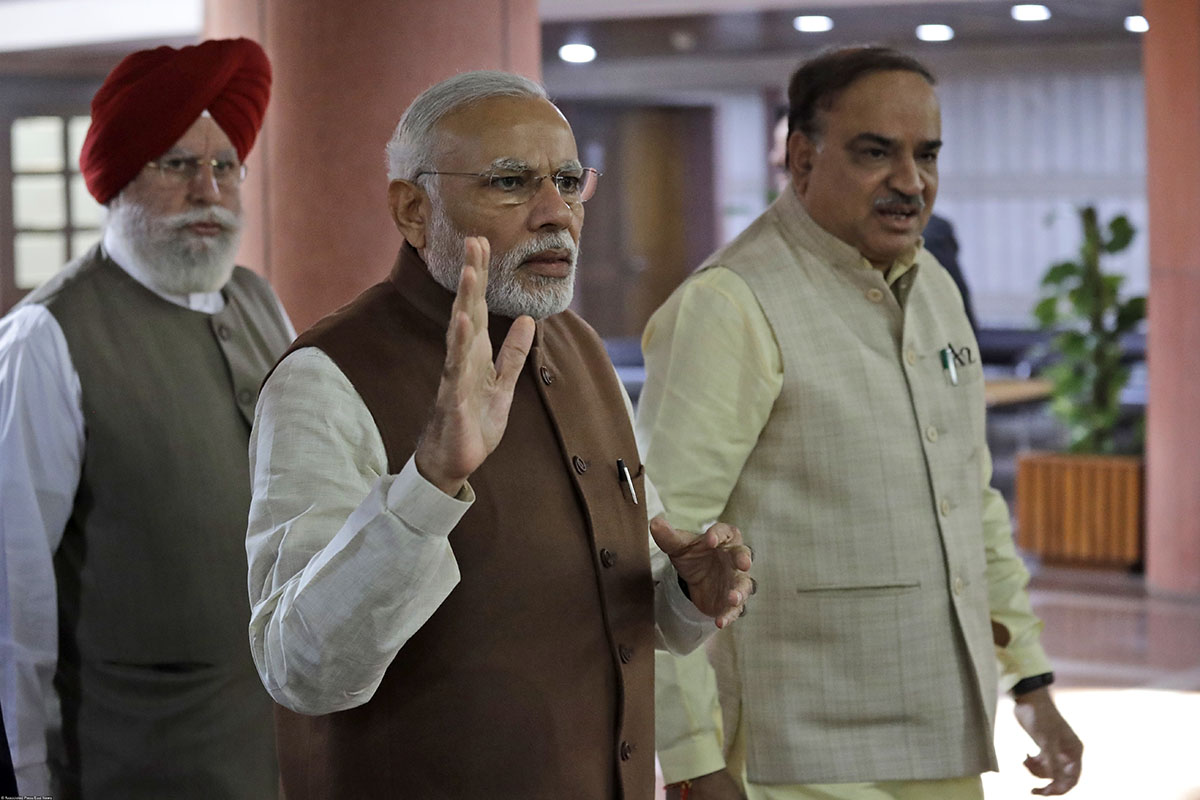
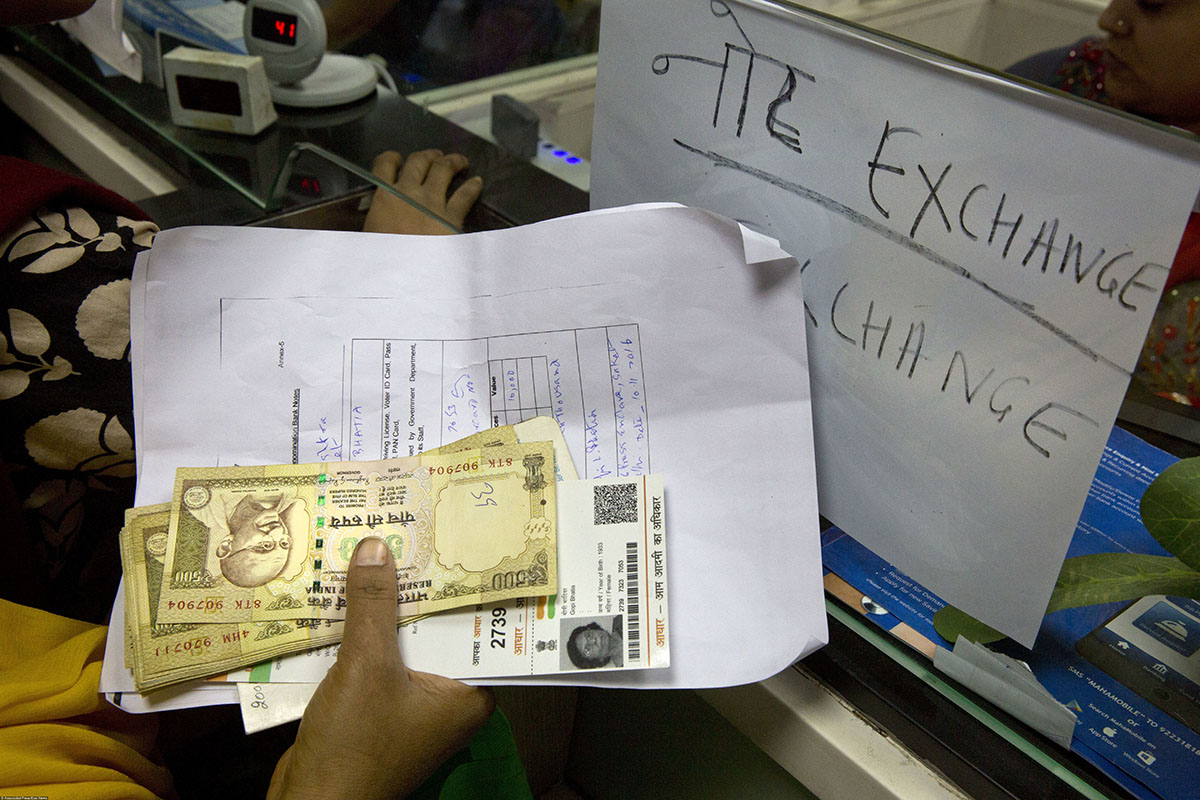
The seizure of bills of 500 and 1000 rupees (about 470 and 940 rubles), which “starting from midnight” become illegal, the Indians declared Prime Minister Narendra Modi in the evening of November 8. Starting from November 9, a small number of old banknotes (approximately 1800–4200 rubles) could be exchanged for a new -sample bill. The Indians should have time to put the rest of the cash before the new year on a bank account, that is, transfer to non -cash form. Who did not have time - he was late. Forever. And another nuance: if the amount of over $ 3600 was not previously declared, its owner will face a fine of 50-200% of the amount in the account, and the money cannot be withdrawn within 4 years. “This is the most stringent change in the monetary policy undertaken in the world over the past few decades,” the ex-Minister of Finance of the United States Lawrence Summers reacted to the steps of the Indian authorities.
Non -held shock
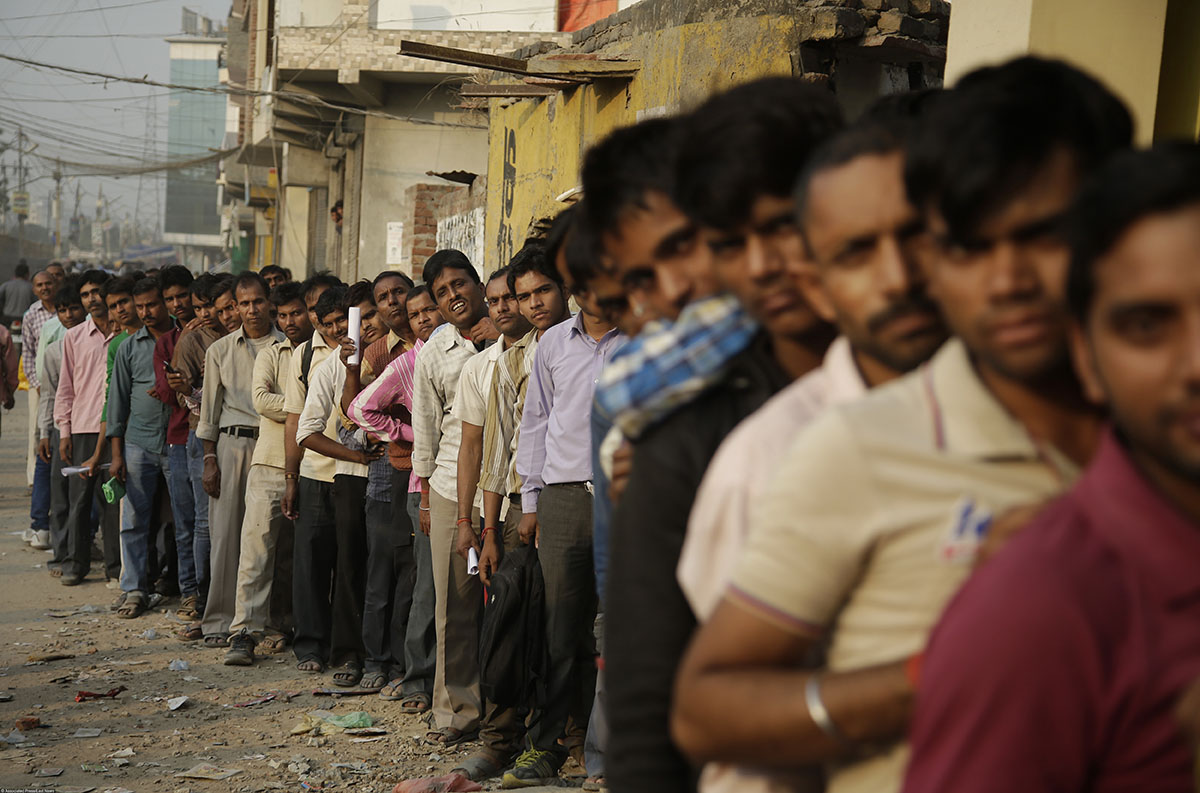
The Indians are just starting to get used to banking cards: with cash, 87% of cash transactions in the country are made, and according to PWC, even 98%. Therefore, observers describe what is happening in India as a shock and chaos: ATMs are empty, and huge lines are being built to the fact that they work, it is impossible to pay for anything, economic activity in the country is paralyzed. The money supply was reduced more than in the USA before the Great Depression. Left with unnecessary money, the poor Indians spent them on paying for electricity debts, and the rich - on the purchase of Rolex watches, writes Bloomberg: only a day after the denomination, some boutiques fulfilled a monthly sales plan. But then the sales got up.
In the absence of money, agricultural products are traded on a barter basis, falling, according to the online publication of The Wire, by 40–80%. The skin production for shoes fell by 40%, car sales by 27%. Many employers in the shadow sector are trying to pay off the employees of old banknotes, but they refuse to accept them. Although over the past 5 years, banks have opened accounts for tens of millions of Indians, 50–70% still do not have a bank account. In India, there are only 7.8 banking departments for 100 thousand people - much lower than the average ID level (13.5 - according to the World Bank). In India, Internet banking is not particularly developed: only 23% of Indians have access to the Internet. And payments from a mobile phone in the move, according to MasterCard, only 5% of the population.
According to Ambit Capital, over the coming months as a result of denomination, the growth of Indian GDP will decrease from 6.8% to 3.5%. The previous level of money supply will be restored at best in six months
Not without human tragedies. One small clerk in the State Bank of India committed suicide, writing in a suicide note that the money that he had been accumulating to his daughter’s wedding, but did not have time to declare, turned into empty pieces of paper. Three more people died from a heart attack after unsuccessful attempts to exchange old bills for new ones. And a completely monstrous case - the death of a baby whose parents could not find 100 rupees of a new model to pay for the hospital - doctors did not accept old money. The Citizen edition has already counted 70 deaths, one way or another related to denomination.
In order to soften the consequences of demonetization, officials approved a list of transactions for which by January 1 you can pay old banknotes: fees for seeds, payment in hospitals, for playing a wedding, etc.
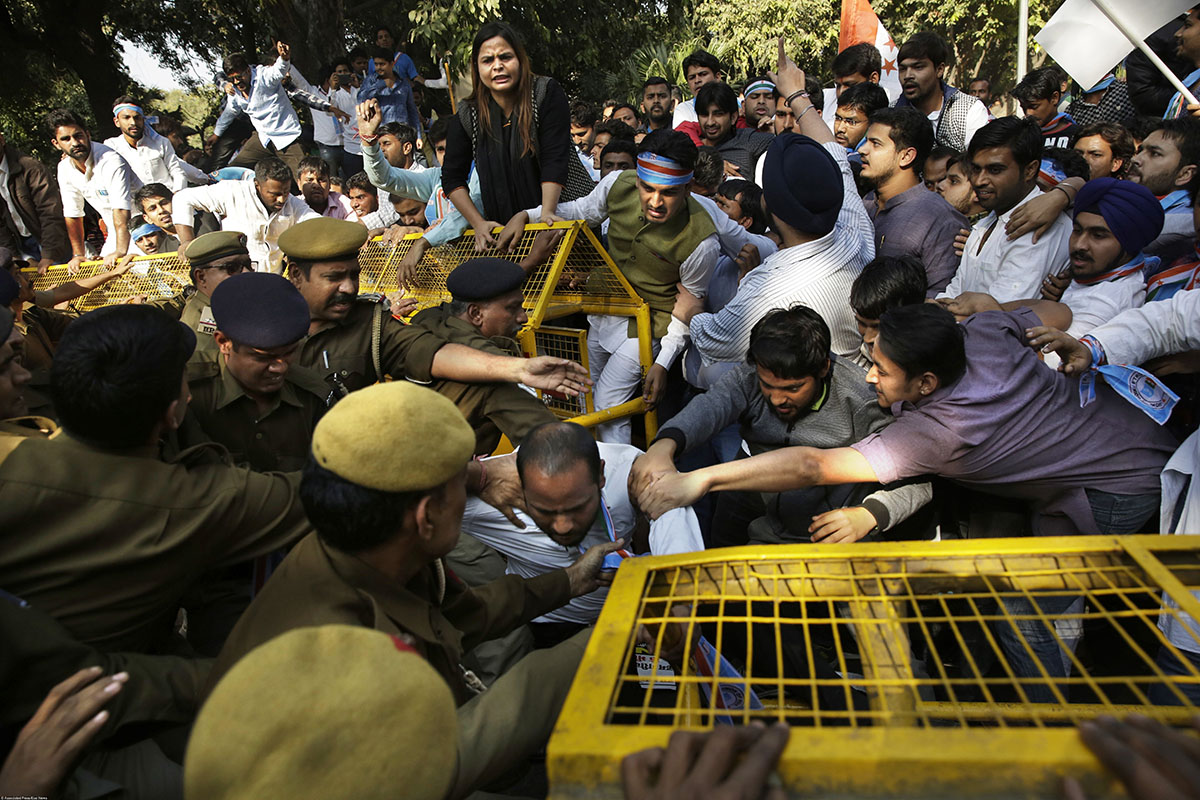
“The government is managing the economy like a bull with a chopping shop,” the opposition demonetization assessed the demonetization, so assessed by the government. However, Modi’s office does not just dismiss criticism. In one of the states, writes The Wire, until mid -January 2017, it is forbidden to criticize demonetization on social networks (punishment - a fine or month of prison).
National sport
The shadow economy in India is about 40% of GDP, up to 80% of the Indians are occupied in it. In "Shadow" - all small trade, lion's share of the services sector, agriculture, etc. The main goal of demonetization is to withdraw huge sums of money from the shadows from which taxes are not paid. In essence, this measure is the third in a row in a series of similar ones. The government began the war with shadow income about two years ago and has already managed to declare both the tax amnesty, and the “compulsory measures” in relation to the Indians holding undeclared wealth outside the country. Although it was necessary to pay a high single tax for the legalization of funds - 45% of the declared amount - the tax amnesty in India (unlike Russia) was not entirely useless: in 2016, 64 thousand citizens worth $ 9.7 billion (an average of $ 151 thousand in each declaration) were declared their income.
Do not pay taxes is a favorite Indian sport. The income tax pays shocking a small number of Indians, for deductions for it in 2015, according to the FIRSTPOST publication, less than 5% of the population claimed. And before the start of the active struggle with the tax evasion of applicants for deductions, there were even fewer - only 1%. The authorities hope that thanks to demonetization, the number of taxpayers in the country will increase at least twice, to 100 million people.
However, the Indian state seems to have no data on real income of people. According to official statistics, only 1.1 million Indians earn more than $ 1200 per month - an absolutely absurd figure. Indeed, according to the annual report of World Wealth Report (Capgemini), only dollar millionaires in India are about 200 thousand, and their number is growing rapidly. As well as sales of expensive jewelry, cars, yachts and real estate ...
The absurdity of statistics can be explained only by a general evasion of income tax. In India, it is calculated on a progressive scale, the rates are growing with earnings: the tax is not paid from income to $ 300 per month, the amount of $ 300 to $ 600 is taxed at a rate of 10%, from $ 600 to $ 1200 - 20%, and over $ 1200 - 30%. Therefore, no one allegedly earns that kind of money.
War without victory
In recent decades, India has become one of the most dynamically developing countries in the world. Only in the last 7 years of the country's GDP, on average, has added 7.5%. In the early 1990s, Podushka GDP in India was about 17 times lower than Russian, now-only 6 times. The Indian success history since the beginning of the 1990s is the result of the rapid development of capitalism and liberal economic policy. Now officials need the Indians to start paying taxes. But they seemed to have forgotten that it is necessary to do this competently, otherwise the consequences will not be long in coming.
According to Ambit Capital, over the next months, the growth of Indian GDP will decrease from 6.8% to 3.5%. The previous level of money supply will be restored at best in six months, and, as notes The Indian Express, the result of cash famine will be a reduction in trade, production and investment. The price of real estate in the 42 largest cities will be submitted by 30%, assumes the publication The Quint.
But the problem is also that the shadow economy is closely related to the formal - one demonetization cannot be defeated. When the developer pays working cash, evading taxes, this is “black nal”. But for the workers, this is already “white”, honestly earned money, noted by Hungant Reddi, the ex-head of the National Bank of India. The owner of the store where the workers will spend this money can also go in two ways - either pay for the “roof” of the mafia (and then it is “black nal” again), or - the municipal company for electricity (and then it is “white” money again).
Peasants, devoid of cash, will not run to lend to banks and will not begin to sell products with all taxes. Half of farmers already have loans, but only 35% of them are taken in banks, writes Nidhi Agnal, an employee of Indira Gandhi Institute of Development Research. The rest take loans informally - from agents buying food, and they must pay with them in cash proceeds for food.
Demonetization is most strongly hit by small shopkeepers and poor, on self-employed, micro- and small businesses, in trade, agriculture and transport. And the owners of gold and millionaires, who managed to bring their wealth from the country to Swiss banks, were not injured. According to Hindustan Times, only 6% of illegal wealth are contained in cash. The rest is in real estate, gold and luxury items, in foreign currency and banks, in the stock market, etc. But the main thing is not eliminated incentives that encourage people to accumulate funds illegally: the tax rate remained at the same level. One -time seizure of accumulations will lead to recession, but will not force people to pay taxes, writes Ideas for India, Maitrish Gateat from the London Economic School.
“Architects of this extremely unsuccessful reform represent shadow money as reserves hidden under a mattress, which can be brought to the light and taxed overnight,” Prabhat Patanaik, professor at Javaharlala Neru, notes in turn. -In fact, the shadow economy is not reserves, but an endless stream of transactions from which people do not want to pay taxes: due to poverty, high tax rates and distrust to their state. You seize one payment tool - and robbed people will do the same with the help of another, interest rates and a “cashing” fee will increase.
Is this possible with us?
The Russian authorities are concerned about the shadow economy no less than Indian ones. The share of non -cash turnover, where it is more difficult to move away from taxes, is growing intensively, but is still very low: according to Nafi and United Card Services, in recent years, the share of non -payment by citizens of goods and services has increased from 5% to 16% - this is slightly higher than the level of India. In developed countries, cashless payments account for up to 90% of transactions. Such a very fast transition to non -cash payment is associated with both the habits of Russians and the high cost of acquiring (entrepreneurs must pay to banks 1.5–2% of the revenue), and with the desire not to reflect part of the tax reporting operations.
The Minister of Labor of the Russian Federation Maxim Topilin proposed to introduce tax on formally not busy: the thought of Russian officials is moving in about the same direction as the Indian, which means that Indian experience may well interest them
The most strongly in Russia is evading social payments, which is why the pension fund in constant shortage. Therefore, the fight against the shadow economy is not headed by the Ministry of Finance and the Federal Tax Service, but by social departments and the deputy prime minister Olga Golodets in recent years. Back in 2013, she complained that 38 million Russians are busy "incomprehensible what." The government increased the amount of deductions to social funds for individual entrepreneurs, which caused a reduction in their number. And recently, the Minister of Labor, Maxim Topilin, proposed to introduce a tax on formally not busy. The thought of Russian officials moves about the same direction as the Indian ones, which means Indian experience may well interest them.
But it would be better not to follow the Russian authorities (unless they have a goal instead of zero GDP growth, get minus 5%). After all, we have shadow wealth in the ruble cache only especially gifted colonels of the Ministry of Internal Affairs. And the money of rich people, evading taxes, also does not lie in cash. Demonetization can be hit only on an informal economy, but traders in the market, owners of workshops in garages and small shops do not keep billions of rubles home. And what is done in India, if you call it in your own words, is the confiscation of the property of millions of people. The main result of the robbery legalized by the state is the loss of incentives for economic activity in citizens. Such a game is not worth any candles.