
Translated material
Last winter in Aleppo
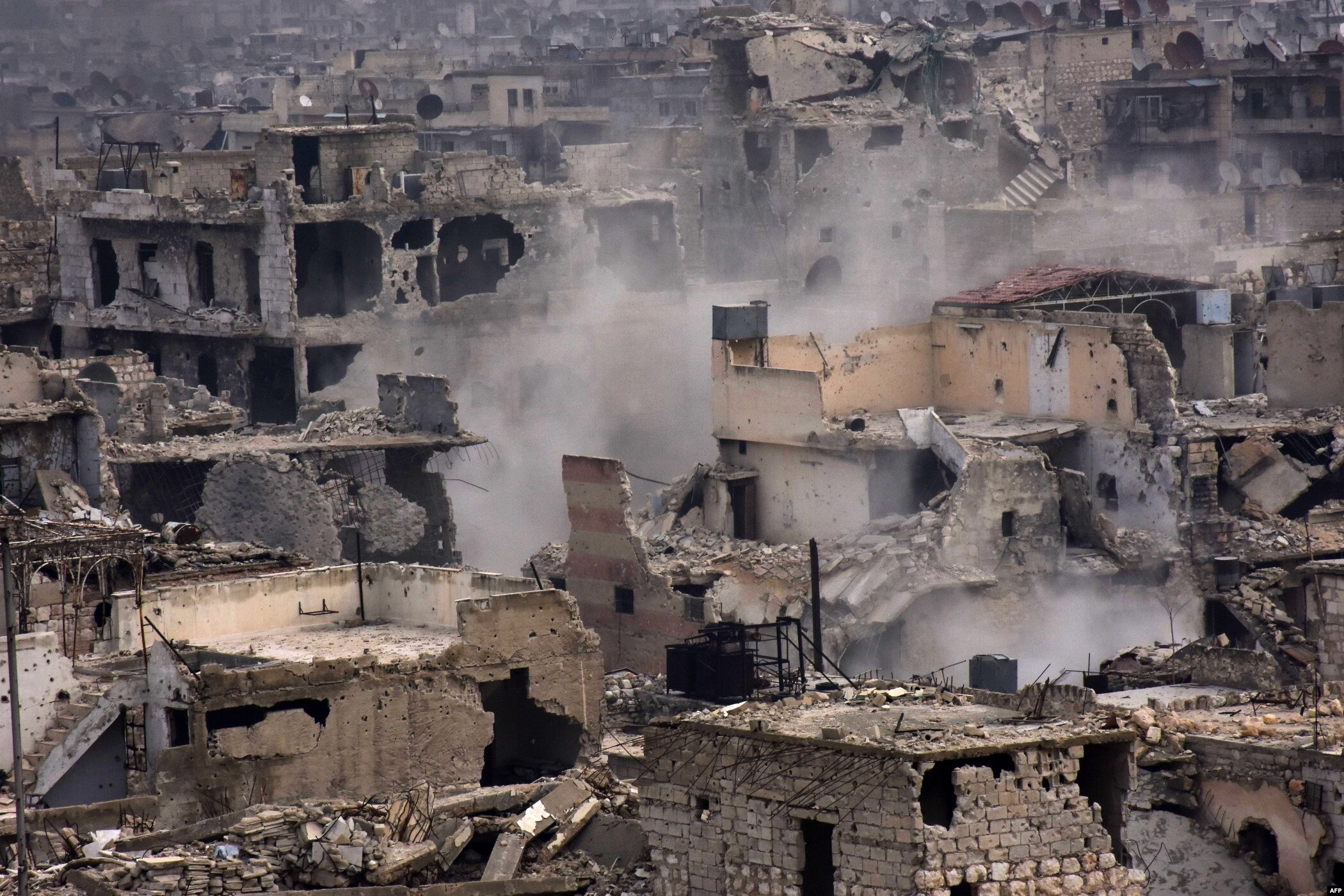
Doctors and humanitarian workers from several international organizations addressed an open letter to representatives of the Russian medical community. The message is addressed to the Union of Pediatricians of Russia, the Russian Medical Association, the Russian Red Cross and the trade union of health workers and signed by famous American medical specialists, university professors and representatives of non -profit organizations. The authors of the open letter are asking their colleagues to influence the Russian authorities so that they stop the bombing of the East Aleppo and allow them to evacuate people from the besieged city without medical care.
"East Aleppo became modern Stalingrad. Stalingrad was besieged by the Nazis for 160 days. It was worse than hell on earth. People in the besieged East Aleppo are now in the same conditions. They are in the siege for 100 days. They have no baby food, fuel, medicines and all that is necessary for simple survival. The last reserves of humanitarian aid previously delivered to the city of the UN, completely The number of victims is exhausted as the bombing of Bashar Assad and the East Aleppo is strengthening - this is only one of the 40 cities and areas in Syria, which are more than a million Syrians. To deliver humanitarian aid to Aleppo and other besieged Syrian cities, we ask you to influence the Russian and Syrian authorities to stop intentional and unintentional attacks on the civilian population, hospitals and schools, ”the letter from the Syrian-American Medical Association signed on the website.
One of the initiators of an appeal to Russian doctors is an American-neurosurgeon of Syrian descent, a member of the Syrian-American Medical Society (SAMS), Dr. Zacher Sahlul, living and working in Chicago. Once he studied with Bashar Assad at the same medical university in Damascus, and is now trying to help the Syrians who need medical and humanitarian aid as a result of the actions of his army and its allies-Russia and Iran. Sahlul visited Aleppo several times as part of medical humanitarian missions before the full siege of the eastern part of the city, the last time in July. From the moment Assad’s army established the blockade of Aleppo regions, who were busy armed with opposition, the delivery of medical care from the United States and other countries became impossible. In an interview with Radio Liberty, Dr. Zakher Sahlul describes the scale of the humanitarian disaster in East Aleppo, based on information that he receives almost daily from the last doctors remaining in the besieged city.
- What is the latest information about the situation in the besieged Aleppo that you have?
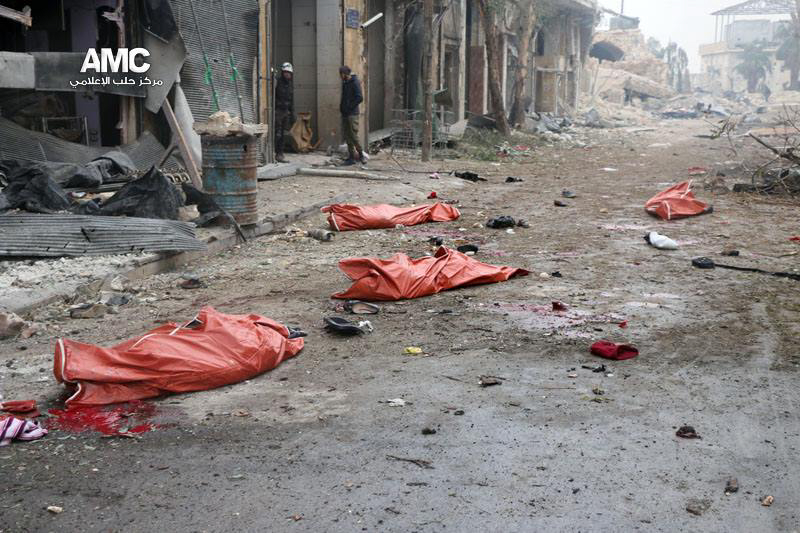
- The situation today is catastrophic. My colleagues send me photos of people running from the city. Several areas of Aleppo are again occupied by the Syrian regime and its allies. I also saw photos of dead bodies on the streets, and it is most painful to see that many of them are the bodies of children. I saw photos of children trying to leave Aleppo. One of these photographs was especially heartbreaking, this is a photograph of a girl with an amputated leg that tried to leave the city on crutches. Many people carry things in their hands, and children on their shoulders. I have reports that about 15 thousand people are trying to leave the besieged part of the city. Some try to flee to the areas that Assad’s army controls, some are looking for ways to villages in the vicinity of Aleppo, which control the Kurds.
There are still several places where doctors and nurses can provide medical care. These are mainly basements and basement floors of buildings
There are still several places where doctors and nurses can provide medical care. These are mainly basements and basement floors of buildings. One of my colleagues, a nurse, told me that some people die not only from injuries and injuries, but also because there are no sufficient number of doctors and medical materials. In addition, it is very cold there now. They do not have enough blankets to cover patients. For patients with blood loss, it is very important to be warm, and they do not have diesel fuel for generators to warm these rooms. So the situation without exaggeration is catastrophic. Let's not forget that about 300 thousand people remain there, of which 100 thousand are children who have been in the besieged city for more than four months. All this time they had no food and medication. Many of them suffer from malnutrition. They are insanely tired of daily bombing. This part of the city has been subjected to continuous bombing for the past three weeks.
- How many people, according to your data, are now in the besieged Aleppo in emergency medical care?
- It is difficult to calculate. But I think that everyone, without exception, in Aleppo now needs one or another medical care - is it about the treatment of wounds, diseases, chronic diseases or mental health. This is a huge psychological trauma for women and children who are faced with death every day, who every day find out that one of their relatives or acquaintances died. There are reports that the Assada regime drops not only barrels, but also bombs with chlorine into the city. They cause suffocation, it is very painful to see people who do not have enough air to breathe. Thousands of people in East Aleppo need medical care. Hundreds need an urgent evacuation. The situation is very unstable and can become even worse.
- How is medical care in the conditions of siege? How many doctors and hospitals are left in that part of Aleppo, which is controlled by the rebels?
- When the last time I was in Aleppo in late June - early July, shortly before the start of the blockade, 10 hospitals worked there. At that time, 30 doctors worked in these hospitals, including two or three surgeons, of which one was a neurosurgeon. But even then they experienced a lack of medical materials. I brought with me a apparatus for a ventricular puncture, which allows you to quickly pump out blood from the ventricles of the brain in case of head damage. There are a lot of such patients, and the device I brought was the only one. The day after my arrival, we have already helped with his help a 7-year-old child. But since I left Aleppo, many of these hospitals have been bombed and destroyed.
Even if you find a doctor and a hospital, you will lie in a cold corner without painkillers and, most likely, die from blood loss
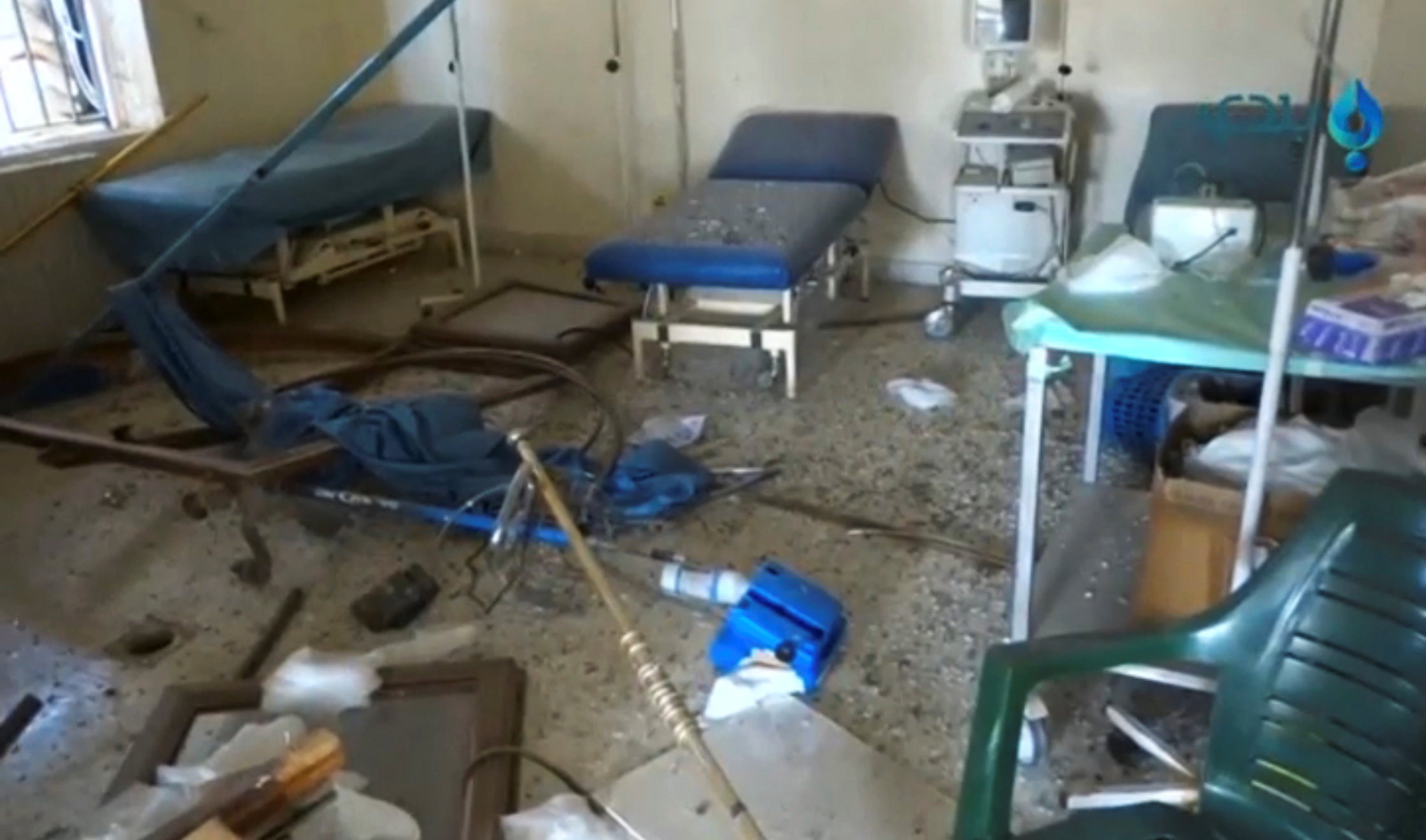
The hospital in which I worked in those days was underground, in basements, to protect against bombs. Before her building was destroyed, there was the largest trauma department in the city, where about 4 thousand operations were performed a year. This hospital was destroyed by barrel and incendiary bombs, even antibunker bombs were dropped on it. As a result, she completely stopped work. All hospitals where I visited during that trip now no longer work. According to information for the past week, in the besieged part of Aleppo there were two small places where doctors and nurses could assist the civilian population. Both of these places are cellar overflowed by people. There is no sufficient amount of medical staff to treat such a number of people, nor a sufficient number of medicines. My friend, nurse, said that they operate on patients right on the floor. People scream. She says that the worst that can happen to you in Aleppo is an injury or injury. This means inevitable death, because even if you find a doctor and a hospital, you will lie in a cold corner without painkillers and, most likely, die from blood loss. This is a complete nightmare, if we speak honestly.
- Winter has come, and in winter the nights in the Middle East are very cold. How do people solve the problem of heating what remains of their dwellings?
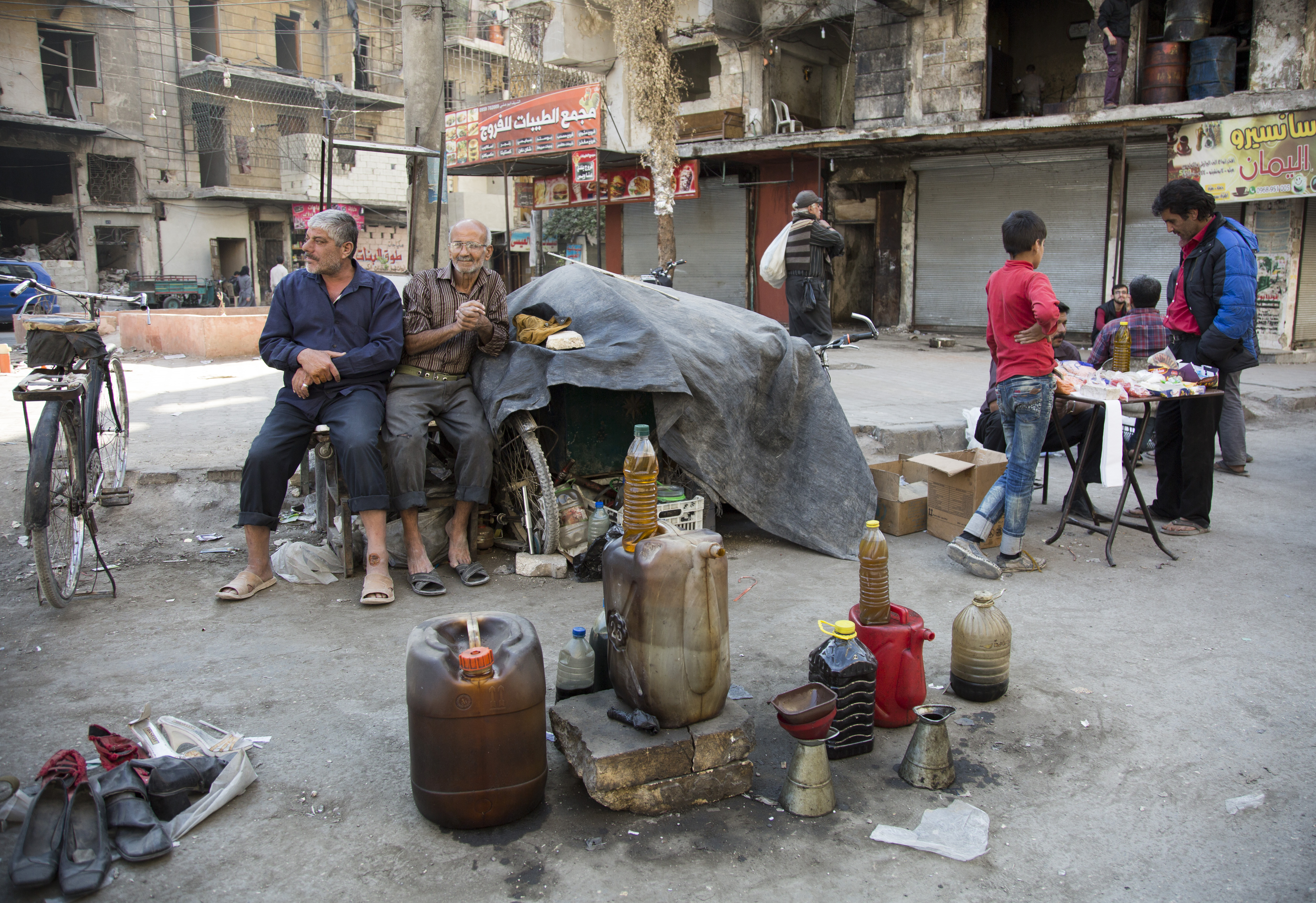
- A good question. I would say that many people in the besieged Aleppo will not survive this winter. We already get from the scene of the events of the death of patients due to severe cold. A few days ago, we were informed about the death of several newborn children who died due to the cold, since there is no electricity in East Aleppo. Previously, they used diesel fuel to heat at least some premises in hospitals and houses using generators. But after four and a half months, the siege of fuel simply did not remain. To warm themselves and their families, people burn doors and window frames remaining from destroyed buildings. This heating method is very dangerous, you can suffocate with carbon monoxide, a fire may begin. People end with food. Aleppo is a very urbanized city. There are no forests, there are no trees left. The trees that were in the parks have long been cut and put on heating. The situation is catastrophic.
- Russia and the Assad regime accuse the rebels of hiding behind hospitals and patients as a living shield. What can answer these accusations?
- I was five times in Aleppo as part of medical humanitarian missions. The last time I was there with two American doctors. One of them is a 70-year-old pediatrician, the second is an orthopedic surgeon working in one of the largest medical centers in Chicago. We did not see any evidence of something like that in any of the seven hospitals where we worked or which we visited. No armed people or just weapons. I maintain a connection with the remaining doctors and nurses in Aleppo. All of them have a clear understanding of what it means to be a doctor in the war. They have a persistent conviction that the doctor should remain neutral and unbiased, that the doctor should not allow the hospital to become a base for armed people, that he should take any patient regardless of his belonging to one or another warring side. This is the essence of the first Geneva Convention , adopted more than 150 years ago, is the essence of the oath of Hippocrates, which all doctors bring, so they must be under protection.
What is happening in Siri and in Aleppo is everyday war crimes
What is happening in Syria and in Aleppo is everyday war crimes. Unfortunately, Russia has been bombing hospitals every day in recent months. Every. This means that you deprive local residents of access to medical care. Over the past 144 days, there have been 143 messages about the attacks on hospitals and medical institutions. In Syria, these attacks took place on average every 17 hours! A third of them in Aleppo. On average, every 50 hours one of the medical workers in Aleppo was attacked. Unfortunately, Russia is one of the accomplices of these war crimes, simultaneously casting doubt on the principle of medical neutrality.
-Do people in the besieged Aleppo at least some opportunity to gain access to medical care in those areas of the city that are controlled by government forces?
- Now moving between these areas has become very dangerous, even for civilians. Just the other day, during the bombing, 20 civilians who tried to leave the besieged part of the city were killed. Probably, in the next few days, people will generally lose the opportunity to move between the eastern and western Aleppo. We have reports that about 2,000 civilians have passed to the areas controlled by Assad. But not all residents of Eastern Aleppo have such an opportunity. For example, the wounded cannot get out of the city without outside help. There are no UN employees in Aleppo. There is no appropriate evacuation procedure. There are no independent observers who could make sure that nothing threatens patients evacuated from the eastern part of the city. Many are afraid that they will go to Assad prisons and will be tortured. Many civilians do not dare to go to the other side for this reason.
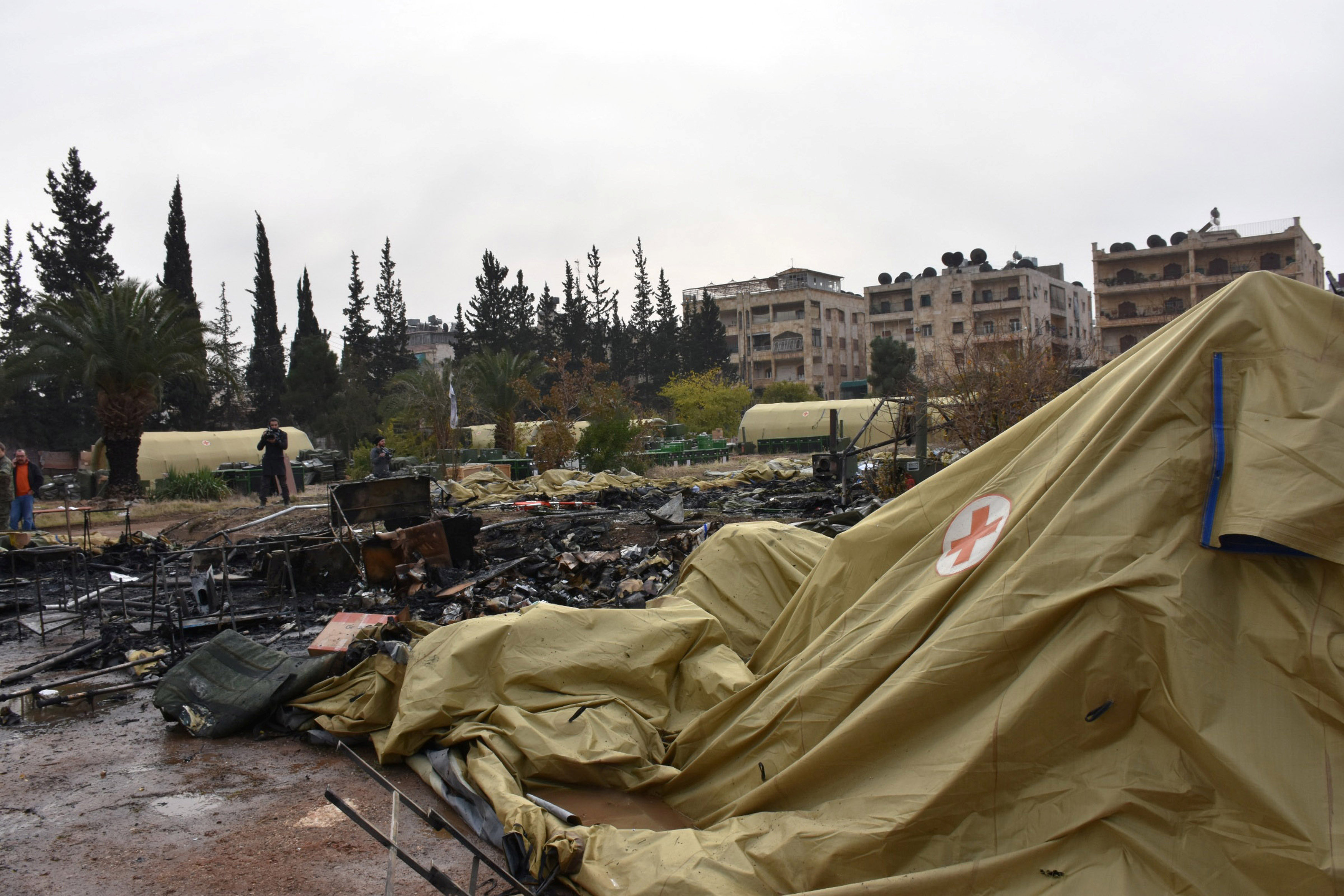
- Russia sent a mobile hospital to Syria to assist local residents. He immediately underwent shelling , in which Russia accuses the detachments of an armed opposition from East Aleppo. How can you comment on this fact? And can Russian mobile hospitals straighten the situation with medical help to residents of both the Western and eastern part of the city?
It is very difficult for me to imagine that civilians in East Aleppo accepted help from their enemies
- We condemn the attack on the Russian field hospital in Aleppo and bring our deep condolences to the families of the dead nurses. Any attacks on medical institutions are a violation of the principle of neutrality of medical workers in the war. The attack on the Russian hospital in Aleppo emphasizes the main problem: since the start of the war in Syria, systematic attacks on medical institutions have become the norm. As for the real help that could be obtained from the deployment of this hospital, I have already heard a lot of promises from Russia. We know that some Russian medical and humanitarian aid enters the West Aleppo, but about the eastern-I have great doubts. If such help will act, I think that the local population will most likely reject it. Russia is perceived in East Aleppo as a country that helps war criminals. It is perceived as a state that attacks the civilian population, bombing hospitals, schools, kills doctors and nurses. It is very difficult for me to imagine that civilians in East Aleppo accepted help from their enemies.
-Is it possible to do something else in order to save the lives of civilians in East Aleppo? Russia, the army of Assad, Iran - all of them, it seems, simply ignore any accusations of the death of the civilian population and methodically continue the advance to the besieged city.
- The main problem is the lack of political will to stop the crisis in Aleppo and put an end to the blockade. Someone must take on leadership. For example, the European Union. I doubt that it may be the United States until the process of transition of power, or the UN, is ended there. Someone should take on leadership and provide protection to civilians, make the hospital bombing so that humanitarian convoys can enter the city, which will feed the starving children. After all, it was already possible to do this in the past. Similar was already in Bosnia, in Kosovo, in other places where ethnic purges took place and war crimes were committed. The international community in these conflicts managed to at least partially protect the civilian population and provide corridors for humanitarian convoys. Now we are talking about a crisis with refugees around the world, especially in Europe. Millions of refugees violated the usual course of life in European countries, caused a surge in xenophobia and Islamophobia, antimigrant sentiments, and the popularity of ultra -right parties and politicians. Every fourth refugee in the world now - and we are talking about 20 million refugees - from Syria. To stop the flow of refugees, you need to stop the crisis in this country, you need to stop the bombing of the civilian population. I was with medical humanitarian missions in Jordan, in Lebanon, in Turkey, in Greece. I talked with these refugees. I asked them: why did you run? And they answered: bombing. Barrel bombs, the use of chemical weapons. If you want to stop the flow of refugees, you must stop the bombing of the civilian population. This is the most important thing, what should be done in the first place.
- You studied with Bashar Assad in Damascus, at the same medical university, even in the same group. How was he a man then? Was it possible, looking at him, to imagine that Bashar al -Assad, whom we know now?
No one could imagine that Assad would become who he became
- It's hard to imagine that this is the same person with whom I studied at the same university. He was a rather timid and shy person, to some extent even attractive, in those days no one perceived him as arrogant or ruthless. I met with him even after he became the president, three times. We talked about his vision of the future Syria. No one could imagine that he would become what he became. For many of us, those who studied with him then, he is responsible for the death of half a million people, for injuries received by two million Syrians, for the forced flight of more than 12 million citizens - this is more than half of the total population of Syria. Он несет ответственность за разрушение исторических достопримечательностей, за всплеск терроризма и за весь тот хаос, которым сейчас охвачена Сирия из-за его беспощадности. После первых демонстраций протеста в 2011 году он мог провести политические реформы, которые бы соответствовали стремлениям сирийской молодежи. Но он отказался делать это, он выбрал другой путь, путь жестокости. Я не могу прочитать его мысли сейчас. Если послушать его последние речи, становится ясно, что он не испытывает никакого сожаления ни из-за бегства людей из страны, ни из-за гибели оставшегося мирного населения. Ему чужды угрызения совести за то, что случилось с Сирией. По сути, он гордится тем, что он сделал. Он убежден, что его война – праведная. Я не могу представить президента, который не испытывал бы раскаяния за то, что он разрушил половину собственной страны.