
Translated material
Thank you for alive
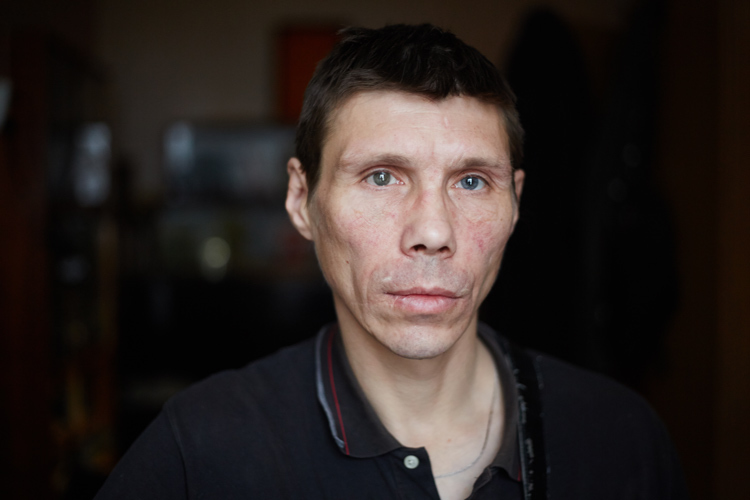
“Waiting for rock and roll heroes. The awards in the cabinets are dusting.
But somehow everything is homogeneous-the heroes do not appear.
Well, they succeeded? Maybe everyone was rushing?
Maybe they hid and drink in quiet sadness? "
Vladimir Burdin. "Heroes of Rock and Roll"
Sverdlovsk - the capital of the Gornozavodsky Territory, founded under Peter the Great; The brutal industrial center, which is included in the five largest Russian cities in terms of population; Soviet Chicago or, say, Manchester transferred to the border between Europe and Asia.
In the 1980s, Sverdlovsk became the third pole of Russian rock, forming a triangle of force along with intelligent Leningrad and artistic Moscow. Rock in Sverdlovsk began with the art rocker groups "Sonance", "Track" and "Urfin Juss"-the last wrote the texts of the young Ilya Kormiltsev. In 1981-a year after the historical “spring rhythms” in Tbilisi, where the audience was shocked by the “Aquarium”, the first rock festival was held in the Ural city, and five years later a rock club was formed, from which Nautilus Pompilius, “Chayf”, “Agatha Christie” and “Small hallucinations” were emerged. Around the same time, Yuri Shevchuk, who was squeezed out of Ufa, lived in Sverdlovsk, who wrote here the songs that made him a all -Russian favorite. In a word, Sverdlovsk is the birthplace of Rock heroes.
The city, which has regained its original name Yekaterinburg, continues to bear the rock and roll banner, not forgetting about its roots. The new Ural Rock-Koking-“Sansara”, “Kurara”, “both two”-is well known outside the ex-Sverdlovsk. The anniversary of the rock club in the city was celebrated by festivals. Several interesting books about the history of local rock culture were released at once. But you will not read about Vladimir Burdin in them - if you're lucky, you will come across a runaway mention of him as one of the founders of “semantic hallucinations” and the author of their first hits, which few people remember. Vladimir Burdin is a missed hero of Russian rock, miraculously surviving a relic, whose songs remind us of times when rock and roll was not yet dead.
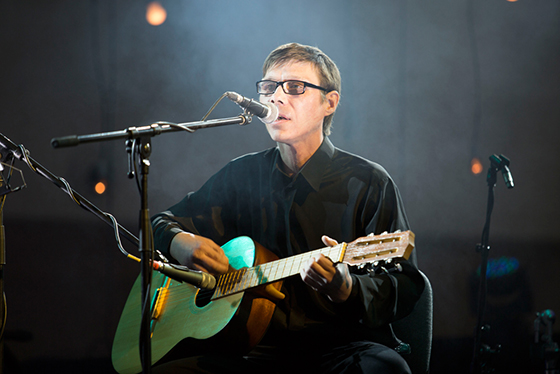 © Lyubov Kabalinova / Yeltsin Center / Colta.ru Vladimir Burdin at the Island of the 90s in Yekaterinburg, 2016
Outsider
Rock is fate, and in the Russian tradition - fate is unhappy, even tragic. Vladimir Burdin got this. Due to the health reasons, Volodya, the son of a famous jazzman, who had been going to music from the age of six, was not taken to a prestigious school with an in -depth study of English, but sent to a recently built, located in a harsh working area. As Karl Marx wrote, "the public being of people determines their consciousness." Until the sixth grade, Volodya Burdin was an excellent student, and then became a bully. He began to run away from the house, spending time in parties with peers and in squat with artists. At the age of 14, Volodya and his friend went to Leningrad, where he went to the rock club on Rubinstein to meet the BG, but did not meet-struck by the Kazan Cathedral, where the “non-formal youth” (as the fans of the Russian rock gained power) sang Shevchuk, Tsoi and Kinchev. Having heard enough of other people's songs, the young Burdin decided that he himself could write no worse. Already in one of his first songs, the “night” that he still sings, the eternal leitmotifs of his desperate lyrics appear: betrayal and temptation, loneliness and doom.
Passion for poetry and rock and roll, a protest against the townsfolk and alcohol bring 16-year-old Volodya Burdin to the bed of the Sverdlovsk mental hospital, nicknamed the Agafurovsky dachas and immortalized in the song “8 kilometers along the way to Siberia”. In the same year, the student of the Muzucchiya named after Tchaikovsky, together with Friends of Kostya Kostya, Uvarov, Seryozha Baranov, Dima Shitlin and Seryozha Bobunets, form the punk group “Semlosy Hallucinations” and a year later join the Sverdlovsk Rock Club. The basis of the repertoire of the young team, whose members consider themselves pancakes and eagerly try to shock, made up Burdin’s songs - “To Siberia”, “Night”, “Mom, I will leave” and “Seals”.
According to Vladimir Burdin, for the first time he gets into prison because of rock and roll and "semantic hallucinations." On the threshold of the 18th anniversary, Volodya is decided to steal equipment from his own music school: “I decided that we need more for rehearsals.” The turning point for the whole country of 1991 becomes a catastrophic year in the biography of a young man who writes bright songs: Vladimir Burdin gets into prison for two years, his father dies in a car accident. “Semantic hallucinations” write down songs without a participant who has made him a member - the first magneto -album “Yojha”, however, remains unnoticed outside of Sverdlovsk.
Returning from prison, Vladimir Burdin could not fit into a new reality in which his city and country lived. Attempts to collect "semantic hallucinations" again and again begin to sing for nothing. The poet and the musician returns to the profession received in prison, goes on a “tour to the south” and gets to Butyrka. Upon his return in 1996, he tries to work with Sergey Bucha Bobunets, who, taking the naked name, scored new musicians to the group, and again-failure. “Serge and I did not agree in tastes and in the party’s policy,” explains Vladimir Burdin. -He was for show business, and I-for the underground. It can be understood. Maybe he did everything smartly. At least he makes bread on bread with music. And not what I am. "
Remaining a fundamental outsider and strangers in show business, Vladimir Burdin works where he will have to, he walks with a guitar on electric trains, drinks and sings in crossings, without ceasing to compose songs about loneliness, doom, betrayal and love. “Eternally young, forever drunk” - refrain, glorifying “semantic hallucinations” throughout the country, invented by Vladimir Burdin and, according to the author’s assumption, was taken by members of the group from his prison letter. But he is not offended. “I have these songs - a whole suitcase,” says the poet and musician.
Alive
Over the past year, Vladimir Burdin removed 14 songs from his suitcase and recorded them. Sightly, in acoustics (since there is no money for an electric sound). As simple as he performs them in rare concerts: a guitar, a voice and a little rhubarp. He turned out to be “living”-the strongest rock album of this year, recorded in Russian. 14 songs from the Burdin suitcase work as a time machine, transferring the listener in the late 1980s, when the rock was still faithful, fate and tragedy, and not show business. By the sincerity burning the soul, they are direct heirs of the texts of Alexander Bashlachev and Yanka Diaghileva. These are now not written and cannot write our rock patriarchs, even if they really want to. Time and air have changed, the patriarchs too, and Vladimir Burdin, once imprinted by them with songs near the Kazan Cathedral, is not. He, hiding from reality uninteresting to him, still lives in Sverdlovsk, in which 1991 did not come.
It is generally accepted that Russian rock is, first of the head, texts, poems, poetry. Vladimir Burdin - of course, the successor of this tradition, although he chuckles at it: “Russian rock is generally an idiotic phrase. Where does the rock come from in Rus'? What is it? Poems to the music! " The literature of the texts of Vladimir Burdin cannot be taken away: poetry, absorbed by the provincial Soviet intelligentsia, is breaking through - from Slutsky to Vysotsky. But at any moment he is ready to violate this tradition, retreating from rhyme, size and style for any appropriate word. And also from the Sverdlovsk bard cannot be taken away by musical flair - he leads a round dance of his songs around a dozen chords (half of them are taken from the Great " House of The Risin ' Sun ” ), but with amazing dexterity and drive, so it is impossible to catch it on repetition. In fact, Vladimir Burdin with rock and roll power performs blues. The poet with the Biography of Ledbelli is a sparkled and broken by the body, which was driving in hospitals and prisons, knowing that “there is no happiness in life, like teeth in your mouth” - a genuine Russian bluesman, which our music has always not been. Prior to him, Peter Mamonov managed to convey in intonations and chords inkwards with such accuracy, from which a Russian person is looking for a way out in binge or prayers.
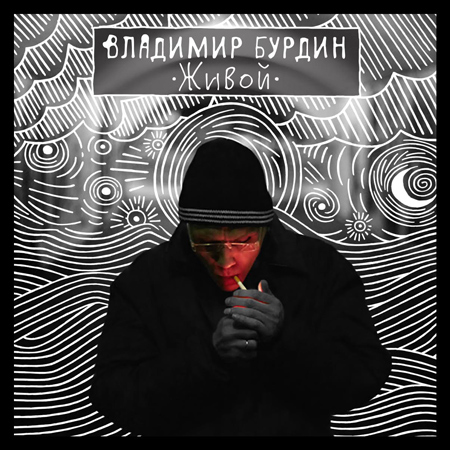 © 2016 Music Union
An important detail: in the blues of Vladimir Burdin there is not a drop of despondency or amazing. In fact, they are hymns that glorify outsiders who follow Jesus Christ. The poet indestructibly believes in the power of his dashing verb, who ultimately makes the Luzer and the renegade as a hero, and the defeated loner - a triumph. In the swollen veins of the songs of Vladimir Burdin, what Yegor Letov called Russian existentialism - “when a person has completely lost - and he sings as he defeated and wins,” and the boyish faith lives deeply in the heart, which will turn the beggar and disdain into the richest of people.
Such is the gospel from Vladimir Burdin.
The presentation of the album "Living" will be held on December 16 in the club "Ryumny Zyuzino"
Pre -order the album of Vladimir Burdin "live" on itunes