
Translated material
Is there life after non/fiction?
Yes! With the novels of Salman Rushdi and David Mitchell
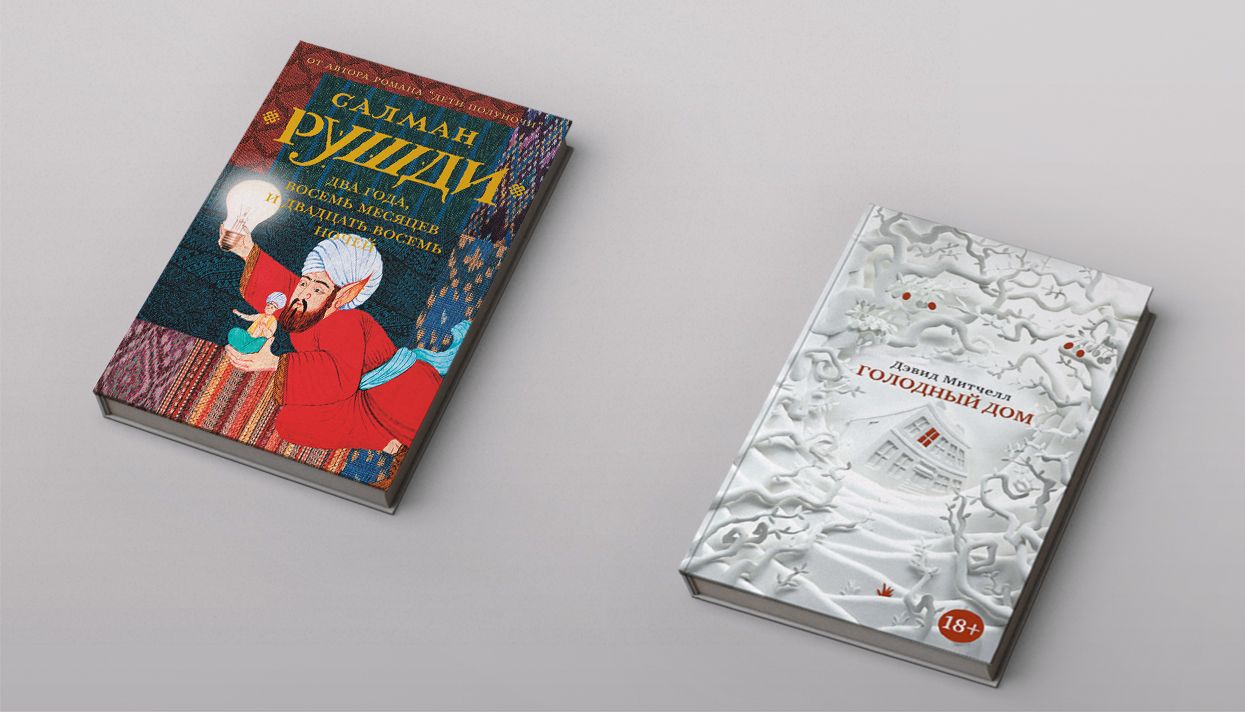
The Literary critic of Medusa Galina Yuzefovich talks about interesting news on December - two “fairy tales” about the struggle of light and darkness: “Two years, eight months and twenty -eight nights” Salman Rushdi and “Hungry House” David Mitchell.
Salman Rushdi. Two years, eight months and twenty -eight nights. M.: AST, Corpus, 2017. Translation from English L. sums
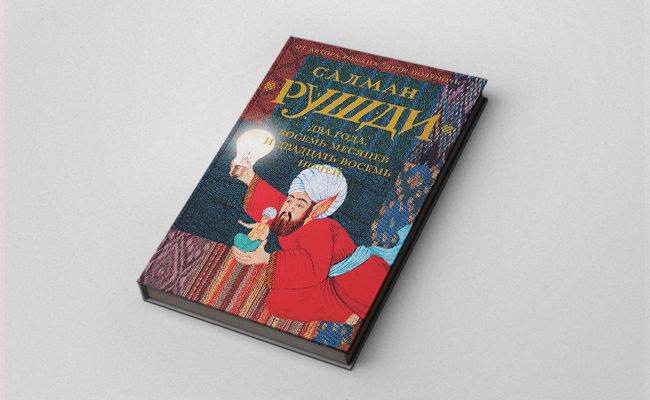
One night, the great Islamic philosopher and doctor Ibn Rushd, a commentator of Aristotle and founder of secular philosophy, known in Europe under the name of Averroes (it was in his honor that the father of Salman Rushdi once took his name), awakened from his deaths in his abandoned tomb. He woke up from the whisper of Dunya, his lifetime lover and mother of his countless children. Dunya, the powerful princess of the genies of miraculous peristan, hidden from our world with a fiery curtain, came to the dead philosopher to tell him anxious news: at the same moment, at the other end of the oikumena, in Iranian Khorasan, the eternal opponent and ideological opponent of Ibn Rushda-mystic al-Gazali woke up in his tomb. He was also awakened by the genie, only dark, striving to destroy all things. And now the world is on the threshold of war, and the salvation of mankind depends on the “Dunya-Zat”, the tribe of Dunya-the descendants of the descendants of Ginnia (as they call female genies) and Ibn Rushda, people with ears without uric and inscriminent craving for adventure. Only they will be able to resist the “unprecedented” that has fallen into the world, the term of which is determined in two years, eight months and twenty -eight nights, or in total of exactly one thousand and one night. And the two representatives of the “Duniya race” - the old gardener Mr. Jeronimo and the young “Madame Philosopher” named Alexander, infected with worldwide pessimism and desperately in love with Schoopenhauer, will have to lead this struggle.
The struggle of dark and light genies, coarse -budget disasters (which is worth the only phenomenon of universal evil in the form of a genie of Zumurrud on the flying urn) and the spectacular victory of the forces of good in the finale - in any other author this story would have formed the basis for a strong comic book (for a variety of oriental exotic elements). However, for Salman Rushdi, he becomes only a shell - a kind of frame like a story about the clever of Shaherezad and the cruel Sultan of Shakhrira, inside which they pulsate, beat, shimmer one into the other dozens and hundreds of other stories. New York with his boundless urban variety turns into a new Baghdad, and Roman Rushdi himself turns out to be a literary analogue of Hermione Granger's handbag, in which, as we recall, a tent, a mobile library and much more fit. Deceptively compact (some miserable 350 pages), the novel in a truly magically draws into the reader, so that after some time throw him pretty battered, dumbfounded and completely happy on the last page.
However, (and not to warn the reader about it, it would be dishonest) If the best Rushdi’s novel is the monumental “midnight children”, then “two years, eight months and twenty -eight nights” have every chance to seem excessively frivolous and lightweight. At the very beginning of the novel, the main character, the gardener Mr. Jeronimo, discovers that his legs no longer touch the earth - he himself did not know how, he took possession of the art of levitation, and now between the earth and the underwear of his shoes can easily be stuck a sheet of paper. Something similar has been happening in recent years with Salman Rushdi himself: starting about the “Garun and the Sea of Stories” novel, his coupling with reality-initially not too dense-it becomes weaker, the distance between the soles and earth is growing, and each next book is even more parable-accelerated, even more torn from the usual world than the previous one. However, Rushdi levitates to that beautifully, smoothly and graceful that only a person is capable of removing him, which is completely devoid of a sense of beautiful.
David Mitchell. Hungry house. M.: Foreigner, ABC-Atticus, 2017. Translation from English A. Pither
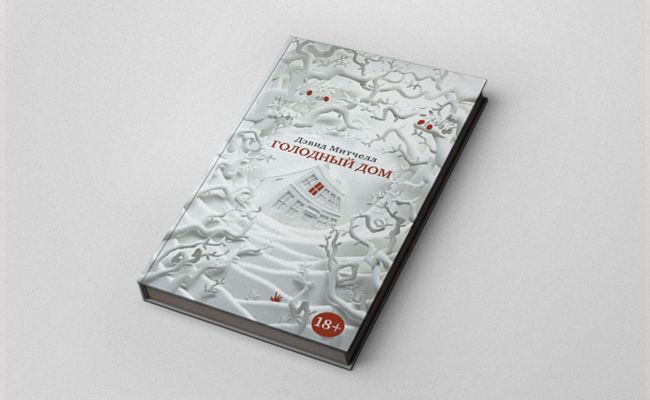
The visually complex and mannerly film “Cloud Atlas”, shot from David Mitchell, the same novel by Tom Teom Teke and the Siblings of Vachovsky, once transferred the British novelist into the field of intellectual prose and forced his work to be seriously. In an amazing way, this did not benefit the writer for the benefit: the ordinary reader began to look in his direction with cautiously (and well, how is the high -loving um?), While the reader of the demanding and capricious reacted to Mitchell with the predictable arrogant coolness. Having had a border for several years on the border between high and entertaining literature and releasing a couple of obscure thick novels, built on the principle of “neither God a candle nor the Kocherga line” (the most famous of them-“simple mortals”-came out in Russian a year ago), Mitchell nevertheless made a steep turn towards a simple and exciting genre. His new (2015) book “Hungry House” is a relatively small energetic romance, designed to read fast, gullible and absolutely unsophisticated.
In the very middle of the cramped, dark and cold ally, Slade is an inconspicuous and low black door. However, if you still manage to see it, it will open easily, and you will fall into a beautiful, slightly neglected garden, in the middle of which you will see a rare beauty mansion. The owners of the mansion-a woman and a boy (either just a woman, or a woman and a man, or a boy and a girl-everything will be in his own way for each guest) will meet you affably, and you will receive exactly what you want more than anything else. The unsuccessful musician will meet Yehudi Menukhin himself there and will be able to demonstrate his art to him. A lonely boy who is poisoned at school will make friends with the same lonely and not like other child. A divorced policeman will receive a little care and magnificent sex in the house. A clumsy and insecure student will touch the alluring secret and will survive an exciting love adventure. However, to leave the house in Slade's allery, to just go outside and go further about your business, none of them will be able to, and exactly nine years after their mysterious disappearance, a new unmistent sacrifice will be tapped into the black door ...
The “hungry house” consists of several separate short stories developing according to the same typical scenario: the next hero learns about the house, approaches him, enters him, then it seems to him that he happily escaped to freedom (or that everything that happened to him was no more than sleep), and then inevitable death awaits him. However, each next story brings the reader slightly closer to the unraveling of what is happening in the alle's allege, so we are already quite ready to meet again with the old acquaintances, beloved characters of David Mitchell, sooner or later pop -up in almost all of his novels - transcendental creatures of two types, good (rogues) and bad ones (anachorets), this time, true, true, true, true. unexpected guise.
The “hungry house” is both a classic horror (capable, as promises to us in his enthusiastic review on the cover of Stephen King’s book, scared for quite truly), and the Gothic story about ghosts, and a little detective, and a nimble story about a systematic inability of a person to distinguish a dream from an insidious trap, and that very often there is no difference between them, in fact. In a word, a good, solid and, with all that, is not one -dimensional genre reading - not that a completely perfect fairy tale at night, but something like that.
Other reviews of Galina Yuzefovich can be found here .
Galina Yuzefovich
Moscow