
Translated material
We are going into the light
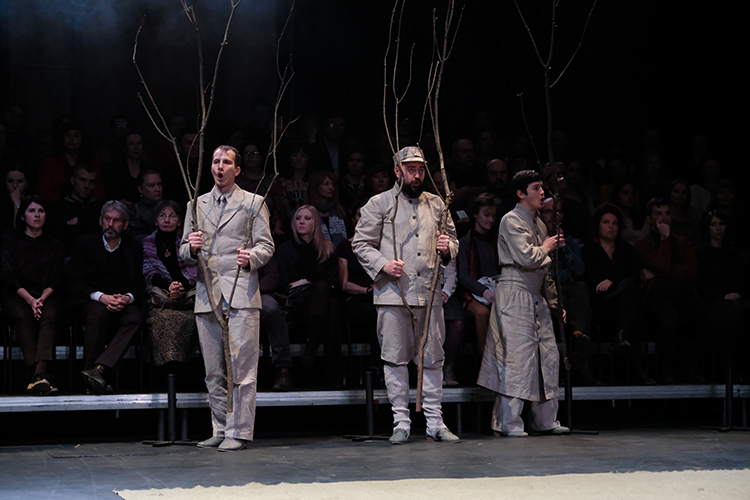
The theme of the new performance of the Perm Opera Theater is formally not at all spiritual. His hero is the American poet Ezra Pound, an important figure that is important for modernism of the twentieth century, dubious-due to profaneous sympathies, and tragic-because of a half-craft. The Pound was a polyglot, knew a bunch of languages and dialects, translated poems from Italian, Chinese and Japanese, promoted the direction of “imazhism” at the beginning of the century, published Eliot and Joyce in Paris, painfully carried away by politics, and in the Second World War told the Italian radio about the “Jewish conspiracy”, stubbornly supported Mussolini even after the detachment of the same From the authorities, in the United States, he was convicted of treason and cooperation with the fascist regime, was kept in Pisa in a terrible imprisonment - in a cage under the scorching sun (Pisan songs written there received a Bolingen prize), almost landed on an electric chair, spent many years in a psychiatric clinic in Washington, was released from there from the insistence of artists (among whom were Jean Cocte and Igor Stravinsky) and until his death in 1972 lived a hermit in Venice, giving a vow of silence.
 © Marina Dmitrieva
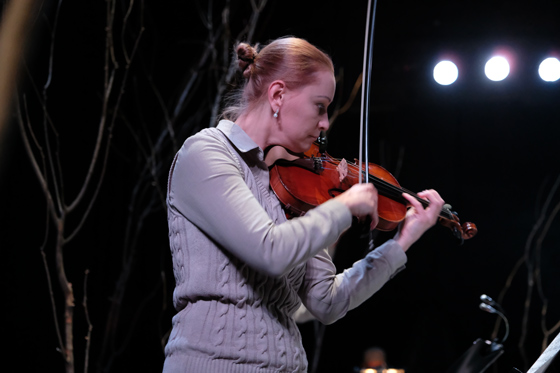
The poet’s dumbness helped composer Alexei Syumak to solve the difficult task set before him by Theodore Custezis (the previous joint work of the two musicians- the “station” in 2008, “Requiem” in 2010)-write a score for a rather strange composition: a solo violin and choir (it was originally assumed that this would be a violin concert). So, the wordless violin of Sumak is the main character, and the choir, performing several texts of the Pound from the poetic epic “ Cantos ” , is his thoughts, doubts, emotions and who will imagine what he imagines.
The imagination of the public, its empathy and even direct participation in what is happening is the necessary component of this non -violin concert, not a opera, not a performance. Movement towards the Maestro Custezis of mystery is in full swing. A particularly conscious part of the audience before the premiere took place of training in the “Laboratory of the Modern Spectator” , which is the fashion innovation of this season. The rest are penetrated right on the go.
 © Marina Dmitrieva
At a meeting with new art, spectators dive one at a black curtain that separates the usual audience foyer from absolute darkness. “Go into the light,” they will admit them. The black corridor does not lead to the auditorium, but directly onto the stage, where several rows of chairs stand on the sides and where the space of incredible beauty opens. The curtain is open, the old structure with lodges and a painted plafon flickers through the theatrical fog, branchy trees grow from red stalling velvet and right on the stage around the audience - there are no leaves, but on each - along the red juicy apple (real, I then ate one thing). So it is necessary to start a story about the world opera premiere not with the composer, but with the artist Ksenia Peretrukhina with a luxuriously debut at the Perm Theater. An additional bonus from it is bonfires in the square in front of the theater, flaring up at the end of the performance.
 © Marina Dmitrieva
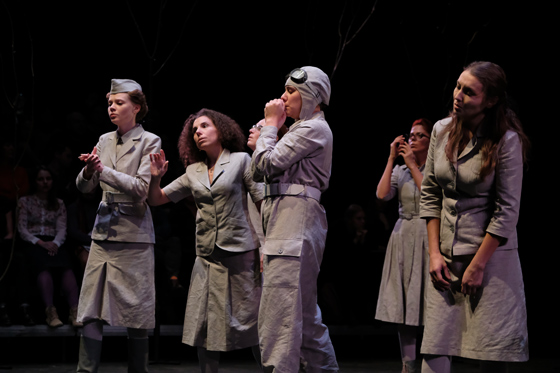
Together with her, director Semyon Aleksandrovsky, sympathetically reacting to the mysterious aspirations of the Perm artist and spectacularly blinded a consistent journey from contrasting musical episodes, in which there is light, darkness, love, transformation - in general, which is not there. Both young, but already well -known in the theater world of the author are a significant replenishment in the opera rows.
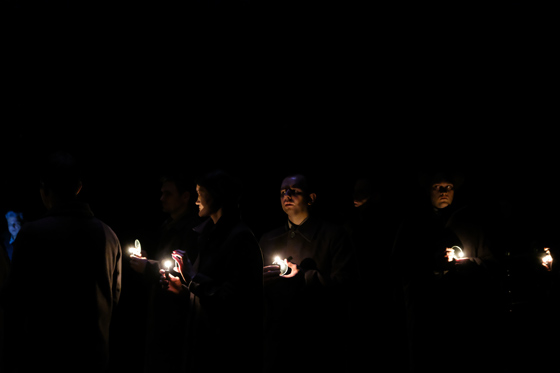 © Marina Dmitrieva
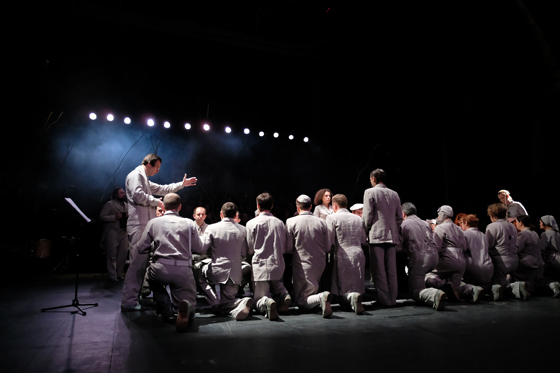
The main action of “ Cantos ” occurs in the scene closed on all sides, in the immediate vicinity of the audience sitting on it. At the end, the curtain opens again. Beauty becomes completely transcendent: under the dome, on the most upper spectator tier, several string instruments are remembered and an endlessly fragile chorale, which had recently sang here with human voices, is remembered. At this point, the most diverse options for the musical, stage and ritual interaction of the violinist Ksenia Gamaris, a pair of percussionists and the Musicaeterna choir rising to the next unattainable level of the Musicaeterna choir were lived. Its participants need to hide between the seats of the stalls, learn by heart the polar poems in different languages, carry heavy wooden tables and sing the excellent music of Syumak of prohibitive complexity (but some parts from it are ready -made bees).
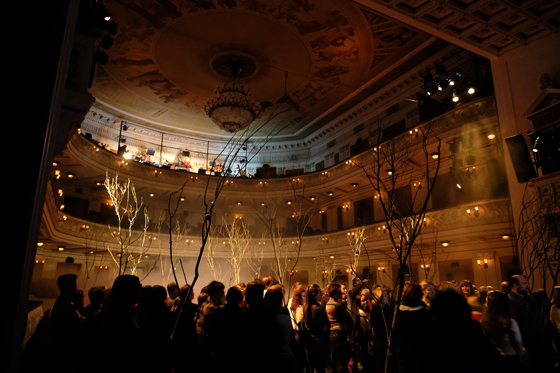 © Marina Dmitrieva
And, of course, it is necessary to all this Maestro Kurentzis soaring, which finally no pit prevents to take a full part in the production. He is dressed in the same beige-linen tones as the rest, moves with them along the stage, conducts, standing on the table above the chorists lying around him on the floor. And in the finale, he raises the audience from places, leads her to the edge of the scene to listen to either the afterlife or still heavenly music from under the dome and eventually sends his parishioners to the stalls of the stalls smelling of incense. The shaking line between mystery and the game at that moment is almost not visible.