
Translated material
Ex -head of the General Staff: The reason for the capture of Palmyra is long humanitarian pauses
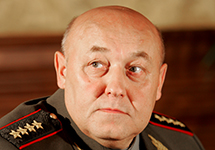
The capture of the Islamic State Palmyra indicates miscalculations in military planning. According to Interfax, this was stated by Army General Yuri Baluevsky, head of the General Staff of the Armed Forces in 2004-2008. According to him, the situation became possible, including due to long-term humanitarian pauses, allowing militants to regroup.
“This is again a blow to the prestige. Including our prestige,” Baluevsky said. It was necessary to anticipate such a development of events, the general emphasized, and calculate his actions.
"The fact that the militants will not stop is understandable. And what today we do, as a military, it is difficult to understand - these pauses are humanitarian, in particular," Baluevsky said.
“I understand,” he continued, “that it is necessary to ensure the safety of the population, to get it out of the fire. But when these pauses last for weeks, and during these weeks the forces of militants are restored, who have hands on the elbow in the blood, and they are released, including as they are commented, and with personal weapons - I don’t understand this.”
Speaking about the situation around Palmyra, he noted the miscalculations of those who plan military operations in Syria. “Whatever the Syrian army, but not to track the concentration of the enemy’s forces in the Palmyra area ... This is wrong. It shouldn’t be. And my colleagues who have it - I don’t understand them either. The Syrians may have no such opportunities like ours. But we looked where it really is that they took Palmyra?”
At the same time, the general has no doubt that control over Palmyra will be restored. “The fact that she is returned is no questions,” Baluevsky said.
The capture of Palmyra became known the day before . The jihadists made a lightning throw after they took control of the old fortress on the western outskirts of the city, built at the top of the hill, at a strategic height. The troops of the dictator Bashar al -Assad moved south of the city.
According to the Ministry of Defense, up to 4 thousand Islamists participated in the attack on Palmyra. As stated, IS transferred large forces from the Rakka region, where "active hostilities against terrorists by groups, controlled by the United States and the International Coalition, were suspended this week," as well as from Deir Ez-Zora. From the area near Deir-Ez-Zor, IG armored vehicles also arrived, the Russian military claimed.
Palmyra (modern Tadmur village) was under the control of IG for 10 months - from May 2015 to the end of March 2016. Islamists destroyed many ancient buildings, declaring them with symbols of paganism. The dictator Assad returned control over Palmyra with the support of the Russian military.