
Translated material
The President of Gambia lost the election. And then I decided to cancel them
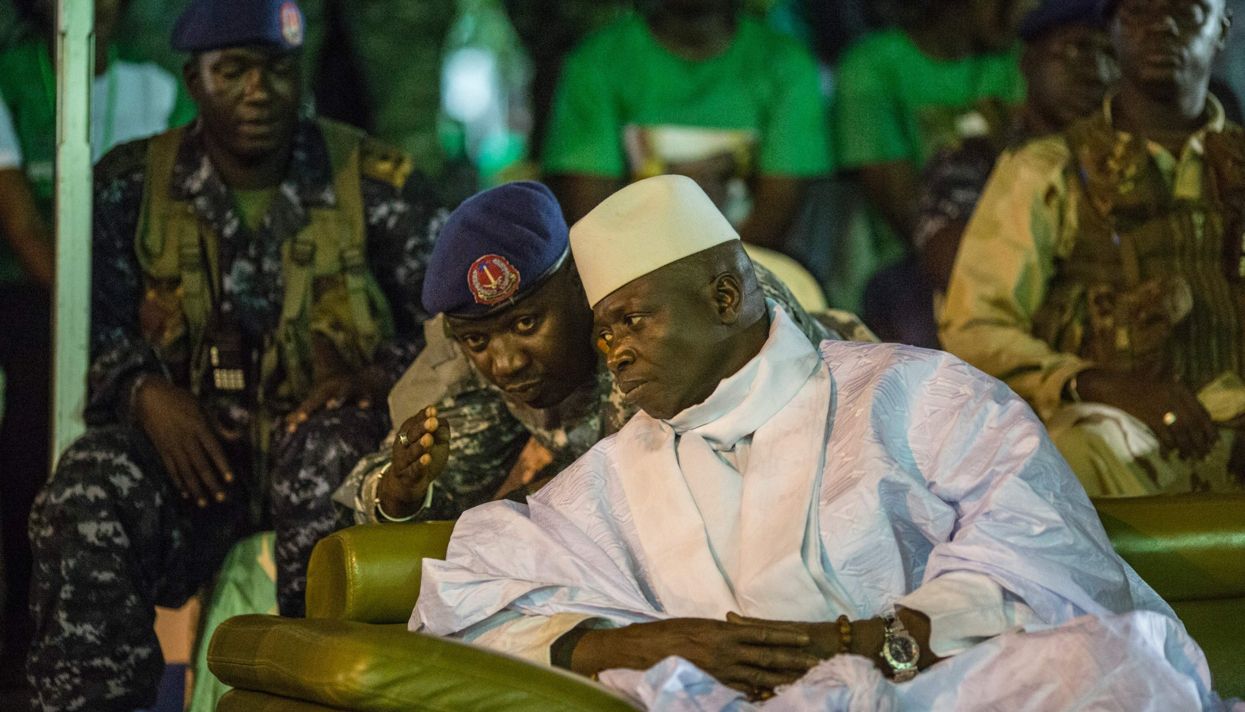
In Gambia, in early December, presidential elections were held, at which, with an advantage of a little more than three percent, the opposition candidate Adam Barrow won. The current leader of Yaa Jamme, ruling in 1994, suffered an unexpected defeat - and, even more unexpected for this African country, recognized him and decided to peacefully transfer power to the winner. This is first. And a week later, the military appeared on the streets of Banzhul, the capitals of Gambia, and Jamma publicly announced that the election results were canceled.
Ya Dzhamme has been heading Gambia since 1994. He came to power as a result of a military coup and since then he invariably won the presidential election with a large margin from competitors. Jamma became famous for many controversial statements and initiatives, for example, calls to chop off the heads of homosexuals. In addition, he argued that with the help of herbs, HIV/AIDS could cure, fought with independent media; He was accused of involvement in the abduction of opposition and dissidents. In 2009, the country began to hunt witches literally-Jamma was sure that his aunt died due to black magic, and created special detachments that detained everyone who could be suspected of witchcraft. At the same time, Jamme forbade the marriage of girls until the age of 18 and conduct circumcision.
Jamma recognized the defeat in the elections. The 51-year-old leader of the smallest country in continental Africa is just the second head of state in the history of independent Gambia and the first to recognize the victory of his opponent in the elections, agreeing to give power and rest. Jamme said this immediately after the first results of the presidential elections held on December 1 became known. He publicly turned to the winner, developer Adam Barrow, and said: “You are the elected president of Gambia, and I wish you all the best. I have no evil intentions. ”
The new Gambia authorities promised to judge Jamma. The winner of Adam Barrow in the past worked as a guard in the English store Argos. He received a higher education in London in the field of real estate and, returning to his homeland in the mid-2000s, took up the development business. The 51-year-old entrepreneur consists in the United Democratic Party of Gambia, but never held government offices and has no great political experience.
In the 2016 elections, Barrow was elected a single candidate from seven opposition parties - for the first time in the history of the country. His victory also became historical - so far the president in Gambia has not changed democratically. Soon after the announcement of the results of the elections, the winning coalition promised to judge the outgoing president for everything that he committed at the head of state, and, in particular, to regain his membership in the International Criminal Court for this. The coalition fears that Jamma will create a base of rebels in his estate on the outskirts of the country and then try to make a coup.
In the elections, they found violations that gave Jamma an occasion to refuse their recognition. In Gambia, quite primitive, but effective electoral technologies - residents of the country entitled to vote, lower the glass ball into a barrel symbolizing this or that candidate in polling stations. Then the balls are calculated and the winner is determined. Voices are thus easier and faster to consider than with paper ballots, and the holding of the elections is quite cheap with reliability comparable to traditional electoral technologies. But errors also happen: on December 5, the local central election man admitted that the initial results were incorrect, and in fact, the separation of the victorious Barrow from the loser Jamma was not nine percent, but four.
The commission noted that the revealed error for the final outcome of the election did not affect, but Jamma himself decided that this was not so. Upon learning of the error, the President of Gambia said that now it is impossible to believe the results of the elections, and he has every reason to believe that their result is not true - and announced that he would achieve a new vote.
What will happen next is incomprehensible. After Jamma rejected the election results, on the streets of the capital of Gambia Banzhul appeared fortifications of sand bags and military patrols intensified. The world community, including the United States and neighboring the country's gamba, calls for Jamma not to refuse to recognize his defeat, and the elected president claims that his opponent has no authority to cancel the election results. Obviously, Jamme will be able to remain in power if the army supports it - and this often happens in African countries; Representatives of the winner of the elections, however, argue that the leadership of the Armed Forces on the side of Barrow.