
Translated material
EU: Mobilization of the centrists
The media continue to discuss the growth of populism in the EU countries and the reaction to this trend in liberal governments in the context of the approaching elections in several Bloc countries.
German Chancellor Angela Merkel often seems to observers the last stronghold of Western liberalism, opposing the wave of populism, writes The Economist . The next fall, she will once again nominate her candidacy for the post of chancellor and, most likely, will be re -elected. However, now this idealistic picture was overshadowed by her statement about the need to prohibit Nicaba . This statement, the author believes, is contrary to its liberal image and values that are associated with it.
Here, the author stipulates that, like other rights, freedom of religion cannot be absolute. Sometimes the state has rational grounds to demand that people open their faces - for example, if they pass passport control or act as a teacher or social worker. For these considerations in Germany, they have already been forbidden to cover his face during demonstrations. However, in the case of Nikaba, Merkel did not speak security terms. She talked about the need to prevent a situation in which two societies-local and new, consisting of immigrant Muslims-will develop and live every insulated life in parallel. To prevent this from happening, Merkel wants to assimilate Muslims who came.
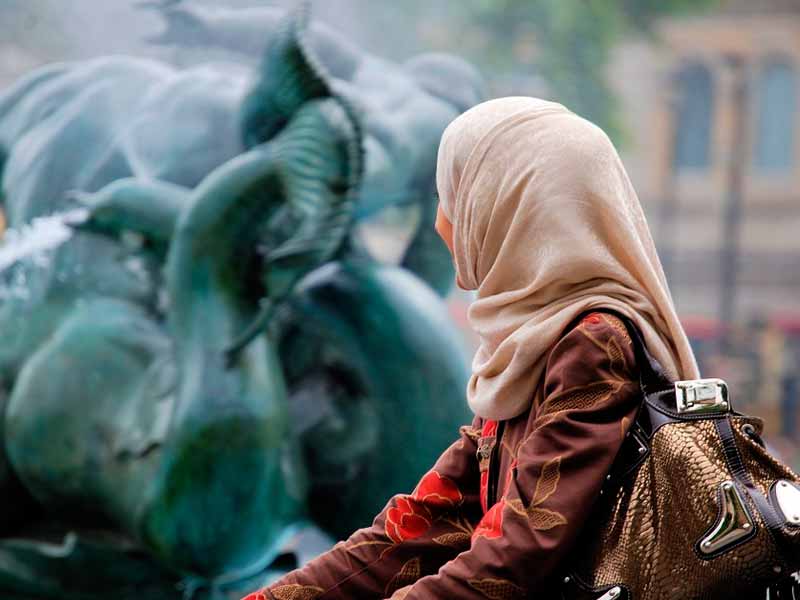 Girl in a scarf. / pixabay.com
Meanwhile, such prohibitions, which are now becoming more popular in Europe, actually do not lead to assimilation, but to isolation of women, who without Nikabov simply cease to be released from the house. Such a passion for prohibitions on the line of clothing is commented by the author, explained not by principles, but by political considerations. In response, a counter reaction is formed when extremists begin to represent, for example, France in the form of an enemy of Islam. There, in 2010, they forbidden to cover his face. In November of this year, a similar ban in relation to educational and medical institutions, as well as public transport, was introduced in the Netherlands. In both cases, the motive was to prevent the growth of the influence of parties opposing immigration.
If the centrists like Merkel began to make such concessions to populists, this means that they are engaged in self -deception, the author concludes. People who are politically addressed to these prohibitions, in principle, do not want either immigration or integration of immigrants. For them, these are the next half measures that irritate their inefficiency.
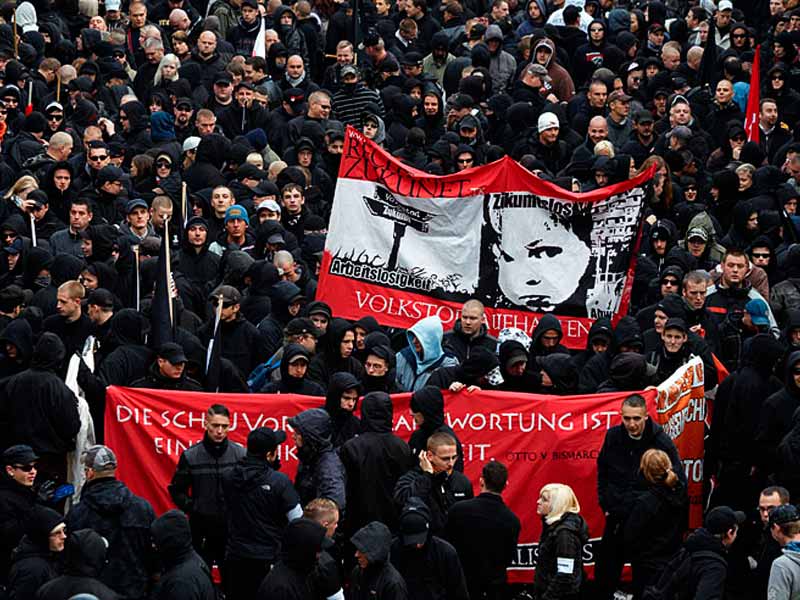 Demonstration of opponents of immigration in Germany. / wikipedia.org
The European centrists crashed, and this gave an impetus to the development of ultra -right and ultralery movements, writes Wall Street Journal . This means that if pro -European politicians want to save the EU in the form in which it now exists, that is, as a project of European integration, they need to come up with more viable strategies. The thought itself is simple, but for a long time it slipped away from the liberal establishment, and not only in Europe, as the experience of American democrats who lost in the presidential election showed.
As the author notes, the current annual congress of the transnational alliance of liberals and democrats for Europe (ALDE) showed that such understanding of European leaders began to form. In particular, the leaders who performed at the congress recognized that radicalization among citizens occurred not just like that, but as a result of errors made by politicians in regulating the economic and migration situation. The demographic characteristic of those who support Eurosceptics and nationalists is indicative. Often these are poor and poorly educated people who were most affected by the policy pursued by the centrists.