
Translated material
Again on top
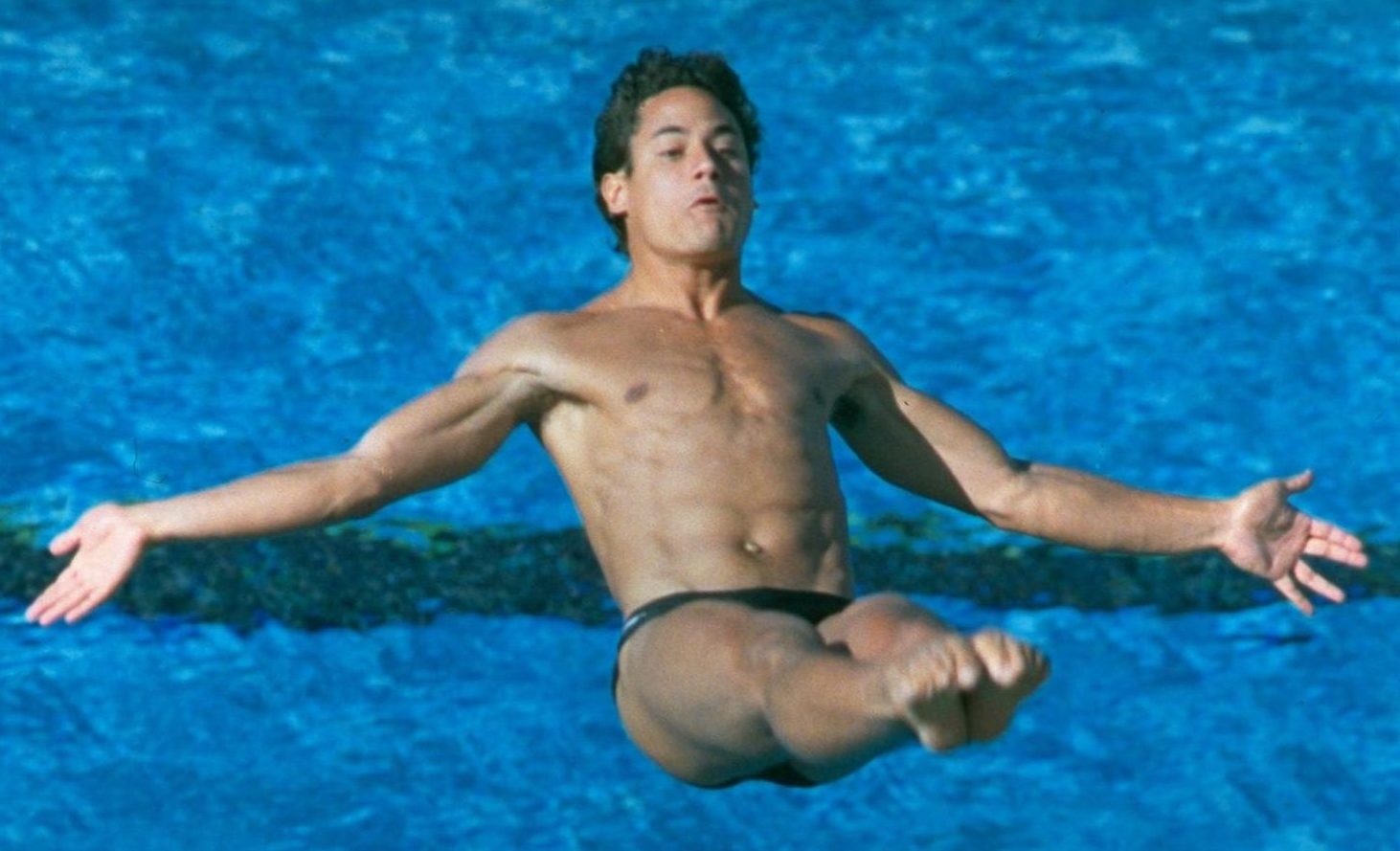
Greg Luganis, five-time world champion in water jumping, talks about what to be open to gay and HIV-positive in sports
For the IX Boc ONE BOC, which had just passed in St. Petersburg, Greg Luganis arrived-an American jump for water, a four-time Olympic champion, a five-time world champion, forty-seven champion of the United States and other, and others. He was called "the best since humanity has come up with a springboard", "a man at the feet of which lies the world of jumping into the water." Nobody has surpassed his records yet.
In addition, Luganis is a symbol of hope for so many living with HIV. In 1994, after the end of his career, Greg publicly spoke about his homosexuality. Then such frankness was unprecedented, there were almost no open gays among the athletes.
The next year, Luganis admitted in his HIV-positive status. This caused disputes: after all, at the Olympics in Seoul in 1988, he already knew about his diagnosis. During the competition, he unsuccessfully jumped and broke his head on the springboard. Blood fell into the water, but then he did not tell anyone about anything. Even though there was no risk for other athletes (HIV is not transmitted through the skin, and blood was immediately diluted with chlorinated water that kills the virus), public opinion condemned it. Luganis apologized repeatedly, but the matter was not in his actions, but in Stigma, which surrounded gays and even more so HIV-positive.
A vacuum formed around the athlete, most companies stopped offering him to act in advertising. They stopped inviting him to work as a coach. Until recently, he was on the verge of ruin, almost lost his house, tried different works, starred in the cinema - as he himself tells, "in different months it was even empty."
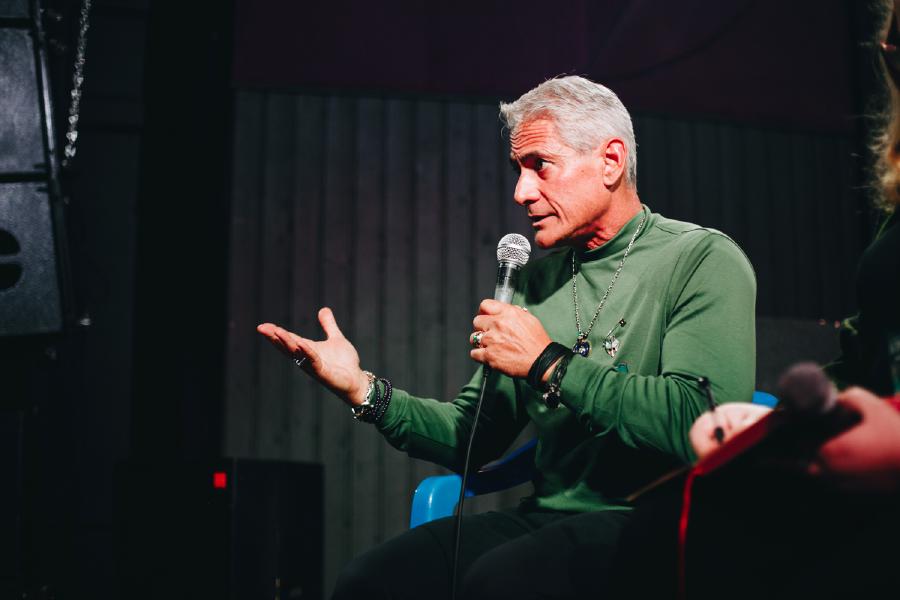 Greg Luganis performs at the Festival "BOC ON BOC" in St. Petersburg Photo: Evgenia Anisimova
Only in 2010, when homo and HIV-phobia in the States went to the decline, he was invited to train the young.
In St. Petersburg, the athlete came with a biographical film about his life “Again at the height: Greg Luganis” director Cheryl Furjanik. And after the picture, Greg Luganis agreed to answer our questions about what was left behind the scenes.
-How did your life immediately after you learned about your HIV-positive status? How did you experience it?
- It was 1988, I was preparing with might and main for the Olympics. The first reaction was: "I will go to my California, ban at home and wait for death." It was a terrible period - people around were dying of AIDS, and I was absolutely sure that I would not live up to thirty. Such a life expectancy with this diagnosis was then.
My cousin is a doctor, and he told me: "It will be much more useful for you to continue to train, to remain active." At the same time, I understood that if after the qualifying competitions it would get worse, then, it turns out, I won’t let other athletes go to Seoul. It was a difficult decision, but I still went to the Olympics.
I was prescribed Zidovudin. It was necessary to take it every four hours, day and night, waking up along the alarm clock. And the medicine has become an important element of the daily routine. Another important part was morning training - they had to go to them regardless of well -being.
Now I understand what happiness it is, that I had jumps. I had something to be distracted around the clock, all my thoughts were engaged in sports, not a disease.
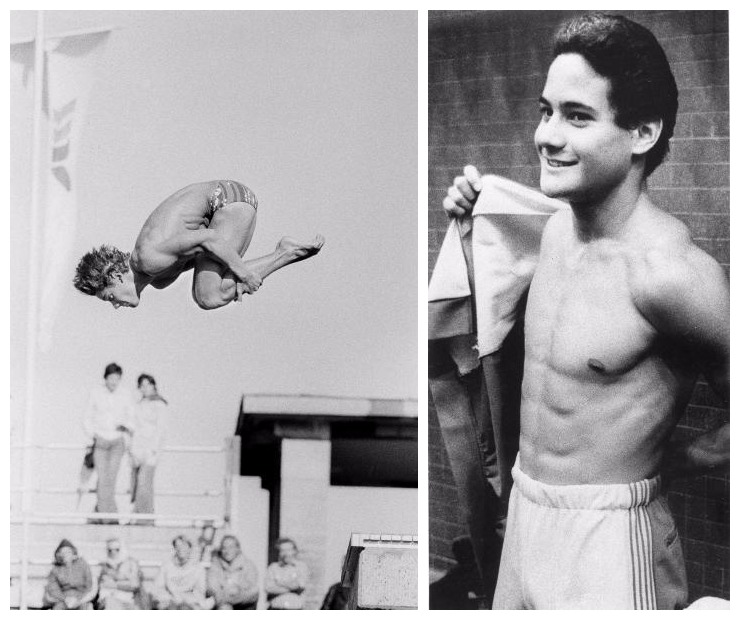 Left: Greg's jump Luganis at the World Cup in Berlin, 1978
Right: Greg Luganis at competitions in the USA, 1978 Photo: On the left: Ap Photo/TASS right: Photo: Madeline Drexler/Ap Photo/TASS
- Since then, the situation with medicines has changed?
- Medicines were very much evolved. Zidovudin, which I took then, is a dangerous, toxic drug. The reception of many other substances is also very difficult to transfer-I participated in some terrible test tests. Medicines for the latest generation are much easier to take. With many familiar experts, we agree that sooner or later a drug will be found that will really cure a person. And we believe that following the medicine for AIDS will be found from cancer too. These diseases have much in common, and we are with cancer patients, in general, in the same boat.
- Recently, it turned twenty -five years since the death of Freddie Mercury. He became infected approximately at the same time, when you. But, fortunately, you look wonderful.
- In 1995, I published my book Breaking the Surface, and I went to a tour of America with it. Even then, I was considered a man who lives for a very long time with such a diagnosis. I met people who lived longer or the same. We had one common feature: we all led a very sports lifestyle. Many began to engage in biathlon or ran, rode a bicycle. Such activity helps metabolism cope with toxins.
Once they had to accept me in the Hall of Glory in San Diego, where I was born. There is a rather homophobic community, and I did not want to go there. Mom once really wanted this-I dreamed how she would dress up beautifully, what a solemn atmosphere will be. When my mother died, I already thought that I would not go there. But the cousin insisted and said that it would be there instead of my mother.
I did not know at all what to say. And in the morning before the performance, I received a letter from a stranger: “You definitely don’t remember me. We very briefly saw our autograph session in a small town in Oregon Fifteen years ago. ”
And I suddenly remembered this man - he came with a photo in which I was with my dogs. I wrote to him in the photo, as usual I write: "Believe in myself." And he painted the imprint of dog paws.
Read also “We are not like in Africa - we have worse” on World AIDS day to fight the TD answered one of the leading experts on the HIV topic Denis Godlevsky
“When you did this,” the person wrote to me, “I decided that I will not try this evening to commit suicide. It saved me. "
It frowned me. We made friends, still communicate. His life went much better. These things also keep me afloat.
“You and others try to keep afloat your openness.”
- At first I was opened with my family and relatives, but I did not communicate on this topic with the press. In 1994, I participated in the play "Jeffrey." I played a hero named Darius, who was “out and proud” - “open and proud of it.” He lived freely, went to gay prides. In this character, I was able to live my dream to be the same open, as well as feel my strongest fear. After all, at the end of the play, he dies of AIDS. And this character gives the chief hero, Jeffrey, a very important, wise thought: "We must hate AIDS, but do not hate life." This prompted me to be more open with the press.
For me, the main thing was that you no longer need to hide anything, to worry about it. Of course, when you have a boss who can fire you, getting out of the closet can be incredibly difficult. But the freedom that you receive in return is something incredible. Although camming out is always an individual choice that can sometimes be too difficult.
Now, of course, a lot has changed. This year I went to the Olympics in Rio-there were fifty-six open LGBT atlets and, it seems, six coaches. It was the most open Olympiad in history.
- What would be important to do to fight HIV?
- Many organizations make efforts to change the situation. There is, for example, HIV Equal-they say that every citizen has some kind of HIV-status-either positive or negative. They urge everyone to be checked. According to statistics, the sooner you find your positive status, the easier it will be for you to maintain a good quality of life. If you ignore this situation for a long time and avoid checking, you only provide yourself with a bear’s service.
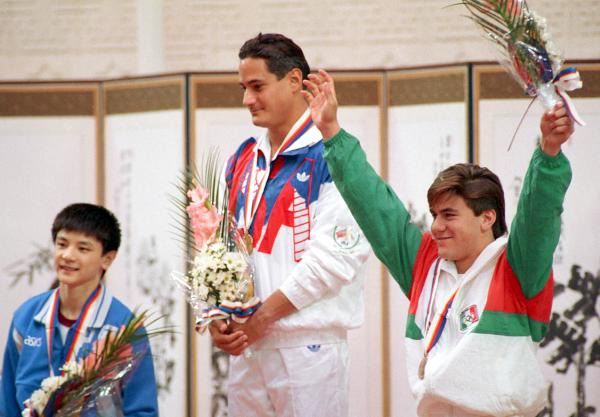 Olympic champion Greg Luganis (in the center) during the awarding ceremony at the XXIV Olympic Games in Seoul, 1988 Photo: Ed Reinke/Ap Photo/TASS
- In general, how much has American society have changed in recent years? How normal is it now to tell friends that you are gay, that you have an HIV-positive status?
- In the USA, these topics are still very stigmatized. There are a large number of homophobes - usually these are elderly, white, conservative people, often slightly racists. They have such a frequent argument: "same -sex marriages threaten our marriages." That is, personally my marriage threatens their marriage. In such cases, I usually ask for: "And which of you are gay?" Otherwise, what else way my marriage can be dangerous for them? Simple logic that helps to see the absurdity of these myths.
And about the virus-I am on dating sites, and very often people in my profile indicate: "I am a vicinative, I am looking for the same partner." Many of these people wrote to me. I ask them: “Do you know who I am? It is difficult to find someone more open about their status. ” And they answer: “Oh, you know, well, I wrote it for my parents - they are very afraid that I will become infected. In fact, it is not so important to me. ” It often happens. In general, the company is still not aware. We still have a lot to do. I would like people to share their stories for this. My husband Johnny has HIV-negative status. And I still have a good situation. All tests give excellent results, the amount of blood virus is very small. But I still check regularly, I take medicines every day and, in general, I always remember this. It seems to me that when there is a lot of love in the relationship, you will just do everything to protect your partner.
- Judging by the film, you were not indifferent to Russia, made friends with the Russian team.
-In Montreal in 1976, I was sixteen years old, all my comrades in the Olympic team were much older than me. But there it was possible to communicate with Soviet jumpers. They were seventeen to eighteen, and it was easier for me. There was even such a Sasha, in whom I even fell in love.
The Soviet team spent a lot of time with me, taught me a greeting in Russian - later I found out that it was an indecent word "p ... c". I also wanted to make fun of them so much, but they still knew something in English.
Recently, in 2012, when Putin signed the law on the “prohibition of propaganda of homosexuality”, many American LGBT activists proposed boycotting the Olympics in Sochi. And I probably was one of the few who spoke the opposite. Such boycottes are harmful only to athletes, but not politicians.
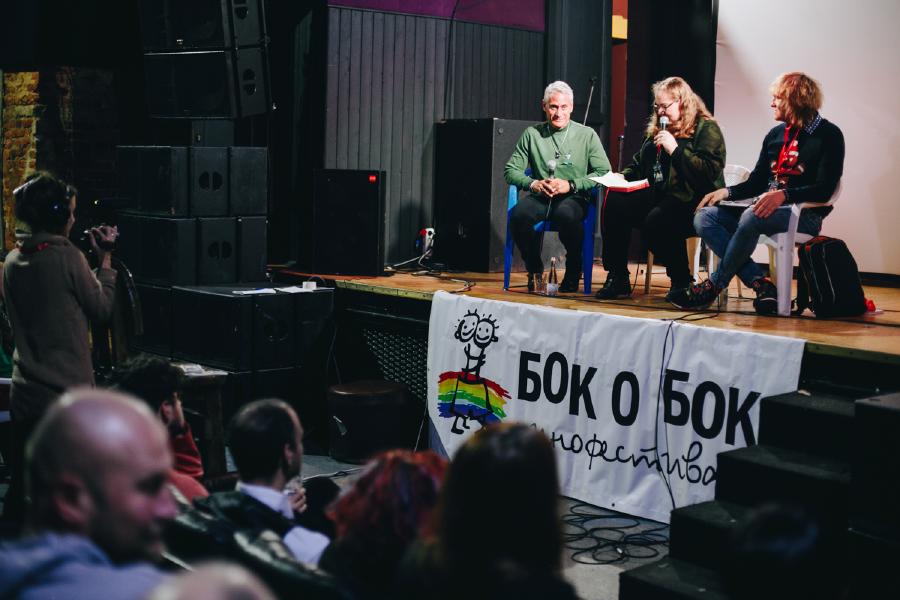 Greg Luganis (on the stage on the left) performs at the Festival "BOC ON BOC" in St. Petersburg Photo: Evgenia Anisimova
- What do you think about the current situation?
- I ran into her when I arrived in Moscow for open games organized by the Federation of homosexual athletes in the interval between Sochi and the Paralympics. It was very important for me to come and support people at least with their presence. And I was amazed to see how many problems were. We were almost evicted from the hotel. The opening of the games was torn off because a false call about mining was received. The organizers of Konstantin Yablotsky and Elvina Yuvakaeva worked twenty -four hours a day to find another site. Found some bar. But we were warned that we had to behave very quietly - and we could not even pat the speakers, only showed the applause with gestures.
-What would you like to convey to those who disrupt and prohibit the activities of LGBT communities?
Read also A positive outcome pregnant women with HIV talk about how doctors and others relate to them, and how to give birth to a healthy child
- First of all, the fact that we are not a threat to society. We are the same people. For example, I really love dogs. I am a friend, I am a brother, I am a son - there are still so many different things in me, except for those facts that people know about me. We could share our experience, allowing people to recognize us better. I hope that it would be possible to change some stereotypes and errors.
It seems to me that ultimately all of us has common values. First of all, we all want to love and be loved. And this is not a privilege, but the right to birth.
The most reliable way to achieve changes is to tell the stories of specific people and be open in your life.