
Translated material
"Yes, we are Scythians!" And the gold was given to Ukraine
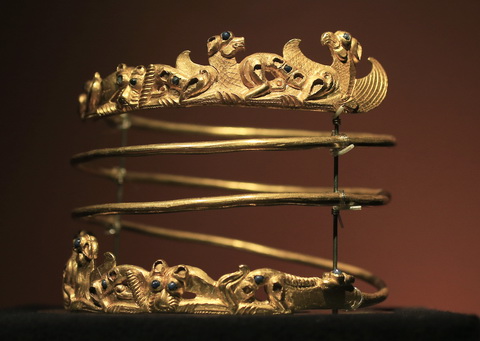
Last Wednesday, the Amsterdam district court decided that the Scythian Gold collection should be returned to Ukraine. The collection, which included more than five hundred valuable artifacts from several Crimean museums, was exhibited at the Allard Pirson Museum from February 6 to May 28, 2014. That is, at the very time when the Russian Federation carried out annexation of the peninsula. In other words, a collection from still Ukrainian Crimea was taken away. According to the laws of Ukraine, all exhibits of that exhibition are part of the Museum Fund of Ukraine. However, back in 2014, the Dutch side refused to return the collection of Ukraine on the grounds that Crimean museums can apply for it. And now the Dutch court has decided in favor of the Ukrainian side.
It is clear that Russian officials made a sharp criticism of the verdict of the court, calling it "politicized." However, not all. “It is very important to understand that the entire museum fund is the property of the state, and not the property of a single museum or other cultural institution. In this case, when the objects were taken out of the territory of Ukraine and belonged to Ukraine as the state, this decision seems to me quite justified, ”said Elena Gagarina, director of the Kremlin museums.
But the opinion of the historian and sociologist Anatoly Golubovsky, whom he shared with the readers of his blog: “According to the Law of Ukraine dated June 29, 1995 No. 249/95-VR“ On museums and museum business ”, all this is good-part of the Museum Fund of Ukraine, a public property. That is, museums - it doesn’t matter whether Crimea or Lviv - are neither the owners nor the owners of the objects stored in them. And Crimeans - even more so. After all, the Crimea is "not a separate state", as the Amsterdam court correctly reminded. In Russia, a very similar law. For example, the fuse only stores, studies and provides access to its collection, but does not own it. Antonova really thought and thinks differently. According to the same law, museum collections and museum objects, "classified as the state part of the Museum Fund of Ukraine, are not subject to alienation with the exception of the exchange for other museum collections and museum objects." By the way, it is not a fact that after the annexation of the collection of Crimean museums, they managed to introduce into the museum fund of the Russian Federation. Surely the Amsterdam court is in the know. So there is no policy in his decision. Continuous jurisprudence. And as for museum ethics, it is probably ethically ethical to steal not only museums with all giblets, but also to claim that by a happy chance it turned out outside Ukraine at the time of robbery. ”
However, be that as it may, the Scythian gold will remain in the Netherlands in the near future - representatives of the Crimean museums said that they would appeal to the decision of the Amsterdam District Court. So in any case, given the upcoming legal procedures, the collection will return to Ukraine no earlier than a year later.
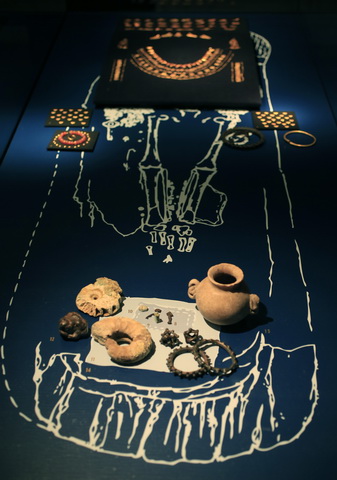
Photo: 1. Peter Dejong/Ar/TASS
2. Netherlands. Amsterdam. December 14, 2016. The Amsterdam District Court recognized the right of Ukraine to the collection of Scythian gold and decided to return the exhibits to Kyiv, and not to the Crimean museums, where it was stored and where it was sent to the exhibition to the Netherlands in February 2014 in the photo from the archive on 08/20/2014: the exhibit of the exhibition "Crimea: Gold and Secrets of the Black Sea" from the collection of Crimean museums in the archaeological Museum of Allard Parson. Ar/TASS