
Translated material
Three years in captivity with Islamists
The full story of the adventures of the traveler Konstantin Zhuravlev in Syria, told by Daniel Turovsky
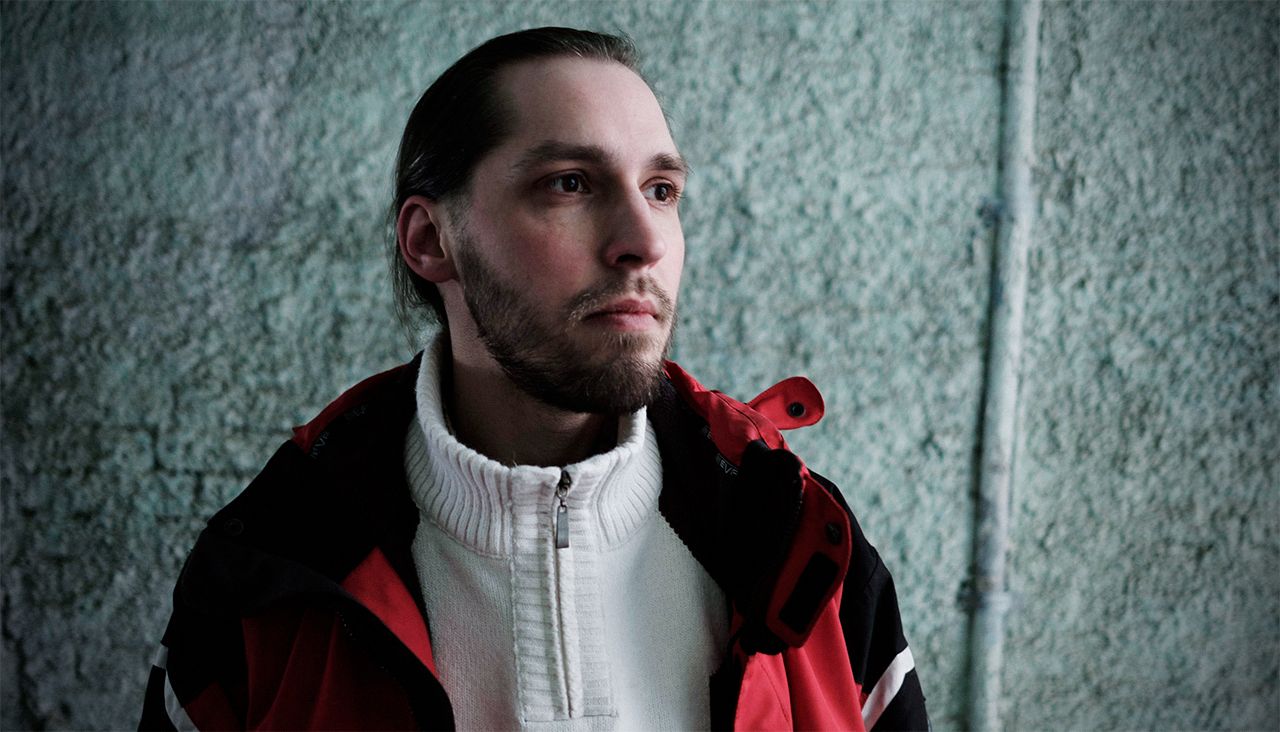
On October 14, 2016, it became known that Konstantin Zhuravlev, a Russian traveler, who was captured by Islamic rebels in Syria in October 2013, returned to Russia and spent three years captured by different groups. During this time, Zhuravlev managed to play football with militants, see bombing and torture, get acquainted with the supporter of the Islamic State, who had previously traded in the Moscow market, and accept Islam. Two months after his return to his native Tomsk, Zhuravlev told the story of his captivity and liberation of the Medusa specialist Daniil Turovsky.
Cold room
Through a small barred window under the ceiling, light broke through into the camera and snowflakes flew.
Konstantin Zhuravlev watched them go down to the floor, cringed, firmly pressed a blanket to him, which itself had long become cold. In the afternoon, the temperature reached an average of five degrees of heat, and at night fell to minus five. Without a heater, the cold became round -the -clock torture.
In this camera, one and a half, a Russian traveler who was captured by the Syrian Islamists was transferred a year and a half after more than a year after he found himself in Syria - in December 2014. She was in the prison of Islamist militants in the province of Aleppo.
The tall and bearded Zhuravlev quickly adapted to her. He cut the foam mattress so that he did not close the entire toilet hole in the floor. Several times a day the captive threw the mattress against the wall and kneaded: he ran in place, pressed, rocked the press - and so four times in a row. During one of the warm -ups, he - as usual - sang in full voice "from a smile will become everyone Sweeter" and "After all, it does not happen in the world that the children are lost." A voice came from behind the wall. Unknown in Russian with an accent believed: “One, two, three, four ...” The militant of the “Islamic state” of Osama turned out to be a new neighbor.
The jihadist said that he learned the Russian language during trips to Moscow, where he and his father sold Turkish clothes. The next days of Zhuravlev with Osama in Russian-Arabic discussed Islam, the methods of the Islamic State, and also the brother of Usama, who came to help him out, but he was captured. Soon both Syrians were exchanged - apparently, for captured militants.
In solitude, Konstantin began to travel in his head. He imagined how he left the house in Tomsk, reaches his brother’s apartment and took his bicycle from him. When Zhuravlev “went” to Argentina, he seemed to simply disappear from a cold prison cell for a few days. In Latin America, he ended up with a girl whom he met shortly before a trip to Syria - they traveled along the lakes and forests on a motorcycle.
Zhuravlev has been in captivity for more than a year. While the 33-year-old Siberian was sitting in a camera the size of a closet, his mother Nadezhda in Tomsk recorded a video message to President Vladimir Putin. “Everywhere Konstantin represented a simple Russian guy, sincere, smiling, a man with a kind heart and an open soul,” she said, standing next to the New Year's garlands. - Now our son is in great danger. I saw the execution of American journalists on the TV screen, I saw the execution of a British 50-year-old traveler, heard about Sergey Gorbunov (the Russian engineer was captured in Racca, he was executed in the spring of 2014). I am scared for the life of my son. I follow the information from Syria with fear. While Kostya is alive, I ask you, I beg you, help my son return home. ” Putin did not react to the appeal.
From the first day, the Russian traveler himself was sure that he would return home. Going through the memories, he found in his past the coincidences and signs that warned him that he would be captured. Konstantin Zhuravlev believed that he was brought to his hostage "Higher Forces to complete some kind of task." It seemed to him that "all this was not captured, but a business trip."
The road to Syria
Konstantin Zhuravlev was born in 1981 in Tomsk. After school, he studied at a programmer at a local university, then he worked on the GLONASS system in the Polyus Scientific and production center-mainly because the enterprise was given a deferment from the army. As soon as he turned 27, Zhuravlev quit and began to travel with hitchhiker, spending the night with friends or on the street. In three months he drove the CIS hitchhiking and spent almost two years on a trip around the world.
On trips, he tried to make his way where access was usually closed: Victoria’s waterfall in South Africa, for an overnight stay for one of the Mayan pyramids in Mexico; Shortly before a trip to Syria, he climbed to the bell tower of one of the Moscow churches in the Kitay-Gorod area and spent the night there. Before the adventurous travels, Zhuravlev tried not to think about the possible consequences, that he could be robbed, abducted or killed: "Otherwise, all this is accumulated as a snowball and can outweigh the desire to travel." He "renamed the adventure."
Zhuravlev - a fan of the Secret project, a pseudo -scientific film and a book that the power of thought can be changed by reality and self -heal. Going to the bookstore, he first goes to the shelf with books about the power of the subconscious. The traveler is sure that the Apple Watch and the BlablaCar fellow travelers and the thought of thought have conveyed the instructions for how to make them.
In the summer of 2013, he decided to go to a long meditation in the Egyptian desert, where he had already visited in December 2010 during a trip around the world. There he was going to live 21 days with blindfolded eyes and shut up his ears.
Further events, as he thinks, happened no coincidence. Zhuravlev was going to fly to Cairo on an airplane, but met in St. Petersburg with an astrologer, who called him to Abkhazia. From Abkhazia, he decided to get to the desert by hitchhiking through Turkey and Syria.
He did not know the details of what was happening in Syria, but there he "called his inner voice in order to come into contact with the pain of the people living in the war." By October 2013, militants from the Free Syrian Army had fought with the troops of President Bashar al -Assad for two years. It all began in the spring of 2011, when several adolescents inspired by anti -government uprisings in other countries of the Middle East (the so -called “Arab spring”) painted the opposition slogans of the wall in the city of Dery. The police detained them and beat them. In protest, local residents began to smash state buildings, the authorities shot demonstrations. After this, the procession and protests spread throughout the country. Several rebellious army generals founded a “free Syrian army”, which included Islamist militarized groups from different regions. At the beginning of the war, they collaborated with each other, but later they began to compete. Around the same time, in uncontrollable Syria, jihadists from the Islamic state of Iraq and Levant began to seize the territories. At the same time, Zhuravlev was going to drive the country in a few days on buses.
In early October, another truck landed him near the Turkish city of the Horde.
In a few dozen meters, among village houses, he heard music and drums - so he accidentally ended up at the wedding. Having walked at a strange holiday, on October 2, 2013, the traveler left the Horde to the south of Turkey. From the village he was planted in Gaziantep, “Turkish Casablanca”, a transit city for militants and refugees. For the night, he went into an abandoned house near the highway. It smelled of rot. Turning on the lantern, Zhuravlev saw a dead bird on the floor. Later - in captivity - he will decide that this was one of the warnings about the near future: the dead bird meant the end of freedom. Having got out of the house, he spent the night in a sleeping bag under olive trees.
In the morning, the traveler caught the car to Kilis, the city on the border with Syria (Medusa published a report about him). Turkish border guards refused to let him in. In English they did not speak-and one of them crossed his hands, showing a gesture that in Syria they will handcuffs on Zhuravlev. After short -term bickering, the Russian still managed to cross the border.
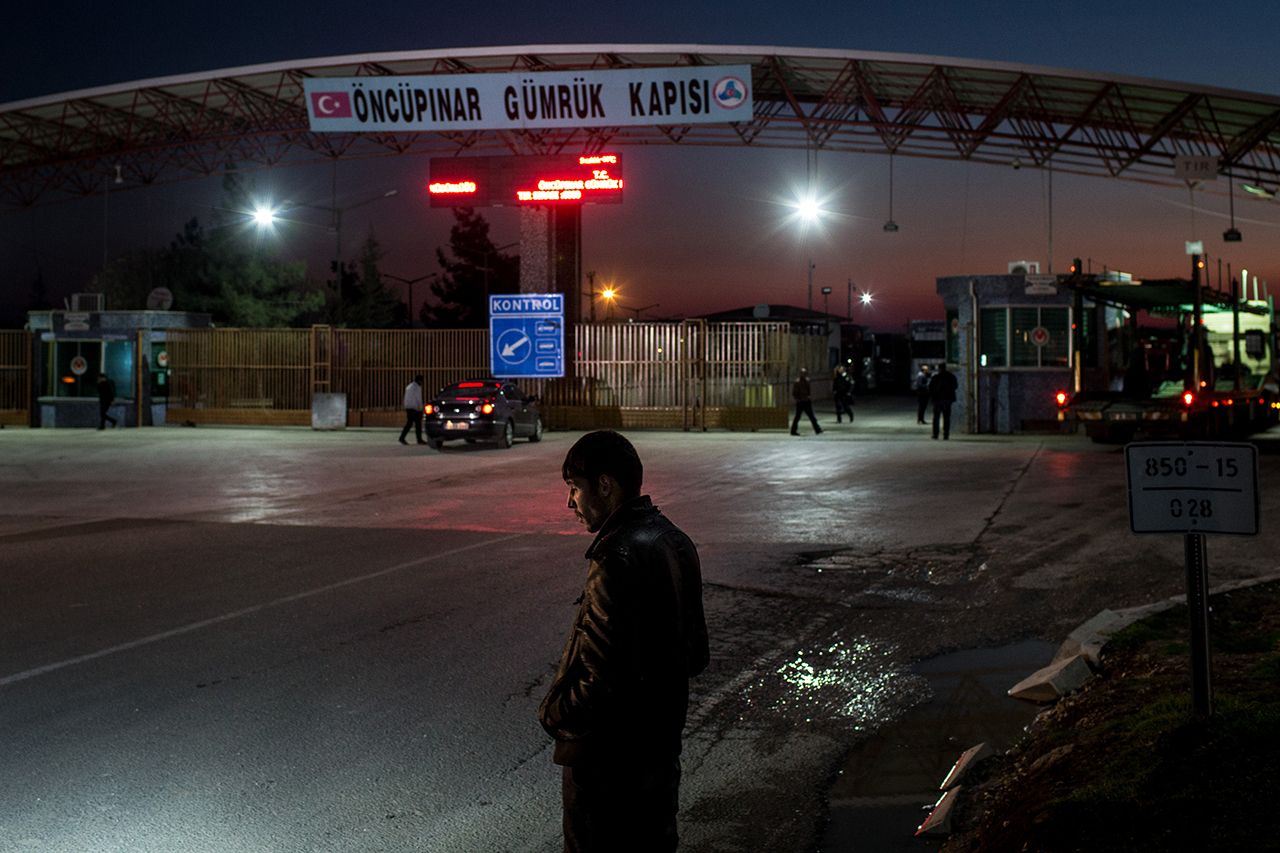
Having passed a few meters, he saw a poster with the inscription English: "Free Syria." Zhuravlev prepared several tens of dollars in cash to pay for a visa - in 2010, he was put on the border during the trip.
The border guard carefully examined the traveler’s passport and led him into a car parked nearby. They drove about fifty meters to a small border service building.
In the building, the man explained to him that he was not a border guard, but a “Lebal AT-Tauhid” soldier, an Islamist group, which is part of the Free Syrian Army. It turned out that this section of the border is controlled by militants. The man asked why Zhuravlev came to Syria and whether he knew that there was a war in the country. He said that the SSA is fighting with the government forces of President Bashar Assad, who is supported by Vladimir Putin, and added that all Russians are under suspicion.
Zhuravlev, who first decided to ask back to Turkey, realized that he would not be released. A few hours later, four more militants arrived in the building. One of them spoke Russian with the Ukrainian accent. He again asked the Russian why he arrived, and Zhuravlev again said that he was going to the desert for meditation.
The Syrians took him a laptop, a telephone, a GoPro camera, a passport - but left bracelets with a symbol of the sun, a rosary and a Buddhist ring. Zhuravlev was put in the car. The AK-47 AK-47 armed militants sat nearby.
Prison, parents and Grigory Leps
Zhuravlev was transported to the city of Al-Ray thirty kilometers east of the border point, where they made a prison out of several large hangars for military equipment. The Russian was placed in a small common camera, where five more people lived - local Syrians who were suspected of relations with the government. The prisoner was not explained what was waiting for him. In other cameras, dozens of teenagers were sitting. Many of them had deep cuts on the body. The children said they would shoot them soon.
The militants often played football in front of the prison building. Friendly and sociable Konstantin sometimes joined them. The head of the prison approached him several times, put a gun to his head and pretended to press the trigger. Zhuravlev answered him in English, whom the jailer did not really know: "Shoot, I will still smile."
Playing football, he noticed that a staircase was assigned to the roof of one of the buildings: jumping off it, one could be free. Zhuravlev thought that he was still unlikely to escape: there were still continuous militants around. When he asked them what they wanted from him, at first they promised to let him go ten days later, and then, when this time passed, seven months later.
Zhuravlev’s parents learned about his captivity only eight days after he crossed the border of Syria. On October 12, 2013, a phone call from relatives from St. Petersburg was heard in their Tomsk apartment. They advised to turn on the TV quickly: in the news they said that Konstantin was captured. Soon, a family friend Oleg Patsai discovered in one of the groups of Syrian militants on Facebook a photograph of the captive of the captive (now the group is closed): it reported that they detained a spy from Russia, who worked for Russian and Syrian intelligence. Zhuravlev's friends began to write comments under the photograph that he was a traveler. The next day, the militants wrote in Arabic in the same group that "exclude the likelihood that he is an ordinary tourist." “What kind of tourism is in the country in which fierce battles take place and whose people are killed, abducted and expelled from their native places?” - the Syrians were perplexed. They stated that they would send Zhuravlev a case for the Islamic court - "there is no more just court than the Jihad fighters on earth."
Employees of Russian power and diplomatic departments with Zhuravlev’s parents did not contact, the mother of Constantine later told Medusa. On October 15, 2013, the Ministry of Foreign Affairs promised to take "the necessary steps for the speedy liberation [Russian]." The representative of the Foreign Ministry, Alexander Lukashevich, added that "it is very difficult to determine the location where our citizen is, and those circumstances that opened him so irresponsibly to Syrian territory."
Soon Konstantin was given to contact his parents. That day, Zhuravlev had dinner in the office of the head of the prison. Abu Hatim agreed to allocate him for five minutes to talk. Zhuravlev entered Skype, but saw that there were no parents on the network. He quickly scored his friend to tell his parents to turn on the computer. After a while, the parents finally went online. The connection broke off, but they saw each other. Before the other call, a few days later one of the guards told Zhuravlev: "Today you will die, we will put on you dynamite and send [explodes]."
A few days later, Zhuravlev was taken out of the camera and brought into the neighboring one. In it, one of the militants raised a blanket hanging on the wall. Behind him was a small door, behind which a long tunnel began in the "secret" room. A little later, he learned that he was hidden from the militants of the “Islamic state of Iraq and the Levant” (the future of the “Islamic state”), with whom the SSA was still cooperating at the end of 2013. Jihadists wanted to take Zhuravlev to them. Arriving militants of the SSA were said that the Russian had returned to Turkey. Zhuravlev suggested that the militants holding him did not want to help the group with which they began to diverge in his eyes: it became too radical.
At the end of October 2013, Oleg Melnikov from the Alternative movement (a public organization that saves people from slavery), using his contacts, contacted the leadership of Leban Aushid. Those transferred their demands: relatives and friends of Zhuravlev must go to pickets in Moscow against the war in Syria and Vladimir Putin. This did not happen - the relatives told Melnikov that they would “put it up for this in Russia. Then the activist agreed with the leaders of the group that two veterous Muslims will come to Syria, who will be entrusted with Zhuravlev at the Sharia court. On November 13, 2013, the “rescuers” flew to the Turkish Gaziantep and crossed the border, but a few kilometers from Aleppo they learned that the meeting was canceled: the leader of the group died during the airstrike. The militants refused to show Konstantin Zhuravlev, citing the fact that the "rescuers" will bring Russian special forces on them.
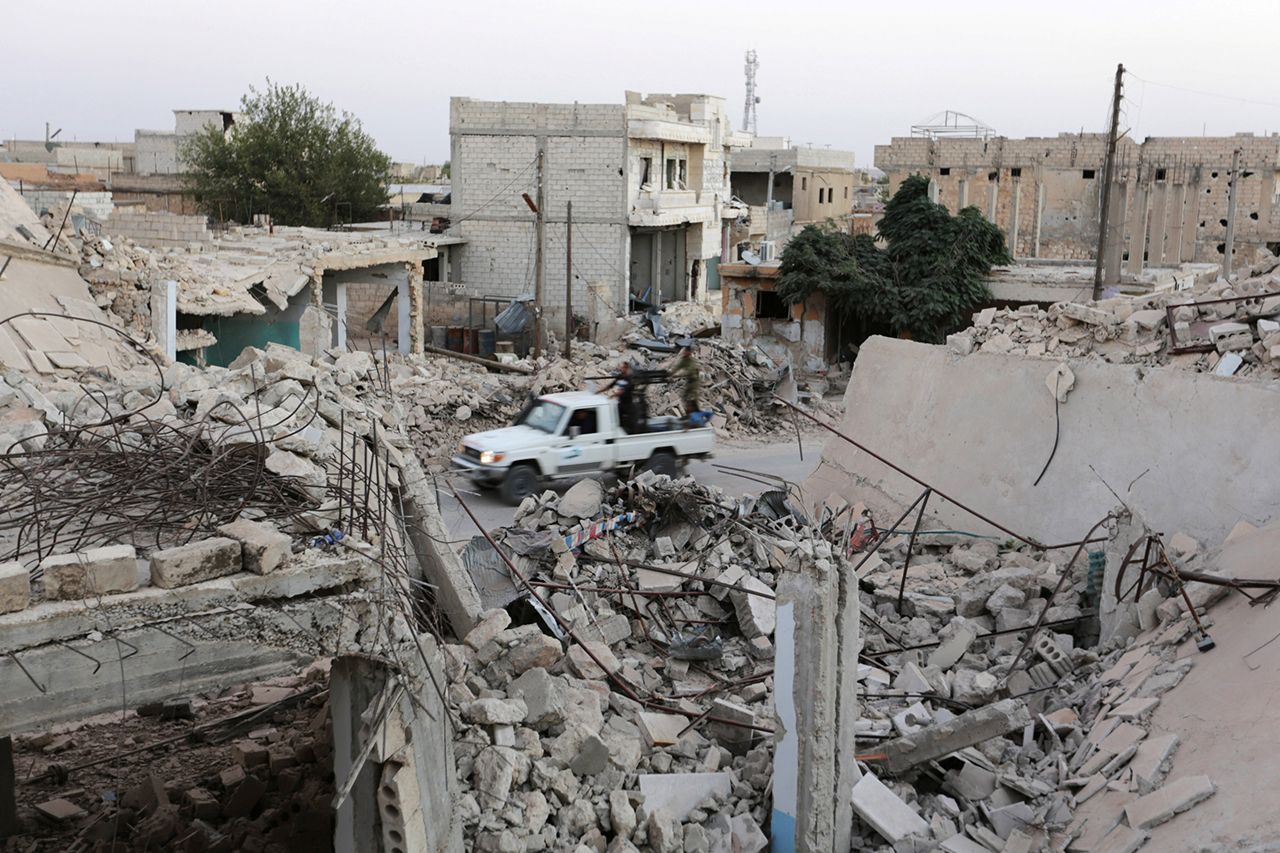
Zhuravlev did not know anything about the efforts of Melnikov-he spent three months in the “Secret Room” and left it only in January 2014, when al-Ray began to surround the fighters of IG. At the end of the month, he and other prisoners were transported to Aleppo, the second city of Syria, the main citadel of resistance, where both sides more than once used chemical weapons against each other. In Aleppo, he was kept in several prisons: the city was constantly bombed by government troops - and the militants moved from place to place. In the days of the bombing, Zhuravlev took refuge with a blanket and carefully listened to where the next rocket would fall.
In early February, he was last allowed to call Skype. The connection was interrupted again. He asked: "Do you hear me?" “Yes, we hear you, son, we hear,” his mother answered him. “In general, these are good people here, but the only thing, now, now they tell me that our government ... no one will do anything ... say only you, let your father say nothing, only your voice ... Listen, take care of your health, because they can call you, they can say that they will kill me. Now, if the government is not ... Hello ... yes, yes? If no one will do anything, they will kill me, but you, please do not worry, you always take care of your health and always think that there is God, even if they kill me ... "
From his parents, Zhuravlev learned that they want to exchange him for sixty militants of the SSA, sitting in prison in Damascus. Later, they proposed to exchange Zhuravlev for the colonel of the SSA, who is captured in the same place. The militants transferred these requirements through the Syrian oppositionist Muiza Abu Alejdail, who had been working in the organization of assistance to refugees “Civil Assistance” (Oleg Melnikov connected it to the case). In a conversation with Aldzhdil, the jihadists called Zhuravlev “a very good person” and refused to ransom. They shot a video in which Zhuravlev said that "everyone wants freedom." “Six months is a long time. I'm not a thief, I'm not a killer, I'm not a soldier. I would like to become free, ”said the Russian. “I wanted our Russian - mine - the government, the Russian government, care not only about the country as a whole, but also about every citizen of my country.”
Муиз Абу Алдждаил рассказывал «Медузе», что передавал требования в МИД и в посольство Сирии в Москве, но ему не ответили.
Здание в Алеппо, из которого Журавлев звонил родителям, часто попадало в зону авиаударов сирийских истребителей. 11 февраля 2014 года его перевели в новую тюрьму в здании школы Аль-Шибани, построенной в XIII веке. Она находилась в старой части города, рядом с его главной достопримечательностью, Цитаделью, которая была построена в 900-х годах и веками использовалась для обороны города — во время Крестовых походов, во время нашествия Тамерлана.
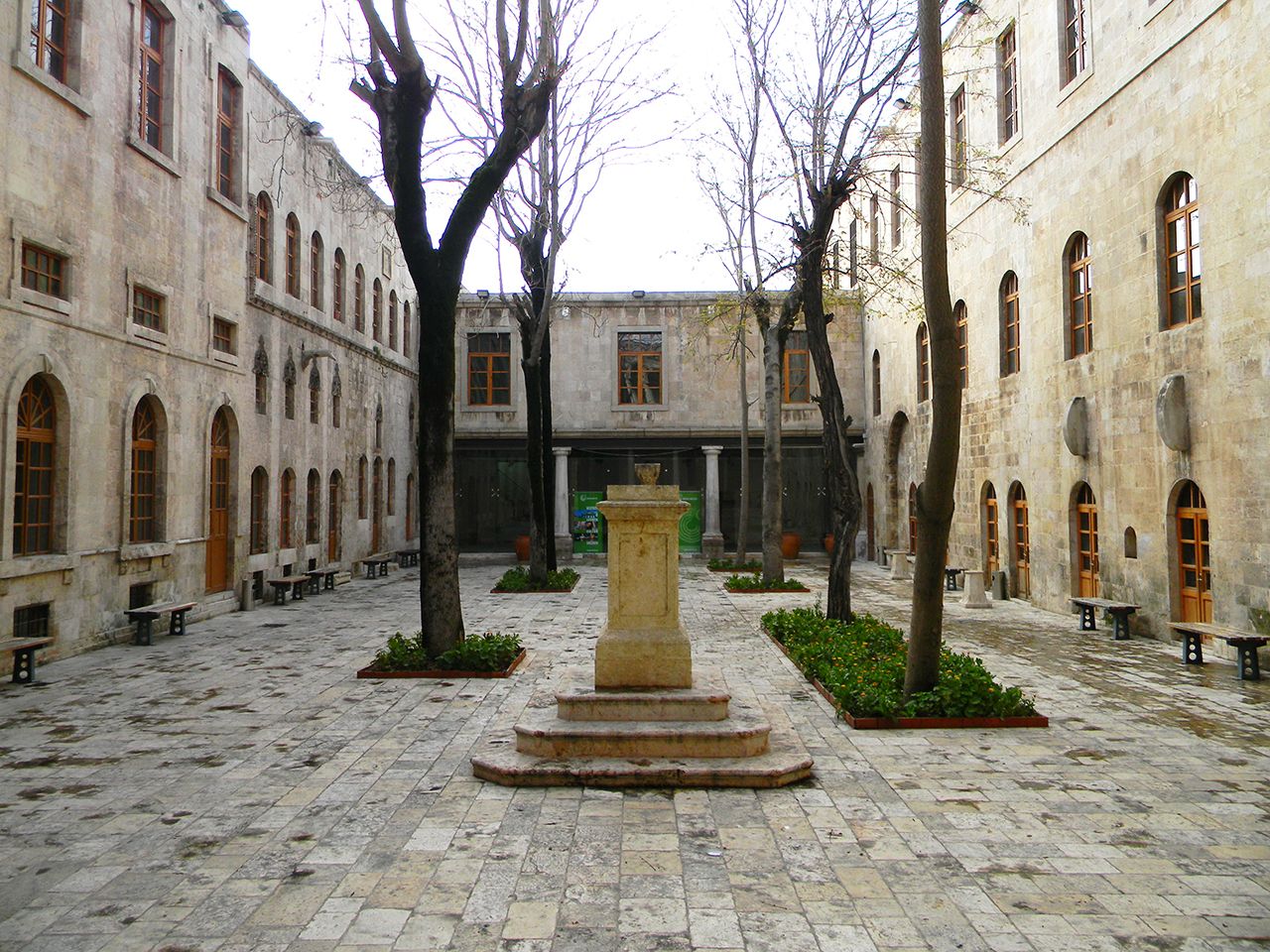
Он попросил, чтобы ему дали еще раз созвониться с родителями, но боевики сказали, что скайпом пользоваться небезопасно. Вместо этого они взяли его с собой, когда поехали за продуктами на рынок, и по пути они заехали в одно из городских интернет-кафе. Правда, внутри оказалось много посетителей. Боевики не хотели, чтобы кто-то узнал, что россиянин с ними, поэтому быстро вернулись в тюрьму.
Скоро пленнику вернули его ноутбук и плеер. Пока рядом со зданием периодически взрывались бомбы, Журавлев слушал «Игру с огнем» и «Я свободен» «Арии», «Машину времени», Григория Лепса.
На компьютере он прочитал давно скачанные книги — труды Карлоса Кастанеды, «7 навыков высокоэффективных людей». Ему разрешали выходить во внутренний двор Аль-Шибани. Во время прогулок он, как и в прошлом месте заключения, разработал возможный маршрут побега. Он нашел коридор, ведущий на второй этаж, где было окно без решетки. Из него можно было выпрыгнуть на улицу. Впрочем, сбегать Журавлев не стал — не только потому, что не ориентировался в Алеппо, но и потому, что пришел к выводу, что плен — «невероятнейшая духовная практика».
Его посадили в камеру с сотрудниками сирийской разведки. Один из них хорошо говорил по-английски, и по вечерам, когда все засыпали, они с Журавлевым обсуждали свою жизнь до плена. Амхаммад (так звали нового приятеля россиянина) любил поговорить о женщинах. Он удивлялся любовным приключениям Журавлева и смущенно рассказывал о том, каких красивых женщин он встречал и как однажды сидел с девушкой в кафе, но боялся, что на них обратят внимание. Днем пленники изучали английский и арабский, составляя словари в тетрадках. Их общение закончилось, когда Журавлев попросил Амхаммада объяснить разницу между суннитами и шиитами. Он сказал Константину, что обсуждения религии для него оскорбительны.
Летом 2014 года Журавлева вывели из камеры, посадили в автомобиль и повезли в поселение к юго-западу от Алеппо. Там «Лива ат-Таухид» передала его людям из «Нур аль-Дин Зинки», одной из самых влиятельных оппозиционных группировок в Алеппо (численность — около 1000 боевиков). С начала войны и до 2014 года они получали финансовую помощь США; позже в их адрес появились обвинения в жестоких казнях — говорили , в частности, что они отрубили голову 12-летнему подростку.
Следующие два года Журавлев пробыл в комплексе тюрем, находившихся в деревне. Первые шесть месяцев он провел в камере полтора на два метра, где сначала было очень жарко, а зимой было невозможно согреться. В январе 2015 года его перевели в общую комнату. Все окна в камерах были заложены камнями после попытки побега одного из заключенных — свет в них попадал только через отверстия в потолке.
Заключенных хорошо кормили и наказывали, если кто-то отказывался есть. Кроме риса, плова, курицы, макарон, лепешек Журавлеву часто выдавали халву, абрикосовое варенье, помидоры. Пленники между собой говорили, что живут за счет США. Журавлев рассказывал сокамерникам о том, как американцы спонсируют оппозицию: «Они уже устраивали на Украине и в Грузии революции, а в России собирались [это сделать] в декабре 2011 года!»
Журавлев чувствовал страх, когда вспоминал, что в любой момент может попасть к ИГ — это могло легко произойти, исламистские группировки постоянно объединялись между собой. Он боялся не смерти, а боли. Пленники рассказали ему, что джихадисты часто практикуют болезненную пытку, во время которой оттягивают и срезают кожу с внутренней стороны бедра.
Впрочем, он был уверен, что не погибнет. Однажды в феврале 2015 года их начали бомбить особенно сильно. Боевики и пленники стали молиться. Ракеты падали в 50–100 метрах от дома. Одна из них попала в припаркованный рядом автомобиль, взрывом его часть унесло на крышу здания. Журавлев, уверенный в том, что в Сирию его привели высшие силы, сказал им: «Ребята, успокойтесь, все нормально, я здесь, ракета сюда точно не упадет. Do not worry. " Чтобы показать уверенность, он подошел к столу с едой, взял лепешку и обмакнул ее в перечную пасту.
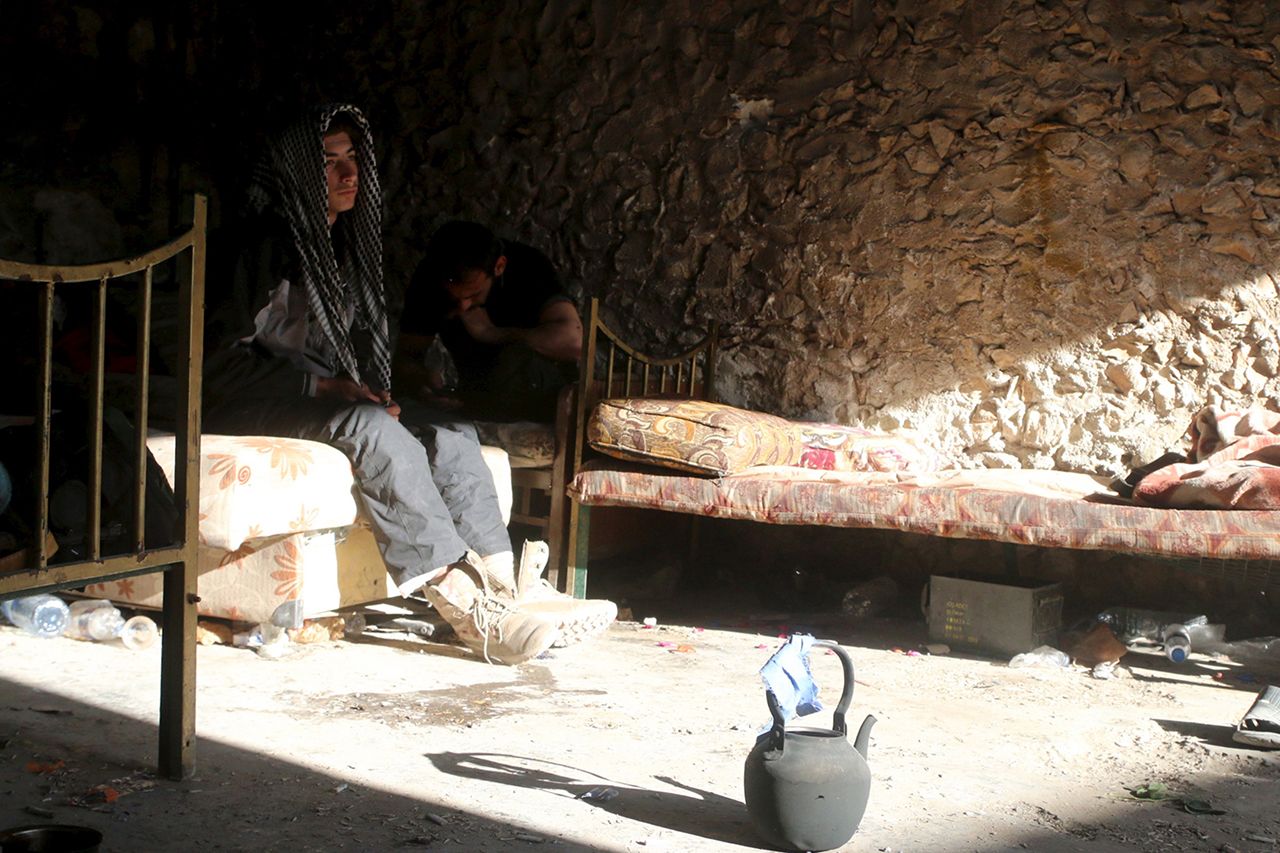
Боевик Дима, живопись землей и комары
Несмотря на то что Журавлев видел пытки, а его самого держали в плену, он доброжелательно относился и относится к боевикам. «Они защищали меня от ИГ, от авиаударов. Я не могу назвать их боевиками, это молодые люди 30–40 лет, они разговаривали со мной по-английски», — говорит он.
Он много общался с джихадистом, который называл себя Димой. Тот родился в Иркутске, уже взрослым принял ислам, рассказывал, что отсидел в России за свои религиозные убеждения, а потом приехал в «Свободную сирийскую армию». На базе он обучал других боевиков восточным единоборствам. Константин задавал ему вопросы об исламе: его интересовало, почему Бог несправедлив и зачем Дима приехал на джихад. Дима был немногословен и советовал искать все ответы в Коране.
С августа 2015 года Журавлев — чтобы разнообразить рутину — стал напрашиваться на работу в тюрьме. Он убирал все 12 одиночных камер и общий зал, чистил туалеты, стирал пледы и матрасы.
Когда не было работы, он пытался исправить свою картавость. Для этого он пел в камере песни, в которых много раз присутствовала буква «р»: «Если долго, долго, долго, если долго по тр-р-ропинке, если долго по дор-р-рожке, топать, пр-р-р-рыгать и бежать».
На второй год в плену Журавлев обнаружил, что коричневатая земля, которая в Сирии повсюду, подходит для рисования. Он просеивал ее от камней через подкладку, оторванную от шорт, которую ему подарил заключенный боевик ИГ. Место для рисунка он штукатурил подошвой тапка, потом разводил порошок водой. В одной из комнат он нарисовал губкой для мытья посуды карту мира.
Каждую камеру, куда его переводили, он старался сделать уютнее. Перекрашивал стены: из серого цвета — в песочно-бордовый. Перекрашивал лампочку, чтобы вместо белого резкого света она давала теплый желтый. Собирал у других заключенных ненужные им пледы и застилал ими все поверхности в камере. Однажды ему удалось добыть второй поролоновый матрас, он сложил его пополам, положил на другой — получился диван.
Впрочем, в плену все равно было тяжело. После холодной зимы пришло жаркое лето. По ночам прилетали комары. Он спасался от них, закрывая мокрыми полотенцами лицо и ноги.
Пленник часто вспоминал, что ехал в египетскую пустыню, чтобы провести три недели в полном одиночестве. К его удивлению, оказалось, что одному ему очень тяжело. Иногда других заключенных не было рядом по несколько месяцев, и единственными собеседниками общительного Журавлева, желающего поделиться переживаниями и историями, оказывались охранники, заглядывавшие на минуту утром и вечером, чтобы передать тарелку с едой.
Еще тяжелее было возвращаться в камеру после прогулок. Однажды после того, как, выйдя на свежий воздух с боевиками, он увидел «небо, птиц, горы, стадо баранов», весь следующий день Журавлев болел — «хотелось рвать и метать». Это ощущение было настолько невыносимым, что от прогулок он в конце концов просто отказался.
Прочитав несколько раз литературу, сохраненную на компьютере, пленник попросил у боевиков принести ему каких-нибудь книг. Боевики согласились только на Коран. Из Турции ему привезли три тома — на русском и арабском с комментариями.
Книга шла тяжело, но заняться было больше нечем. Пленник прочитал Коран несколько раз, делая пометки и выписывая фрагменты в блокнот, который ему иногда выдавали. Ему не понравилось, что весь ислам построен на страхе: Журавлев считал, что с Богом нужно общаться как с другом.
В те же дни он попросил у тюремщиков учебник арабского. Ему принесли детскую книгу с алфавитом и рисунками. Еще до учебника, общаясь с боевиками и заключенными, он выучил отдельные слова — «слушать», «лежать», «идти», «есть».
Однажды осенью 2014 года пленник услышал, что в подвале включили политические песни ССА. Это было знаком, что там кого-то пытают. Журавлев взял Коран, вышел во внутренний двор и зашел оттуда в комнату, где пытали кого-то из заключенных. Там его увидел один из охранников. Константин показал ему суры о прощении. Охранник покивал, вышел, пытки внизу продолжились.
Журавлев регулярно становился свидетелем пыток, но его самого никогда не трогали. Он считал, что его хотели сохранить в «товарном виде».
Других пленников пытали в специальных тюремных комнатах. Некоторым выбивали зубы, других подвешивали в наручниках и избивали палкой. Чаще других способов боевики использовали для пыток пластиковую трубу, ей они били по стопам, ногам, спине. Так они, например, наказали одного из охранников, который иногда давал заключенным-сирийцам позвонить по телефону родственникам.
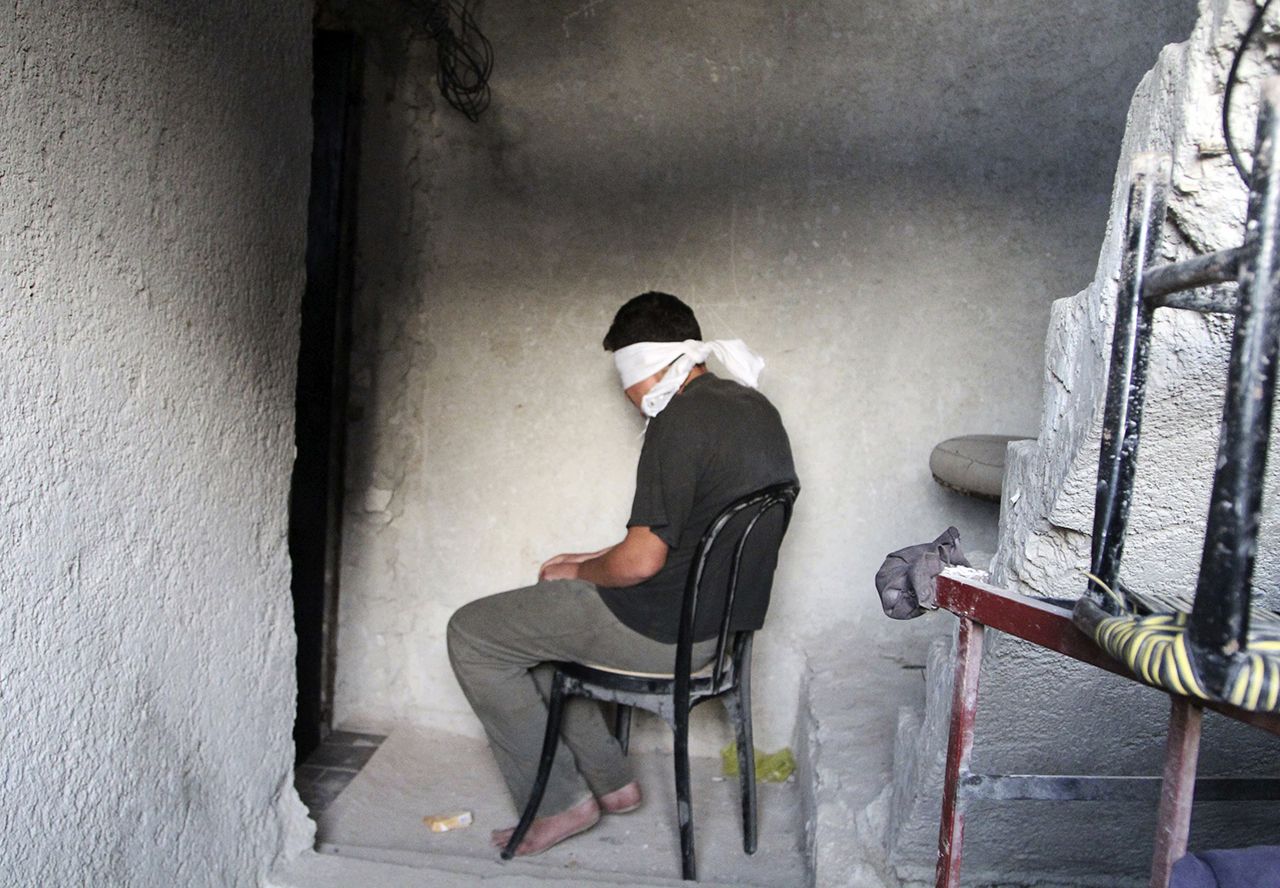
Журавлев продолжал читать Коран. Приносить заложникам Священную книгу — традиция исламистских боевиков. Многие из попавших к ним со временем принимали ислам. Узник «Исламского государства» журналист Джеймс Фоули принял ислам и взял имя Абу Хамза (в августе 2014 года его казнили).
Боевики интересовались у Журавлева, почему он не поступает так же. «У меня позиция многогранного мышления. Я не хочу уходить в какую-либо религию, для меня важен сам человек — чтобы он был добрым, чистым, нравственно здоровым. Я предпочитаю брать отовсюду кусочки света, которые мне близки, и считаю, что это наиболее правильно», — говорил он им на английском, который никто из охранников на уровне богословских бесед не понимал. Тем не менее летом 2014 года, поговорив с одним из заключенных, Журавлев стал мусульманином — произнес шахаду и признал Коран.
В течение нескольких месяцев он искренне молился, потому что «была потребность», — обычно за несколько минут до намаза других заключенных, в этот момент они переставали разговаривать, и Журавлев ловил эту тишину. В дальнейшем Журавлеву часто приходилось молиться «напоказ», когда в его камеру подселяли других пленников. Он выучил «Фатиху» на арабском, но вторую часть молитвы всегда произносил на русском: благодарил Аллаха «за жизнь, за маму и папу, за путешествия».
Liberation
В декабре 2015 года один из охранников тюрьмы сказал Журавлеву, что его скоро отпустят. В середине месяца на него впервые составили анкету: на бумаге А4 со штампом ССА были указаны возраст, место рождения, маршрут и место работы — российские спецслужбы. Боевики написали, что Журавлев ехал на встречу с представителями «Исламского государства», чтобы наладить сотрудничество между ними и сирийской армией.
Все время нахождения в плену российский МИД раз в несколько месяцев сообщал, что «решает вопрос» освобождения Журавлева. «Мы активно занимаемся этим, вопрос достаточно сложный» (февраль 2014 года); «необходимые меры с целью сохранения жизни и здоровья и освобождения Журавлева МИД России приняты» (август 2014); «предпринимаем активные усилия по его освобождению и возвращению на родину» (ноябрь 2014); «мы находимся в плотном контакте с официальными властями Сирии и сирийской оппозицией, обращаемся к международным и региональным партнерам, имеющим влияние на отряды вооруженной сирийской оппозиции» (февраль 2015).
В следующий раз об освобождении охранники заговорили с Константином только в сентябре 2016 года. 22 сентября к Журавлеву зашел Абдрахман, куратор повстанческих тюрем провинции Алеппо. Он посоветовал к ночи собрать вещи и поручил одному из охранников купить для пленника новую одежду и собрать пакет с едой. Новые джинсы и футболка оказались на несколько размеров меньше нужного — так что вместо них Журавлев снова надел зеленый свитер, оранжевую футболку, песочные брюки и заштопанные несколько раз ботинки, в которых три года назад заезжал в Сирию. Охранник вручил ему пакет с курицей, картошкой фри, кетчупом и газировкой.
Журавлев пригласил всех боевиков на «заключительный вечер» в свою камеру. Те зашли в гости на минуту, а потом пригласили пленника наверх — в свою комнату. Там на столе лежала гора шоколадок и вафель — Журавлев подумал, что они предназначались ему, но это предположение не подтвердилось. Поедая сладости, боевики завели с ним вечный разговор о Башаре Асаде, Путине и судьбе Сирии.
Ночью за Журавлевым никто не приехал. В обед на следующий день его посадили в автомобиль и отвезли далеко на запад, в город недалеко от Латакии, где с 30 сентября 2015 года находится база российских войск.
Его передали представителям очередной группировки. Впервые за все время плена россиянину на руки и ноги надели наручники. Хотя боевики и хорошо говорили по-английски, они не уточнили, к какой именно организации принадлежат. Журавлева привезли в квартиру в жилом доме. Первые две ночи он спал лицом вниз с застегнутыми за спиной наручниками; после них у него остался на руке шрам. В этой квартире он провел следующие восемь дней.
Утром 1 октября 2016 года тюремщики принесли россиянину его вещи. Журавлев помолился и сел в автомобиль. Автомобиль два с половиной часа петлял по деревням и полям — и в конце концов прибыл в город Хама. Россиянина вывели из машины и передали группе мужчин, которые оказались сотрудниками сирийских спецслужб. Они перевезли его в свой офис в Дамаске, где на следующий день к Журавлеву пришли представители российского посольства. Они задали несколько формальных вопросов и пообещали, что совсем скоро все закончится.
4 октября Журавлева посадили в самолет и перевезли на российскую военную базу в Латакии. Его собирались сразу же отправить в Москву, но из-за плохой погоды в столице полет отложили на следующий день.
Журавлев так и не понял условий своего освобождения. Он не знает, заплатили ли за него выкуп или обменяли на пленных боевиков. Ему посоветовали не рассказывать подробности своего освобождения.
В Москве томского путешественника поселили в гостиничном люксе. Следующие двенадцать дней Журавлева опрашивали и осматривали сотрудники ФСБ. Судебно-медицинская экспертиза не выявила на его теле каких-либо травм и повреждений.
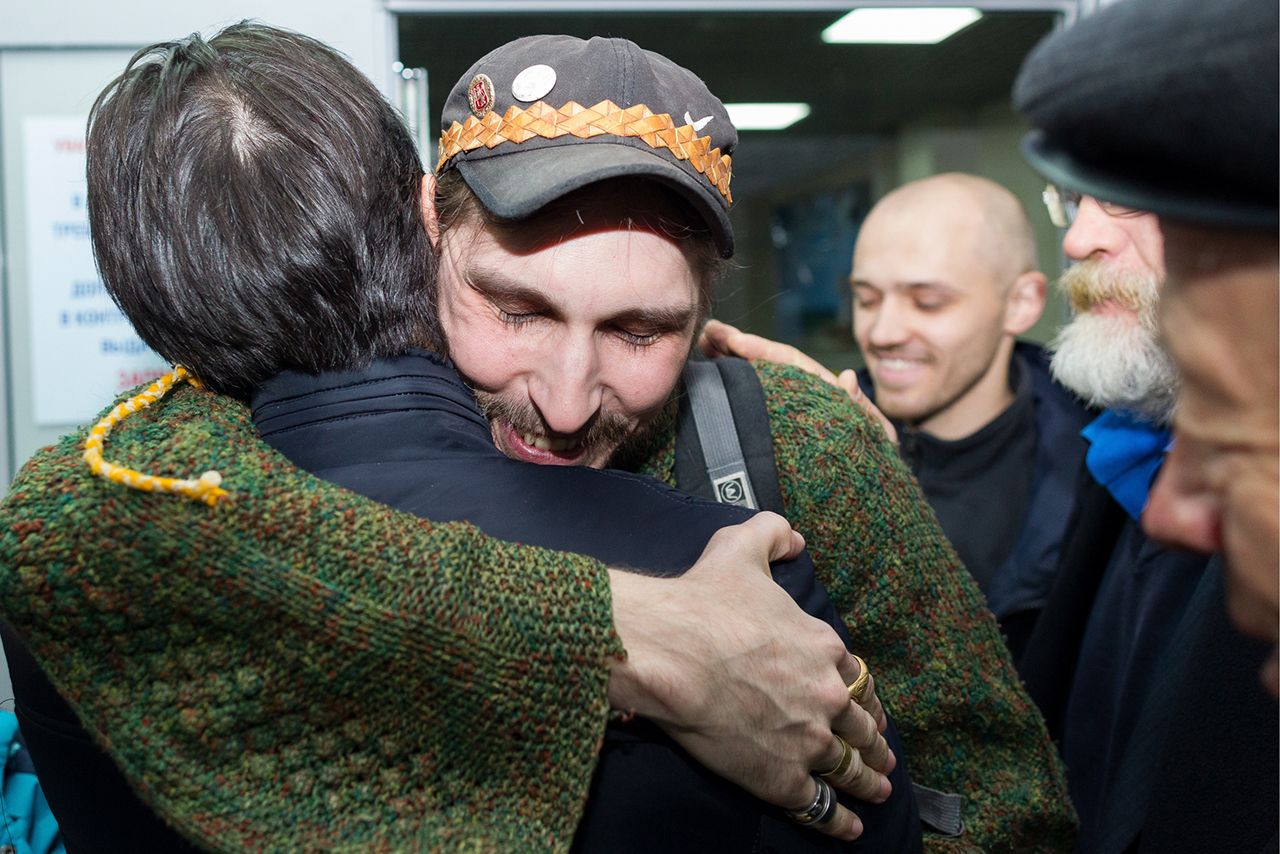
14 октября к нему приехала мать, и на следующий день они вместе улетели в Томск. Там его встретили родственники и друзья. Выйдя из аэропорта, Журавлев снял ботинки и пробежал по снегу босиком. Он выкрикнул: «Ребята, разувайтесь, идите по снегу пешком!» После нескольких дней с семьей Журавлева снова обследовали психологи — но от постоянных консультаций он отказался. После возвращения из плена Константин заметил, что ему стало сложно фокусировать взгляд с близких на дальние предметы и сконцентрироваться на чем-либо. В первые несколько дней после возвращения он старался прочитать как можно больше новостей. Некоторым он удивился — например, появлению 3D-принтеров. Информации оказалось даже слишком много; он свел к минимуму чтение социальных сетей.
Провинцию Алеппо и сам город, где путешественник три года провел в заложниках, к середине декабря 2016 года почти целиком зачистила сирийская армия.
В ближайшее время Журавлев хочет найти работу и поставить о своем 1096-дневном плену спектакль. В первый же день в Томске он заявил , что хочет восстановить загранпаспорт, чтобы отправиться в Сомали и Афганистан. «Медузе» он сказал, что не собирается в новые путешествия: «Пока хватило».
Daniil Turovsky
Moscow