
Translated material
Terror in the Crimea
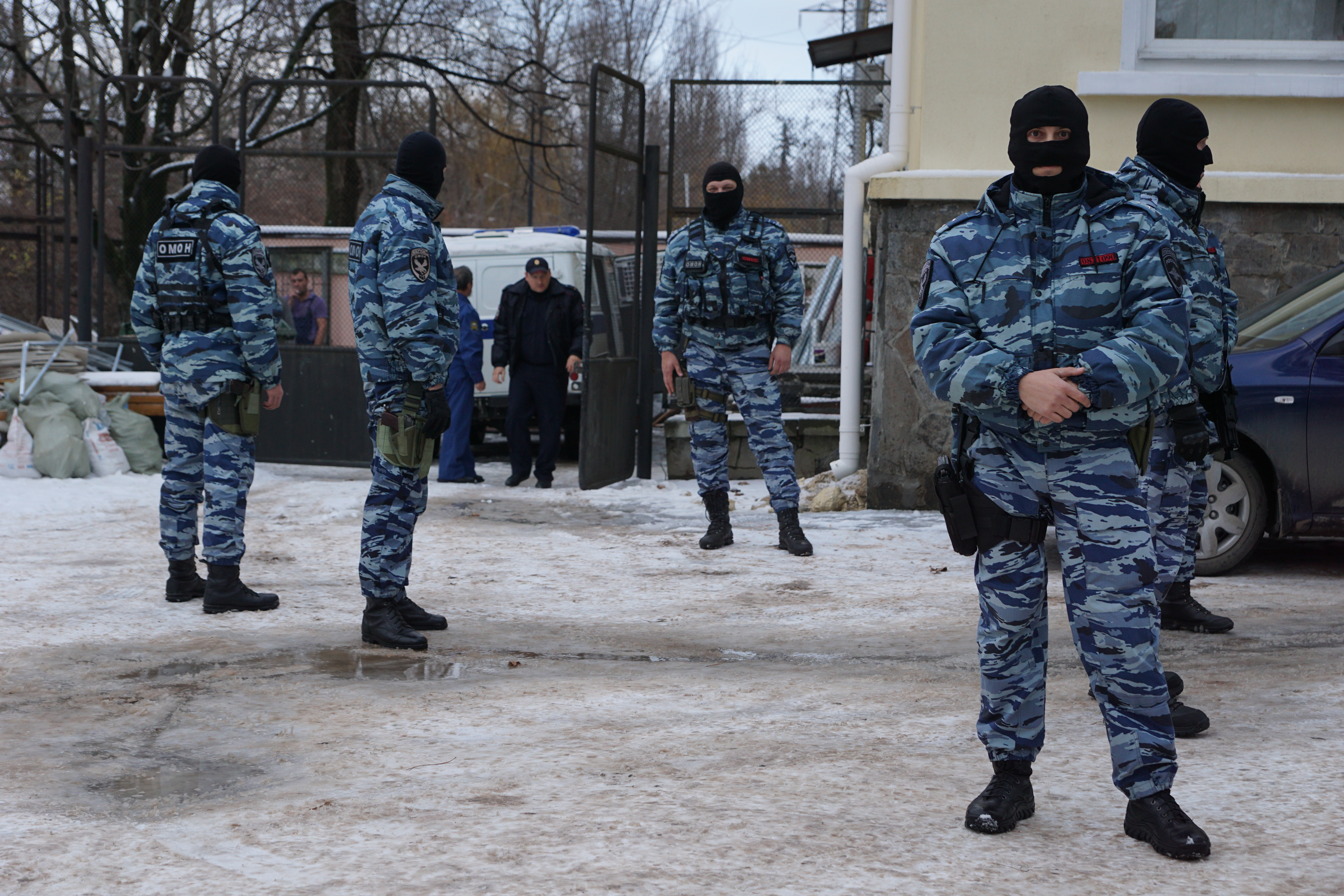
The international human rights organization Amnesty International has published and presented a report on human rights violations in Crimea with the eloquent name "Crimea in the darkness". "Having spread the prohibiting Russian legislation in the Crimea, de facto authorities significantly limited the freedom of assembly and associations and freedom of expression. Many people were on the bench of the defendants, and the trials against them are gloating violate the standards of a fair court," the preamble said, and then separately the facts of human rights violations on the peninsula by the Russian authorities and security forces are revealed. The conclusions of AI experts are built for more than fifty interviews that they held in September 2016 on the territory of the peninsula, visiting Yalta, Korea, Alushta, Bakhchisaray, Simferopol and Sevastopol.
The report was presented in Kyiv, but initially caused not very much attention of the media. The Minister of Foreign Affairs of Ukraine Pavel Klimkin did not at all visit the presentation. There is an explanation for this - almost all the facts set forth in the report are known, however, the value of the AI work is that they are now collected together and verified by experts, the independence of which, including from the Ukrainian side, is not doubted. The presence of at least episodic international observation of what is happening on the peninsula, it already means a lot, given the serious pressure of the authorities on the work of journalists and the media in the Crimea. “At least three television channels, two news agencies and other independent media were closed,” the statistics of the persecution of the media on the AI peninsula cite. “Those that moved to the mainland of Ukraine, in particular, the popular television channel in the ATR Crimean Tatar language, since then lost the opportunity to freely make reports from the peninsula and broadcast in the Crimea. Like several other media, the TV channel. ATR was also deprived of the opportunity to broadcast on the peninsula via the Internet. "
Among the experts who visited the Crimea, the director of the Russian representative office of the International Human Rights Office of Amnesty International Sergey Nikitin. “This trip was a few months ago. I must say that before that I was also with my colleagues in the Crimea a year and a half ago. Thus, we had something to compare,” Nikitin told about the AI mission. “The situation changed for the worse. And we say specifically that the attacks were mainly aimed at the community of the Crimean Tatar people. And we were talking in our report, and we were witnesses that we were witnesses that we were witnesses that we witnessed that The persecution is systematic.

Pursuit of journalist Nikolai Semena
The case of journalist Nikolai Semen is devoted to a separate section of the report. “There is no more pluralism in the media, and individual journalists who dare to criticize de facto power are no longer left to the media, they literally left no choice but to write under fictional names for the media outside the Crimea,” the authors of the report say. “Criticism of the Russian occupation and annexation is a criminal offense, in accordance with Article 280.1 of the Criminal Code of the Russian Federation ( “ Public calls for performing actions, aimed at violating the territorial integrity of the Russian Federation. " - approx. ), Which entered into force two months before the occupation of Crimea and was even more supplemented after its annexation." Nikolai Semen was charged after the publication in September 2015 on the website of the Radio Liberty project "Crimea.real" of the article "Blocada - the necessary first step towards the liberation of Crimea." The investigation considered that the journalist, speaking of the illegitimacy of the capture of the peninsula, calls for a violation of the territorial integrity of Russia. Judging by the case file, surveillance was organized behind the journalist, including remote access to his computer, even before the initiation of the case. Now the investigation is completed, the case will be referred to court in the near future. The defense insists on the innocence of Semyon, claiming that one cannot judge a person for observing international law that continues to consider Crimea Ukrainian, especially if the country's constitution declares the rule of international norms over national.
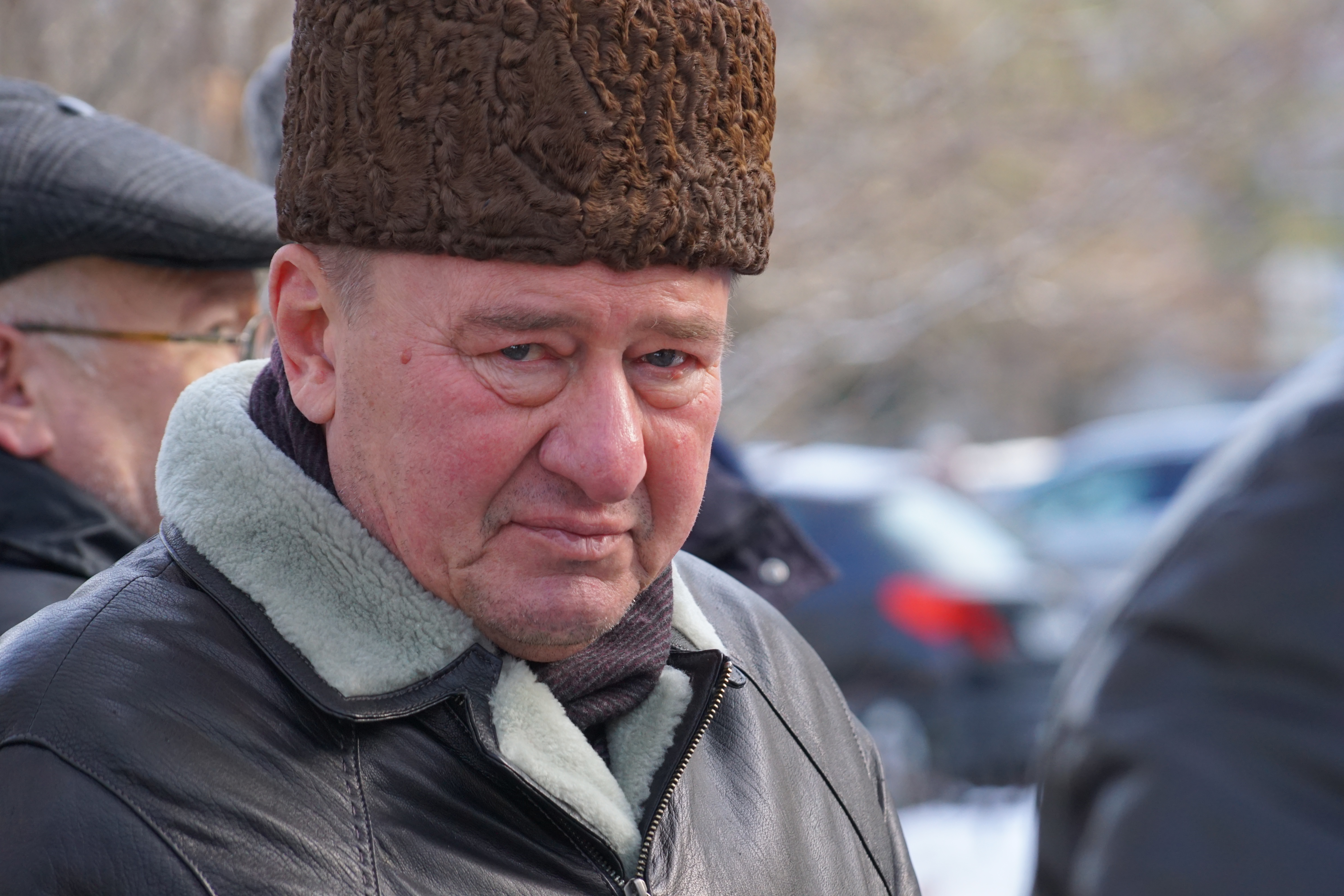
Pursuit of the deputy chairman of the Mejlis Ilmi Umarov
A similar accusation was brought by the deputy chairman of the Medzhlis of the Crimean Tatar people Ilmi Umarov, who in March 2016 in an interview with the ATR television channel spoke out for continuing international pressure on Russia in order to force it to leave the Crimea and Donbass. The investigation considered Umarov’s statements extremist, the only evidence of this is a linguistic examination, which was given not even the actual words that were in an interview with the Crimean Tatar language, and their not entirely correct translation into Russian. During the trial, Umarov was offered to undergo a psychiatric examination. This action is quite within the framework of procedural law, but not mandatory in the case of the accusation that was brought by Umarov. He refused the hospital, and he was forcibly put in a psychiatric clinic, where he spent several weeks. "I did not agree to conduct an examination with the help of a commission, because, firstly, completely normal, and secondly, because I was afraid that its results would be falsified and used to discredit the Mejlis," Umarov explained. He called the three weeks in a psychiatric hospital. As a result, he was recognized as sane, the trial continues to this day. Like Nikolai Semyon, he is under the subscription of the lower room and cannot leave the peninsula even to receive medical care.
“It is quite obvious that we are witnesses of restrictions on the activities of the Mejlis. We are witnesses of actually the persecution of individual leaders of the Crimean Tatar people,” the head of the Russian representative office of AI Sergey Nikitin comments on his job.
Punitive psychiatry
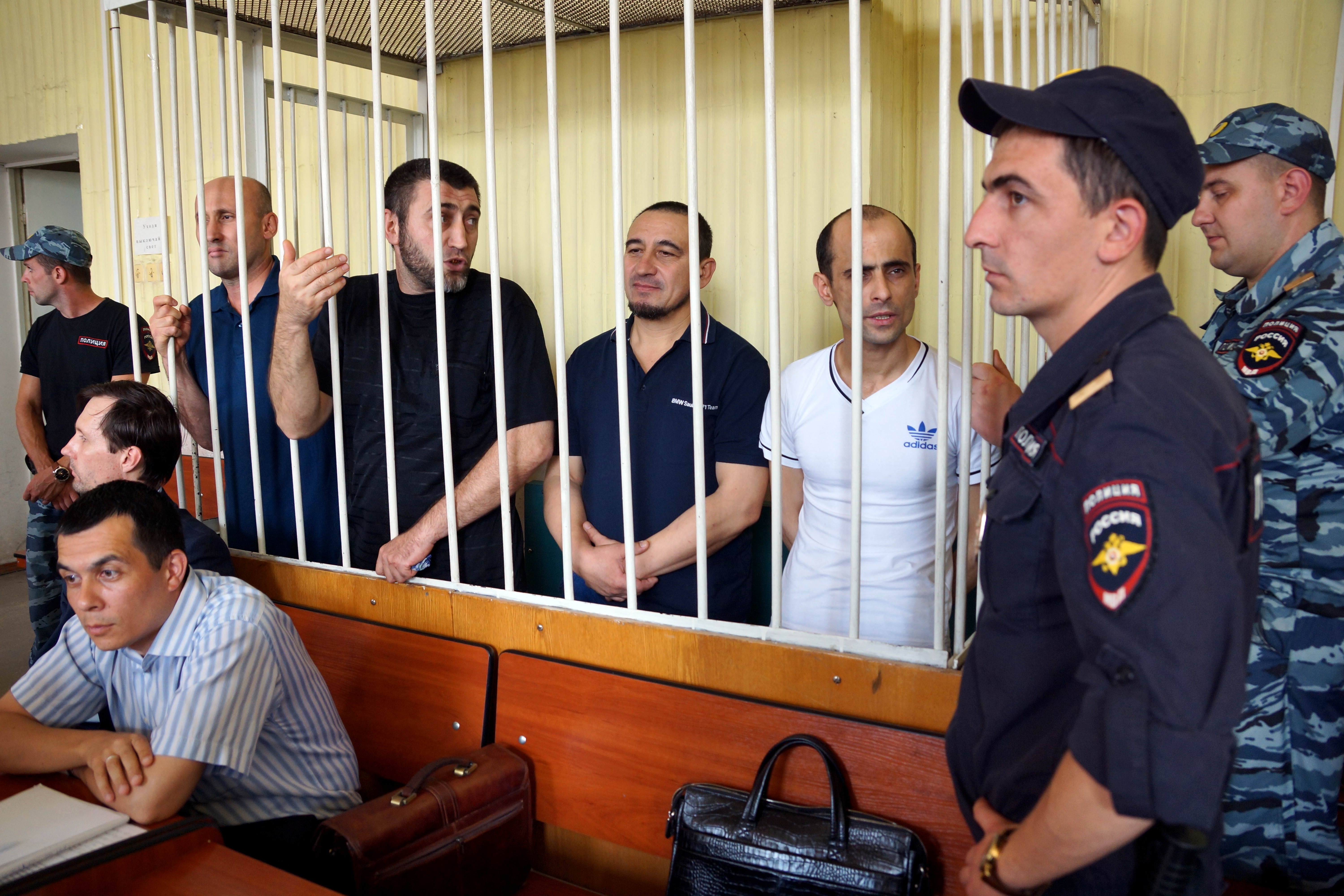
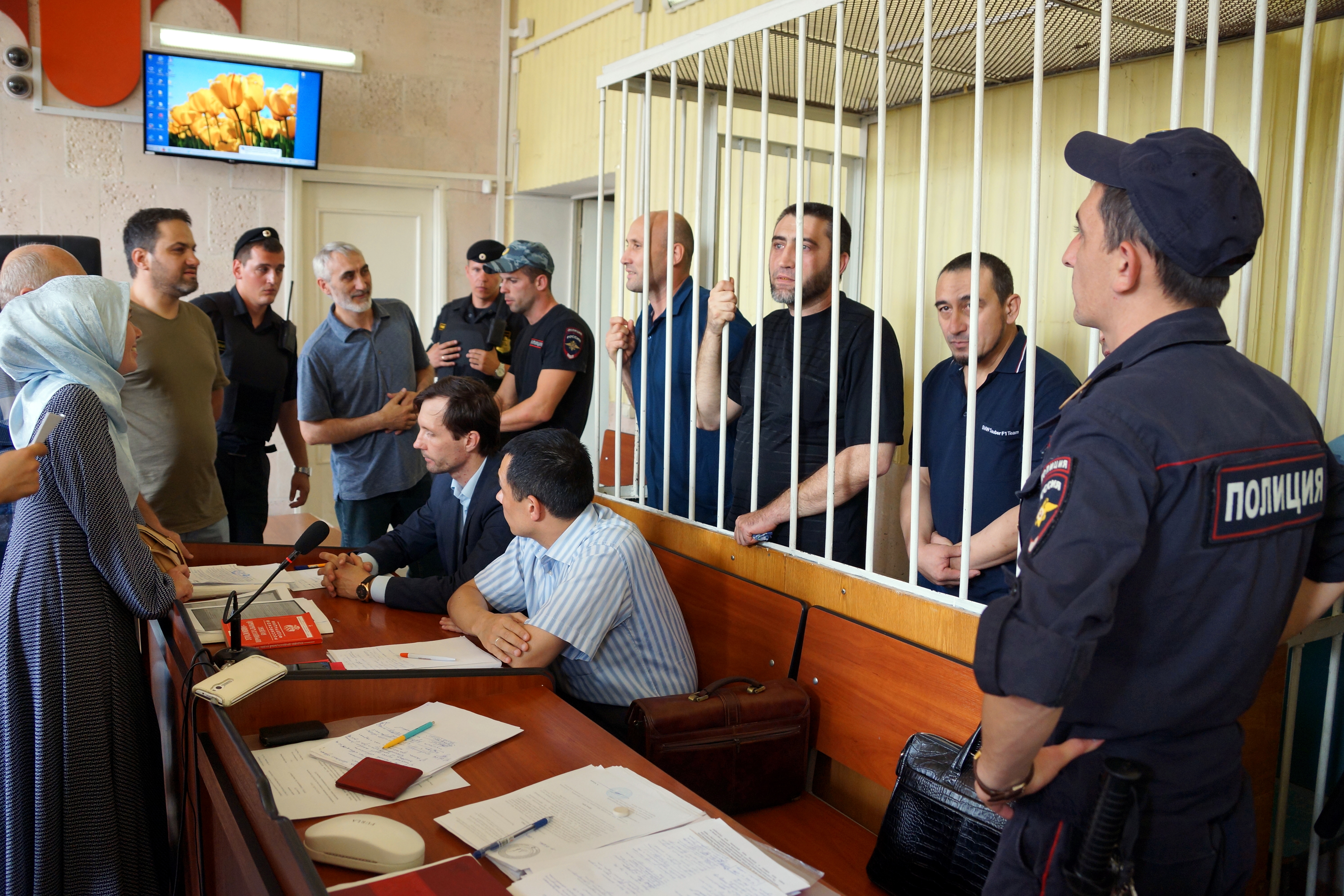
The use of medicine in the Crimea has generally acquired a systemic nature. These facts were not included in the AI report, since the mission worked on the peninsula even before they began to massively send Crimean Tatars to the psychiatric clinic, the defendants of the Hizb Ut-Tahrir case. The Muslim organization "Hizb Ut-Tahrir al-Islami" was recognized in 2003 by terrorist in the only country-the Russian Federation. Throughout history, the members of the organization did not commit a single terrorist attack, its teaching denies any methods of force exposure. "In all these cases, accusations of membership in Hizb Ut-Tahrir either turn out to be unequivocally unreasonable, or there are good reasons to doubt the reliability of the accusations. This causes serious concern for the justice of the court," the Hizb Ut-Tahrir case on the territory of Crimea in the AI report. Over the past few months, already when the AI mission left the Crimea, six accused in the case got into a psychiatric clinic for a violent examination. Initially, several defendants agreed to conduct an examination without placing in the hospital, but the commission doctors began to ask questions about the essence of the charges against them, actually provoking testimony. As a result, all the accused Crimean Tatars refused to answer questions, were declared "non -contact" and forcibly placed in the clinic. Muslim Aliyev and Aresen Dzhepparov had already spent several weeks in it and were transferred back to the Simferopol pre -trial detention center, Enver Bekirov, on the contrary, was sent to the clinic, where Refat Alimov and Vadim Sirok also remain. Another accused in the Hizb Ut-Tahrir case is a resident of Yalta Emir-Ussyn Cook is placed in a psychiatric hospital in a single chamber.
Case "Hizb Ut-Tahrir"
Of the 19 people arrested in the Crimea in the Hizb Ut-Tahrir case, four have already been convicted of the North Caucasus Military District Court. “There are many questions about how fair their court was,” the authors of the AI report pay attention. “In particular, during the court hearings, several witnesses of the prosecution withdrew their statements made before the court. One person, a shepherd from Sevastopol, said in court that during the interrogation, the FSB investigator warned him that if he did not sign a document lying before him, then it was in prison together with the prison together with him. The other four.
The experts of AI devoted a separate section to the persecution of the Emir-Ussyn Cook, the Crimean Tatar human rights activist, who was accused of belonging to Hizb Ut-Tahrir. In July 2014, the FSB operative invited him to cooperate with the Russian special services, the human rights activist refused. In the fall, he began to actively investigate and record the abductions of the Crimean Tatars, in April they tried to detain him, in fact it was the failed abduction. Two men were waiting for him on the highway, stopped, tumbled to the ground and began to beat him. When the incident attracted the attention of the neighbors of Cook and passing by the people, the employees of the special services in masks and with machine guns, who forcibly put Cooks in the car, took to the house and conducted a search there. The police refused to accept the application for beating, and then even accused Cook of an attack on two employees. The human rights activist was finally arrested in December 2015, charging of participation in Hizb Ut-Tahrir. All these facts are reflected in the AI report. "Amnesty International considers it unreasonable to accusion against Emir-Usein Cook, who is pursued for his human rights activities and the legitimate expression of his own views. All criminal charges against him should be immediately removed, and he himself should be immediately released," the human rights defenders urge.
According to lawyers working on the peninsula, and human rights activists, the Hizb Ut-Tahrir case and the persecution of Muslims on charges of participating in this organization was created by Russian special services for pressure on disloyal citizens, especially the Crimean Tatars. Often, and this is noted by the authors of the AI report, there is no reason to consider the accused by members of the organization banned in Russia, the investigation is based on the testimony of secret witnesses, the accuracy of which cannot be confirmed. One example is the case of Muslim Aliyev, which is also reflected in the AI report. Aliyev was actually an informal leader of the Muslim community in Alushta, who accused the official mufti of subordination to the Russian authorities. After the last arrests in the Hizb Ut-Tahrir case in the Simferopol district in the fall of 2016, it turned out that the arrest was initiated by the mufti. The official appeal addressed to the head of the Crimean department of the FSB Viktor Palagin from the spiritual administration of the Muslims of Crimea speaks of "an outrageous situation with adherents of the radical Muslim sect" Hizb Ut-Tahrir "and the Habashites." In a letter dated July 29, 2016, Muslims are listed with addresses and phone numbers, which, according to the muft, are part of the organizations prohibited in Russia. According to the AI experts expressed in the report, Muslim Aliyev is pursued not for participating in Hizb Ut-Tahrir, but due to active criticism of the muftiyat.
Abduction of people
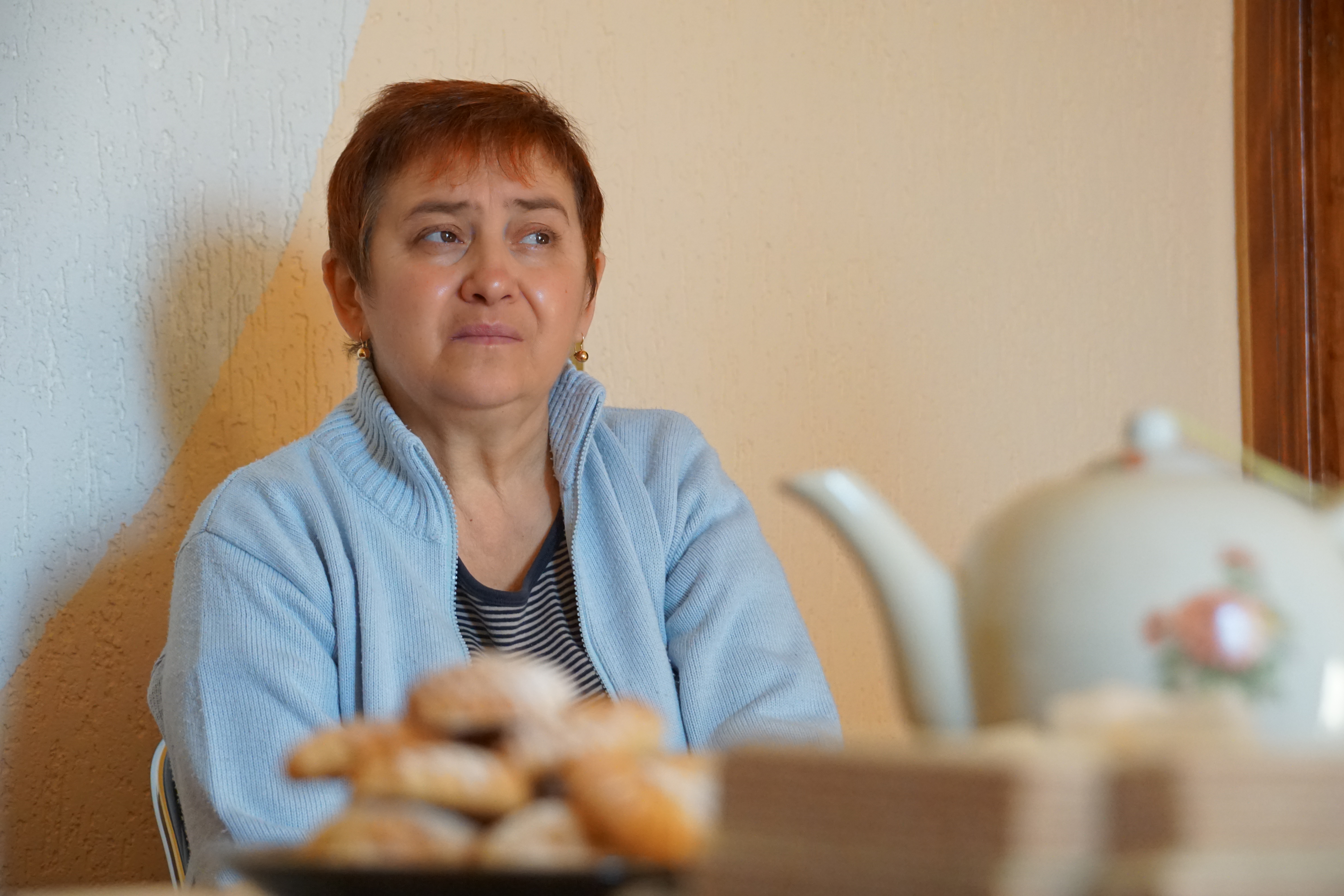
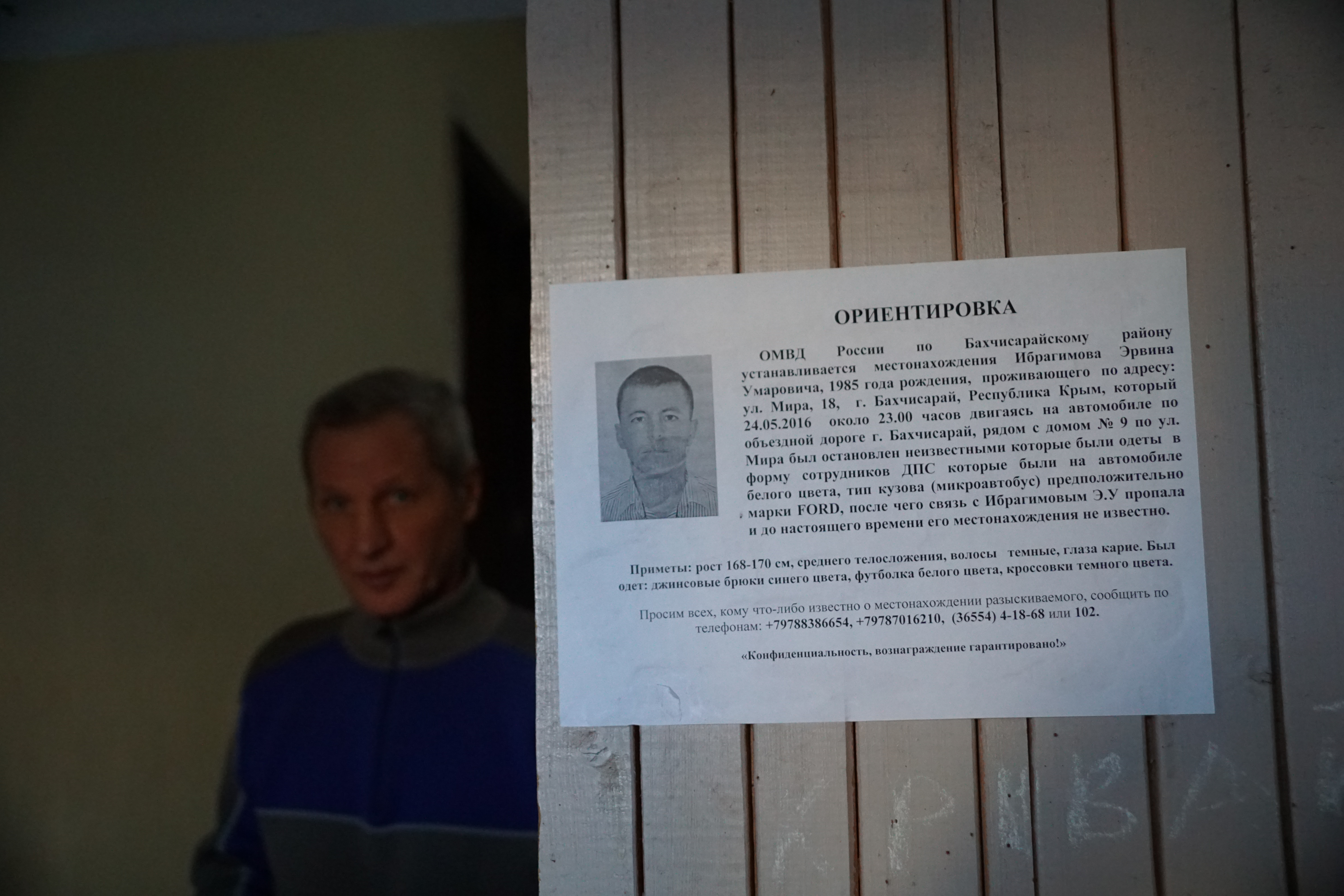
An attempt to abduct the emir-Usan Cook is not the only case of the violent disappearance of people in the Crimea. In total, since the annexation on the peninsula, judging by the official data of the prosecutor's office, more than 200 criminal cases have been instituted about the loss of people. Several dozen of them are Crimean Tatars. The attention of the AI mission was attracted by the fact of the abduction of a resident of Bakhchisarai, a member of the World Congress of Crimean Tatars Erwin Ibragimov. The last time he was seen on May 24, 2016, the abandoned car was later found next to the road on which he was driving home. The external surveillance camera recorded the fact of abduction: several people in the form of a traffic police stopped Ibragimov’s car, another car blocked the passage, people ran out of it, grabbed Ibragimov and took it away. Seven months have passed, and there is no information about Ibragimov. The father died Ibrahimov believes that the investigation does not specifically search for his son, and accuses the Russian special services of abduction.
Russian special services clearly worked, and the investigation does nothing to find them
Other cases of abductions of people were not included in the AI report, but there are plenty of such facts in the Crimea. In October 2014, the Crimean Tatar Escander Apselyamov went to work in a bakery in Simferopol and disappeared, there is no information about him. Mukhtar Radlanov at the end of August 2015 walked from the market with groceries home in Simferopol and disappeared. Witnesses said that they saw how two people in a police uniform were led, put in a white car and took him away. At the end of September 2014, the son and nephew of the Crimean Tatar activist and human rights activist Abdureshit Dureshit Jepparov were still not found. Young people blocked six cars at once, after which they were pushed into a car and taken away. Against the witness who was ready to tell about the incident in court, the case was opened, after which he refuses to take part as a result of the loss of the Dzhepparovs. “Everyone knows everything, and they ( Russian law enforcement officers. - Approx. ) They notice traces. The Russian special services clearly worked, and the investigation does nothing to find them,” says Abdureshit Dzhepparov.
The ban on the Majlis and the persecution of the Crimean Tatars
Among the stolen and persecuted in the Crimea, not only the Crimean Tatars, but the authors of the AI report, noted that the main Center for the Annexation resistance is precisely among the national Crimean Tatars movement: “Almost two years later, the pressure from the local and federal authorities did not decrease. They are not enough an accession of the peninsula to the Russian Federation, they require the complete adoption of this cruel fact, depicting those who oppress this as extremoid And terrorists and pursuing them.
As the most organized resistance center, Crimean Tatars took on a powerful blow of this oppression. "" We do not concentrate our power on the representatives of any one ethnic community. The things are just in such a way that the representatives of the Crimean Tatar people who have suffered a lot and in the past, you can only express compassion for these people who are objects of human rights violations by the de facto authorities in Russia, ”the director of the Russian representative office Sergei Nikitin explained.
The most characteristic manifestation of pressure on the Crimean Tatars, AI experts considered the ban on the Medzhlis, the case against which the Crimean prosecutor’s office opened in February 2015, accusing the organization of self -government of the Crimean Tatars of extremism. The accusation was built only on the statements of the head of the Mejlis, Refat Chubarov, who publicly declared disagreement with the annexation of the peninsula and called for the return of Crimea to Ukraine. Another example of the persecution of the Crimean Tatars in the AI report is the “February 26” case and personally accusations against the deputy chairman of the Mejlis Akhtem Chiygoz, the lawsuit over which is now in the Supreme Court of Crimea.

Case "February 26"
On February 26, 2014, Crimean Tatars and pro -Ukrainian activists reached a rally against the adoption of the so -called separatist laws to the building of the Supreme Council. In fact, activists tried to defend the territorial integrity of Ukraine. Pro -Russian activists gathered against them, including members of the illegal armed formation "Crimean self -defense". As a result, clashes occurred, as a result of the crush, two elderly people died. Then the Crimean Tatars and activists managed to preserve Crimea for Ukraine, the next day the building of the Supreme Council turned out to be captured by Russian special forces. The investigation in the “February 26” case regarded the rally of the Crimean Tatars as mass riots, accused Akhtem Chiygoz of their organization, who, judging by the video and evidence of eyewitnesses, on the contrary, tried to dilute the sides and prevent bloodshed. For 18 months, Chiygoz has been in jail, he is not brought to court, in the meetings he participates in the video, which the side of defense considers the violation of his rights. "Amnesty International considers Akhtem Chiygoz a prisoner of conscience, who was imprisoned and condemned exclusively for his peaceful political activism and confrontation between the Russian occupation and the annexation of Crimea. All the accusations should be immediately released and removed from it," the authors of the AI report were summed up.

Pursuit of lawyers
In addition to the persecution of journalists and the actual cleansing of the information space in the Crimea, the experts of Amnesty International drew attention to the facts of pressure on lawyers who protect the defendants in the case of the Hizb Ut-Tairer case and activists. На полуострове работает несколько местных адвокатов, у каждого из которых десятки дел, не так давно стали работать члены адвокатского объединения "Агора", в деле Ахтема Чийгоза и Ильми Умерова работают бывшие адвокаты Надежды Савченко Николай Полозов и Марк Фейгин. Кроме очевидных трудностей из-за режима пересечения админграницы, адвокаты сталкиваются и с прямым давлением со стороны российских властей и силовиков.
30 августа 2016 года несколько десятков сотрудников в штатском пытались проникнуть в симферопольский офис адвокатов Эмиля Курбединова и Эдема Семедляева. Оба они ведут целый ряд дел над крымскими татарами и в это время находились в Ростове на заседании. Очевидцы узнали среди пытавшихся проникнуть в офис сотрудников ФСБ. Неофициально на Курбединова давят почти все время, угрожая и призывая бросить дела, которые инициировала ФСБ. В последний раз ему неофициально звонил чиновник из Симферопольской администрации, который настаивал на том, чтобы Курбединов покинул Крымскую коллегию адвокатов.
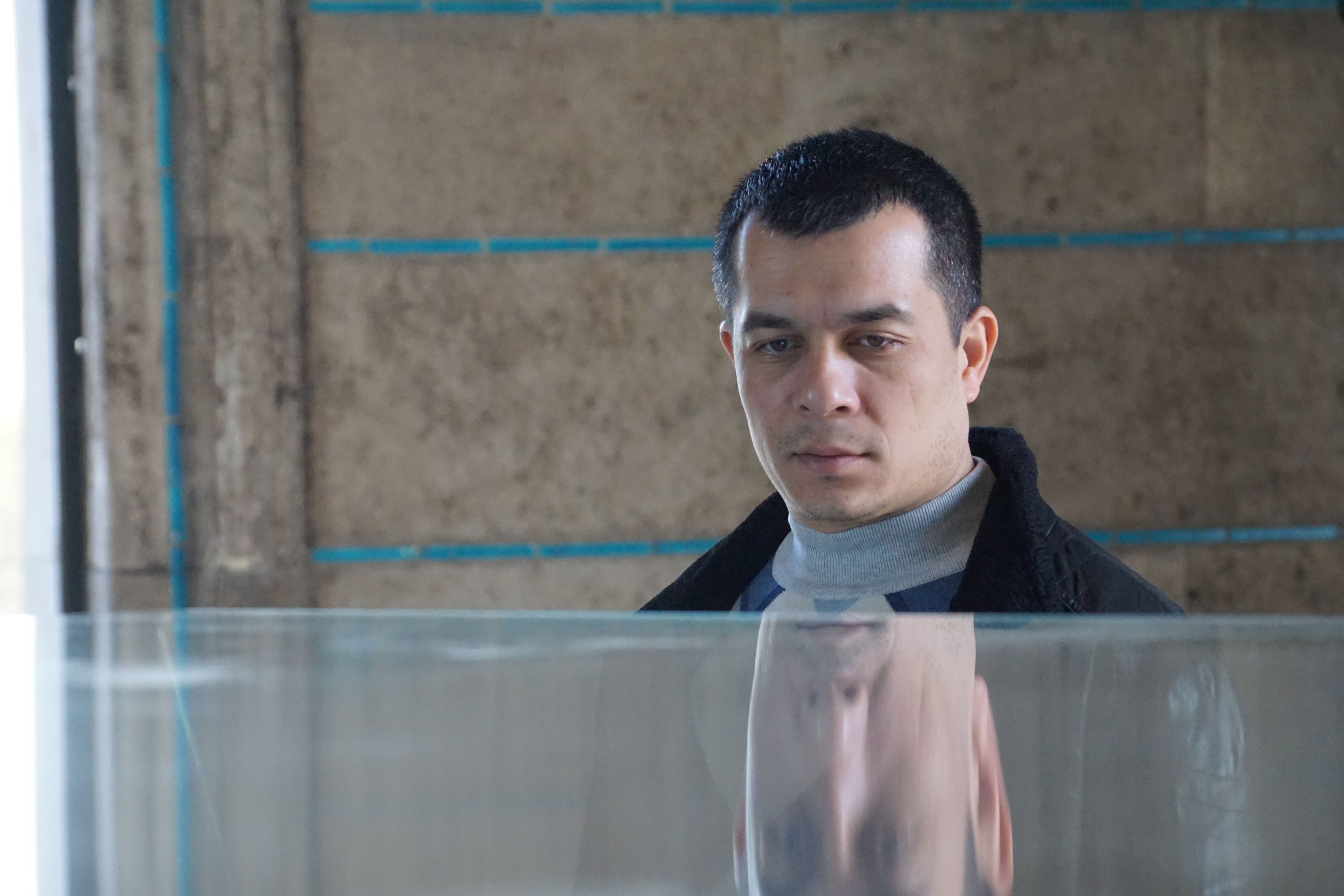
Кроме этих случаев в доклад AI не вошли факты очевидного давления на адвоката Николая Полозова, защищающего Ахтема Чийгоза и Ильми Умерова. В августе 2016 года в отношении адвоката начали доследственную проверку по заявлению прокурора Александра Домбровского, который посчитал себя оскорбленным высказыванием Полозова в соцсетях.
"Отдельно хочу отметить неподобающее и гнусное поведение государственного обвинителя Домбровского, позволяющего себе колкости и шуточки в адрес Чийгоза, его вопросов, связанных как с качеством связи, так и с качеством судебного процесса. Насколько мелок и ничтожен Домбровский, настолько, буквально на контрасте, честно и мужественно ведет себя на процессе Ахтем Чийгоз", – написано было на странице Полозова в "Фейсбуке" 23 августа. Дело сразу по трем статьям, в том числе о неуважении к суду, возбуждать против адвоката не стали. С другой стороны, следователь ФСБ пытается в судебном порядке заставить адвоката дать показания по делу Ильми Умерова. Полозов считает, что это намеренно делается для того, чтобы изменить его статус с защитника на свидетеля и исключить из дела.
Выводы и реакция
По итогам анализа фактов нарушений прав человека в Крыму авторы доклада Amnesty International составили свой список рекомендаций, причем не только российским властям, международному сообществу, ОБСЕ, но и официальному Киеву, которому посоветовали как можно скорее ратифицировать Римский статут Международного уголовного суда. Главным требованием к международным институтам, наверное, является добиться независимого наблюдения за соблюдением прав человека на полуострове. К России требований гораздо больше.
Кроме предоставления доступа в Крым всем организациям, ведущим мониторинг, AI требует расследовать все заявления о пропавших и похищенных в Крыму, способствовать работе "незаконно закрытых или вынужденных закрыться" СМИ, обеспечить журналистам доступ и свободу заниматься своими обязанностями, в том числе украинским, расследовать факты преследования журналистов и прекратить безосновательную блокировку СМИ. Меджлис крымско-татарского народа, по мнению AI, должен быть исключен из списка экстремистских организаций, а люди, которые мирно сопротивляются аннексии, не должны преследоваться властями. AI призывает снять все обвинения с Ахтема Чийгоза, Ильми Умерова, Николая Семены, Эмира-Усейна Куку и прекратить необоснованное преследование по делу "Хизб ут-Тахрир".
Официальный Киев в лице пресс-секретаря Министерства иностранных дел Украины Марьяны Бец одобрил доклад правозащитников. "Учитывая ограничения российскими оккупационными властями доступа международных конвенционных механизмов мониторинга на территорию Крыма, отчеты и заключения независимых правозащитных организаций о ситуации на полуострове имеют чрезвычайное значение для фиксирования преступлений российской оккупационной власти и подготовки адекватного ответа международного сообщества, в том числе с целью привлечения к ответственности всех виновных", – говорится в сообщении.
В России официальной реакции на доклад не поступило. "Нам не удалось встретиться с уполномоченной по правам человека Республики Крым Лубиной, хотя в прошлую поездку в 2015 году у нас такая встреча состоялась, – рассказал Сергей Никитин. – Нам также не удалось повстречаться с представителем прокуратуры Республики Крым. И в том году нам тоже не удалось с ними встретиться. Наши попытки каким-то образом обсудить эти факты с властями, как обстоят дела с правами человека на этой территории, они, к сожалению, не совсем успешны". В Крыму в последние несколько дней задержания продолжаются. В Севастополе 16 декабря сотрудники ФСБ задержали проукраинского активиста Игоря Мовенко, которого в сентябре избили за украинскую символику и символику добровольческого подразделения "Азов" на улице города. По свидетельству очевидцев и судя по видео, избивал Мовенко сотрудник полиции в штатском при полном одобрении толпы. После инцидента против Мовенко возбудили дело за демонстрацию символики "Азова" как экстремистской. По всей видимости, сегодняшний обыск был проведен в рамках этого дела. Как передает Крымская правозащитная группа, которая связалась с женой активиста Валентиной Мовенко, обыск прошел утром, изъяли ноутбук, жесткие диски, телефон, мужа после этого увезли, к полудню привезли обратно в наручниках и увезли снова. Активист успел сказать ей, что его избили, угрожают арестом, если он не признает вину по делу об экстремизме. Днем ранее на рынке Привоз в Симферополе полиция провела рейд и задержала минимум пять человек с украинскими паспортами. Their location is unknown. Несколькими днями ранее был задержан житель Серебрянки Раздольненского района Владимир Балух, который вывешивал украинский флаг на крышу дома и публично заявлял о несогласии с аннексией Крыма. Оперативники заявили, что во время обыска обнаружили у него патроны и динамитные шашки. Во время обыска у Мовенко оперативники, по словам жены, подробно снимали на видео украинские флаги.
"Чем больше людей знают о том, что происходит к Крыму, в частности, в нашей истории, тем больше шансов, что какие-то произойдут изменения, – пояснил цель доклада AI Сергей Никитин. – Потому что гласность никому не нравится. Никакой нарушитель прав человека не любит, когда на него направлен такой прожектор гласности, выражаясь старым языком. И, естественно, если все забудут и перестанут говорить о том, что происходит в Крыму, в других местах, где нарушаются права человека, то конечно, тогда будет легче творить какие-то злодеяния и нарушать права человека дальше тем, кто этим занимается сейчас".

Prisoners of the Kremlin
-


Anton Naumluk
Foreign Correspondent RS