
Translated material
What Putin has achieved in Tokyo
Alexander Gabuev sums up the extremely successful trip of the Russian president to Japan: Carnegie.ru
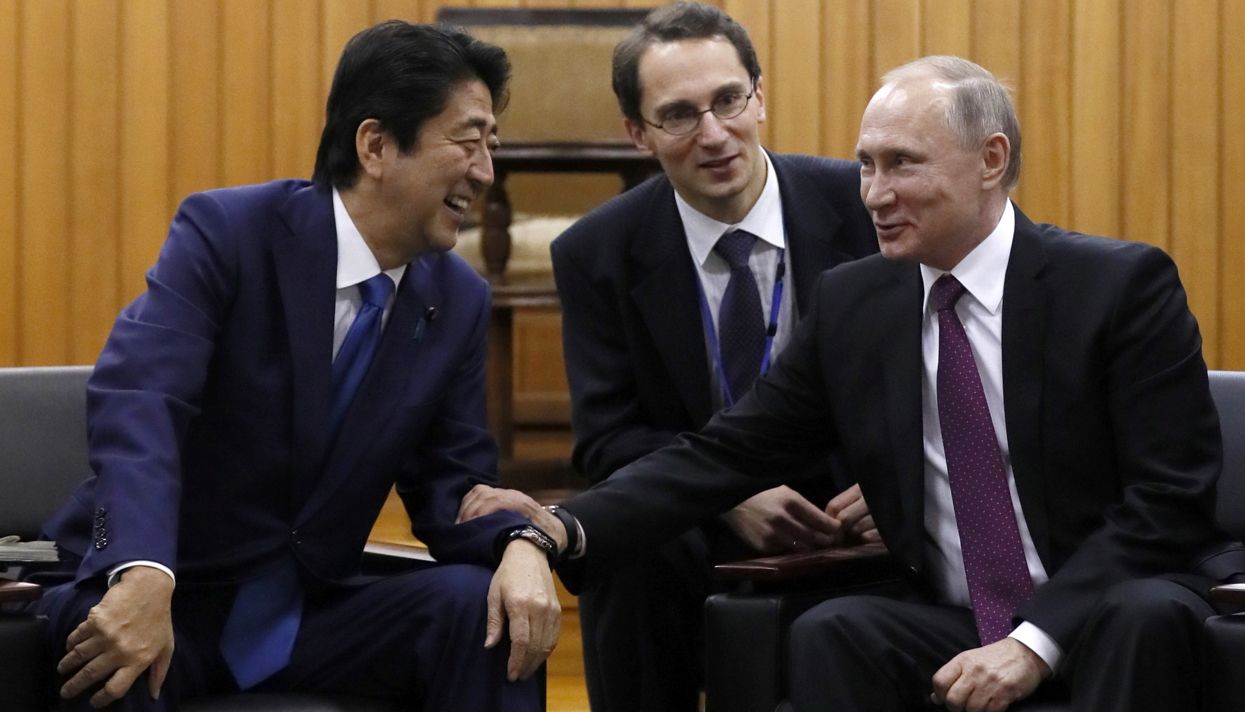
Japanese investments in the smokers while maintaining the sovereignty of the Russian Federation, billionth transactions with suction companies, a warm welcome in one of the G7 countries without mentioning Ukraine and Aleppo - Putin took everything that is possible from Tokyo. Much of the signed is only a memorandum, some of which will never reach implementation. But Moscow and Tokyo are not even fundamental, it is more important to send the desired signal, says Alexander Gabuev, the head of the Russia in the Asia-Pacific region of the Moscow Center of Carnegie .
Welcoming Vladimir Putin in his native Nagato, Shinzo Abe, in the first minutes of the meeting, said the word “Onsen” several times. The Japanese Prime Minister personally came up with the idea of “Onsen-Sammit” with Putin-he himself is a lover of hot springs and knows that his guest also willingly go to the bathhouse. Judging by the reviews of the Japanese negotiators, special hopes were assigned to the wonderful abilities of these sources to bring people closer and clean thinking. Having immersed Vladimir Putin in ONSEN (and even better-having plunged with him), Abe hoped to convey to the Russian leader how much he appreciates his relationship with him and his country and how much Moscow and Tokyo need to look at his relationship in a new way.
ABE voiced a similar thought and publicly , speaking in September at the Economic Forum in Vladivostok. “ONSEN DISPLOMATIA” is a very characteristic manifestation of ABE approach to relations with Russia and its leader. All Japanese Russians recognize: the current rapprochement is the personal project of Shinzo Abe, while for a significant part of the Japanese foreign policy and business community, the need to look for proximity to Moscow is far from obvious.
Personal Premiere Project
Due to the military union with the United States and the special importance of the American market for Japanese companies (trade turnover in 2015 amounted to $ 197.5 billion), most of the Japanese business and political elite is oriented towards America. Therefore, the demonstrative rapprochement with the enemy of his main ally is not the idea that finds wide support. In addition, many in Tokyo still have the question: what exactly will Japan get in exchange for the signs of attention that Abe provides to Moscow? For example, in the Japanese Foreign Ministry, which was a guarantor of continuity in foreign policy, when the premieres changed every year, they never experienced the illusions that Moscow would make concessions and return the southern smokers on acceptable conditions. And since the territorial problem does not have a decision convenient for Japan, then there is nothing to waste time on the persuasion of Moscow. It is much more important to maintain a fundamental position and not lose face.
Considering that the results of the Second World War are still painful and in many ways packed in Japanese public discussion the topic (at least its discussion is in any comparison with German), but it is impossible to discuss the bombing of Hiroshima and Nagasaki in detail, the issue of “treacherously annexed the USSR” is a symbol of the fact that Japan was a sacrifice.
In such conditions, the development of relations with Russia is a special operation, which is personally controlled by ABE with the help of several trusted people. Even the Foreign Ministry, the main carrier of expert knowledge in Russia and the territorial issue, has largely turned into a technical department, while the main role is played by part of the National Security Council, led by the Prime Minister.
Another feature of the Russian policy of ABE was the participation in its formulation of individual figures from business circles like the general director of the Japanese Bank of International Cooperation (JBIC) Tadasi Maeda, as well as a special support on the Ministry of Economy, whose head, Hirosige SECO, appointed the Minister of Development of Cooperation with Russia.
What is ABE special approach to Russia? According to the reviews of Japanese experts and negotiators, the prime minister really believes that in his power to agree with Putin on resolving a territorial issue. Abe himself is the first strong prime minister after a series of heads of government, most of which did not stay in power for more than a year. He has enough political capital and time to take obligations and fulfill them. Putin in his eyes is a strong and pragmatic leader, who acts in the national interests of Russia, but at the same time refers to Japan well, has experience in the country's country (during the border demarcation with China), as well as a rather popular and controlled media to explain to the population any decision. The second such chance may not be presented.
In addition, relations with Russia for Abe are part of a much wider geopolitical picture. In it, China gaining strength is the main threat to Japan, and this installation is already shared by the vast majority of the Japanese elite. It is under ABE that the course to restrain China acquires more and more vivid outlines. For example, in response to the creation of an Asian Bank for infrastructure investment (Abiya), Tokyo announced the launch of the initiative to develop high -quality infrastructure. Moreover, $ 110 billion, originally allocated for its development, is $ 10 billion more than the authorized capital of Chinese Abia.
Japanese diplomacy intensified both in Central Asia and in Tropical Africa - in those regions where Japan seems to have no vital commercial interests, but there is a growing Chinese presence. Any conversation in Tokyo on a foreign policy ends with the phrase that “Japan never recognizes the Chinescent -centric order in Asia,” although no one can say anything specific about the essence of this “ChinescentCentric order”.
A big reason for concern is the future of relations between the United States and China. In Tokyo, they were seriously scared by the concept of G2, set out by Zbignev Brzezinsky, and took it as a call to the American-Chinese condominium in the Asia-Pacific region excluding the interests of Japan. The sluggish reaction of the Barack Obama administration to Chinese actions in the South China Sea only strengthened Tokyo in the thought that in any case, Japan should engage in the development of its armed forces, the creation of a legal framework for the development of the army and foreign intelligence, as well as building its own partnerships with the countries of Asan, India and Australia.
Russia in this situation plays a very important role. Since the mid-2000s, Tokyo with growing anxiety watched the Russian-Chinese rapprochement, and after 2014 it began to cause outright alarm. Japanese diplomats many times tried to convince American colleagues to take the relations of Moscow and Beijing seriously, especially indicating weapons transactions like the sale of S-400 air defense systems or SU-35 airborne systems (though these arguments did not impress the State Department and the American SNB).
Prime Minister Abe believes that Japan is able to exercise Russia in the coalition of countries to deter China, then at least return the relations of the Russian Federation and China to the Pozhkrymsky level, that is, without the development of large-scale military-technical cooperation and without the construction of pipes, which will tie the oil and gas wealth of Siberia exclusively to China. That is why the development of relations with Moscow in the context of China’s deterrent is an independent value for the Japanese prime minister.
The target audience of the turn
It was precisely these considerations that Shinzo Abe was guided by when he did not want to join the sanctions of the G7 against Russia (he joined only after several tough conversations Susan Rice with his National Security Advisor Setaro Yati) and when he made these sanctions obviously soft and non -public. That is why, having felt in early 2016 that the departing US administration is now not up to strict pressure on the rest of the seven countries about the sanctions, he went to a meeting with Putin in Sochi, taking with him an eight points to resolve relations.
The fact that the Japanese prime minister did not listen to the exhortations of Barack Obama and violated the request of the senior partner not to go to Putin, caused respect not only in Moscow, but also among many associates in the liberal-democratic party. Thus, the prime minister showed that Japan again becomes a normal country with its national interests, which can sometimes differ from the interests of the United States.
But how to get into the soul of Vladimir Putin, in addition to entering the onsen? Here, for Abe, the councils of businessmen played an important role. By building its Russian strategy, Abe proceeded from the fact that Russia is in a difficult economic situation and, in addition, more and more enters the clutches of the PRC, especially in the Far East. So, the first step is to establish economic cooperation. Especially show to Moscow that Japan can be an alternative to China in the development of Siberia and the Far East.
If earlier Japanese investments were considered as a prize for solving the territorial issue on Japanese conditions, now they have become a condition for changing the general background in relations, as a result of which it would be possible to return the territory and move Moscow from Beijing. A plan of eight directions that Abe in May brought to meet with Putin in Sochi, just about this.
Initially, the approach of the Japanese negotiators was largely naive: they carefully studied all the performances of the Russian president and his officials responsible for the Far East, found specific promises to improve the life of the local population and came up with a list of projects like improving the work of mail or access to modern medical technologies that would help Moscow in conjunction of citizens on the election.
True, soon the advisers of the prime minister from among the businessmen convinced Abe that Putin was most appreciated by not small high -tech initiatives for citizens, but megaprojects with the participation of state -owned companies or companies of his old acquaintances: such projects are sometimes jokingly call “gifts to the Tsar”.
The Russian side quite skillfully played on the feelings of Abe and his environment. Throughout 2014 and 2015, at various levels of the Japanese, they were reproached for the adoption of sanctions (the role of the evil policeman basically went to the diplomats), then they told how to successfully develop cooperation with China, then they suggested that the Japanese could do if they want to develop a business and at least compete with the Chinese. A team of the most skilled Russian officials led by First Deputy Prime Minister Igor Shuvalov (he heads the intergovernmental commission), as well as domestic businessmen-the Russian-Japanese business council led by Aleksey Repik,, according to many, is the most successful among such councils with various countries of the APR, was thrown into the Japanese direction.
Perhaps Russian officials were able to sell the topic of rapprochement with China to the Japanese much more successful than skeptical Europeans and even the Russian business community. As a result, Japanese companies, wanting to please the prime minister and hoping for state funding from JBIC, rushed to Russia to look for partners, although not everyone was noticed before the bureaucratic pressure in special zeal.
Better than with the Chinese
The work on the creation of a list of joint projects in Moscow and Tokyo ended in Moscow and Tokyo just a week before the visit. The process was not able to slow down even the Japanese who was very concerned about the arrest of the formal curator of this work by Alexei Ulyukaev - at that time Igor Shuvalov, who was at that time in Tokyo, said that he and the team, led by Deputy Minister Stanislav Voskresensky, would finish the case. As a result, 120 were ducked for the trip ready for signing documents, 80 (12 interagency documents and 68 commercial documents) signed from them. Thus, even the records of Russian-Chinese summits were beaten, including the epoch-making meeting of Putin and Xi Jinping in May 2014 in Shanghai, where the number of signed documents exceeded fifty.
The Russian and Japanese negotiators signed on December 16, not without reason, consider the main result of the presidential visit. However, attentive reading of this list and communication with the Japanese business soothes emotions no worse than onsen. First of all, despite the mountain of documents, the total amount turned out to be quite modest - according to the deputy Secretary General of the Japanese Cabinet of Ministers Kotaro, it amounted to $ 2.54 billion.
A significant part of the real money falls on “gifts to the king”, although they were much more modest than the gifts of the Chinese leader of Xi Jinping. Thus, for example, the JBIC and the RDIP agreement on the creation of a joint fund of $ 1 billion (the experience of a similar fund with China shows that you can look for projects for it for quite some time), as well as an agreement with the JBIC on the provision of $ 200 million on the Yamal LNG project (although this is a little more than 1% of the financing project, and Chinese banks have already provided over $ 10 billion). The most important thing in these documents is not even the amount of the amounts, but the fact that they are signed with companies under American sanctions.
The remaining documents mainly indicate the possible menu of future cooperation. 43 out of 68 corporate documents are either memorandums or an agreement on intent (sometimes simply breathtaking an orientalist, such as the development of Russian factories according to the Kaizen method), and many of them are based on previously signed documents (for example, Rosneft and Gazprom projects). If the execution of numerous memorandums signed with China in 2014-2016 with Non-Light Pumple can serve as an indicator here, then these memorandums can be embodied in real projects for many years-or never come true at all. In this regard, Russian negotiators half -joking say that "memorandums with the Japanese are more reliable than many agreements with the Chinese." But it is still unknown how true this is.
Many of the announced plans are concentrated in the Far East in the territories of advanced development (Thor) or the free port of Vladivostok. But, as focus groups show among Japanese entrepreneurs held by the Moscow Center of Carnegie in early 2016 in Moscow, Vladivostok and Tokyo, the Japanese business is extremely conservative of potential projects in the Russian Federation. Among the main risks, businessmen call frequent changes in the rules of the game and tariffs, as well as high bureaucratic barriers and direct corruption ( survey of Japanese departments give similar results). The fact that economic cooperation has not been developing very well over the past two years is even admitted by Putin and Abe at the final press conference. In 2015, trade between the two countries fell from a record $ 34 billion to $ 20.9 billion due to cheap oil and ruble devaluation, and in the nine months of this year the fall continued-another 40% .
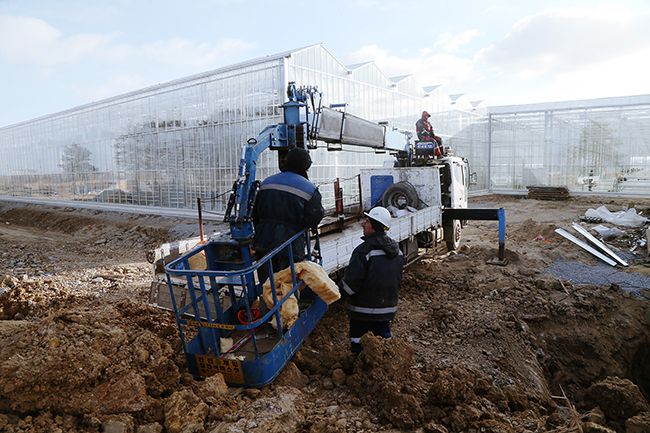
Skeptics among Japanese businessmen say that an important indicator will be success stories among already announced flagship projects. It happens differently here. For example, JGC vegetable greenhouses are quite flourishing, and the Japanese are going to expand them. But the MAZDA car factory plant, which, according to Vladimir Putin, is “built” and serves as the pride of many Russian officials, does not feel very well. In 2015, at the Sollers factory in Primorye, where they were going to install equipment for the production of engines, the Toyota and Ssangyong cars were closed , and then the benefits of transporting assembled vehicles to central Russia and zero VAT on customs - the economy of the plant supported the government compensation for the payment of recycling fees. Now at the plant some workers are on vacation, and since next year the last Mazda assembly line at the plant will probably be transferred to a four -day working week. The plant does not publish news about the installation of equipment for the production of engines.
Bargaining for the islands
Against this background, the agreements that were achieved on the most difficult issue - territorial one are unexpectedly optimistic. Putin and Abe signed two statements on this subject. The first is with the order to start consultations on the joint economic development of the southern smoking, primarily in the field of fishing, growing fish and seafood, as well as tourism. For a long time, Moscow promoted this topic, but the Japanese always refused - it was proposed to invest according to Russian laws, and consent to this partly implied the recognition of the sovereignty of the Russian Federation over disputed territories. Now, Moscow and Tokyo recorded that joint economic activity would not contradict their fundamental positions on the issue of sovereignty, and a separate international agreement can be concluded for work on the islands.
Если условия для японских инвесторов на Курилах будут напоминать ТОР или свободный порт Владивосток (то есть налоговые каникулы и отмена многих регулирующих норм), это позволит им как можно меньше сталкиваться с российскими чиновниками и делать вид, что работают они как бы не по российским правилам, а потому и суверенитет РФ над «северными территориями» вроде как не признают. Не очень ясно, кто больше выигрывает от этой договоренности: Россия может получить инвестиции в острова, многие жители которых находятся в довольно незавидном экономическом положении, а Токио может рассказывать гражданам, что вернул острова хотя бы частично — в виде рыбы и гребешка.
Второе не менее важное соглашение — согласие России допустить на острова их бывших японских жителей в упрощенном порядке, оформленное в виде отдельного заявления . «Мы договорились о том, что максимально обеспечим свободный доступ даже в те районы, которые до сих пор были для них закрыты», — сказал Путин. Этой теме очень много внимания уделил на пресс-конференции и Абэ. С его слов выходило так, что больше всего решение курильского вопроса в той или иной форме нужно как раз их бывшим японским жителям и именно для них он выбил из Путина новые уступки (в обмен Япония упростит визовые требования для всех россиян).
Конечно, все эти шаги (кстати, тоже пока не необратимые) никак не приближают Москву и Токио к решению главного вопроса — разделу спорных территорий и юридическому оформлению этого раздела. Здесь сплелось сразу столько проблем, что разрубить этот узел не представляется возможным. Суверенитет над всеми Южными Курилами позволяет России считать Охотское море своим внутренним морем. К тому же здесь расположены проливы, наиболее удобные (и незаметные для американских спутников) для выхода российских подлодок на патрулирование в Тихий океан.
Возможно, Россия готова вернуться к формуле декларации 1956 года, передав Шикотан и Хабомаи после заключения мирного договора. Но здесь всплывают другие трудности. Прежде всего, последовательность шагов имеет значение: Москва настаивает, что исходным пунктом должно стать признание итогов Второй мировой войны и суверенитета РФ над всеми четырьмя островами, а после подписания договора Россия «передаст» маленький Шикотан и гряду Хабомаи в качестве жеста доброй воли. Япония же настаивает именно на «возвращении» островов, причем уже соглашаясь порой принять Шикотан и Хабомаи в обмен на мирный договор и инвестиции. Но полностью отказываться от хотя бы символических претензий на Кунашир и Итуруп для Токио сейчас невозможно из-за общественного мнения в Японии.
Наконец, для России важно, будут ли на Шикотан и Хабомаи в случае их передачи распространяться гарантии американо-японского договора и не появится ли на островах военная инфраструктура США. Для Японии такие оговорки неприемлемы — принимать острова с ограниченным суверенитетом там пока никто не готов. Не говоря уже о том, что о возвращении даже двух островов, согласно майским данным Левада-центра, не хотят слышать 71% россиян. Хотя, согласно ноябрьскому опросу японской газеты «Майнити», за более гибкую формулу решения спора, не предусматривающую возвращение четырех островов, выступают уже 57% японцев.
Неслучайно Москва и Токио пытаются найти решение не первый десяток лет и никак не находят. Оба государства нередко бывают уверены, что противоположная сторона находится в более слабой позиции и вот-вот уступит — и всякий раз эти надежды оказываются напрасными. На сей раз Путин и Абэ по крайней мере честно говорили, что быстрого решения проблемы не будет, даже несмотря на целебные свойства онсэн, тем более Путин туда так и не сходил. «Мне удалось прикоснуться только к одному горячему источнику, — признался российский президент. — Это саке местного производства, называется „Восточная красавица“. Очень рекомендую, но думаю, что нужно знать меру».
Теперь стороны, очевидно, займутся анализом результатов визита и символической продажей их населению и целевым аудиториям в Пекине и Вашингтоне. А заодно последят за общественной реакцией. Как всегда в случае громких прорывов в российском «повороте на Восток», истинную реакцию Москвы оценить пока сложно — мешает победный треск государственных СМИ и искренний энтузиазм измотанных переговорщиков, для которых визит увенчался успехом.
А вот в Японии, судя по первой реакции, переговоры большого восторга не вызвали. Генеральный секретарь правящей ЛДПЯ Тосихиро Нокай уже признал , что «большинство граждан разочарованы итогами саммита». Публикации во многих японских СМИ также представляли итоги саммита как дипломатическую победу Путина и проигрыш Абэ. Пока из-за общей глобальной неопределенности, барометром которой стал твиттер Дональда Трампа, делать какие-то выводы рано.
В октябре ЛДПЯ изменила партийный устав под Абэ, и теперь он сможет возглавлять партию и правительство до сентября 2021 года, так что время на переговоры с Путиным у него еще есть. Но если прогресс на переговорах по территориальному вопросу окажется слишком медленным и отколоть Россию от Китая за это время не удастся (а сворачивание военно-технического сотрудничества между Москвой и Пекином выглядит маловероятно даже после победы Трампа), не исключено, что в будущем Синдзо Абэ будет не готов тратить слишком много времени и политического капитала на сближение с Москвой.
Read on the website of the Moscow Center of Carnegie:
Кризис доверия. Кто может сменить непопулярных лидеров Украины
И вся президентская секта. Чем кончится кризис в Южной Корее
How humanity owes Fidel Castro
Alexander Gabuev