
Translated material
Post -Soviet history
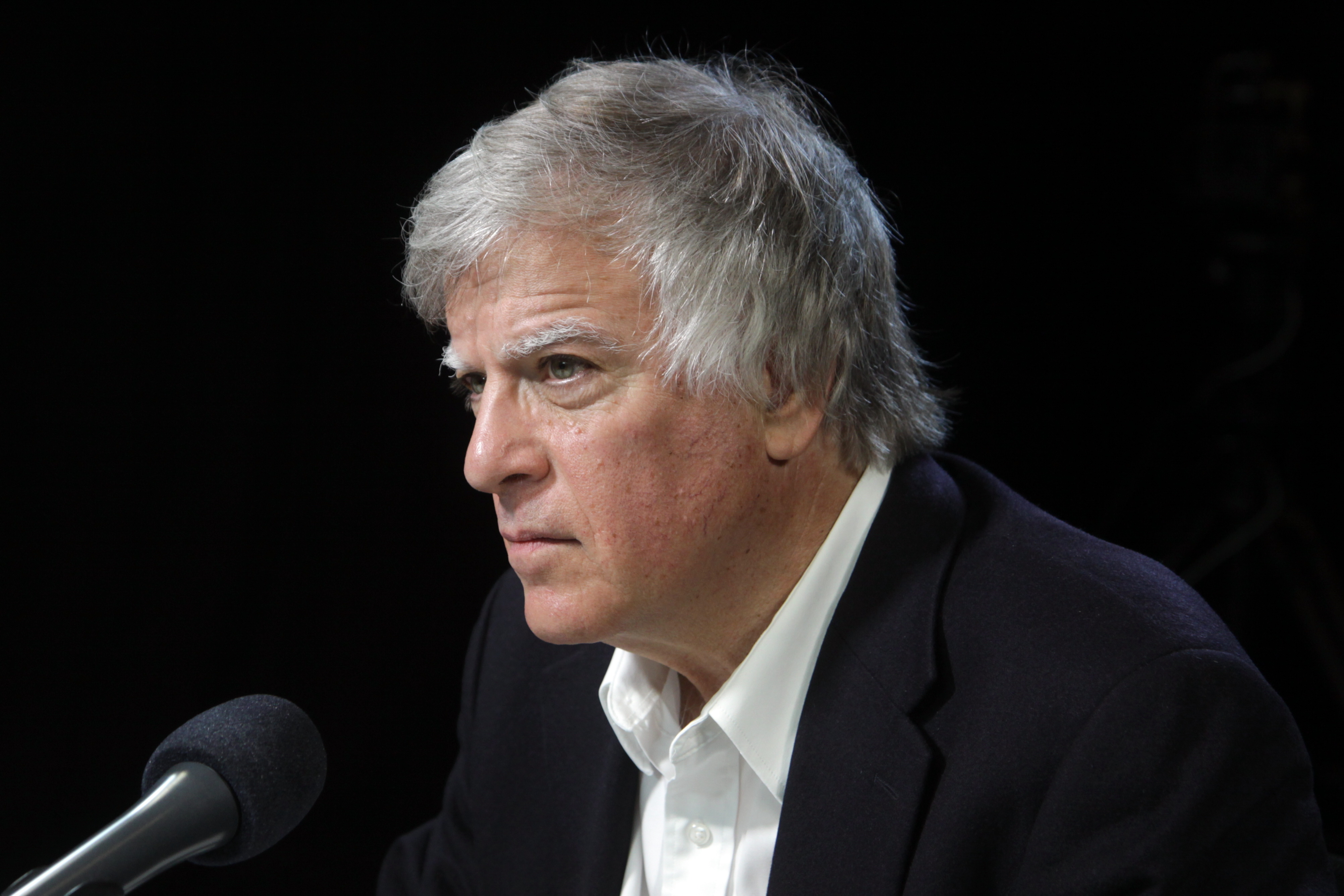
Alexander Genis: Today, visiting Ach, is a famous journalist and political scientist David Satter, with whom our correspondent Vladimir Abarinov is talking about his new book.
Vladimir Abarinov: David Satter is a recognized American expert in Russia. He worked in Moscow as a correspondent of the British newspaper Financial Times from 1976 to 1982, then he repeatedly arrived in Russia and lived in it for a long time, traveled a lot around the country, talked with ordinary citizens, watched perestroika, the formation of the Yeltsin regime, the transition to capitalism and, a rapid rush to the power of Vladimir Putin. The result of his observations was the books “Century of Madness”, “Darkness at dawn”, “It was a long time and not true.” They have many real destinies, the unacceptable stories of ordinary people who are combined with political changes in the country and give them a human dimension. In December 2013, Russia declared Satter an unwanted face, he was closed to the entrance to the country. After that, he wrote his new book. It is called “you know less - you sleep better” and published in three languages: English, Ukrainian and Russian. The Russian version is published in the American publishing house Bergstrom Press.
David, this is your first book about Putin’s regime and at the same time the last in the cycle of books about the latest history of Russia. It can be called a “short course” of this story. You set it out in a compressed form, summarize and make a forecast.
David Satter: Yes, because after I was expelled from Russia, I decided that the moment came when it was necessary to summarize the post -Soviet history of Russia in a brief form, because I have a deep conviction that a lot is incomprehensible. The Americans are, of course, but even Russian.
Vladimir Abarinov: It seems to me that you had in mind primarily a young Russian reader, a person who was born under Gorbachev or even under Yeltsin and who lacks a historical perspective.
David Satter: Yes, absolutely. But I wrote not only for the young, in principle for everyone, because in Russia now there is a strong tendency not to look at the truth, to ignore the truth. There are many events that are still not very well understood in Russia and which actually had a key importance for the evolution of post -Soviet Russian history.
Vladimir Abarinov: I miss many nuances in the book, but they can be found in your other books. But what you really do not write about is about the international dimension. But without the support of the West, the current Russian regime would not survive or it would be much more difficult for him to survive. You and I perfectly remember the 2000 presidential campaign in America. Republicans criticized the candidate of Democrats Ela Gora precisely for Russia, because he was responsible for her in Clinton's office. There was a report “The Way of Russia to Corruption”, Bush accused Chernomyrdin on the debate of putting the IMF loan in his own pocket and promised that he would take a tough position in relations with Moscow. But then Bush and Putin met in Ljubljana, Bush looked into Putin's eyes and saw his soul in them. And everything went the same. Eight years ago, the Democrats candidate Barack Obama criticized Bush’s Russian policy and said that everything would be different with him, but when he became president, he made a reboot, and four years later the Republican Mitt Romnie said that President Obama was too gently behaving with Russia. Everything is repeated. Why does America behave like that?
David Satter: I completely agree with you about this. My attention is actually attracted by one moment. After three FSB agents were arrested in Ryazan who laid a bomb in the basement of a residential building, and Nikolai Patrushev said that these were exercises, our authorities accepted this absurd explanation. They did not express any doubts, although obviously, they had this information-I know it because they saw documents of that period-they knew that there was something very suspicious here. With this silence, they actually contributed to the concealment of the truth about the terrorist act. Therefore, I think that the superficiality of the West and, I must say, the interest of officials who made a career that democracy in Russia is Yeltsin, played their negative role in this.
Vladimir Abarinov: And yet. You are very close to Washington decision -making centers, perform at a public hearing in Congress, you write articles, participate in discussions - why is all this in vain?
David Satter: Because in order to understand Russia, one must have one quality that is very lacking in American official circles. This is an imagination. We must have the ability to see the world with different eyes. And people who are aimed exclusively at their own career and who do not know Russia at all, they can be very mistaken. But, besides this, in order to admit that Putin, for example, came to power as a result of a terrorist act, one must be prepared for a complete change in relations between the two countries in a very uncomfortable direction. And then you need to have the ability to explain everything to the American public. And this is not easy, because an ordinary American cannot imagine that the country's leader is able to indifferently kill his country's citizens for political purposes. Therefore, it is easiest to just continue to make a career, not think about it, and if someone is asking, answering that we continue to consider this issue.
Vladimir Abarinov: There is such a Russian expression: “does not fit in the head” ...
David Satter: does not fit. And this is precisely the most important defense of the Putin regime. And this applies not only to explosions in residential buildings. The same thing happens on all issues, including the recent murder of Boris Nemtsov. No one wants to understand that this cannot be without Putin's order. Or take, say, Beslan. Who is able to understand that the leader of the country can give an order to open fire from flamethrowers in the gymnasium, in which hundreds of hostages are children, parents. This is the level of barbarism, which is difficult to accept as an opportunity to a normal person of a civilized world.
Vladimir Abarinov: Because in Russia the vertical of power. He is responsible for everything, all decisions are made by a person at the top of the vertical. Take the same story with doping at the Sochi Olympics. After all, if the FSB participated in this, then she did it with the knowledge and by order of the first person, because she obeys directly to the president and anyone else.
David Satter: Putin said when he became the president that nevertheless in Russia the president was responsible for everything. Someone else could give such an order in such a situation? I don't think. We judge by circumstances and by the nature of the system. And on the basis of everything that we know about the history of the behavior of Russian leaders, this, on the contrary, they must prove that they did not give such orders. But they cannot and will not do this, because it is completely clear that this all comes from them.
Vladimir Abarinov: Nevertheless, a turning point in relation to Russia occurred. Congress adopted the Magnitsky act with the appropriate consequences, illusions against the Russian regime were dispelled. How did this happen, how did the Senators, congressmen, president managed to convince?
David Satter: I think this happened for various reasons. If we talk about the Act of Magnitsky, then this is a situation that Americans are able to understand. But what is amazing here is that the Russian state, instead of investigating the actions of these people and condemning them, protects them. And this, of course, attracted the attention of the American public. And whoever could not see that the capture of Crimea Russia violates the most important principle of international order. Therefore, the masquerade, of course, can last a long time, but sooner or later the actors do something that they dismantle themselves.
Vladimir Abarinov: Let's talk about the future of Russia. Your script is pessimistic, gloomy. You do not see the legitimate ways to change the regime. There are two options: either the palace coup or the Maidan. Do not you think that another third scenario is possible? When legal forms of protest are impossible, the protest can follow the path of radicalization. I once read such a phrase on the Internet: "Russian Ulrika Minhoff has already graduated from school." Possible prospect?
David Satter: This is possible. This is one of the main dangers in existing conditions. I do not quite agree that the Maidan is an illegal way of struggle, because according to the Constitution in Russia, people still have the right to demonstrate. So this is another question, especially when it comes to peaceful protests. As for the possibility of terrorism, we are still familiar with Russian history and we know that this cannot be excluded, especially in the situation that exists today, when the possibilities of legal and peaceful protest are closed one after another.
Vladimir Abarinov: The hottest news of the last days is Russia's alleged intervention in the American electoral process. Do you believe in it?
David Satter: Yes, everyone is talking about it now. At first I thought that it was aimed at the Russian audience, that the plan was not to help Trump win. Now the CIA has expressed the opinion that the idea was just that - to influence the outcome of the elections. They probably know more than me. The only thing I can say - even if this is so, then in the future the Putin regime will not achieve this. Because this makes it impossible for a new era of rebooting, which Trump spoke at first and which the Putin regime probably dreams of.
Vladimir Abarinov: You are not waiting for a new reboot with the advent of Trump?
David Satter: I don't know. Much depends on the personality of Trump. He is a man is clearly superficial in all respects. Even his passion for beautiful women and money also indicates a certain superficial nature of his character. How he will behave is difficult to say, but I have complete confidence that sooner or later he realizes how all his predecessors realized when he will be forced to deal with the specific style of thinking of Russian leaders ... When you begin to listen to these surrealist Russian explanations, even such a superficial person as Trump will understand that something is wrong here.
Vladimir Abarinov: Here is one of the last paragraphs of David Satter's book “You know less - you sleep tight”:
"Gloomy times are coming in Russia. The war in Ukraine is not visible, and in the light of the murder of Boris Nemtsov, all the conditions for mass domestic repression were created. Threats of the use of nuclear weapons against countries that are not enemies of Russia, the leadership increased the risks of its use - due to error or in confrontation caused by the actions of Russia. On the other bowls of Libra, the stamina and talent of Russian citizens, which are spontaneously all, which all out of all. forecasts, were able to overthrow communism peacefully and which are able to overthrow the new tyranny that replaced communism. "