
Translated material
The death of the post -Soviet project. Part 2. Nostalgia of atoms in molecules
We continue to publish the cycle of the columns of Kirill Kobrin, united by the theme of the “Death of the post -Soviet project”. About how the ideology of the last calendar century mutated in Russia, from Lenin to Putin, can be read in the first part of the project . The second refers to the foundations of the entire post -Soviet one: atomization of society and nostalgia for Soviet as a method as a method of this atomization to camouflage. To be continued.
For the first time, the Kobrin project was published on the Opendemocracy Russia website, which we are grateful for the possibility of a recovery.
Nostalgia for molecules atoms
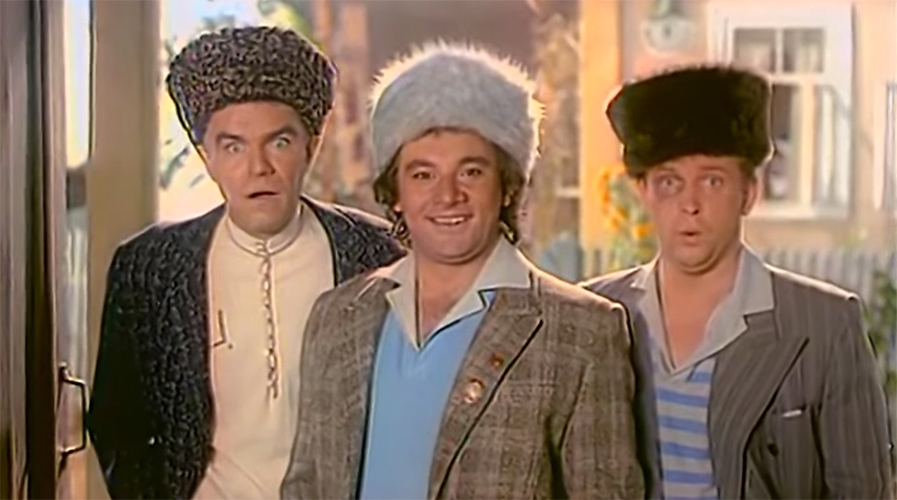
A third -party observer should be amazed at how in the last 25 years of Russian history the publicly expressed emotions and the real content of life in the country did not correspond to each other. The obsession with all Soviet ones, which covered Russian society almost immediately after the collapse of the USSR, was combined with the very anti -Soviet real economic and social policy. Quoting the heroes of the films of Ryazanov, Menshov and Danelia, the post -Soviet man built a life that excluded both such heroes and the possibility of creating such films. It looked like if a militant atheist smashed the church, singing the psalms with visible pleasure.
From the point of view of public consciousness, the post -Soviet period was the embodiment of such schizophrenia. Moreover, I risk saying that the “post -Soviet project” itself in many ways in this schizophrenia was based. Was it really schizophrenia? Or are the simultaneous and such opposite real life and the cention still have the point of convergence, or even origin?
If you make up the frequency dictionary of the most common phrases of the post -Soviet person, especially the post -Soviet person with a certain income and certain social expectations, then the following maxims will be in the first places:
"The thief must be in prison!"
"Devastation is not in closets, but in the heads."
"I do not like the proletariat."
The first belongs to the brutal hero of the series Stanislav Govorukhin "The meeting place cannot be changed." The hero is played by Vladimir Vysotsky, which immediately gave (and partly gives) this phrase is one hundred percent convincing. The second and third maxims - from the film “Dog heart” by Vladimir Borto, they are pronounced by the Jovian professor Preobrazhensky, a convinced opponent of the Soviet regime - and at the same time close to the body of the Soviet leaders Aesculapius.
The publicly expressed worldview of the post -Soviet man, especially surviving perestroika at a conscious age, is almost completely exhausted by these three phrases.
Instead of the law - a tautological statement, impersonal in nature; After all, it is not said that “a thief should be imprisoned” - this suggests those who condemn and plant. We see here a pure abstract judgment, claiming to describe the order of things. A thief in prison should sit. If I, speaking, do not sit in prison, then I am not a thief. The archaization, which is generally characteristic of the artistic language of this television industry, is still interesting here. The “thief” in this case acts in the old Russian meaning - “criminal”. It turns out that those who are in prison are criminals, who beyond its borders are not; Everything happens in itself, without the participation of the police, judges, state. It really happened.
Professor Preobrazhensky rejuvenates the Soviet party bons, but contemptuously curses from one word "Soviet". The liberal post -Soviet cultural figure will go abroad at the state expense, but will try not to get into the photo next to Minister Medinsky.
As we see, there is no contradiction here: you can be a real thief, fraudster, corrupt official, criminal and say that the thief should be in prison, because if I am at large and have the opportunity to speak out, then I am still not a thief. That is why the presence of a large number of employees of the law enforcement agencies, ministers, deputies, businessmen, journalists and ordinary people who repeated this mantra on the day, strictly speaking, by a manifestation of double -humor or schizophrenia. This is a manifestation of a very common in an atomized society of total distrust of institutions - to the law, the state, as well as the refusal of an individual of social responsibility. There is a separate person and there is fate, the order of things who will either send this person to prison and make him a “thief” or leave him alone.
The paradox is that you can be a real thief, fraudster, corrupt official, criminal and say that the thief should be in prison. Phrases from the "dog heart" transfer this problem already in a purely social field. The reasoning of the "devastation" is not a philosophical maxim designed to encourage fellow citizens to take up their own thinking. This phrase is not pronounced by the philosopher, but by the doctor who pretends to be above the new Soviet life surrounding him, but at the same time owes his own position to those who built this life and leads it.
Here we see the pattern of the typical behavior of whole two groups of the post -Soviet population - the capital (humanitarian, first of all) intelligentsia and officials, especially large ones. The first almost every time was ready to serve the authorities, which she actually despised. The latter were forced to demonstrate an unearthly love for the “common people” in order to more handfully squeeze out the means to maintain their own power and well -being.
Professor Preobrazhensky rejuvenates the Soviet party bons, but contemptuously curses from one word "Soviet". The liberal post -Soviet cultural figure - if he is called, of course, - he will go to the public account abroad, but will try not to fall into the photo next to the Minister of Medinsky. The post-Soviet official with accounts in Switzerland, a house in Nice and a daughter in Oxford is sometimes forced to go to the “factory” and meet there with “workers”, he even drains in disgust in the factory canteen, but, emerging into a service car, will wash the taste of the eternal Soviet cutlets from a flask from a flask.
Others can be thieves, have a devastation in my head, clean closets, and I will separately deprive my divisions and resonance. Before us is public consciousness, in which the idea of solidarity is completely absent.
This is not hypocrisy, not: this is a conscious separation of different aspects of life, one another concerns, no schizophrenia. It is here that the truth important for understanding modern Russian society lurks.
Repeating the hundredth time about “devastation in the heads”, the post -Soviet person has in mind completely different; Thus, he simply refuses to eliminate the devastation in Kloset, providing others (“Well, I have no devastation in my head!” He believes after Professor Preobrazhensky) to cope with this devastation. “Destruction” - “not about me”, she is about others, I have nothing to do with it. And here we find ourselves in the same situation as in the case of the formula "a thief must sit in prison." She is also about others. Others can be a thieves, sit in prison, have a devastation in my head, clean closetes, and I will be aside, separately, to deprive my divisions and resonance. Before us is a public consciousness, in which the idea of a social - and simply anthropological - solidarity is completely absent.
What is manifested, of course, in the third phrase - about the proletariat. This, as they would say in the days of my youth, "show -off", and the show -off are cheap. Professor Preobrazhensky would try to say that he does not like the proletariat, year in 1918, when the Red Guards came to “compact” him; Then he understood that any wrong word - and the armed proletariat would be torn to pieces.
And here, already in the well -established, hierarchical Soviet world, under the protection of security diploma from the Central Committee, he can tell these ridiculous dreamers from the Domkom anything right in the face, with the squeamish grimace of the tired master. He is just rude to him.
The notorious lapidar post -Soviet rudeness, penetrating the whole society from top to bottom, is enclosed in this phrase - and it is from here that the most monstrous, impudent, inhuman statement of Putin: "She drowned." Chic cynical tautology is strong, which does not need to pretend to be weak. Yes, I do not like the proletariat - this is the truth with which you will not share anything, how you can’t do anything with me. Yes, Kursk drowned and we lied to you - this is the only truth in this story of a monstrous lies, but you will not be able to do anything with this truth or with us.
For new generations, Soviet infrastructure was given by default ontology of life. And Soviet life, presented in painted Soviet cinema, began to replace the pictures made in Hollywood.
Another curious feature: not to love the proletariat in a country built by the proletariat and for the proletariat is coquetry and hypocrisy. The post -Soviet project of Russia was hypocritical and flirty, he enthusiastically used everything material and culturally valuable, which was created in the Soviet period, but pretended that he had nothing to do with it, that all this good fell on it by itself.
Soviet nostalgia was the reverse side, a kind of psychological compensation, an absolutely necessary detail of this project - otherwise there would be no balance. Over the years, the balance has been destroyed - as it was growing wear of worn -out both Soviet infrastructure (houses, power plants, bridges, railways), and a direct sense of involvement in the previous era.
For several years, Soviet nostalgia has been used as an ideological tool. The farther in time the post -Soviet society went away from the Soviet period, the more nostalgia became, for the direct idea of the “Soviet” from collective memory disappeared (along with the carriers of memory of the Soviet past). The balance has not been needed. For new generations, Soviet infrastructure was by itself - as if not even Soviet, but in general, by default, the material ontology of life that saw types. And Soviet life, presented in a restored and painted Soviet cinema, began to replace the pictures made in Hollywood. At this point, the post -Soviet project in the Russian public consciousness dies - after all, he was embodied in this balance.
The above was intended to hide the deep catastrophe that took place with society - its final atomization. The history of Russia for the last one and a half centuries can, in particular, can be considered as a series of social disasters that destroyed the prevailing horizontal public relations that connected the vast majority of the country's population. It doesn’t matter what these disasters were caused, we are only interested in their effect. The abolition of serfdom, subsequent urbanization and collapse of the rural community. The revolution of 1917 and the breakup of the existing social system. Stalin industrialization, collectivization and mass repressions. The relative respite occurred only in the second half of the 60s and lasted twenty years-a Soviet person (for various reasons that we will not discuss here), the authorities left in relative peace. Moreover, the Soviet government provided him with housing, a limited opportunity to grow things, everyday life - and social ties covering a wide range, from “blat” to collecting brands, chess clubs and even studying Esperanto. It was Stalin who killed the Esperantists, but they were not interested in Brezhnev.
The history of Russia for the last one and a half centuries can be considered as a series of social disasters that destroyed horizontal public relations.
As a result, there was an unofficial horizontal world of society, in which personal interests, territorial, professional and other social were intertwined; All this included even such a thing that disappeared under Stalin as “solidarity”. Crazy capitalism, released in Russia in 1992, and the complete absence of any social policy in the authorities of this world to shreds, into atoms. Only the phantom memory of some supposedly “kindness”, “mutual assistance” and “justice” reigning in the USSR remained. Yes, if there were manifestations of mutual assistance and solidarity at a private level, then they were in completely different people . In any case, we have another one - the last - an integral part of the Soviet nostalgia of the post -Soviet man.
Nostalgia as a sociopsychological and sociocultural phenomenon can exist only in private, unofficially, as a process, and not a ready -made thing. For several years, Soviet nostalgia has been used as an ideological tool and - what began much earlier - an advertising strategy. From the sanitary, she became an official rhetoric and even a “large style” - thus putting the end of a certain type of public consciousness, which we have the right to call the “post -Soviet” one. When nostalgia cast into cast -iron slogans, it became clear that the post -Soviet atoms did not hold anything together. And here there is a dangerous moment.
The collapse of social structures and atomization of society is the main reason for the ongoing disaster of some regions of the world: in Africa, Central Asia and, for example, in the present Donbass. To stop the war of everyone against everyone in order to stop the prolonged disaster, you need to rely on stable social structures; If they are not, then any efforts of this kind are meaningless.
This is well understood by the Russian authorities, which hit ultra -conservatism and traditionalism. She tries to create (claiming that they “recreate” them) these structures, but herself - with the other hand - destroys the timid shoots of a new horizontally intertwined society that appear contrary to her will. Thus, the power entrusts both society and the state into even greater trouble, the attempts to avoid which, apparently, will become the content of the following period of Russian history.
The third (and last) part of the “death of the post -Soviet project. Between Brezhnev and the old woman Shapoklyak ” will be published on Colta.ru on December 23.