
Translated material
Friends: Nikolai V. Kononov - Sergey Lebedev
Three weeks ago, Kolt began the Friends project. Its meaning is simple: we invite everyone to sit with their friend or girlfriend, pour tea or something stronger and talk about what you can talk about only with loved ones - for life (we suggest about life in Russia today from the prospect of different generations, but you are free in the choice inside this most wide framework). You need not to forget to write down this conversation, arrange it in a fascinating text (up to 20,000 signs) and send it to the editor Crowd@colta.ru . The deepest, sharp, unexpected, touching or funny conversations we will definitely publish. Therefore, sit in a long winter holidays under the Christmas tree - and go! All the rules of the project are here .
Several such conversations have already come to the editor - thank you, friends! But we are waiting for real competition to begin.
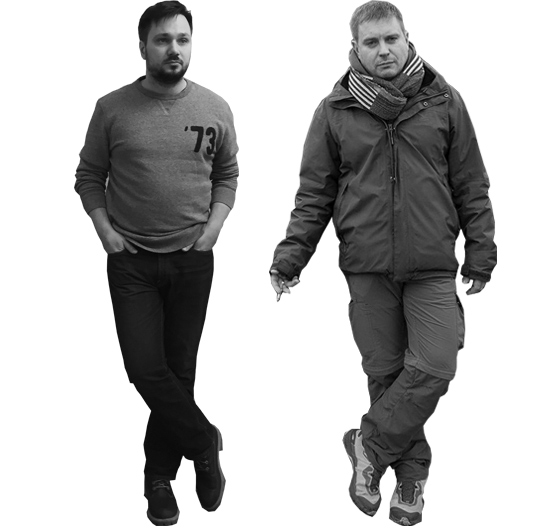
Meanwhile, the first in our series were Yuri Saprykin and Ilya Oskolkov-Censer . And today we publish a new conversation that came to the editor. Friends and interlocutors - two writers, Nikolai V. Kononov (“God without a car”, “Durov Code”), part -time editor -in -chief of the company's Secret of the Company, and Sergey Lebedev (novels “The Limit of oblivion”, “The Year of Cometes”, “People of August”), one of the most noticeable new Russian authors outside of Russia: just “The Tnure of oblivion” was called one of the best books of 2016 in Wall in Wall Street Journal.
Kononov and Lebedev for this conversation united the topic, at the same time private and general: the history of their families as a fragment of the history of the country.
This topic - the wounded, intermittent historical consciousness of the nation - came to the forefront of public interest, and Kolta started even a separate section for it - "remember everything."
In general, read the second conversation in the “Friends” project, and we are waiting for new ones - yours!
Nikolai V. Kononov: How did you find out that your grandfather is a lieutenant colonel of the VChK-OGPU-NKVD-MGB, and started to Chon, that is, expropriately expropriately at the peasants?
Sergey Lebedev: The first impulse, signal, was from parents. They are geologists. At the age of 15, I went to the first expedition to the north, and ... however, even earlier, in childhood, I had some strange feeling that there, in the north, northeast, was some kind of non-shaped secret. I’m a late child, and my parents began to work immediately after the camps were closed.
Kononov: Late and only?
Lebedev: Late and only.
Kononov: Me too. Dad was 48 when I was born, and my mother was 40.
Lebedev: I have 42 mom, dad 40. Mom worked in the Far East, she had all the workers to be unfinished prisoners. Parents saw what was happening live. And therefore, when he and friends sat down at the table, a snack, herring, vodka, I often directly felt that the conversation was going somewhere in the wrong place and so badly freezes-because there is a child, it is impossible with him. But still, on these conversations, a strange feeling was created that the geography of this unkind secret is the north. Something indicated there.
Kononov: That is, they knew and were silent.
Lebedev: Yes, the performance had deep, physically everyone saw this: both exiled and camps.
Kononov: But the turning point, you say, was when you went on an expedition.
Lebedev: Yes, 1996, the first expedition, taiga, all your life you wanted this, dreamed - and now. The helicopter flies up from the outskirts of the city of Pechora, and suddenly you see that in the taiga there are some kind of forest-axes, bald spots, barracks are rotten, all the pichoras of the forests are bolded. And next to the huntsman sits, and you ask: "What is this at all?" And he tells, shows where which camp was. And then, when you are already flying to the mountains, to the Popular Urals, you see that there were pack paths where the horses were driven. The barracks have already developed, lie, rot, but there were adits, the mines - the only thing that no nature would destroy.
It turned out that I applied the executioner reward to my chest. Everything fell apart, I stood and thought that there was no one to ask.
Kononov: So the grandmother did not say anything, because, as you say in the “limit of oblivion”, worked in the Politicizk and knew how to be silent professionally?
Lebedev: This is Grandma Natasha, grandmother in her father. She wrote memoirs for about a year since the 85th, when there was still no idea that the USSR would fall apart,-the Belovik of Family History simply wrote. She emphasized that her parents were of noble descent, but at the same time they always sympathized with socialists. Like, we are not rootless, we went from somewhere, but we are fit for the Soviet world. I never said anything again. I have a photograph of the late 1916: a manor, such a long-long fence, and they are sitting on this fence or even hanging, as you know, lilac, young people, guys, girls, their people are 40, some in military uniforms. This is a family. By 1945, one grandmother will remain alive. Therefore, I think, she considered herself some kind of strange. The glass crashed, one fragment flew into a corner, it lies there-and good.
And there was a grandmother Pava, a mother’s grandmother. She was married twice. That is, along this line I have two grandfathers - a native, first husband of my grandmother, Grigory Trofimovich, and the second husband. The first is the captain, fought the whole war, was wounded twice. And from the second remained at the dacha hats, fishing rods. And all. The image is absent. Grandma died, and in 2008 I was in her apartment and climbed into a huge box with orders. I thought it was the order of the grandfather who fought for Stalingrad, forced the Dnieper and so on. The rewards themselves were my fetish thing, I sometimes tried them on.
And so I found a pack of documents and two officer books. I was also very surprised that there were two of them - I did not think that the second grandfather was related to the armed forces. He discovered the one that belonged to Grigory Trofimovich, and everything was confirmed: captain, Stalingrad. But not a single order, not a single medal except "for the victory over Germany." I got dumbfounded and thought: what is it?! He opened the second, and there - the lieutenant colonel of state security, served from 1919 to 1954, began at 15 years in Jung, that is, yes, he took the grain from the peasants. Well, all the orders, of course, is his: the Red Banner, the Red Star, the Order of Lenin, everything is as it should.
Kononov: What did you feel?
Lebedev: In childhood, I felt more than the grandson of Grigory Trofimovich than the son of my parents. I had an idea of fair awards, that your grandfather is a hero of the war, that there was something in him. I thought that someday I would accomplish feats. It turned out that I applied the executioner reward to my chest. Everything fell apart, I stood and thought that there was no one to ask: no grandmother, no grandfathers, parents can only be asked "Why were they silent?"
Kononov: What did they answer?
Lebedev: "We wanted this to remain with us, and to save you from this cargo." Like such a noble thing.
Kononov: And how did you come to Roman about this later?
Lebedev: I was not going, in principle, to write any novels. I was engaged in journalism, essays. After I found out about my grandfather, I wanted to go somewhere, do something, ask someone. It was clear that they would not give me the case, because all these things were closed. And suddenly I realized why I went to all these camps, why I looked at all this eight years in expeditions. In an instant, everything came together. I realized that since no one will ever tell me anything about him, then I must use the method that they have not foresee anything. You can write a novel. The figure of the grandfather can be guessed. You can take it out of the shelter, this common faceless figure, put your face, bring it into the circulation of culture, where there are no people like him. And then, when I wrote, there was a feeling that now the whole country would read the book and something will be, but the book just ... Absolutely fell.
There are really two or three close members of the family, and the rest are called: name grandfather, name grandmother. They are not, there are only photos on the walls, and you learn to live with them.
Kononov: I remember. She's not that failed. What happened to her that with the most interesting books on these topics took place - they seemed to have sunk into the water, into the void, into the Semoine Camera.
Lebedev: But this did not affect anything, because the next book itself began. I internally felt that there was a large number of departed people behind me. None of them have left life of their own free will or for natural reasons. This amount of ostentwood votes is behind me, the critical amount of the unfulfilled.
Kononov: In the history of my family, there are also completely inexplicable things. For example, my mother’s grandfather went missing after dispossession. No one knows, neither where he died or died, nor where he is buried. This was not discussed. The clan was amazed in rights. None of his children had a higher education, and one of his mother’s aunts was exiled near Krasnoyarsk, in the formulation of the reservation there was a “daughter of a fist”. All of them, aunts and uncles, went out of their village to cities, where it was easy to get lost, and they were silent all their lives. Their children and even more so grandchildren forgot their great -grandfather, and that’s all.
And so my mother and I came to my native village to look for some traces, a wealthy village between Kimra and a taldom called Spas-Privashenki-there are skins, the forrins lived. The great -grandfather had a teaspoon at a profitable fork: one road goes to Kimra, the other to Sergiev Posad. He also owned a factory-river. And so we went along the main street, went to the church, which remained, and there we found one clue. In 1922, the commission came to withdraw church values, rang into the bell, peasants appeared, a riot began, and when the commission left, either they threw stones, or they gave someone in the face. One way or another, six months later, the GPU arrived and took seven people. Among them was Kopeikin - the surname of the great -grandfather. And suddenly my mother says: “You know, it’s enough for me that I saw this village and realized where my grandfather lived. I don't want more. "
I was amazed. I thought, maybe the generation of parents was just tired. Just does not want to spend mental strength. It was - okay. The past was over ... I went to the regional archive, found the case and realized that not great -grandfather was injured in history with church values - another kopeikin was taken away.
Lebedev: My father also did not know his father. Either Grandma Natasha decided that he was dangerous for the family, or something else, in general, after the war, he disappeared into the war, and then - that’s it. They, their parents, were so learned to live with the absence of people, with some symbolic replacing figures that it is about the same as living with people alive for another. I realized that there are really two or three close members of the family , and all the others are named: name dad, name grandfather, name grandmother. They are not, there are only some photos on the walls, and you learn to live with these photos on the walls.
Kononov: This is perhaps the main thing than the Soviet, and the post -Soviet person is interesting to the world. Life without memory, without a foundation. Man is like a birch in a swamp: it is easy to pull it out, because there is nothing under it. How do millions manage to live with this? My parents adapted with the help of some simple psychological techniques-not to think about the bad, to notice only the good, not to see something that can injure.
Lebedev: Yes, to believe that in the past not everything is definitely, not everyone was bad, not everyone was good. Such erosion of responsibility. Don't know. I think that what I am writing is their debts, but it is not written for them, because they themselves saw enough to understand something. I’m as if I buy it out of them, not what they had not said-not what was said to me.
You know, there is one camp on the Kola Peninsula, very close to Kirovsk, there they mined radioactive ore. There was a Gakmanite mineral, radioactive. And when there was a Beriyevsky team to everyone to look for at least something radioactive, they built a camp there, and several huts were left from him. Since there is no forest there, the huts were built of stone. And now, standing there, I thought: here there is a lot of people of a tourist to the city - we need a memorable sign, stele. And then I realized that this stele will also hang in the air. Because she does not create a memory, she can only refer to memory. But there is no memory itself.
Man is like a birch in a swamp: it is easy to pull it out, because there is nothing under it.
Kononov: Have you seen the film of the Austerlitz Loznitsa?
Lebedev: Last, about the camps? No.
Kononov: About how strange memorial places work. People come there and first be careful, deliver, and then they begin to peel a selfie against the background of the gate with the inscription “Arbeit Macht Frei” , look into the gas chamber as usually they look at some small side hall of the Berlin gallery, and so on. Something is not going on with memory in the expositions at the site of the camps. The devil knows him. How should it be arranged?
Lebedev: I spent a month on the outskirts of Berlin, in Vanze, and every day I walked past the villa, where the “final solution to the Jewish question” was made. In the heart and conscience, in its place there should be an eternally steaming funnel. Not sure, but it can be a place for prayer. It seems to me that the museum should be replaced by something artistic, the power of artistic statement.
Kononov: Do you remember the memorial in Tyrgarten - gypsies? It looks like a funnel. If you look from above.
Lebedev: Well.
Kononov: Once we are about Berlin, there was still a story. A year ago, I ended up there in a hospital. He fell asleep at the wheel and, Long Story Short , got into their intensive care unit. Fortunately, in this hospital, the wife, who saved me, was allowed to stay, and when after a while I was able to sit, we began to get out for walks. Sasha rolled me in a stroller in the park, then to the edge of the field-and among the field we noticed an island of some fruit trees, shrubs. It was obvious that he was there for some reason. We crawled along the path and saw that it was a memorial. In the center of the boulders, something simple is engraved on it, like "in memory of the victims of the euthanasia program." It turned out that the Psykhlechebnik was on the site of the hospital, where in 1940 the patients were killed in gas chambers.
Near the stone there were stands such as bus schedules. Documents were displayed on them - lists of people, with ticks, with notes, lists of those who needed to be poisoned. And near the photographs of a gas chamber, buses on which corpses were carried to a crematorium, a crematorium. Somewhere on the side there was a timeline, covering not only euthanasia, but in general the entire history of the place-what has been here since the 19th century. Nothing artistic, documents are just working. People begin to peer, they can’t take care and tear themselves away. Here is such a modest thing, but it creates such a buzz of electricity, powerful emotional work.
If you return to how to talk about the terrible, transcendental - as I understand it, are you trying to hit with artistic means?
Lebedev: Just not, do not hit. Here is the most terrible story. Nazin tragedy, 1933, early expulsions of kulaks, Ob, spring, deported are left without tools, without food.
Kononov: On the island, who will be called the "Island of the I amputs."
Lebedev: Yes. If we take this place and write about the island of the cannibals, pushing the pen, then, in principle, this is the point of absolute darkness, maximum compression of the universe, there is no air, there is nothing. So, my idea is that the book must be written so that it internally takes into account that reading it is uncomfortable, reluctant to anyone, it hurts. Here is all this work, a trial with the past, you need to arrange so that you are invited somewhere, they are safely carried out by some road. And therefore, I don’t know, using some structures of the myth or something else, but you must make a book so that a person can go through it to the end. Odysseus also descends into the underground kingdom, where the dead flows on his blood - and, in general, you can leave him there. But it is better to come up with the book so that the hero was still walking through the darkness.
Kononov: Of course.
Lebedev: And with him the reader went out somewhere. This is not the amount of darkness, this is the question of how you will write down the move through these strata compressed.
Worklar mountains, tundra, June. The day lasts, the feeling of time is lost. Politzes begin the uprising. They will build their little democracy with parliament.
Kononov: I also began to study the strange things related to the history of the family, and was amazed: if you look at private memory, documents, diaries, memories - how much it is different to the past. How much it does not look like what has already been written about him, removed, delivered. Narratives formed, and we used to think and look through them.
Look: this summer I was sitting in the Memorial, in the memoir fund, I was looking for materials for the book about what was when people returned from the camps, how they lived on the same street with those who planted them. As a victim and executioner lived in the same city, on one street - there is almost nothing about this. And suddenly, almost by accident, I heard the phrase “Norilsk Rulery”. These two words attracted me with something, I began to watch the documents. In general, this uprising was the first in a chain of riots, after which the system of special camps crashed where the Politsyki sat - after it the Rechlag rebelled in Vorkuta, then the Kengirsky described in the Gulag Archipelago began. I began to read on the topic everything that was in open sources. And according to these sources, it became clear that behind the seeming usual prison riot, a “bagpipe”, a change of consciousness, an understanding of terror history is hiding.
In short: 1953, the political prisoner camp, where, in addition to the Russians, Ukrainians, Germans, Japanese, Poles, and Baltic states were brought in addition to the Russians. Worklar mountains, tundra, June. The sun does not leave the sky, the day lasts, the feeling of time is lost. Stalin died, but for some reason only criminals amnesty. The mainland, Moscow, civilization is somewhere far away-the Politzes understand that they can not survive in permafrost for a long time, and begin an uprising. It will last two months. Их более 20 000 человек, четыре мужских отделения и одно женское. К ним приедет комиссия из Москвы, наобещает с три короба, они поверят, но быстро поймут, что обмануты, и продолжат бунт. Построят свою маленькую демократию с парламентом, станут ставить спектакли и проводить соревнования. Это будет выглядеть фантасмагорично: Вторая мировая недавно закончилась, а непримиримые народы, как львы с ягнятами, возлегли рядом на нарах, как, например, евреи и члены ОУН (и «мельниковцы» , и бандеровцы), мирно сосуществуют и борются с общим врагом.
Они запускали воздушный шар с листовками — если прикрутить веревку нужной длины и поджечь, она догорит, и когда шар долетит до Норильска, ветер разнесет листовки по городу. Одна расконвоированная спрячет листовку под одеждой, доедет до Москвы и сдаст в МВД. Позже их товарищ во время допроса услышал по радио, что Берия арестован, и передал это «на волю» — и у державших оборону появилась надежда. Но они поняли, что их хотят додавить, и написали письмо в правительство, что требуют себе высшую меру наказания.
Эта их маленькая попытка жить, зная, что ты скоро и мученически умрешь, меня очень сильно уколола. Я понял, что эта история — совершенно мимо и блатного флера, и «лагерной прозы». Там в каждом отделении яркие герои, свой сюжет. Вот идеолог подпольной демократической партии, который писал ее устав на французском и вел дневник под видом сонника. Вот «мельниковец», который топил за ненасильственное сопротивление и в его отделении не было жертв, после лагеря он стал йогом и никогда не жаловался, говорил, что если бы не ГУЛАГ, он не стал бы собой. Вот москвич, сын партийного московского функционера, написавший гневное стихотворение отцу, где спрашивает, чем мы лучше тех, с кем воевали. Там же, рядом с ними, в Норильске следил за восстанием американский священник-иезуит, попавший в лагеря как «шпион Ватикана».
Лебедев: Опрокинутая история.
Кононов: Два месяца они держались, понимаешь? При отсутствии сведений о том, что творится в мире, это же не просто север, это край света, другое измерение. В общем, я начал писать новую книгу, недавно съездил к одному из участников восстания и снова ощутил, как это удивительно — слушать, расспрашивать свидетеля. Я так понимаю, в твоих историях свидетелей уже нет?
Лебедев: Нет, в моих историях свидетель — это, в основном, природа. Потом, смотри, какая интересная вещь. Когда ты языком реалистической прозы начинаешь писать про прошлое, ты оказываешься в ловушке. Ведь прошлое состоит из дыр молчания. А ты его все равно как бы нормализуешь.
Когда ты погружаешься на два километра вглубь горы, там сохранился воздух лагеря, там он стоит. И я подышал тем, чем людям не нужно дышать, — воздухом загробного царства, почувствовал себя отравленным.
Кононов: В смысле?
Лебедев: Делаешь пригодным для daily -восприятия. Когда ты пишешь, ты вводишь эти нечеловеческие вещи все равно в ряд постижимого, возможного — просто в силу того, что пользуешься языком. У меня есть ощущение, что такое повествование должно, как голос под сводами собора, аукаться с большим молчанием мертвых. Язык должен самому себе противоречить, сам же с собой спорить, постоянно себя очищать, приближать и отстранять одновременно.
Кононов: Это важный момент: как писать о советском терроре из двадцать первого века? Ну вот мы — такие московские мальчики девяностых. Не свидетели. Имеем право?
Лебедев: Ну, есть мир, в котором ты живешь, Москва, и надо физически проделать очень длинный путь, чтобы достигнуть каких-то потайных уголков, где в прошлое можно протянуть руку. У меня есть любимый образ, который я использовал в «Пределе забвения»: штольни уходят километра на два в гору, и когда это все консервировали, вентиляцию, естественно, выключили, и сообщение воздуха прекратилось. То есть когда ты погружаешься на два километра вглубь горы, ты можешь закурить, прийти через неделю, а твой завиток дыма будет еще висеть. Там сохранился воздух лагеря, там он стоит. И я почувствовал, что подышал тем, чем людям не нужно дышать, воздухом загробного царства физически, я почувствовал себя отравленным.
Или еще я видел размываемое захоронение. Погост лагерный. Сначала ты ловишь рыбу из речки и пьешь из нее воду, а потом отходишь на несколько километров выше и там видишь, как кости торчат из берега. И все, это в крови, это в тебе, в теле уже живет. Ты как бы из этих мертвых состоишь. Или познакомились с егерем, и он ведет показывать место, где один сбежавший зэк съел другого. Реальная история: двое думали из Печоры бежать хитро в Западную Сибирь через Урал, но ошиблись, проглядели поворот, свернули в ущелье, которое изгибалось и вывело их обратно на европейскую сторону. А когда поняли, продукты уже кончились, один другого съел.
У нашего поколения был непосредственный контакт с материальностью разной, из моей памяти этих лагерных рудников уже не вычеркнешь. А те, кто потом придет, — для них уже не будет материальности. Доски сейчас уже истлели, а через 20 лет их уж точно не будет, ну дырки эти останутся странные в земле.
Поэтому мой ответ такой: литература расследования. У меня — позиция следователя, разыскника. У тех, кто придет следом, будет другая свобода в выборе форм, позиции. Но какие-то первичные вещи будут сделаны. Болото сгустится. Я думаю, что если есть смысл в моих книгах, то это первичное сгущение болотистой почвы . Чтобы на что-то можно было опираться. Это скорее для моих детей, для моего сына.
Кононов: А тебе не хочется освободиться от этой темы? Взять и написать что-то еще?
Лебедев: О, ты знаешь, был замечательный эпизод. В самом начале, когда я еще думал про «Предел», мелькнула идея, что я хочу написать другую книжку, большую-большую. Я тогда работал с отцовской частью архива — это по его линии, я говорил, дворянское семейство, дамы, классные наставницы Смольного, сохранились все фотографии. Ты видишь эти наряды, лица и думаешь: интересно, они вообще меня в качестве своего правнука опознали бы — ну, в гуманитарном смысле? В этом существе узнали бы родственника? Одновременно я читал бабушкины воспоминания про отношения между мужчинами и женщинами, и мне хотелось написать книгу про нас как поколение, к которому вернулась лиричность жизни. Я сел и стал писать… Начал со сцены, где герой и героиня сидят на берегу где-то в Португалии, океан, белое вино, рыба, — и вдруг я с ужасом понял, что пишу начало книги про ГУЛАГ. Это моя история: ведь мне сложно было есть рыбу после того, как я поел ее из лагерной речки. И я понял: ты можешь вилять, не вилять, но ты просто идешь по этой линии.
Мы — поколение, выросшее, как мох, на крыше заброшенного барака.
Кононов: Это ровно то, что я ощущаю. Сейчас исторический момент, в котором все так херово и странно, что уже много кто понял: в этой точке невозможно конструирование будущего. Как если бы ты попал в черную дыру и попробовал, не зная ее законов, что-то прогнозировать. Даже те, кто рвался быть глобалистом, жить как в Нью-Йорке, агитировать за огороды на крышах офисов и учиться жарить панкейки вместо оладий, все равно споткнулись. Feminist? Заикнулась о равноправии — над тобой смеются. Ресторатор? Снимай вывеску «Шашлычная “Антисоветская”». Блогер? Пожалуйста, вот срок за репост. Разница между тюрьмой и волей небольшая. Как-то очень остро стало чувствоваться, что зона советского эксперимента не изменилась, что игла Кощея там, в терроре. Кто-то из шестидесятников — кажется, Визбор — говорил: «Мы — поколение, выросшее, как ветка, из приклада винтовки». Мы тогда — поколение, выросшее, как мох, на крыше заброшенного барака.
Лебедев: Зерно рока — там, определенно. У меня был такой образ, я в Инте его нашел. Улицы, сталинки какие-то, раскрошенные, как печенье, балконы, видна арматура — и в одном месте, где арматуры не хватало, строители использовали витки колючей проволоки.
Кононов: Да, а я вижу волну людей, которые начинают разбираться с последствиями террора — чаще всего через восстановление семейной истории, ищут следы пропавшей родни. И я вижу авторов, которые занимаются тем, что открывают в советском прошлом или русском настоящем новых героев. Гагарина ведь недостаточно. Есть герои лагерного сопротивления, есть люди, которые просто делали свое дело, а этим делом спасли огромное количество людей: типичный пример — это мужик, который в Ижме в аэропорту работал и…
Лебедев: ...и 10 лет после закрытия аэропорта полосу чистил.
Кононов: Да. А потом аварийный самолет на эту полосу сел. Вот выросший герой Пантелеева, маленький часовой, который не ушел с поста. Я бы хотел читать о таких на сайте, где половина историй ярко написана историками, антропологами, а половина была бы user generated content , и чтобы этот сайт говорил языком проекта «1917», то есть умел рассказывать школьникам.
Лебедев: Знаешь, я однажды перечитывал «Огонек» 1988—1989 года насквозь. Осталось странное ощущение, послевкусие такого советского проповедничества: «Люди, вы должны выйти и измениться». Это же чистый Борис Полевой! Лежит Маресьев в госпитале, а на соседней коечке лежит комиссар. Сказал ему комиссар: «Маресьев, ты еще не конченый человек». Маресьев встал...
Кононов: И комиссар долго-долго смотрел ему вслед.
Лебедев: Вот!
Кононов: Или как Солженицына по телевидению показывали. Мужик с бородой грозит тебе пальцем и призывает к покаянию. Какое, на хер, покаяние у людей, которые пережили дичайший экономический, социальный, ценностный кризис. Нельзя взять и переродиться после внушения с экрана.
Лебедев: Ты точно сказал: когда у людей вчера было неясное прошлое, сегодня такое же неясное будущее, а им заявляют: «Ребятки, давайте мы сейчас покаемся, поменяемся» — ответ будет: «Да идите вы». Ощущение от перестроечных «Огоньков» такое, что там люди живут как в русской сказке, где есть персонаж Правда, Правду надо выпустить и она сама все переделает, победит кривду, наведет мосты. Я думаю, то, что мы имеем, — отчасти результат установки, что Правда все сделает сама. Нет ни одной мысли об институциональных вещах. Магическое сознание. У меня уже некоторое время есть ощущение, что надо какую-то группу создавать, какие-то немецкие образцы брать с хартиями, объединениями. Что-то вроде вольного исторического общества, но литературного свойства.
Кононов: Как же вовремя Карагодин расследовал историю убийства своего прадеда. И как эту ситуацию использовать, чтобы еще сильнее поднять волну, прокричать? Я чувствую, что должна появиться такая коллективная Алейда Ассман, но не в науке, а в литературе, в кино.
Надо какую-то группу создавать, какие-то немецкие образцы брать с хартиями. Что-то вроде вольного исторического общества.
Лебедев: Кстати, с мемориальскими списками палачей скандал — он тоже вовремя. А ведь еще несколько лет назад механизмы общения были абсолютно дисфункциональны, информация глохла в вате после двух-трех транзакций. А теперь как будто бы эти цепи прочистились на пять звеньев, стали работать. Забилось какое-то маленькое сердце. Оно маленькое, слабенькое, его недостаточно, чтобы всю кровь гонять, но лед взломан.
Кононов: Кстати, твоя новая книга тоже с террором связана?
Лебедев: Там история следующая. В Москве есть немецкое кладбище — Введенское, оно же Иноверческое. У меня в детстве был большой вопрос: «Какого черта мы, Лебедевы, похоронены на этой вражеской земле?» Там первый слой — немецкие могилы, а второй слой — это советские военные могилы. Выглядит недружелюбно, когда какой-нибудь Готвальд Рихтер, аптекарь, смотрит на подполковника Иванова, награжденного Красной Звездой, и они рядышком там живут. Мне всегда говорили: наверное, потому что прадед, отец бабушки Наташи, был военным врачом, работал в госпитале Бурденко, мы там жили — вот ему и дали кусочек землицы на кладбище. Только когда Советский Союз приказал долго жить, бабушка году в 93—94-м рассказала, что это наши предки здесь похоронены. Но поскольку это самая страшная стигма советского времени — быть немцем, она уже моему отцу никогда про это не рассказывала. Потом я это все загуглил, и выяснилось, что фамилия моих немецких предков весьма известна в Германии.
Кононов: Какая?
Лебедев: Швайкерт. Старый Швайкерт был сподвижником Самуэля Ганемана (основателя гомеопатии. — Ред. ), входил в круг Гете, естествоиспытателей, величайших врачей, которые лечили наших двух императоров, и так далее. Он поехал из Германии в Россию в 1832 году как апостол гомеопатии, надеялся быть принятым ко двору, поскольку его старшие наставники лечили Александра I. Поехал крестить Русь в новую медицинскую веру. При этом я думаю, что он истово во все верил.
Так часть семьи оказалась в Германии, часть в России. В 1914 году они перестали общаться, а зимой 1942-го в Сталинграде потомки встретились. Каждый из них не знал, что на стороне врага может быть кто-то из родственников. Кто-то служил в вермахте, а кто-то в Красной армии.
Кононов: Это не твой конструкт? Ты проверял?
Лебедев: Я провел в Волгограде месяца три, все измерил рулеткой, где какой полк стоял. В общем, примерно рядом они воевали, хотя, скорее всего, друг друга не видели.
Немецкий родственник, который там воевал, тоже никому ничего не рассказывал. Остался его архив где-то на чердаке, заброшенный. Молчащие отцы не говорили, а дети не спрашивали. Потом родственники архив нашли, и спустя 100 лет после последнего контакта в августе 1914 года мы встретились. Ну и дальше, естественно, я писал прозу. Это не документальная вещь.
Кононов: А ты веришь, что фамильный рок есть? И веришь ли ты, что от него можно уйти?
Лебедев: Верю, что можно, и очень далеко. Иногда на семейном древе бывают странные побеги, которые куда-то вбок выстреливают, такие странные судьбы типа «уехал на Мадагаскар».
Кононов: В моей семье такие люди были. Не просто белые вороны, а беглецы от рока. И за счет чего, по-твоему, люди совершают эти побеги? Я долго думал, но понял, что одного ответа нет.
Лебедев: О, вот это большой, честно говоря, вопрос. Я тоже не готов сразу на него ответить. Я работаю с материалом, где почти никто никогда побега не совершал. Все сидели и ждали, пока мясорубка до них доедет.