
Translated material
Kazakhstan is transferred to a general regime
Nazarbayev announced the upcoming constitutional reform
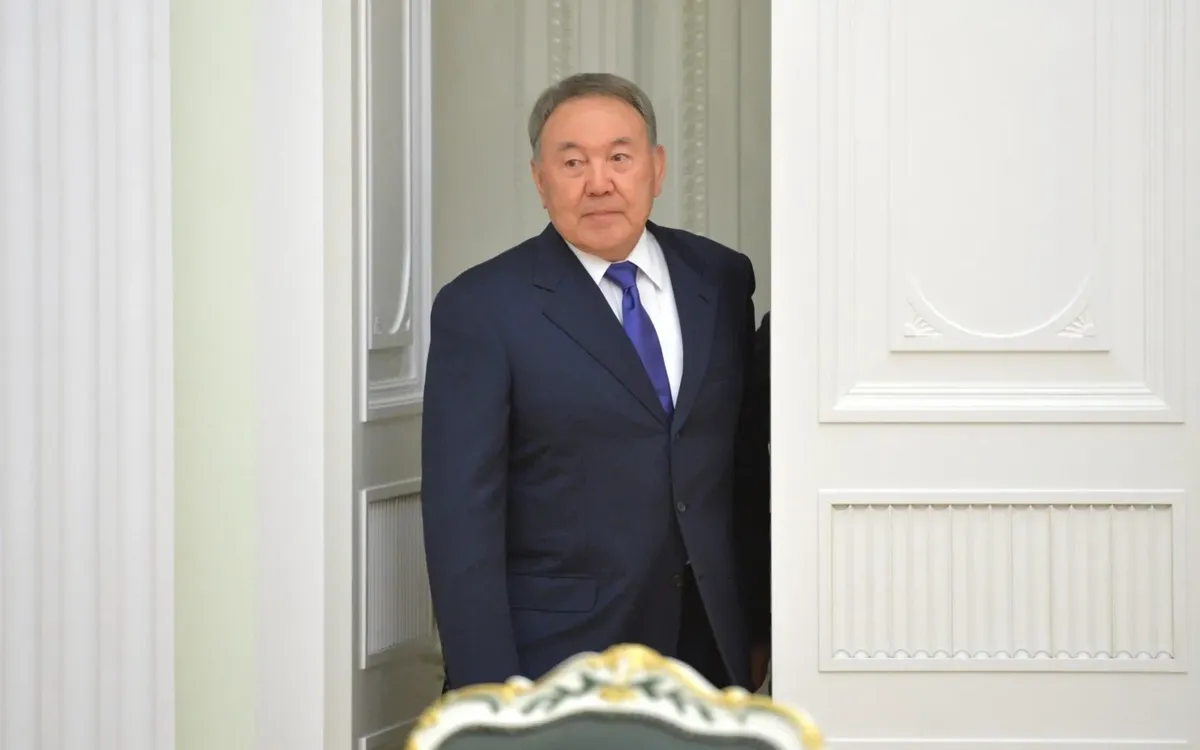
President of Kazakhstan Nursultan Nazarbayev wants to leave behind a collective leadership of the country. But the liberalization of political life can not be expected: the power of the country is shy to any freedom - both his and alien.
They will live now in a new way
Last week, Kazakhstan celebrated the 25th anniversary of the country's independence. Exactly for this holiday, the country's president Nursultan Nazarbayev announced the upcoming constitutional reform. Its summary: in general, people like the total power of the president, but part of the authority can be shared with parliament. “The history of independence shows that the success of the construction of a new state is ensured, first of all, by a strong presidential authority. It is time to consider the issue of redistribution of powers between the president, government and parliament. And the special commission should study these issues and make proposals to amend the relevant laws, and possibly the Constitution, ”Nazarbayev said at a solemn reception in Astana in honor of Independence Day on December 15.
I must say that the main document of Kazakhstan is quite familiar to changes. The current constitution is the second in the country: the first was introduced in 1993, and there was at least equal dominance of the president and parliament (then - the Supreme Council), and in reality the council was even more important. That is why Nazarbayev, as the majority of loyal and opposition politicians of that time noted, dismissed the Supreme Council and, through the popular referendum, pushed the new version of the Constitution: on it he already became super -president with unlimited powers and power of the supreme arbitrator over three other branches.
“The president said that there is a crisis, urgent economic reforms are needed and for a while to concentrate in one hand. We must take a package of urgent economic measures to get the country out of the crisis, he said. This will not last long-they assured us so, ”explains the logic of the then popular support of the new format of the reign, politician Amirzhan Kosanov, a former press secretary of the government. - We agreed that reforms were needed - especially after the positive experience of the Baltic states and Eastern Europe. But we did not know that this transit period would last 21 years. ”
Over time, the powers of the branches of the authorities remained only on paper, and the Constitution more and more fixed the role of Nazarbayev as a full-fledged ruler of the country: in 2007, the amendments to the Constitution lifted any restrictions on Nazarbayev’s right to be elected by the president of the country again and again, and in 2010, with the help of changed constitutional laws for Nazarbayev, the status of Elbasy, the leader of the nation-the leader of the nation. It would seem that it is still needed for happiness. But at the beginning of 2015, when the crisis was already raging in Kazakhstan with might and main, Nazarbayev announced that the country needs to change again: he proposed a plan called “5 institutional reforms”, one of which was precisely the gradual redistribution of powers from the president to parliament and the government. At the end of 2016, Kazakhstani Elbasy spoke about this objectively: he created a commission and, in fact, announced the upcoming reforms.
Ritual service
Does Kazakhstan actually expect a change in the political regime and the democratization of the country? According to experts surveyed by the “new”, the president’s statements are largely ritual, although the need for changes in the Kazakh government already conceived. “We do not live in a vacuum. The same Uzbekistan [after the election of Shavkat Mirziyoyev] began to talk about the election of Akims ( mayors and governors. - V.P. ). The spirit of the time forces to change at least the rhetoric of the president, ”said the political expert Aidos Sarym. “In general, there is a request for some democratic reforms within the country, but so far it has not yet been articulated, and the authorities are now trying to intercept the slogans [from the dissatisfied].”
Formally, the Kazakh government, really, is time to change: in the past year, almost the largest rallies of protest throughout the republic have passed in the country in the country: people were dissatisfied with the fact that the state was going to lease Kazakhstani land in private hands. Since this initiative has been lobbying for more than ten years by Nursultan Nazarbayev himself, the rallies were a demonstrative expression of distrust and the president himself. As a result, the VETO was imposed on the amendments to the Land Code until 2021, and the Kazakhstan authorities, in fact, failed the stress test.
Another thing is that the declared changes in the Constitution are not an attempt to return the confidence of the population, but an attempt to build a political system that will work after Nazarbayev’s departure. “The current powers that the president have will not master no one except Nazarbayev himself,” emphasizes Aidos Sarym. This means that the future president of the country (and operations on the transit of power and on the search for the successor - the two most discussed trends in the policy of Kazakhstan 2016) in any case will cease to be an absolute leader. “Nazarbayev has a goal - not to leave behind a strong leader,” the politician Peter Suyk is sure. - There is nothing worse for his family than the arrival of the new president with the same powers. Therefore, now there is work to transfer the country's management into a collective format. Nazarbayev plans to make the position of president of the ceremonial, and the real authorities will have a parliament controlled by the Nur Otan presidential party, where all the figures important for Nazarbayev will be collected. ”
It should be noted that the ex-adviser of the country's president Ermukhamet Ertysbaev also spoke about the possible strengthening of the role of parliament in an interview with the Kazakhstani edition of the Radio of Freedom. “The second Nazarbayev will not be for sure. Nazarbayev himself understands this himself, therefore he announced a course of the Presidential and Parliamentary system-for these purposes, [the former head of the presidential administration] Nurlan Nigmatulin was sent there to cultivate the role of parliamentarism as such, ”said Ertysbaev. The nuance is only whether the current amendments will (if they generally appear) mean the beginning of a complete transition to this course. Peter Suyk, for example, doubts: “This is such a transit of the transit of power. The president began preparatory work, and some powers will give parliament - for example, to strengthen the role in the formation of the government. But the final stage of reform will begin when the final of the reign of Nazarbayev himself comes. ”
Ablyazov and a little nervous
However, there is, however, that Nazarbayev is not going to change anything at all, and all the current movements with the constitution are only an attempt to distract the population from the deterioration of the economic situation in the country. “They will give the parliament more authority in the social sphere and appoint the country responsible for the economic state of the country,” says the former secretary of the country's security council Baltash Tursambaev. - This is the classic scheme “The king is good, the boyars are bad”: when the situation worsens again, it can be shown to the parliament and say - “This is all of them.” According to the politician, if they added the opportunity to appoint the heads of law enforcement agencies or courts to the powers of the parliament, we could talk about some positive shifts, but for now this is nothing more than words.
As the outgoing year showed, the Kazakhstan Supreme Power is really not ready to share such powers with anyone else. The court was still completely controlled by the secret leadership from the presidential administration, as a result of which Kazakhstan saw a scattering of politically engaged sentences: the beer oligarch Toktar Tuleshov from Shymkent was sentenced to 21 years for the “attempt by the state carrier”, civil activists of Max Bokaev and Talgat Ayan were planted for five years for the organization for the organization. rallies (formally - for inciting the razor). Repressions against journalists are strengthened: the head of the Union of Journalists and his son was sentenced to six and five years of prison, respectively, and in the country the amendments to the laws that actually destroy investigative journalism in the country are discussed.
A cherry on the cake of total control of power over everything in Kazakhstan was a shutdown on December 16 - right on the feast of independence - almost all social networks in the country: for about three hours there were VKontakte, Facebook, Telegram, Instagram, as well as Google and YouTube. The authorities called what was happening a “technical malfunction”, but it was at this time that the Internet was broadcast on the interview of the disgraced oligarch and enemy Nazarbayev-businessman Mukhtar Ablyazov, who was humiliating the court in France last week for the Kazakhstani authorities to deport Russia (from where it was supposed to be transferred to Kazakhstan, where Ablyazov’s enemies were above the roof).
And although it was publicly announced that the block out of networks during the interview is just a coincidence, the Kazakh public public made its conclusions. And they are disappointing for Kazakhstani power: so far in the corridors of Akorda (the President’s residence) there is a fear in relation to a single person and until the authorities cease to tighten the nuts for any reason and even without it, there is no difference what design and how many people will be at its top. Collective fear - he may even be even more dangerous.