
Translated material
The death of the post -Soviet project. Part 3.
We are completing the publication of the project of Kirill Kobrin about the death of the post -Soviet, as we know him, who first appeared on the pages of the Opendemocracy Russia.
The first part of the project refers to how Leninist ideology was destroyed in the USSR - and what replaced it. In the second - about egoism as the basis of the post -Soviet, covering nostalgia for the romanticized USSR. In the third - about how the culture of Russia and its foreign policy react to the Soviet heritage.
From the life of nostalgans
In the USSR, they created "Soviet multinational culture." In post -Soviet Russia, as in other former Soviet republics, they began to make a national culture.
The experiment with the creation of national cultures turned out somewhere, somewhere, but I think that only in Russia the company was crowned with complete success. It remains to find out what is meant by “national” and what is “success” in this case.
I already remembered above Lenin and his ideas - after all, speaking of the “post -Soviet”, it is impossible to get away from the person who was the creator of the “Soviet”. Discussing the ideological and social aspects of the “post-Soviet project”, we have already noted that “post-” in these cases meant “anti-”, albeit disguised as continuity in relation to the previous period. In the plot about culture, these relationships look more complicated.
In one of the most famous works of Lenin - the article “Critical Notes on the National Question” (1913) is a wording that is painted painfully familiar to everyone whose childhood, youth and even part of adulthood fell on the Soviet period. Here it is: “There are two nations in every modern nation-we say we all National Socials. There are two national cultures in every national culture. There is a Great Russian culture of the Purishkevichs, Guchkovs and Struve - but there is also a Great Russian culture characterized by the names of Chernyshevsky and Plekhanov. ”
If you blow off the dust from this statement, and forget that more than one generation of Soviet people was mentally raped by them, then its content is of exceptional interest. At the first - superficial, banal - level, Lenin divides the national culture into “the culture of the ruling classes” (Black Highlight Vladimir Purishkevich, Oktyabrist Alexander Guchkov, former Marxist Peter Struve) and “democratic culture” (democratic revolutionary Nikolai Chernyshevsky and Marxist theorist Georgy Plekhanov). It is interesting here that the “culture of the ruling classes” is taken as a whole, without taking into account the deep political abyss between, say, Purishkevich and Struve. Here, Lenin showed amazing perspicacity, as if knowing in advance that by the end of his life he would switch to ultramonarchical positions characteristic of the first (albeit without open Black Hundreds).
Pop culture is a marker of national identity and even nationalism.
So, “two national cultures” are a non -treasure -free culture of the ruling classes and democratic - oppressed classes. This contrast “removes” everyone else, including a pair of “high culture - folk (low) culture”. By the way, the “folk culture”, so colorfully described by Bakhtin, has nothing to do with the Leninist formulation - neither Chernyshevsky nor Plekhanov belong to it. In fact, in the Leninist work two varieties of “high culture” are given - the cultures of educated people who read, write, reflexive with the help of the social layer of tools traditional for this. Just one of them broadcasts the people of incorrect values and worldview, and the other is correct.
It was on these grounds that Soviet culture was originally built - it was important not “who”, but “for what” acts. The program of the cultural revolution, put forward by Lenin after the revolution and the civil war, involved the expansion of the "cultural layer" of the country to the size of the entire population. Universal literacy was primarily aimed at covering illiterate communist propaganda. An ideal picture: a peasant who unfolds the newspaper "Pravda" at his leisure. That’s why the cinema was “the most important of the arts”, and noble Bolsheviks were engaged in the spread of the radio. “Culture” is a massive instrument of propaganda and does not have independent value - such is the Lenin Testament to the future generations.
After Lenin, this approach was transformed - and in the reactionary, romantic side. First of all, the “national” returned to the “culture”-it was contained in strict framework, was supposed to serve the ultimate goal, but nevertheless it was allowed and supported. In place of the Leninist image of the monogenic, international Soviet culture, another stood - the image of a patchwork blanket sewn from multi -colored national pieces. “Soviet” as an independent “content” disappeared, becoming a framework, horizon, goal, ideological intention. And on the pattern of this patchwork blanket, one national culture stood out, taken as such, - Russian. She was in the center, determining the location of the remaining elements.
If you still return to the pair “High Culture-Low, Popular Culture”, then in the late USSR it looked so that the first element of this couple was purely “national”, and the second-“International”, actually “Soviet”.
Classical literature and classical music, “serious” theater and fine art - all this received an incredibly high status, forever being walled up in the “heritage”. Classic is not only that which is dead, but also what is done inside the national culture (Russian, Ukrainian, Georgian - it does not matter). Another thing is that we proceed from the fact that the Russian people are “older brother”, then his national high culture was higher, most important than the rest. Before us is the most decisive rejection of the Leninist cultural concept, much more serious than even in the field of economics or social.
If the “classic” is that which is dead and is at an unattainable aesthetic and moral height, then “pop culture” in the USSR was just living and international. It was she who created the image of the “Soviet”, according to which residents of the post -Soviet space are nostalgic today. They sigh not according to the conditional Soviet “Hermitage”, or “Bolshoi Theater”, or academic collected works of Dostoevsky and Tolstoy, they want to return to the world of “Irony of Fate”, “Mimino”, VIA “Self -City!” And young Alla Pugacheva.
It was in this area that Soviet internationalism worked best, mixing everything with everything - the Moldavian singer from Ukraine with the Leningrad film director, the Georgian song with the interior of the Moscow restaurant. In this area, everyone was equal, the friendship of the peoples flourished-and it could not be otherwise, because pop culture should claim universality, otherwise it is not a “popular culture”. The hatred and contempt of the “Russian patriots” of the Soviet era to the “stage” and other manifestations of licentiousness - the reaction to the living life of the guardians of the corpse of “great Russian culture”. It is amazing that these people did not understand that their “great culture” as a special and high value was invented by Stalin in the centenary of the murder of Pushkin, in the ominous 1937.
Soviet pop culture-as the main supports of national identification-is exhausted. Moreover, the operation of deposits of late Soviet culture is carried out in Russia in the same barbaric way as the operation of the subsoil.
Finally, in 1991, it all ended, and a completely different period began. The nineties, especially their first half, became the time of an extremely interesting experiment, when one type of culture is replaced by a rather complex, hierarchized, which is under strict control - came a completely different one: decentralized, focused on net profit and, most importantly, alien.
Western pop culture, growing from a certain socio-political and sociocultural context, was beckoning the Soviet man as something far and poorly achievable. She embodied his secret dreams of a real style, real beauty, real open sexuality. As a vague object of lust, given only in bad photographs in Alexander Kukarkin’s ideologically sustained book “Bourgeois Mass Culture” and in songs, novels and films that broke through the iron curtain, it was beautiful. But when she came to the lands of the former USSR and settled there in a businesslike way, her image changed. This culture appealed to a common, universal, mass man. And the post-Soviet man suddenly acutely felt the lack of something special. The post -Soviet man wanted to identify himself through culture - and reading “war and peace” or listening to Prokofiev did not help here. So it was required to create their own pop culture, national.
First of all, there is no exotic in this: this has long happened in India, Japan, a little later - in China. Actually, in the countries of the First World, even in Europe, pop culture-or, as old man Kukarkin loved to express himself, “mass culture”-becomes not just “national”: it is a marker of national identity and even nationalism. The stronghold of xenophobia in the current world is a mass yellow press and popular television channels. So nothing special in post -Soviet Russia happened. The principles of the device of pop culture in the current world are universal, the content is national.
The main condition for the construction or folding of pop culture is the presence of a consensus in the society about some main things. First of all, these are aesthetic and ethical values and representations, as well as methods of social identification. Usually such a consensus is the result of a fairly long tradition - but sometimes a consequence of recent shocks, as in post -war Germany.
In post -Soviet Russia, nothing similar to German denazification and a conscious rejection of the monstrous past occurred; However, there was no living “old Russian pre -revolutionary tradition” in the local society, no matter what the romantically -minded patriots of Russia say. But the consensus was-and its basis was the Soviet pop culture, the only real living value that was inherited by the post-Soviet Russian (and most post-Soviet people in general). So she became the content of the new post -Soviet mass culture. Funny - once the stronghold of Soviet internationalism has become the embodiment of national specifics like Olivier's salad.
This is the culture “low”, “mass”, “folk”. And what happened to the "high", even with the "high -lurcé"? In contrast to what happened before 1991, it suddenly became internationalist, declaring its belonging to the “world culture”. Moreover, a paradox has arisen: a high -clicking culture, by the definition of “anti -democratic” (for for a few), became the refuge of those (both its creators and the few public) who just professed democratic, liberal values.
And here post -Soviet Russia boasts the championship: it was in it that this process began long before it manifested in the West. It was only now in Britain that the fact that the refined intellectuals, readers of the Guardian newspaper, despising the yellow press, the Bulf Chetico and Justin Bieber, are the main defenders of the “people” ceased to amaze. “The people” does not want to protect himself, does not see the need for this, he calmly reads the tabloid Sun , looks soap operas and does not like foreigners.
If we change Guardian to the “New Gazeta” or Colta.ru, and Sun to “Komsomol Truth” or Life. R U , a similar picture could be observed in Russia much earlier. The difference is, of course, the content of the TV: in Russia, the situation is as if the ultra -right populist Fox News has become state and it is twisted in some versions on all channels. I imagine how Lenin would not like all this.
This is the main reason for the end of the post -Soviet time in the field of "culture". First of all, 25 years have passed since the collapse of the USSR. “Soviet”-and, above all, the Soviet pop culture-exhaust itself as a space and the main supports of national identification. It is not forever, especially since the operation of deposits of late Soviet culture is carried out in Russia in the same barbaric way as the operation of the subsoil. Over the years, almost all the heroes of that pop culture passed away, and there are many fans too.
Whatever culture as a result, it will not be “post -Soviet” - as well as the society nourished.
For younger generations, the same role - jumping through the period of perestroika, which became traumatic for the Russian national consciousness and therefore hidden into the far corner of collective memory - began to play the nineties and even zero.
Finally, the current government also feels the exhaustion of this cultural resource and in search of a new one moves deep into the past. Some are trying to find a new consensus in Stalin's times, others return to the sentimental nonsense about "eternal Russia, spoiled by the non -Russian Bolsheviks," calls to return to "Russia that we have lost." It is unlikely that the multinational population of the Russian Federation can be convinced that “we” is related to them.
Quickly pumping out the cultural deposits remaining there from the Brezhnev period, the post -Soviet society is now forced to dig history even deeper or build the concept of the eternal beautiful present. The first is fraught with a loss of interest - who needs rusted tin cans? The second requires a huge talent for self -adulthood - or, more precisely, requires the authorities of the great talent of the conviction of society. Obviously, the “present” of the poor, backward and split in the social inequality of Russia is not forever and far from great. It is unlikely that the current cultural authorities have a talent to convince society; Talent is not an Amater dissertation of the master, protected in the serf scientific council.
In any case, whatever culture as a result, it will not be “post -Soviet” - as well as the society nourished to it. And, referring to the gap between the poor and rich in Russia, I would advise you to carefully re -read Lenin’s work “Critical notes on the national issue”. And not only to the inhabitants of Russia.
Between Brezhnev and Old Woman Shapoklyak
The main feeling that occurs even with a cursory look at the transformation of Russia's place in the world from 1992 to 2016 is a grave bewilderment. The country, the sympathy for which was almost universal, the country, so to speak, was “fashionable”, a country where humanitarian help was sent and for which they saw a wonderful future turned into an outcast, then certainly into a world scarecrow.
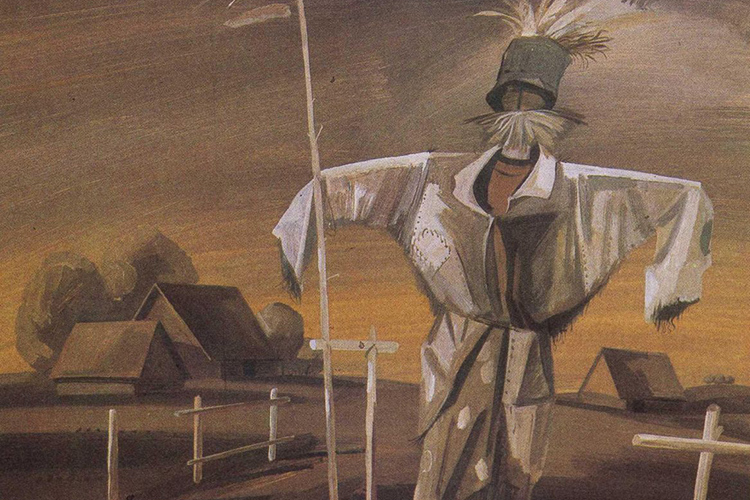
Many in Russia are proud of the role and title of “scarecrow”, but we should not forget what this word means. And it denotes a hastily worked out doll, dressed in an old rag, which, with its terrible look, should drive birds from agricultural vehicles, fields, garden or garden, it doesn’t matter. The scarecrow can be seen from afar, it really copes with its specific task, but it is unlikely that anyone will use it to build a house or even for the defense of this house. How is the state that gives hopes, proud that voluntarily ceased to be a monster, dropping the yoke of the authoritarian regime, which announced the beginning of a new era in the life of his and his neighbors, ended with this?
Of course, all words then should not be believed, and today's conversations about Russia too; But those who claim that Grozny's bombing in 1994 (or in the early 2000s) and Aleppo bombing today-in principle, the same thing, are wrong. The difference is that Aleppo is outside the Russian Federation, and indeed, strictly speaking, Russia does not care about Syria. It’s just that the West made a mistake, and we are right there. It looks like the logic of the Cold War, when the parties instantly used any conflict in any region of the Third World (and not only the “third”) to open another front.
As a result, the whole world was a stress field, at each point of which it was possible to find particles “charged” by the West, and particles “charged” by the East. Hence, by the way, most of the most difficult international problems after the end of the USSR - after all, during the Cold War, both sides recruited allies based on only one principle: so that it could be used in the game with the main opponent.
The very principle of "yes, this is a son of a son, but this is our son of a bitch." When the Cold War ended, the most diverse “bitches of children” ceased to be conditionally “ours” and began their own game, like Bin Laden, Taliban and many others. Some of them, however, decided to stay in their own brilliant isolation, since there were no patrons at all - so until recently a cube existed, so there is North Korea.
The principle of “our son’s bitch” today imitates the Russian leadership, refusing to understand who this case is specifically discussed and what this or that client of Moscow - Assad, late Gaddafi, Chavez and others actually pursue the goals. Они важны как фигуры в игре со стратегическим противником — а материал, из которого такие фигуры сделаны, Россию не интересует. Все как в то самое блаженное советское время, когда Хрущев стучал ботинком по трибуне ООН и готовился превратить земной шар в облако радиоактивной пыли — из-за новообращенного советского «сукина сына» на Кубе, от услуг которого еще недавно столь глупо отказались США.
Советская внешняя политика без СССР, советского лагеря, советской идеологии и возможностей советской экономики и техники — вот что превратило Россию в международное пугало.
Уже тогда это выглядело странно — уничтожить к черту весь мир ради построения лучшего будущего этого же мира. Но тогда за всем стояла как минимум идея «лучшего мира» и «прекрасного будущего». Сегодня ровным счетом ничего, кроме неказистого настоящего, Россия миру предложить не может. И она настойчиво пытается делать это настоящее еще более неказистым, неприятным, опасным.
Но вернемся назад, в начало 90-х. Когда возникает новое государство, оно начинает искать свое место в уже существующем мире. Российской Федерации пришлось этим заняться, причем условия были самые благоприятные.
Безусловно, советская экономика рухнула и вооруженные силы в ослабленной, только что родившейся стране оказались на грани распада. Однако преимуществ было гораздо больше, прежде всего — тот кредит доброжелательной поддержки, которым Россия действительно располагала в первые годы президентства Ельцина. Вопрос заключался в том, на что потратить этот кредит — ведь долго такое стечение обстоятельств длиться не могло, что многие понимали. Но тогда следовало ответить на тот самый вопрос, с которого мы начали наше рассуждение: каковы место и роль России в современном мире? Ответить на него было непросто — тем более что это место складывалось из самых разных уровней международных отношений.
Первый уровень — отношения с республиками бывшего СССР, причем не со всеми, а с Украиной, Белоруссией и государствами Средней Азии. Второй уровень — то же самое, но в отношении закавказских республик. Третий — государства Балтии. Четвертый — государства бывшего соцлагеря (причем отдельно стояли Югославия с Албанией). Пятый — остальная Европа, условный «Евросоюз». Шестой уровень — клиентелла бывшего СССР во всем мире, от Кубы до Вьетнама. Седьмой уровень — страны «третьего мира», причем особняком стояли уже тогда Китай и Индия. Восьмой уровень — большие экономические державы вне ЕС, но не США: Канада, Австралия и Япония, с которой особые счеты. И, наконец, девятый уровень: бывший главный супостат, Соединенные Штаты. Можно назвать еще с полдюжины разных подуровней.
Отношения Москвы с каждым из этих уровней требовали собственной настройки или перенастройки: работа долгая, кропотливая и тонкая, как любая настоящая дипломатия. Но даже самый лучший результат такой настройки был немыслим без того, что он исходил из целого, из общего «звучания» внешней политики новой России, которую следовало заново отрефлексировать и определить. А вот здесь возникла сложность — и эта сложность легла в основу первого, постсоветского этапа международного курса Российской Федерации.
Из чего исходит внешняя политика того или иного государства последние двести лет? Какие соображения — помимо персональных качеств руководителей страны и дипломатического ведомства — должны лечь в основу этой политики? Их несколько, и они общеизвестны. Экономические интересы, как бы их ни понимали, от интересов правящего класса до более широких. Идеология — и светская, и религиозная, по-разному. Очень важный фактор — традиция; иными словами, сложившиеся способы и манеры поведения той или иной страны, которые при кажущейся несовременности и даже ненужности тем не менее многое определяют. Наконец, соображения внутренней политики, интересы существующего режима и так далее.
Конечно, все эти факторы крайне редко, на самом деле, отрефлексированы — кроме разве что идеологических; здесь скорее существует своего рода облако представлений о том, как следует вести себя на международной арене, своего рода аура возможного и приличествующего , находясь в которой, люди, прокладывающие международный курс своей страны, действуют чаще всего на ощупь, реагируя на внешние события. Иными словами, здесь мы видим изменчивую прагматику, но существующую в рамках определенных закономерностей. Декларированные цели внешней политики обычно провозглашаются постфактум. В каждом отдельном случае вопрос состоит в балансе между закономерностью и случайностью, между осознанием долгосрочных факторов и текучим прагматизмом.
Так оно и происходило с внешней политикой России с 1992 года по относительно недавнее время, то ли по 2008-й, то ли по 2014-й. Этот этап и можно назвать частью «постсоветского проекта». В отличие от внутренней политики и госстроительства, международный курс РФ в этот период выглядит весьма логичным, искусным, неопрометчивым и даже отчасти основанным на здравом смысле. Осознав, что Запад не собирается принимать новую Россию ни как равного партнера, ни — уж тем более — как союзника и что торжествовавшие тогда на Западе неолибералы занялись прямым «экспортом демократии» в совершенно не ждущие таких подарков регионы, Россия в позднеельцинское время и первые почти десять лет путинского режима инстинктивно отстранилась от происходящего, выбрав наилучшую позицию.
В Кремле думают, что они ведут себя как условный Брежнев в годы холодной войны, но они не понимают, что это не Брежнев, это стиль старухи Шапокляк: «Кто людям помогает — лишь тратит время зря. Хорошими делами прославиться нельзя».
Это позиция критически настроенного наблюдателя, который всегда готов сказать незадачливым глобальным игрокам: «Мы же вас предупреждали!» — и продолжить заниматься собственными делами. Прагматический курс исходил из экономической уязвимости страны, из ее технологической отсталости и зависимости и из вполне разумного понимания, что ничего хорошего из «экспорта демократии» в Сербию, Ирак и Афганистан не выйдет.
И вправду не вышло — мир в результате стал гораздо более опасным местом, нежели до этих затей. Зато под шумок можно было укреплять связи с некоторыми бывшими республиками СССР, наращивать влияние — политическое и финансовое — в некоторых других странах, выстраивать новые экономические партнерства, оживлять старые (Бразилия, Китай, Индия) и, самое главное, делать так, чтобы в твои собственные дела никто не вмешивался. Собственно, такова и была база постсоветского проекта российской внешней политики — сделать так, чтобы «нас» никто не трогал. В этом смысле Россия вполне разумно следовала примеру Индии и особенно Китая.
Беда в том, что Россия — не Китай. При всей коррупции и непрозрачности политической, социальной и экономической жизни КНР эта страна уже давно сознательно воплощает в жизнь образ «великой державы», сложившийся из смеси старинных имперских концепций, маоистских идей о «третьей мировой силе» и жесткого прагматизма технократов. Внутри КНР существует негласный консенсус, что это и есть единственно возможный и правильный путь, что именно таков «национальный интерес». Это образ страны, которая динамично развивается сегодня, но главное у нее — в будущем. Исходя из этого и строится китайская внешняя политика — очень осторожная в делах, ее прямо не касающихся, весьма напористая в остальных. Граница между этими областями проведена карандашом «национального интереса».
Российское государство так и не смогло выработать разделяемое обществом сколько-нибудь внятное представление о «национальном интересе». Это связано с особенностями устройства этого государства, которое есть не failed state , а fake state , маскирующее группу из полдюжины кланов, теперь уже наследственных, эксплуатирующих собственную страну, как колонию.
С другой стороны, это связано с уже помянутой крайней атомизацией постсоветского общества. Такое общество неспособно на консенсус по любому поводу — а уж тем более по вопросу довольно отвлеченному, о «национальном интересе». Поэтому о «национальных интересах» России говорили много, но каждый раз в этот перечень попадали разные вещи и по разным поводам; этот странный текучий, изменчивый национальный интерес — одна из главных характеристик постсоветского этапа истории России.
Рано или поздно такое должно было закончиться — и большинство людей, наблюдавших за международным существованием России, примерно понимали, как и почему должно закончиться.
Здесь сыграло свою роль несколько факторов. Первый — «экспорт демократии», который с самого начала сильно раздражал далекую от демократических убеждений российскую власть, добрался до границ России в форме «цветных революций». Конечно, это был очень мягкий «экспорт», скорее западные политическая и медийная кампании в поддержку «цветных революций», но Кремль воспринимал их в контексте того, что произошло в бывшей Югославии и арабском мире. Затем началась волна массовых протестов в Москве, и подозрения российской власти стали убеждением, даже паранойей.
«Китайская модель» внешней политики была оставлена — вместе со здравым смыслом; вместо нее была принята «советская модель». Только у России образца 2012 года уже не было ни Варшавского договора, ни военного паритета с Западом, ни «своих сукиных детей» по всему миру (за небольшим исключением), ни военных баз, ни денег, ни — что самое главное — того, что можно было бы предложить потенциальным союзникам.
Советский Союз учил специалистов из стран «социалистической ориентации», посылал туда своих специалистов, поставлял современную технику, вкачивал в их экономику гигантские деньги, и, в конце концов, он обещал светлое будущее без неоколонизаторов и капиталистов. Что может предложить Россия сегодня? В лучшем случае дать взятку местному диктатору и прислать устаревший авианосец — помочь уничтожать собственное население.
Советская внешняя политика без СССР, советского лагеря, советской идеологии и возможностей советской экономики и техники — вот что превратило Россию в международное пугало. И это же завершило постсоветский период ее существования на мировой арене. России опасаются — безусловно, так как у страны есть большая армия и атомное оружие (и вот еще выяснилось, что она скупила по всему миру искусных хакеров и завела армии ботов), но все прекрасно понимают — особенно на Западе, — что особых возможностей у этой страны нет. Оттого ее — как отвратительный агрессивный образ — можно использовать в самых разных внутренних и внешних политических и медийных играх — от выборной кампании в США до сложных интриг на Ближнем и Среднем Востоке.
Российской же власти ничего не остается, как следовать по той дорожке, которую ей предложили более сильные: становиться еще более пугающей и еще более отвратительной, дружить с мерзавцами вроде Асада, давать деньги правым радикалам в Европе, пакостить Западу везде, где возникает хотя бы малейшая возможность. В Кремле думают, что они ведут себя как условный Брежнев в годы холодной войны, но они не понимают, что это не Брежнев — это стиль старухи Шапокляк:
«Кто людям помогает — лишь тратит время зря.
Хорошими делами прославиться нельзя».
В этой формуле — «прославиться» вместо того, чтобы «строить», — и заключается новый период в истории России.