
Translated material
Colta.ru
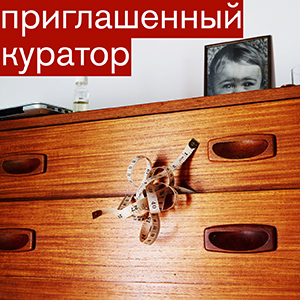
The last release of the “invited curator” this year. We remind you that Colta.ru at the beginning of the year invited to temporary curators over the section “Photo projects” of young and talented representatives of leading Russian photocurium, who selected the most interesting samples of modern Russian photography for publication.
Invited curators
Katerina Zueva , center of photography named after Brothers Lumier
Nadezhda Sheremetova , "Femicip"
Sergey Lostev , "House of Metenkov"
Daria Tuminas , Freelance Curator, Amsterdam
Anastasia Bogomolova , The Blog This a Photobook
Svetlana Taylor , British Higher School of Design

Sixth resident: Svetlana Taylor. An independent exhibition curator, founder and head of the faculty “Photography and Videoart” at the British Higher School of Design, a specialist in the history and theory of a new photo. Explores the phenomenon of photography outside its direct documentation.
Svetlana Taylor about "Stasis" Yegor Zaika
The exit beyond reality is not today special for us, but stay, hardening, hanging somewhere between -still remains something curious. “Intermediate worlds” is a certain landmark where modern people are ready to be, where they are still curious to get. You can designate these spaces as a zone of unknown and transcendental, private territory of guesses and delusions. Due to the fact that the ratio of the imaginary and real, and after this, the complete misunderstanding of their proportions in the life of a modern person create a movement around the center, which is always inaccessible, most likely it is absent, that is, it is simply not. We stopped understanding when one ends and the other begins, because the boundaries that divide them also do not exist. And the question arises: is faith in the reality of our reality possible today? Where the line passes that separates them from each other when we understand that the best way out is to enter another reality .
Following the "Motherland", which was shown in the spring in the photobiennal, Yegor Zaika creates a new story: "Stasis." For me, this is his fourth large photo project, while there are only assumptions where the author is striving, but it is quite obvious that he is trying to overcome the connection of his photographs and reality.
The virtualization of space, the overproduction of images, chaotic production of meanings led to social bifurcation, each lives in their own world, but in fact we are dealing with the phenomenon of the “king of walnuts”.
Stasis is a term from science fiction, a kind of zone where you can move, where time ceases to exist, and all the processes occurring in living organisms freeze. Egor Zaika again creates a project based on individual mythology. The principle of this approach in the photograph was launched in 1969 by Christian Boltansky, who artistically directed efforts to "search for the disappeared part of myself, the archaeological excavations of the last depths of my memory." An attempt to recreate micromers: events, gestures, minor objects, surrounding reality - today it is no longer rethought historically, does not work with collective memory as a variant of experience in pain of the past, but occupies a tiny space of personal history. Egor Zaika moved three years ago to live in Riga, which made it possible to introduce a retrosprication method in the field of his photographic practices. The first were the “signs” - a large -scale story about concentration camps and their architectural remnants or simply geographical location, as they are integrated into the peaceful life of Europe today. Next was made a “homeland”, built on quite piercing memories of childhood. These projects opened up the possibility of new visuality to him. But Zaika is well aware that digital photography in itself compromises the truth of the document, a new regime of truth appears. Yegor Zaika does not create a drama, he is removed to the method of weak affect, when the image is built on understatement. His photographs refuse to tell the viewer a direct message, leaving the look at the wide field for interpretation, giving him the maximum liberty of the interpretation. A piercing bright color and light play a key role in his works, manic study of details, absurdity and meaninglessness of the plot - this is how the necessary image is formed.
Stasis is the space of the individual world, it seems to be, but its authenticity cannot be checked, nor detect, nor refuted. This is the territory of the actual, but fictional space. Stasis was built on a well -known parable: “Zhuang Zhou dreamed that he was a butterfly. He fluttered cheerfully, was happy and did not know that he was Zhou. And waking up suddenly, he was even surprised that he was Zhou. And he did not know: Zhou Lee dreamed that he was a butterfly, or a butterfly dreams that she was Zhou. After all, the butterfly and Zhou are not the same thing at all. Or is it what is called the transformation? "