
Translated material
Consumer Reports did not approve the MacBook Pro for the first time
The authoritative magazine was faced with the oddities in the work of its battery
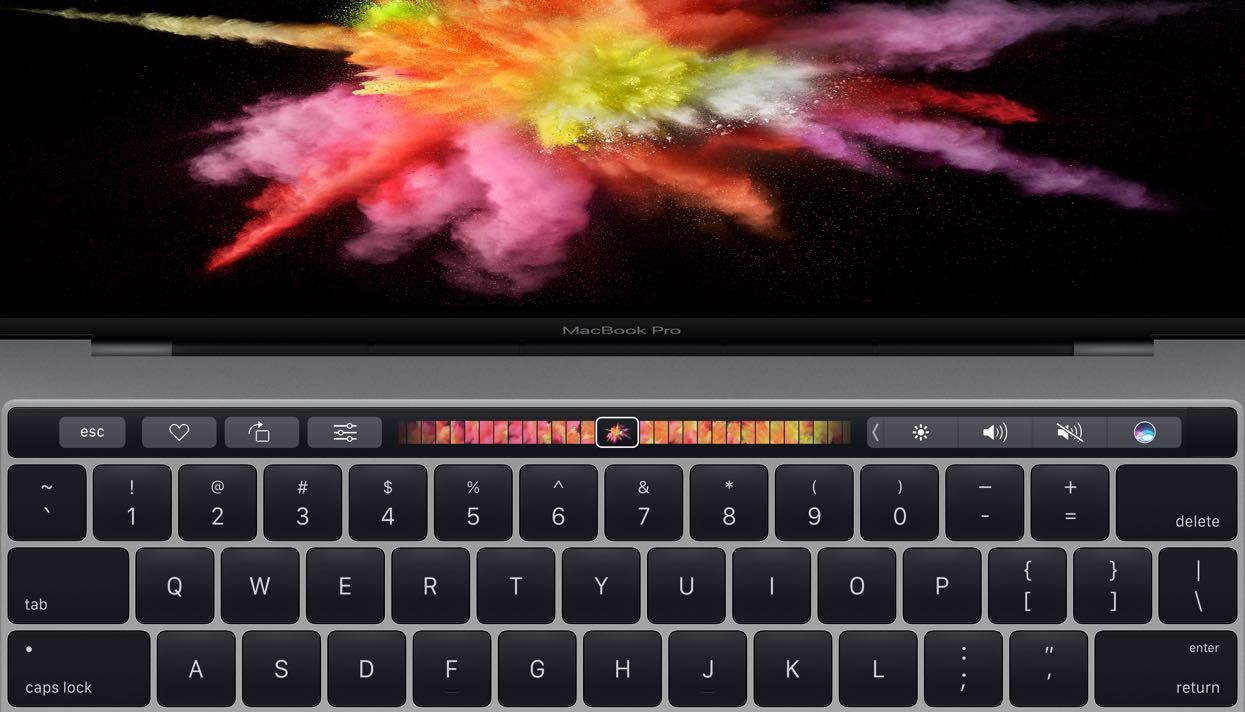
The American Consumer Reports magazine, which is published by the Non -Profit organization of Consumers Union, for the first time in the history of the MacBook laptop line, did not recommend readers to buy a new model - MacBook Pro. The journal’s employees tested three different versions of laptops and in all encountered problems in the battery life. And, it seems, the Safari browser is to blame.
Update: January 10, Consumer Reports said that Apple found a bug in Safari, which could influence the test results. The company issued a correction, and the magazine will hold a new test. If its result is higher, the MacBook Pro will receive the status of the “recommended”.
Consumer Reports is one of the most authoritative expert publications in the world. The magazine tests all the technique (and cars) independently and really values the reputation of the independent: it does not place advertising on its pages, does not accept offers for testing equipment - it chooses it itself - and does not allow the use of reviews in products advertising.
Macbooks have always received the highest grades from the publication. Consumer Reports evaluates products according to different parameters, the best is assigned the status of “recommended”. The idea is simple: a potential buyer does not need to delve into dozens of models, just look at the recommended and choose what is suitable for him.
The 2016 MacBook Pro did not receive the status of the “recommended” for the first time. Apple introduced new models at the end of October, Consumer Reports finished testing in December. The magazine notes that the laptops showed themselves “very good” in terms of the quality of the screen and performance. What cannot be said about the battery.
All MacBook Pro models worked very strangely from the battery. The magazine tested three different versions of laptops, and each model has passed the same test several times. At the same time, the MacBook Pro with TouchBar and a 13-inch screen in the first test worked from the battery for 16 hours, in the second-12.75 hours, and in the third-only 3.75 hours. The model without Touchbar showed then 19.5 hours, then 4.5 hours. The 15-inch MacBook Pro stayed from 18.5 hours to 8.
Typically, the results for the same model differ slightly, and Consumer Reports uses the average value when it forms an assessment for the laptop. But in the case of MacBook Pro, the difference was so significant that the average value would not reflect the real state of affairs. Therefore, the magazine when summing up the results took into account the worst result for each model.
Testing was carried out in Safari browsers. Consumer Reports uses standard browsers of subjects computers in tests; In MacBook Pro, this is Safari. Testing took place as follows: a fully charged computer was connected to a specially created Wi-Fi network, set the average level of brightness of the screen backlight, and then forced the computer to alternately open 10 web pages from the company server. And so in a circle until the laptop is turned off due to the sowing battery.
In Chrome, the results are completely different. Consumer Reports as an experiment checked how the MacBook Pro battery behaves with the Google Chrome browser. Each model was tested twice, and the results were evenly high in all six cases. This is especially disappointing in the light of the fact that Apple emphasizes the energy efficiency of Safari - the company claims that when working in a standard browser, computers are 2 hours longer than when using Chrome or Firefox.
At the same time, the magazine writes that data for full conclusions about the advantage of Chrome is not enough. The results of the experiment do not affect the final assessment, since Chrome is not a standard MacBook Pro browser.
Consumer Reports did not first encounter the oddities of the batteries of the new MacBook Pro. Apple promises that the laptop will operate 10 hours on one charging. At the same time, users complained that the charging indicator in the computer showed that the battery would be enough for only 3-4 hours. Apple solved the problem by simply removing a function from the MacOS Sierra that evaluating the battery life - it worked too inaccurately.
Apple does not comment on the results of Consumer Reports. The company said that she needs to better understand the essence of the problem. To help her, the magazine transmitted diagnostic data from the tested computers. Apple sent the following statement: “All users who have questions about their Mac should contact the [support service] Apple Care.”