
Translated material
UN resolution against Israeli settlements
What does she mean? Why did the United States allow it to accept it?
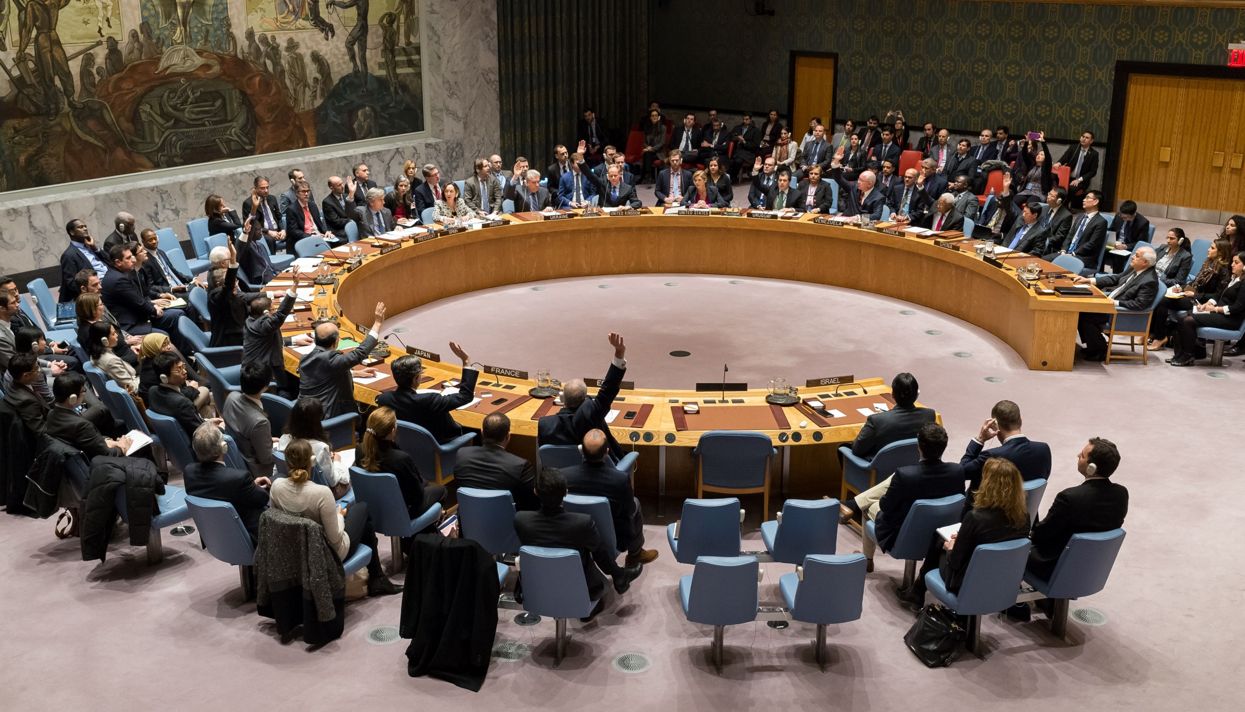
The UN Security Council on December 23 adopted a resolution condemning the construction of Israeli settlements in the Palestinian territories. 14 out of 15 members of the Security Council announced the construction and expansion of settlements by violation of international law, and the United States, which traditionally block such resolutions against Israel, abstained. Israel called the resolution a shame and threatened to take diplomatic measures against the countries that allowed its adoption and "UN institutions that are hostile to the Jewish state." "Medusa" explains what happened.
What is Israeli settlements?
These are settlements in those Palestinian territories that were under the control of Israel after the six -day war of 1967, that is, on the western bank of the Jordan River and in East Jerusalem. Settlements were also built at the Golan Heights, on the Sinai Peninsula and in the gas sector (the latter were liquidated in 2005 according to the Israeli plan of one -sided demarcation).
Settlements began to arise and continue to exist for a number of reasons. The former were built for security reasons - after the 1967 war, many in Israel were waiting for a new attack. Some of the settlements arose for economic reasons: housing in Israel itself is very expensive. Among the settlers there are radical religious activists who consider the occupied territories part of the Holy Land. Now in 140 settlements (some of them are very small, others have the status of cities) about 500 thousand Israelis live.
Most UN countries consider the territories that departed to Israel after 1967, occupied, therefore, the placement of the civilian population of the occupying country contradicts the Geneva Convention. In 1979, this assessment was enshrined in the UN Security Council resolution No. 446 . Israel defines the territories as controversial and supports the construction of settlements.
What is the resolution of 2334?
The new resolution of the UN Security Council claims that Israeli settlements have no legal grounds, lead to a change in the demographic composition of the population of the occupied territories and are a major obstacle to achieving peace in the Middle East. It requires Israel to stop all activities related to settlements. The resolution also consolidates the requirement to divide Israel within the borders until 1967 and the occupied territories.
The resolution was brought to the vote by the delegation of Egypt, but soon recalled "under the pressure of Israel and the elected US President Donald Trump." On December 23, the text was again submitted for discussion on the initiative of New Zealand, Malaysia, Venezuela and Senegal. In support, 14 countries voted, including Russia. The decision of the US ambassador Samantha Power not to use the right veto was met by prolonged applause.
Why did the United States abstain?
The United States traditionally consider Israel its key ally in the Middle East. Provided that the majority of the UN countries are familiarly opposed to Israel, American law played a key role to overcome the diplomatic isolation of the Jewish state. Over the past 30 years, the United States has been blocked more than 40 times in the UN Security Council of resolution, condemning Israel - including in 2011 , when a resolution was made to the vote, very similar to the one that was adopted on December 23.
This time, however, Washington chose to refrain-that is, he actually allowed the Council to adopt a resolution of 2334. In the Barack Obama administration, this decision was explained by the fact that the Preserner of Benamin Netanyahu did not lead to any progress in the negotiation process. The resolution, according to the official representative of the White House, "reflects the views on Israeli settlements adopted in the world community." According to US Secretary of State John Kerry, Washington "could not interfere with the adoption of the resolution that calls both parties to work to achieve peace."
How did you react to the acceptance of a resolution in Israel and beyond?
The governments of most Western countries welcomed the adoption of resolution No. 2334, while in the United States a significant part of the establishment condemned it. In Israel, the resolution was called "shameful", the country's ambassador to the UN announced that "it is like prohibiting the French to conduct construction in Paris."
Benjamin Netanyahu called the ambassadors of the states to the Foreign Ministry that voted for the adoption of a resolution, as well as the US ambassador. The Israeli ambassadors from New Zealand and Senegal were recalled. The Prime Minister also ordered to revise the programs of assistance to these states and reduce the financing of some UN institutions, which, according to him, are hostile to Israel.
Moreover, not the entire population of Israel shares the position of the Prime Minister. Holding left -wing views and traditionally condemning the construction of the settlements, the Gaarets publication published several texts , which claims that, having voted for resolution No. 2334, the world " tried to save Israel from itself ."
What will happen now?
The UN Security Council does not imply any measures against Israel, including sanctions, and therefore many declare its symbolic character. Netanyahu has already announced that he did not intend to obey the requirements of the resolution. Donald Trump wrote on Twitter that after January 20 (the date of his inauguration as the US president) “everything will change”.
Nevertheless, the document may have a number of practical consequences. For example, its adoption may affect the fate of the Palestinian complaint against Israel , which is now being considered by the International Criminal Court. Israel is accused of committing war crimes during an operation in the gas sector in 2014 and during the construction of settlements in 2015. Until now, the case has been at the stage of preliminary consideration, but it is possible that now the MUS is retraining it into a criminal proceedings.