
Translated material
Counter blow
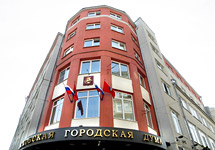
The Moscow City Duma adopted a bill according to which the metropolitan deputies should hold meetings with voters of the rules established for public events, BBC reports . Only three deputies from the Communist Party faction voted against the Communist Party.
Before the meeting, the deputies from the Communist Party Nikolai Zubrilin and Elena Shuvalova held a picket against the bill in front of the Moscow City Duma building. About 15 people participated in it. "The ban on meetings with deputies violates the constitutional foundations of representative power!" - It was written on posters.
“In Moscow, the situation is heated, residents are unhappy with what is happening,” said Shuvalova. “Plus, municipal elections on their nose. It is easier to manage a large number of people, you can deceive them, to show a good transfer on a candidate from the authorities, to falsify the elections. And when they elect a municipal deputy, representatives of several streets, it is more difficult to control.”
The Communists believe that in the "Unified Russian" they are afraid of protests in the capital. “Probably, they don’t want to see anyone in parliament. Unicorns are comfortable sitting in deputy chairs, they themselves do not want to work and interfere with us,” said Zubrilin. “This is a holy duty - to meet with residents and tell what is happening in the Moscow City Duma,” Zubrilin emphasized.
According to the law "On the status of a deputy of the Moscow City Duma", the parliamentarian is obliged to inform voters about their activities "during meetings with them, as well as through the media." As Zubrilin recalled, according to the same law, the prefect of the corresponding administrative district of the capital is obliged to create the conditions necessary for the work of the deputy and his assistants with voters, as well as notify residents about the place and time of meeting the deputy with voters. “In extreme cases, prefects are sent to the meeting by the police outfit, but they don’t carry out informing,” the deputy complained.
Zubrilin said that the deputies will find ways to continue to meet with voters, Zubrilin said. According to him, the provisions of the law allow this. What kind of articles will be based on the deputies, the Communist did not tell, so as not to give unicorns the opportunity to make new amendments.
On December 22, thisbill was submitted to the Moscow City Duma . Amendments to the city laws on the status of a deputy and on the organization of local self -government in Moscow were developed by the Commission on State Construction and Local Self -Government under the leadership of United Russia Tatyana Portnova.
In accordance with current legislation, the organizers of meetings with deputies should not first notify the authorities of the upcoming event. The explanatory note to the bill noted “that in order to ensure the safety of participants in the meeting, other residents of the capital, as well as uninterrupted movement of transport and the functioning of urban services,” it is necessary to introduce a notification procedure for conducting such shares. The exception will be made only for the meetings held in the premises.
The head of the Moscow City Committee of the Communist Party, State Duma deputy Valery Rashkin said that this bill violates the constitution. “In addition, this is an example to imitate the rest of the regions. It is possible that such a bill will be submitted to the State Duma. Following Moscow, after all, paid parking throughout Russia is distributed,” the communist noted. “The authorities want the deputies not to meet with voters so that the truth does not reach the population through the deputies.” If the bill is adopted, the Communists will appeal the document in the Constitutional Court, Rashkin emphasized.
The Law on the Status of the Deputy states that people's deputies can hold meetings anytime and anywhere. A meeting with deputies, along with gatherings and single pickets, remained those few public acacias that do not require the authorities. The deputies sometimes use this form, if the authorities refused, to coordinate a rally or procession. However, the announcement of a meeting with deputies does not always save the participants in the action from the detentions and attacks of the police.