
Translated material
Memory. Dziga Vertov
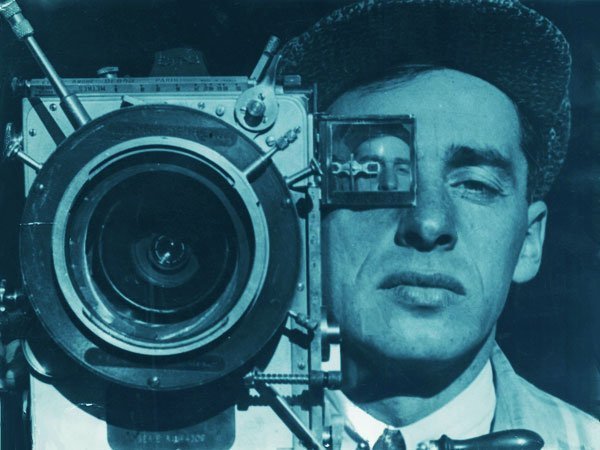
On January 2, 1896 (December 21, 1895), Dziga Vertov (David Kaufman), film director, one of the founders of documentary cinema was born.
Personal business
David Ableevich Kaufman (1895 - 1954) was born in the city of Bialystok of the Grodno province, now located in Poland. Early began to compose poetry. He used the pseudonym Dziga Vertov (from the word "jig", which means a top in Ukrainian and Polish). He studied at the Petrograd Psychoneurological Institute. After the February Revolution, he moved to Moscow and began to study at the law faculty of Moscow University, also attending lectures in mathematics, but soon decided that his calling was different, and left the university. He began to work in the newsreel department of the Moscow film committee, then he was a compiler of the film "Release" magazine. Filting documentary materials, he visited many fronts of the Civil War. Since 1920, he became the director of documentaries. In 1922 he published the manifesto “We”, in which he announced the creation of the “Kino” group (from the words “Kino” and “Eye”). He announced the feature cinema with “leprosy and infection”, and demanded “its disarmament”: “We affirm the future of cinema by the denial of its present. The death of "cinematography" is necessary for the life of cinema. We urge to speed up her death. ” Articles on the theory of cinema art were published in the journal of Mayakovsky “Lef”. For the four years in the early 1920s, he released the film magazine “Kino-truth”, also shot the documentaries “The Socialist Revolutionary Process”, “Soviet Toys”, “Kino-Glaz”, “Sixth of the world”, “Shagai, Council!”, “Man with a movie equipment”, “Enthusiasm: Symphony of Donbass”, “Three Songs of Lenin” and others. He worked at the Studios "Kultinkino", the 3rd Goskinofabrik, the Kyiv film factory of Vufku, "Interrabmofilm", the Central Executive Committee. During the Second World War, he shot documentaries in Alma-Ata: movie magazines, defense essays, the film “You, Front!”. In 1944 he returned from the evacuation and made the last film the oath of the young. After the release of this film, he stopped shooting films and led the work of front -line movie operators. In the last decade of his life, he worked in the film magazine "News of the Day". Dziga Vertov died in Moscow on February 12, 1954.
What is famous
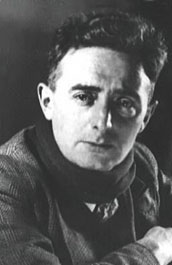 Dziga Vertov
The innovator of cinema, which had a huge impact on the development of documentary cinema. Created many new techniques for shooting and installing a documentary. “Documentaryists shot the image to Vertov, after Vertov they learned to shoot ideas,” said Frederick Rossif, Director of the French Cinemate. Many ideas of Jigi Vertov have found recognition after his death in European and American cinema. Its successors were representatives of the Sinema Belief School of Film Documentarism (the name is the translation of “Cinema”), as well as representatives of “Direct Cinema” (Direct Cinema ”in the UK and the USA. The influence of Dziga Vertov was experienced by Chris Marker -a documentary film reformer and the creator of the genre of the film-Estate.
What you need to know about
Both younger brothers Jigi Vertov also became outstanding cinema figures. Mikhail Kaufman worked until 1924 with Dziga Vertov. Then he began to independently remove documentary tapes on the film studios of Ukraine. In 1941-1977 he worked as the director of the studio of the Mostuhfilm Centernachfilm. The youngest of the three brothers - Boris Kaufman in 1917 emigrated with his parents from Russia. He graduated from the Sorbonne, worked as an operator in a documentary and feature cinema. He shot all the films of Jean Vigo , worked with other directors. He fought in the Second World War. After the defeat of France, he went to Canada, then to the USA, where he also worked as a movie operator. He received an Oscar and Golden Globe for operator work in the film “In Port” and was nominated for an Oscar for the film “Doll”. In total, he shot more than 70 documentary and feature films.
Direct speech
Came a young man of medium height
In Small Gnezdnikovsky, 7.
He suggested a film right.
It would seem simple.
No. Not really.
A long story begins here.
History will figure it out in this story.
Dziga Vertov. From poems about yourself
There is no ZGI here
Believe -
Eye Iga and
The coffins of Veriga.
Just winds
death
centuries to spin.
But - Jin! - Turn
Disks.
Gong at the door aort.
I-oh-th! - AutoVizhi,
Tricks of the mouths -
Dziga Vertov.
Dziga Vertov. Poem "Dziga Vertov" (1920)
We call ourselves to and n o and m and, in contrast to the “filmmakers” - herds of junkers who trade in a notorious rag.
We do not see the connection between cunning and the calculation of the merchants and the genuine to the same.
We consider the psychological Russian-German film drama, which was served by visions and childhood memories.
The American film adventure, a film with ostentatious dynamism, staging of American Pinkertones - thank you a movie for the speed of shifts of images and close -ups. Good, but randomly, is not based on an accurate study of movement. The step is higher than the psychological drama, but nevertheless nefudinal. Sample. Copy with a copy.
We declare old films, romantic, theatrical, etc. - pumped.
From the manifesto "We" (1922)
7 facts about Dzig Vertovo
- The earliest use of the pseudonym Jiga Vertov is a signature for the drawing “Spring Satan”, 1915.
- The film "Three Songs of Lenin" entered the Soviet film program awarded the Grand Prix at the 1934 Venice Exhibition (predecessor of the Venice Film Festival).
- In the initial edition of Roman Ilf and Petrov, the “Golden Calf” was a character of “extreme views”, “a great fighter for the idea of a cinema of a fact” and the author of the film “Impartial lens”. It was described how he removes the cigarette butt in the urn close -up, so that he "takes on the appearance of the vent of fortyadvuhsantimeter guns."
- Critics of the late 1920s, who accused Jig Vertov and his followers of excessive enthusiasm for futurism, called the film-cinema groups, comparing them with pathogenic bacteria.
- In 2012, in a survey, almost thousands of film critics of the British magazine Sight & Sound “The Man with a Cinema” took the eighth place of the list of the best films of all time. In 2014, Sight & Sound called the picture the best documentary of all time.
- For the silent film "Man and the Cinema", more than ten soundtracks were written, many decades after the release of the film. The latter in time was written by the famous English composer-minimalist Michael Naiman in 2002.
- "Enthusiasm: Symphony of Donbass" became the first Soviet sound documentary movie. Charlie Chaplin called the film one of the most impressive soundproof symphonies.
Materials about Dzig Vertovo
Article about Dziga Vytovo on Russian Wikipedia
Jiga Vertov on Internet movie Database
The film "Man with a film apparatus"
Fragments of the films "Kino-Glaz" and "Kino-truth"
Biography and materials on the portal of Russian documentary cinema Vertov.ru
L. M. Roshal "Dziga Vertov"
V. Rogova "The strange fate of Jigi Vertov"