
Translated material
A truce with shooting
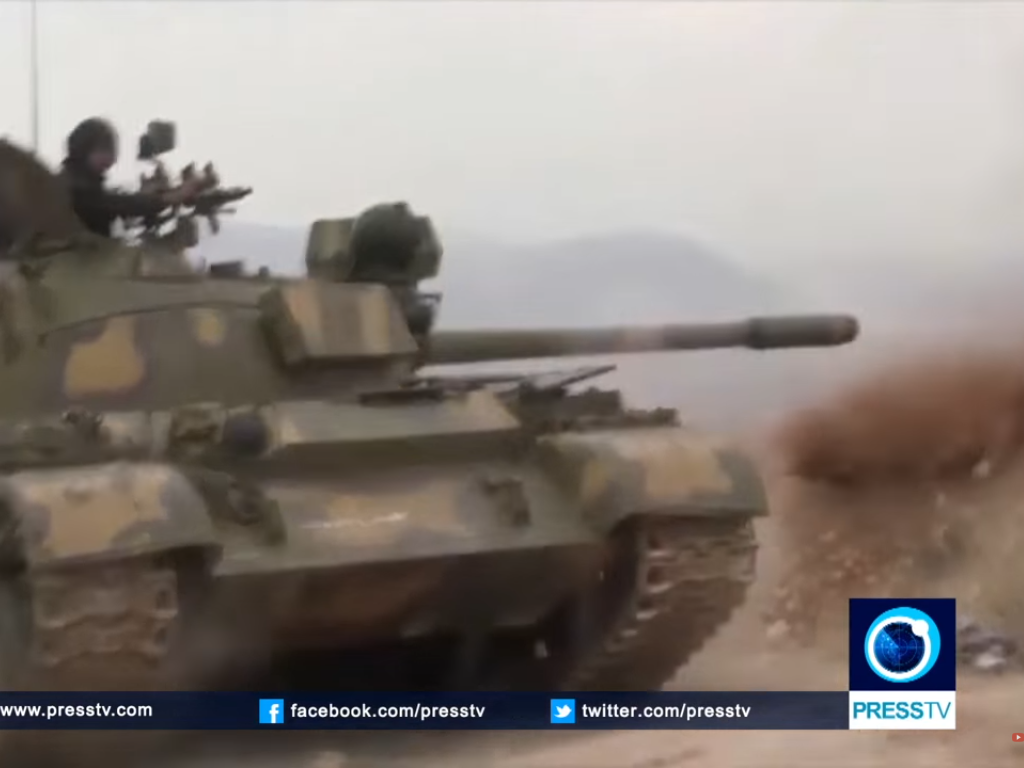
Hundreds of civilians were forced to flee from the mountainous region near the Syrian capital, since the government army resumed a military operation against several rebel groups, including the Al-Qaeda, which was banned in Russia, excluded from the Associated Press report.
According to the agency, from December 31, about 1.3 thousand people left the Vadi Barad Valley. Despite the ceasefire, supported by the UN Security Council, air raids and shelling continue in the region. According to the television show Al Alam , the Syrian army, with the support of the militia detachments, entered the village of Ain-El-Fiji, where the largest drinking water tank is located. According to other sources, fighters of the Lebanese Hizballs participate in the ground operation with the support of Russian and Syrian aviation.
Vadi-Barada Valley is the main source of water for Damascus and the metropolitan region. According to the local media center, the water supply system located in Ain-El Fiji was destroyed by air strikes, but the Syrian government claims that the rebels deliberately ruined the water source with diesel fuel. Since December 22, Damascus has been experiencing an acute lack of water.
The battles also go for the neighboring settlements of Basim, El Husseinia and Ain-El-Khodra. The operation of the government army in the region began a week ago. According to Damascus, the militants of the FATH Ash Sham group refused to leave Damascus in exchange for the conclusion to the Idlib province.
A truce in Syria entered into force on December 30, 2016. The next day, the UN Security Council approved a resolution on the ceasefire, which was prepared by Russia and Türkiye. The government army and a number of armed groups agreed to connect to a truce, the guarantors of which are Moscow and Ankara. Groups that refused to join the truce will be considered terrorist.
The next ceasefire is the result of two -month negotiations between the Syrian government and the rebels, the Minister of Defense of the Russian Federation Sergey Shoigu said earlier. A truce does not spread in the territory controlled by the militants of the Islamic State prohibited in Russia.
It is expected that the Syrian government and representatives of opposition groups will meet in the capital of Kazakhstan in the second half of January. Then, according to the plan of the Special Supervisor of the Secretary General of the UN Staffan de Mistura, the parties to the conflict will gather in Geneva, where intersiryr negotiations should be resumed on February 8.
The Permanent Representative of Russia at the UN Vitaly Churkin said that the ceasefire in Syria is adequately observed. However, the Russian Center for the Reconciliation of the warring parties in Syria recorded 21 shelling from armed groups in the provinces of Aleppo, Damascus, Latakia and Hama over the past day. Opposition Syrian media report that in these areas the Syrian and Russian aircraft continues air raids.
On January 1, Turkish and Russian aircraft struck the positions of IG in the north of Syria, destroying 22 militants. Over 100 IG objects were destroyed per day in this area. According to the Anadolu agency, strikes were inflicted both by aviation and land units.
According to him, blows on the objects of terrorists were inflicted both by aviation and land units. In general, 111 IG objects were destroyed per day. In particular, in the area of the Syrian city of El Bab from the Fyrtyn self-propelled artillery installations, strikes were struck by 103 objects. Another 8 objects destroyed the Turkish Air Force.
The agency also notes that the Russian Air Force destroyed the objects of the IS militants southeast of the city of El Bab.