
Translated material
With a poisonous gun
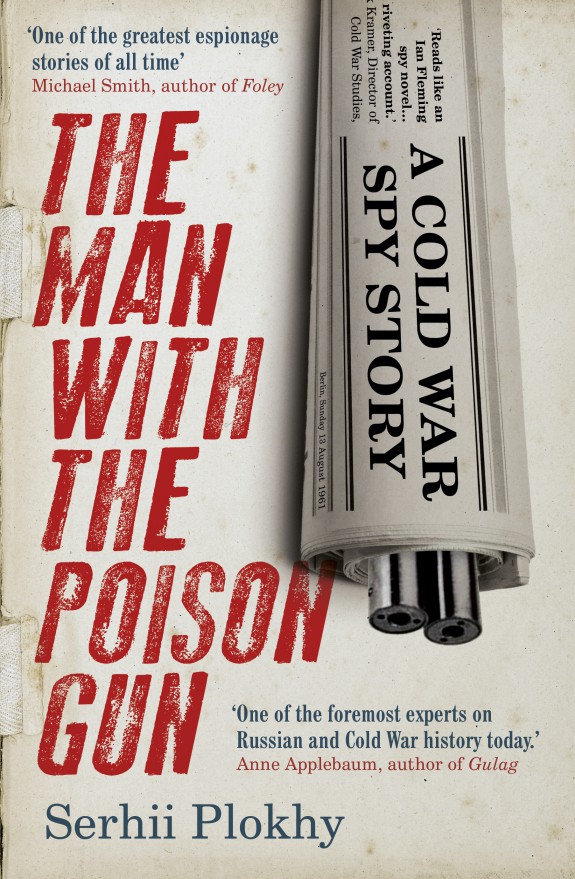
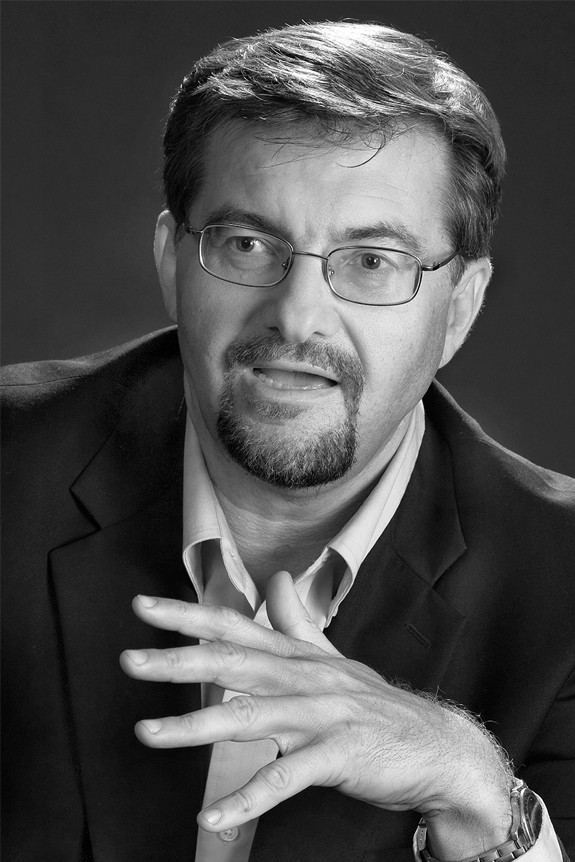
In the UK, a book was published about one of the most high -profile killings of the Cold War - the murder of the KGB agent in October 1959 in Munich the leader of the organization of Ukrainian nationalists Stepan Bandera. The book is called the "man with a poisonous pistol" . Its author, a professor of Harvard University, Sergei Prohiy - analyzes the life and fate of the KGB agent Bogdan Stashinsky who killed Bandera and who fled to the west.
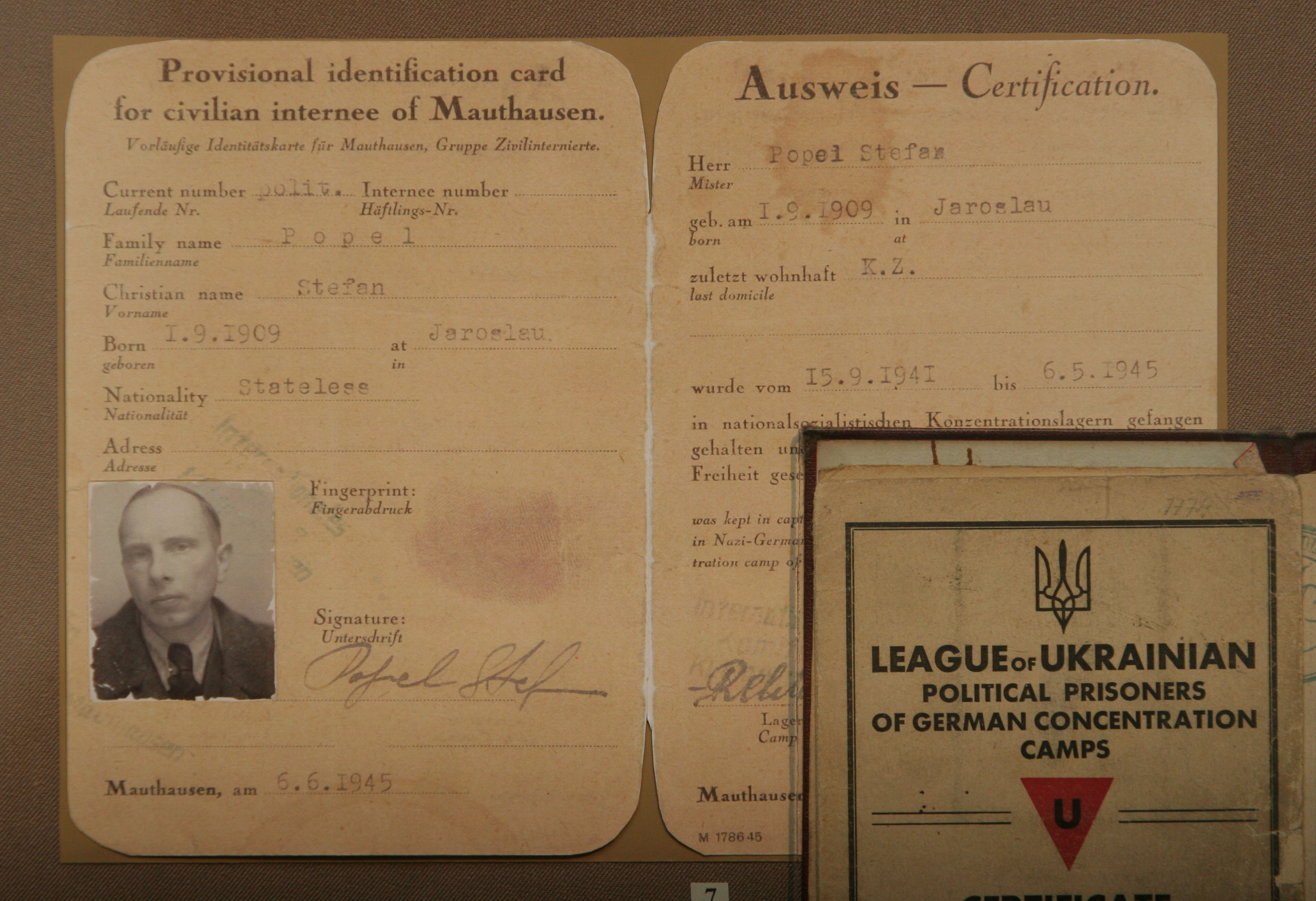
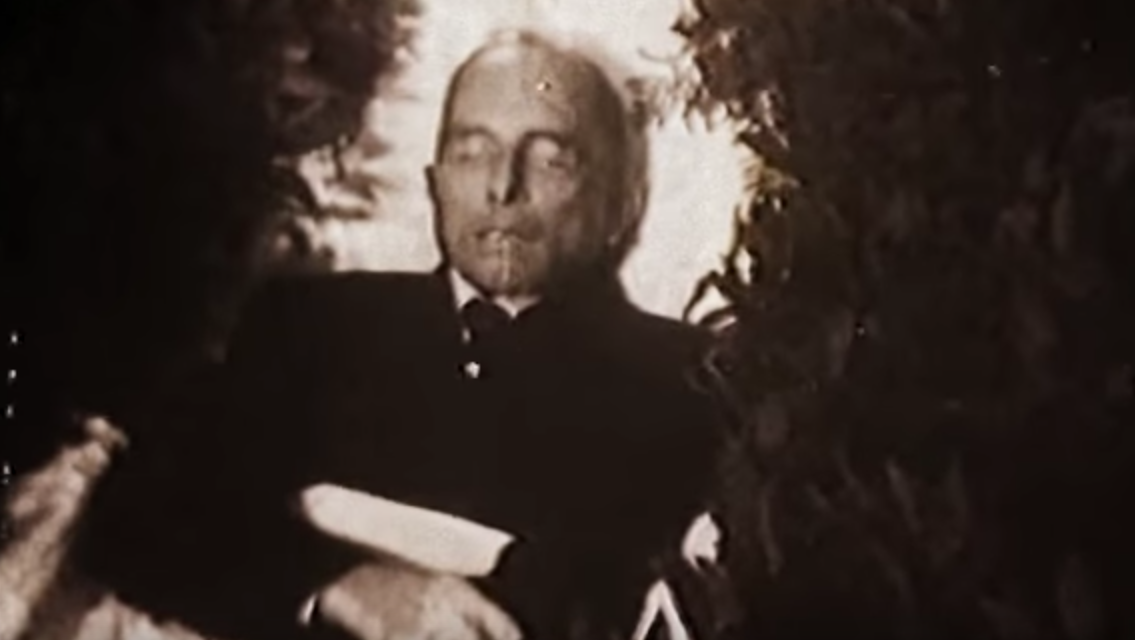
Almost 60 years have passed since the murder of the ideologist of Ukrainian nationalism, the leader of the OUN and one of the creators of the Ukrainian rebel army Stepan Bandera, but the violent disputes about him and his heritage have not subside. Professor is a bad, based on archival documents, the protocols of Bogdan Stashinsky’s interrogations in the CIA and his testimony at the trial in Germany in 1962, against a wide historical background, recreates a picture of the murder of one of the most fierce and convinced opponents of the Soviet government. Directed in October 1959 to Munich, where, under the name of Stefan Popel, Bandera lived, KGB KGB Bogdan Stashinsky was an experienced killer. Two years before the attempt on Bandera, in the same Munich in October 1957, he killed one of the leaders of the OUN, publicist Lev Rebet. Moreover, both murders were committed with the help of a special secret weapon, throwing a cloud of toxic gas into the face of the victim, whose inhalation leads to not leaving traces of instant death. In 1962, Stashinsky fled west, and the secret became clear. The sensational international scandal in connection with the self -disclosure of the Moscow killer opened the veil over one of the most ominous aspects of the Soviet regime.
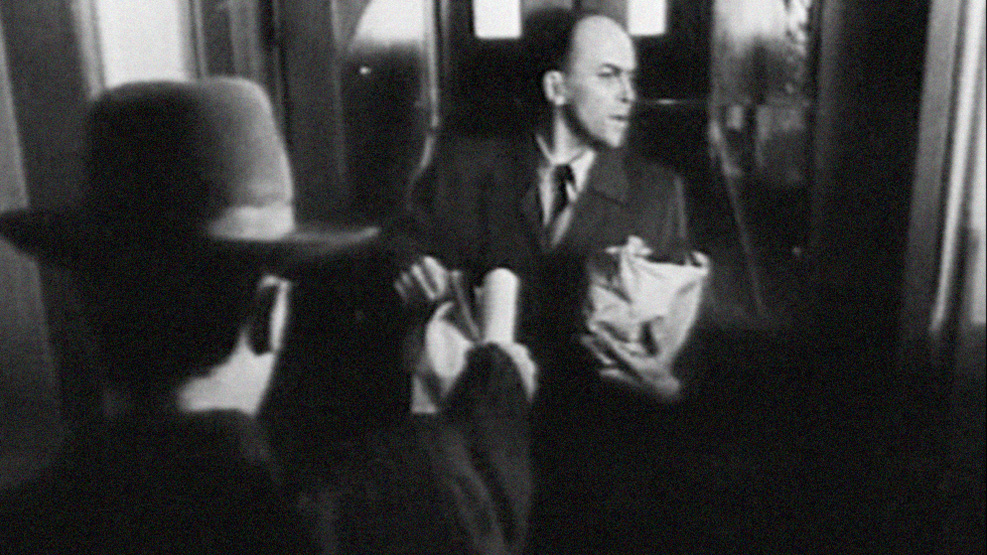
The ninth chapter of the book, which describes how Stepan Bandera was killed, the professor of the bad entertained Herr Popel. The chapter begins with a story about the first and unsuccessful attempt of Stashinsky to kill Bandera in May 1959. Then Stashinsky thought to shoot, the situation seemed to him dangerous. In order to deceive the KGB curator and the probable spying (he secretly followed the other agent of the same department), he shot quietly into the ground, threw the “poisonous gun” into the nearest river, where he threw the same gun from which Rebeta killed, and broke the key to him from Bandera’s main house, pretending not to open the door. The second attempt to kill the leader of the OUN took place on October 15, 1959. For the entire operation and reconnaissance, Moscow allocated no more than ten days, after which Stashinsky had to immediately move from Germany to the GDR. On that day in the morning, he began to follow Bandera’s house. According to the plan, he had to kill him in the lobby. At noon, he saw that Bandera led his “Opel Captain” from the garage and left somewhere. A nervous expectation stretched. An hour later, he returned, and while he put the car in the garage, Stashinsky opened the front door with the key and hid in the lobby for the elevator. He held the "poisonous gun" wrapped in a newspaper. As soon as Bandera entered the lobby, the killer came close to him, lifted the newspaper to his face level and pressed the trigger. Without lingering and without turning around, Stashinsky went out and closed the door behind him. The fact that he completed the task and killed Stepan Bandera, he learned only the next day at the airport - all the newspapers wrote about this. Was the Stashinsky action of a more extensive KGB program to exterminate anti -Soviet emigration? Was there a department that specialized in foreign murders in the structure of this department? How was it all organized in general? I addressed these questions to the author of the book - the professor of bad.
There was no special murder program, but the murder was part of the "repertoire" of this department
- There was a special department of the KGB, which was engaged in the murder. However, Bogdan Stashinsky was not an agent of this department, he served in the department for working with emigration. It seems that several departments were engaged at once by the murders, at least they had such a right. There was no special murder program, but the murder was part of the "repertoire" of this department. The idea was to quarrel two different groups in Ukrainian emigration. It was assumed that the murder would be perceived as an action committed by a political competitor, and thus conflicts in the emigrant environment will arise. As for the story of the murder of Bandera, here from the very beginning the KGB focused on its liquidation, and this operation has been prepared for a very long time-from the late 40s. Judging by the memoirs of the KGB officers, the average command staff of this department was against this operation. This was explained by the fact that the KGB agents by that time had already deeply entered the environment of Bandera and could manipulate them through his connections with Ukraine, which were also controlled by the KGB. According to these officers, there was no operational need to eliminate Bandera. However, the problem was that at that time the head of the party, and therefore the state, was Nikita Khrushev, who in the 40s was actively engaged in the fight against Ukrainian nationalism in Western Ukraine, and orders for Bandera and Ukrainian emigration were given from the very top. For the murder of Bandera Bogdan Stashinsky, he was awarded the Order of the Red Banner, and the then head of the KGB Alexander Shelepin personally handed it away.
- Does this mean that such murders needed the sanction of the Politburo or Secretary General?
Ukrainian emigration enjoyed the special attention of the KGB
- In the published memoirs of Vladimir Semi -City - the head of the KGB next after Shelepin, their author complains that the head of the KGB could not single -handedly give an order to liquidate, such decisions were made at the very top. I must say that this practice was legalized by a special decision of the closed session of the Supreme Court. It was about the elimination of the so -called "traitors" who were supposed to be either former security officers or Soviet citizens living in the West. However, the concept of "Soviet citizen" was interpreted very widely, for example, the child and Bandera were never Soviet citizens, but came from the territory that was annexed by the Soviet Union during the Second World War.
- Why did the KGB pay such close attention to Ukrainian emigration? Not Baltic, not Russian, not Armenian?
- Attention was paid to all emigrations. But, indeed, Ukrainian emigration enjoyed the special attention of the KGB. This was due, firstly, with its multiplicity, and secondly, with its high organization and mobilization ability, since its significant part and its leaders were participants in the Ukrainian armed underground, armed resistance in the USSR, and, according to the authorities, posed the main threat.
- You note that Khrushchev was personally interested in eliminating the leaders of Ukrainian emigration. Why?
- He was the head of the Communist Party of Ukraine at the beginning of World War II (1939), and this under his leadership was the Sovietization of Western Ukraine after its capture by the Soviet Union. Then since 1944 he was very actively involved in the fight against the Ukrainian nationalist underground.
- You write that Bogdan Stashinsky was recruited by the KGB with blackmail. Explain this, please.
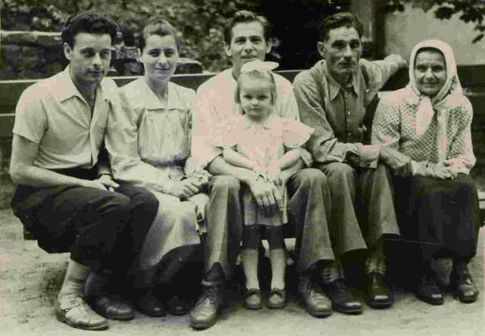
- The fact is that his family was actively involved in the Ukrainian underground. His older sister was connected in this underground, the other sister was the bride of one of the commanders of the Ukrainian rebel army. Bogdan was 19 years old at that time. He was placed in the conditions: either he will be cooperated, or he and his whole family will be arrested. In the end, he decided to cooperate.
- How would you describe the personality of Stashinsky?
The marriage to the anti -Soviet -minded inge turned out to be fateful
- At that time he was a student, studied mathematics. He was the first member of the family receiving higher education. When he was recruited, he accepted many postulates of communist ideology as self -justification. He inspired himself that the armed underground was doomed, and the communist regime carries some positive things for both Ukraine and the Union as a whole. But he had certain elements of doubt. These elements, in particular, manifested themselves when, contrary to the ban on his curators in the KGB, he at a meeting with Shelepin insisted that he be allowed to marry Inga Paul - a German from the GDR, who was very anti -Russian and anti -Soviet. Her mother suffered during the Soviet occupation of Germany - she was raped several times. Stashinsky hid from the leadership of the KGB that he was married in the church. He believed that his very religious parents would approve of this. The marriage to the anti -Soviet -minded inge turned out to be fateful. In the end, under her influence, they decided that when he was once again sent abroad, he would remain there. According to Stashinsky, he very painfully experienced his role as a KGB killer.
- You quote the materials of Stashinsky’s interrogation in the CIA, at which he claimed that he acted from ideological motives. Was he a communist fanatic before marriage?
- I think that he was not a fanatic, but those propaganda ideas that he were offered as an excuse for his activity, he accepted, and this became part of his new identity. Even during the trial in Karlsruhe in 1962, he called himself Russian, he and his wife introduced himself as Russian. That is, it was a problem not only of ideological, but also in national identity. His desire to marry Inga and certain doubts about the communist ideology caused by religious education, they suggest that the struggle of these two principles took place in him: family education and service in the KGB. In the end, this conflict resulted in the west.
- But he did not just run - we will think, under the influence of his wife, - but he also surrendered to the American CIA ...
Paradoxically, in court the task of Stashinsky was to prove that he was guilty
- From his point of view, this was the only way to stay alive. He knew what methods his department applies in relation to the so -called "traitors". He believed that after the flight for him and his family, the only way to survive is to get the protection of the Western special services in exchange for the information that he is ready to provide. It was a shock for him that the Americans, having heard him, did not believe him. For them, his story was so incredible that they decided to transfer it to the West German police, which conducted an investigation, as a result of which it turned out that he was telling the truth. Paradoxically, in court the task of Stashinsky was to prove that he was guilty. And if he abandoned his testimony, there would be no grounds for his conviction.
- Strange CIA: it did not believe Vasily Mitrokhin when he fled to the west and decided to surrender, Svetlana Alliluyeva at first did not believe either ...
-The CIA can be understood: for the first time it was faced with such an unknown and incredible method of murder: with some poisoned syringe or unprecedented gun. The CIA had its own version of the murder of Bandera. There it was believed that he was poisoned by someone from the inner circle, pushing him with coffee or tea. This was their working version, and suddenly a person appears who offers his version that contradicted everything that the CIA had at that time.
- Does it mean that the transfer of the Stashinsky German police indicates that he was simply considered a criminal in the CIA?
At the time of pressing the trigger, the ampoule was broken, and the liquid was sinking in the form of a gaseous cloud
- They did not believe him in general. Stashinsky had several documents for different persons. One passport was in the name of Stashinsky, the other two on citizens of Eastern and Western Europe. The Americans could not identify his personality. They had great doubts about the veracity of his testimony, and they decided to get rid of him. All this happened in a situation where Berlin was just separated by a wall, and the Americans had a lot of trouble without Stashinsky. They simply did not want to mess with a person whom they could not identify and who treat them with fantastic, in their opinion, stories; And they decided to transfer it to the police.
- Could you describe in more detail the "poisonous pistol" that Stashinsky used?
The killer was supposed to take an antidote tablet before and after surgery
- It was a cylinder into which ampoule was inserted with fluid based on potassium cyanide. At the time of pressing the trigger, the ampoule was broken, and the liquid was sinking in the form of a gaseous cloud. And when a man inhaled him, an instant death occurred. It was a gun used by German intelligence during the Second World War and which was improved in the KGB. By 1959, it was already a "double -barreled" - the pistol already had two trunks, from which it was possible to shoot separately. It was assumed that Bandera will be with the guard and will need two shots. The improvement of this pistol took place between 1957 and 1959.
- When shooting, it was necessary, apparently, to be at a certain distance from the victim?
- It was necessary to shoot in the face. And the killer himself had to take the antidote tablet before and after the operation. It was necessary to get very close to the victim.
-This device is somewhat reminiscent of a “shooting umbrella”, with the help of which the Bulgarian dissident Georgy Markov was killed in London ...
- As far as I know, this umbrella needed to prick a person. In the end, on the corpse of Markov, a point was found from the injection and the capsule with ricin resulting from this injection in the body. The "poisonous gun" did not leave a trace.
“ You write that Bandera was warned about the attempt preparing for him and that he was advised to leave Munich, but he refused.” And who warned him ?
- We know about this warning from the memoirs of the head of Bandera’s security. He writes that, surrounded by Bandera, there was a double agent who worked for the OUN and the KGB, who supplied information to both parties. In one of his reports, Bandera said that during a meeting with curators from the KGB he knew that a series of attempts was being prepared and that some new weapon would be used. And the fact that Bandera refused to follow the advice to leave Munich and that for the most part he did not enjoy security is confirmed from many sources. In the end, after the long state of war, in which, according to Bandera, there was an OUN, a sense of danger is dull. He believed that in such circumstances it was necessary to continue to fight, not to retreat.
- And why did Bogdan Stashinsky get such a relatively short prison term (eight years) and was even released ahead of schedule?
- The court took place in October 1962 - at one of the most intense moments of the Cold War, on the eve of the Caribbean crisis. The process was very ideological. Ultimately, the leaders of the Soviet state were recognized as the main criminals. And in this light, Stashinsky was considered by the court as an instrument in the hands of criminals. He was merit to him the fact that he told the whole world about the atrocities of the Soviet regime at a time when there was no other evidence. As for his early release, this is the norm with good behavior in prison. His early release raises less questions than a relatively short prison term for both murders. The fact that the Stashinsky process was ideologically colored and the fact that Alexander Shelepin was the main accused on it played an extremely negative role in the fate of the head of the KGB. He was the main political competitor of Brezhnev in the 60s-early 70s. Brezhnev struck the final blow to Shelepin in the spring of 1975, when he withdrew him from the Politburo. And this happened after Shelepin did not go to the West for many years, where, according to the results of the Stashinsky process, he was considered a criminal. Finally, in April 1975, he, as the head of the Soviet trade unions, went to the UK, where mass protests were held. This was used by Brezhnev to remove it from the Politburo.
- You write that after Stashinsky’s flight to the West, many speculations arose about the reasons that prompted him to escape. Even the assumption arose that all this was a planned KGB operation. What do you feel about it?
- Here we are faced with typically conspiracy theories. The process over Stashinsky caused a loud international scandal and very negatively affected the image of the Soviet Union and Soviet leaders, not only Shelepin, but also Khrushchev. The reaction of the Soviet leadership to the flight of Stashinsky rejects the version of the planned KGB of the action. 17 KGB officers in East Berlin were revoked, some of them were in prison. The conspiratorial theory that another KGB agent allegedly killed Bandera, and to give up suspicion from a true killer surrounded by Bandera, sacrificed Stashinsky, like other theories, does not look convincing.
- What is known about the life of Stashinsky after liberation from prison and departure from Germany to South Africa?
-What is known is contained in a number of articles by the former head of the police of the South African Republic of General Geldenheis, who were published in the mid-80s. Он пишет, что Сташинский прибыл в ЮАР в конце 60-х годов, что ему была сделана пластическая операция, что он вновь женился (брак с Инге не пережил его процесса) и что он консультировал южноафриканскую разведку. Мне удалось взять интервью у генерала Гельденхейса, который подтвердил всю эту информацию. В книге я попытался реконструировать жизнь и деятельность Сташинского в ЮАР, учитывая его сотрудничество с местной контрразведкой. Скорее всего, он был советником южноафриканских властей, которые как раз в это время начинали операцию против партизанского движения в Родезии. Сташинский вполне мог быть экспертом в этой области, учитывая его опыт работы в Западной Украине во время борьбы с УПА.
– Вы цитируете статью немецкого журналиста, озаглавленную "Сташинский – это идеологический Раскольников". Есть ли смысл в этом сравнении?
– В статье речь идет о том, что человек, который совершает убийство, в конце концов раскаивается. Это то, что произошло со Сташинским. Он раскаялся и покаялся. И это стало частью его процесса преображения. В этом у меня нет сомнения.
– Мне показалось, что вы слегка романтизируете героя своей книги. Ведь ее название – это парафраз названия последнего романа Иэна Флеминга о Джеймсе Бонде: "Человек с золотым пистолетом"...
В окружении Бандеры был двойной агент, работавший на ОУН и на КГБ, который поставлял информацию обеим сторонам
– Связь с Флемингом для меня не является элементом романтизации Сташинского. Флеминг, когда работал над этим романом, как раз знакомился с материалами, главным образом газетными, его процесса. Роман "Человек с золотым пистолетом" начинается со сцены, когда Джеймс Бонд пытается убить своего шефа в британской разведке, используя пистолет Сташинского. И перед этим они обсуждают убийство двух человек из "ядовитого пистолета". Так что история Сташинского стала частью сюжета романа Флеминга, и название моей книги лишь подчеркивает эту связь, а ни в коем случае не является попыткой представить Богдана Сташинского разновидностью Джеймса Бонда.
– Ваша книга завершается такими словами: "История Сташинского – это более чем исторический эпизод. Это также экскурс в настоящее и предупреждение о будущем". По существу, вы этим отсылаете читателя к современной, путинской России. Продолжает ли ФСБ практику советского КГБ?
– Так же, как в истории со Сташинским, полный и окончательный ответ на этот вопрос мы сможем дать лишь после того, как станут доступными секретные архивы ФСБ. То, что доступно, – это материалы британского расследования по делу Александра Литвиненко. Судя по нему, существуют веские доказательства того, что эта практика продолжается. Сегодня мы все чаще и чаще говорим о возрождении холодной войны. В этих условиях я рассматриваю историю со Сташинским как напоминание и предупреждение о том, что в обострившихся международных отношениях старые методы возобновляются. Мне хотелось привлечь внимание читателя не только к одному из самых зловещих эпизодов холодной войны, но и предупредить об опасности повторения прошлого.