
Translated material
Ksenia Kirillova: The less you know ...
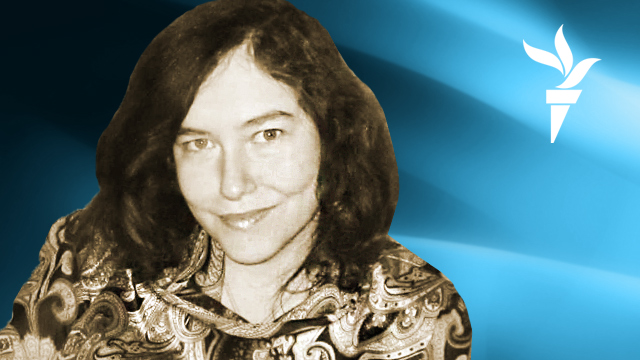
Last year, the book of American journalist and publicist David Satter was published “You know less - you sleep stronger” (The Less You Know, the Better You Sleep), dedicated to the formation of the dictatorship in Russia. Most of the book is devoted to the history of explosions of residential buildings in Moscow in 1999, or rather, the participation of the FSB in the organization of these explosions. More recently, the book has become available in Russian .
As David Satter himself explained at the presentation of his book in California, the disclosure of the truth about the events of the seventeen years ago can affect the mass support of Putin by Russians.
"Putin came to power using the fear of the population after the terrorist attacks, and gained popularity as the only person who was able to protect the country from a terrorist threat. If the Russians understand that he himself was the source of this threat, the attitude towards him can change significantly," the author hopes.
It is the 99th year that Satter considers a turning point in relation to the West to Russia. One of the main thoughts of his book is that the inability of the West to believe in the incredible in relation to the events that took place in Russia cost the United States and Europe very expensive, and with the coming to Putin’s power, the understanding of the West of Russia and completely ceased to have any relation to reality.
The study of the facts of the Second Chechen War gives a lot to understand today's military crimes of Russia in Syria and Donbass
Of course, the question of what facts are able to influence the worldview of today's Russians, and how much they are ready to accept the truth, remains debatable, but undoubtedly one thing - it is the explosions of residential buildings and the second Chechen war helped Vladimir Putin to obtain power. Meanwhile, in Russia itself, the Chechen adventure Putin remained, if not unnoticed, then justified by fear of the Wahhabis, quite real terrorist attacks and the horror of field commanders. It was not customary to talk about the death of civilians in this war, and the journalist Anna Politkovskaya who wrote about them was shot in the elevator of her own house in 2006.
Meanwhile, the study of the facts of the Second Chechen War gives a lot to understand today's war crimes of Russia in Syria and the Donbass. If we compare the causes of the war, the objects of attacks and the attitude to the civilian population, we can find that since then, practically nothing has changed in the behavior of Moscow.
At our disposal was a unique, not published diary anywhere in which the Russian refugee from Chechnya Natalya Vetrova described the horror of the bombing of the formidable and subsequent unbearable conditions of the camps for refugees and the homeless existence with children in her arms. I will give here only some of the most vivid excerpts from her descriptions:
“ The next morning the city began to bomb. At first, the explosions were heard far and rarely, then closer and more often. The children were scared - I told them that it was thunder. I sealed the windows in the apartment with tape so that the fragments would not fall inside the room. But this measure would not save from a strong explosion. How I glued the windows - the first thing my daughter remembers in my life ... again, the children's sleep. I rake them in an armful with a blanket and tuck up the explosions, even concrete under my feet and shake everything inside me, I say that this is a thunderstorm, but it doesn’t help, they are scared and crying today, I grabbed them, sleeping down the floors in the blanket.
We run into the office premises on the ground floor. There are still some machines, but nothing has been working for a long time. Everything is abandoned. We were hiding in the office, because he was below, but we could not enter the basement - it was flooded with water from the first war. Buro-green water, a knee of an adult, stood in the basement, and huge clouds of mosquitoes curled here. Mosquitoes remained in Grozny apartments even in winter. Their inconspicuous hordes rose from the basements, where they multiplied in standing water, as in a swamp. Public utilities practically did not work, so there was no one to eliminate the flow in pipes and pumping water. It was unrealistic to wait for the bombing, knee -deep in a smelly slurry, especially with children, so we chose the office with our refuge.
The residents of our entrance were running here as soon as the first explosions were heard. People sat on the floor along the walls. With each explosion, everyone was mechanically contracted and covered their heads with their hands. I held the children in my arms, pressed them to me, leaning forward to close them with my body. Time seemed to freeze during bombing. They seemed to never end. There were no thoughts in these minutes, only fear, only never previously experienced horror of expectation of death or terrible injuries and torment. And the numbness ... and then, when a terrible hellish roar was heard, you understood what this time carried: since you hear it, you are alive ...
There was a full -scale war, with aviation, missiles, mortars, and the corridor was not given to the public population. Many are happy to leave Grozny, but were afraid to leave the city, because the refugee columns were sometimes bombed from the plane. The city was getting colder and worse. Over time, fear dulled, and we no longer went down during the bombing. Someone said that the most reliable place in the apartment is the corridor at the front door. There I lay a blanket, and we sat on it, hugging during the bombing and freezing with horror with every explosion , ”Natalya writes.
She recalls another inevitable consequence of the war: hunger caused by food blockade and fear of suppliers who did not dare to risk their lives for the delivery of products to Grozny.
" In a city where all industrial facilities were destroyed, people were interrupted by random earnings. No one had large food supplies, and they soon began to come to an end. The money also ended and people began to sell gold jewelry and jewelry. They bought food for the proceeds. They stopped traveling from the villages of traders. It became very dangerous to move along the roads, and people did not leave their homes without extreme need. My children will be forgotten for a long time.
Russia introduced a complete blockade for residents of Chechnya. At first, electricity was turned off in the city, then the water was turned off. Water did not enter the upper floors, and on the ground floor it still flowed with a thin, puny stream. In apartments on the ground floor, the doors did not close from morning to night. The upper tenants went with buckets and cans to the first floor for water. The water flowed very slowly, and a whole queue formed on the stairwell. Then the water disappeared on the first floors. It became very difficult to get it. It became very bad when the gas was turned off. After all, in a cold apartment, the plate was a savior, we warmed up near her, we were preparing simple food. Then a fire was divorced in front of the entrance, and on it the residents took turns boiling kettles in turn. Furniture and fences went to the fire , ”says a former resident of Chechnya.
Probably, many refugees from the occupied Donbass described here will seem familiar. That is how the life began to look like many Ukrainian cities after the coming there the "Russian world". Something like this, most likely, also look at the ruins of Aleppo. For seventeen years, Russian society has learned to not notice in the yna and even meet them with enthusiasm. This amazing ability to "not know", it seems to be an integral part of the Russian mentality to avoid unpleasant information.
Ksenia Kirillova - a journalist, a former correspondent of Novaya Gazeta (Yekaterinburg), lives in the United States