
Translated material
The last five years David Bowie
What we learned from the documentary "BBC" dedicated to the most mysterious period of the musician's life

On January 8, 2017, David Bowie would have turned 70. A year after the death of the great musician, BBC released a documentary dedicated to the most mysterious period of his life-the last five years, when he secretly recorded albums, put a musical and fought with cancer. Medusa watched The Last Five Years and tells how Bowie returned to music - and why the last Blackstar album, contrary to our ideas about it, was not conceived farewell.
Farewell to fame
David Bowie said in the early interviews that he was not going to be a rock star all the time: music and world fame for him only an instrument in order to be able to do what he wants. In reality, it turned out a little different. Bowie ceased to be a person who is in sight, only in 2004 - after a concert tour on the occasion of Reality’s album.
According to the BBC2 television channel, the musicians, with whom Bowie performed in the 2004 round, it was these concerts that seemed to be the happiest in his life. He enjoyed songs and performances, was fooling around during travels from city to city (the film shows the appropriate archival shots: Bowie puts on flashing badges in the form of musical instruments). The guitarist Garry Leonard notes that Bowie seemed to decide to take off the mask - for the first time in all the time that the musicians knew him, he became himself both for them and for the public. The tour ended on June 25, 2004-due to the heart attack that Bowie happened right during the performance. Since then, the musician has never given full concerts and practically stopped appearing in public.
Friends of Bowie say that he thoroughly revised his views on creativity and his own life - and moved away from music. Bowie practically ceased to communicate with the musicians of his group, limited to rare letters. The producer of many albums of Bowie Tony Visconti admitted that after a heart attack and by about 2011 David, the music was not at all interested in; The musician Peter Gabriel said the same thing.
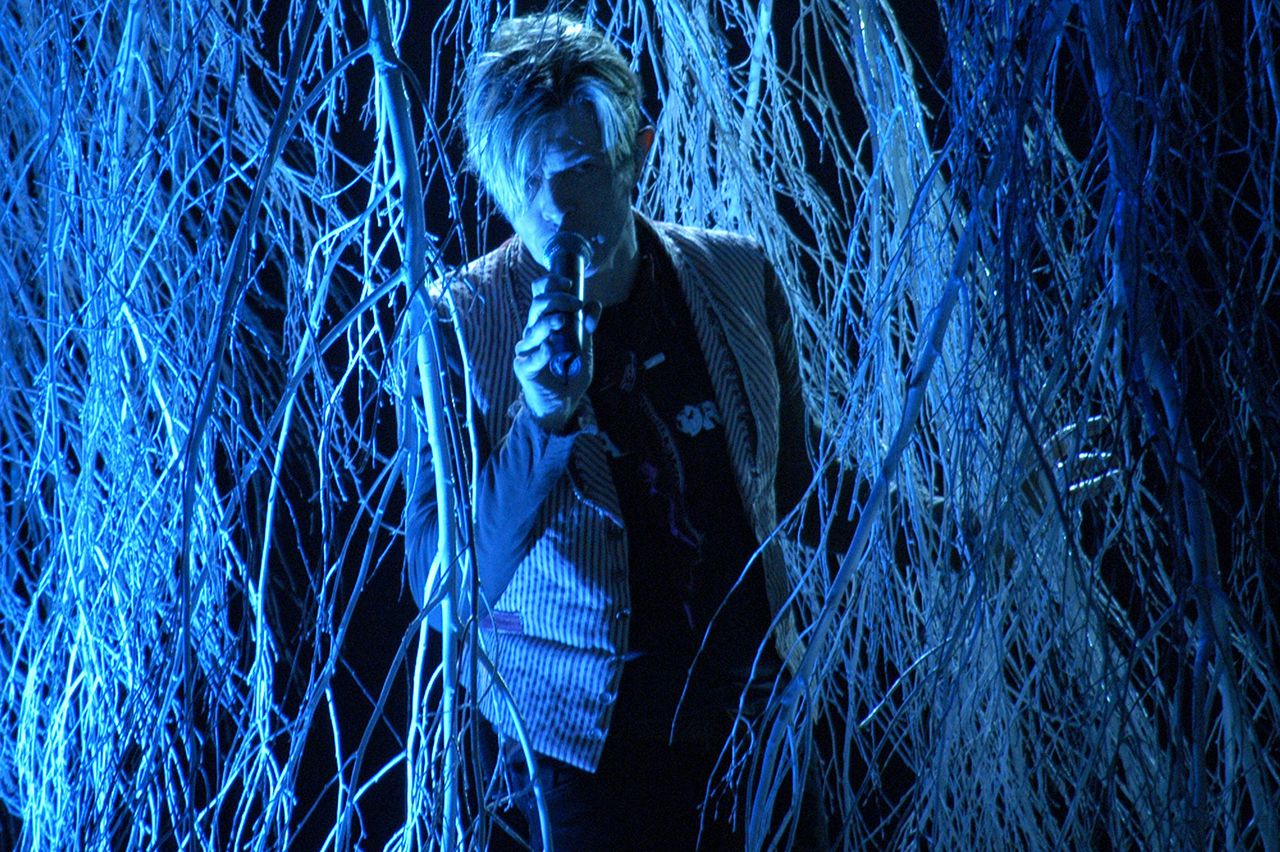
Autobiography in music
In 2011, the musicians with whom Bowie went to Reality Tour received unexpected letters from David: he was interested in whether they were busy and would they be able to participate in the record of a new record. The only condition is the strict secrecy: Bowie forbade to tell someone about the new album and even forced to sign documents about non-disclosure, which he never did in life. Tony Visconti in a documentary suggests that Bowie thus tried to get rid of pressure from the musical industry - and release the record precisely when all the songs are brought to mind and completely finished.
The record was very different from how Bowie worked on albums in the old days. At exactly six in the evening - and sometimes before - the musician just got up and left, noting that the work is over today. He often ironized about his age and walked around the studio in home slippers that he brought from home.
It was unexpected not only the fact of Bowie’s return to music, but also the theme of the new album The Next Day. Bowie is primarily known as an innovator who never looks back - but it was on this plate that he turned to the past, both in music and in the texts. The song Were Are We Now, as you know, is dedicated to Berlin and the years that Bowie spent in this city: as Visconti says, a close friend of the musician and producer of more than a dozen his albums, David had never indulged in nostalgia before. “I never thought he would look back. This is something new for him, ”says Visconti.
The Next Day cover was also nostalgic. Bowie invited the artist Jonathan Barnbruck as inspiration one of his concert photographs of the 1970s. After long thoughts, Barnbrook began to modify other legendary photos of the musician and the old covers of his albums, closing their fragments with squares. As a result, the Next Day was one of the most famous pictures of Bowie, a photo from the Heroes cover, on which the musician's face is closed with a white square.
The fight against cancer
As follows from The Last Five Years, Bowie knew about cancer when in October 2015 he worked on the latest Blackstar album and on the musical Lazarus based on his own songs-but he did not think that the disease could not be won. Bowie spoke about the illness and musicians with whom Blackstar recorded (Bowie replaced his permanent group to the jazz saxophonist Donny Makkaslin), and the Musical troupe, but did not attach much importance to this.
Many perceived Blackstar as a farewell: Bowie died two days after the release of the album; Many songs from the plate in one way or another concern the topic of death. The clip for the Lazarus song is also unambiguous: Bowie lies in a hospital bed, and at the end of the video it climbs into the closet. At the same time, the familiar Bowie with whom he worked on the album is sure that the musician himself was not going to say goodbye at all: he said that he wanted to put another musical - and that he has sketches for new songs.
As the director of the clips of Blackstar and Lazarus, Johan Renk, said in The Last Five Years, Bowie had many reasons about the first song, including the author of the image of a man with his eyes; The musician also proposed to include in the video a scene with the skeleton of the astronaut (an obvious hint of Tom Major). However, in the case of Lazarus, Bowie hoped for a regular clip with musicians - without any plot. Renk, however, did not agree: the song is called Lazarus, it mentions a biblical plot; Therefore, the director insisted that a person with the eyes of the buttons in the video lay down on the hospital bed. “From my point of view, the point was in the biblical aspect of the song ... The clip was in no way connected with the fact that he was sick,” Renk explains.
Renk later learned that the week when the video was shot, David Bowie reported the transition of the disease to the terminal stage. The album was already recorded by this time.
January 8, 2017, on the day of the 70th anniversary of David Bowie, was released by the No Plan mini-album, the last entry of the musician, which has three previously not published compositions. The songs were recorded for the musical Lazarus. You can listen to the album here .
Pavel Borisov