
Translated material
"In Russia everywhere fronts"

Over the past two years, the number of people convicted of extremist crimes in Russia has doubled - these are the data of the Supreme Court of Russia. According to the Judicial Department at the Supreme Court, in the first half of 2016 227 sentences were sentenced to "extremist" articles of the Criminal Code - Art. 280 "Public calls for extremist activity" and Art. 282 "The excitement of hatred or enmity, as well as the humiliation of human dignity." In early November 2016, at the Plenum of the Supreme Court, numbers for 2015 were named - 588 convicted of extremist crimes.
In December 2016, at a meeting of the Human Rights Council, President Vladimir Putin called for refraining from excesses upon initiation of criminal cases under an article on extremism. “Social networks are increasingly used for extremist activity, and the state has a natural legal desire to resist this,” Interfax quotes the president. “But, of course, it is impossible to bring everything that is not falling under this Surdinka,” Putin emphasized, adding that “we must carefully figure it out in this matter.”
In November 2016, the Supreme Court of Russia called on the courts to carefully analyze cases related to the so -called "extremist" reposts on social networks. In particular, when making decisions about whether the information is extremist, stimulating hatred or enmity, it is recommended to take into account the context and form of this information, as well as the presence or absence of any comments on it.
Law enforcement is such that it is completely impossible to understand who will come to the next time
The report of the Information and Analytical Center of the Owl, dedicated to the practice of unlawful anti-EXTRUMISMICS for the period from January to August 2016, is noted, in particular, that anti-extremist legislation "was actively used not only against radical opponents of the political regime, but also against citizens far from radicalism." For example, among cases of the unlawful use of anti -extremist legislation, the authors of the report cite the case of housewives Ekaterina Vologzheninova , who, for several reposts on the social network, VKontakte, was accused of arousing hatred and enmity to representatives of the authorities and “volunteers from Russia, fighting on the side of militias from eastern Ukraine”. She was sentenced to 320 hours of compulsory work with the confiscation of the laptop.
Another thing about which the owl writes is the case of the Tyumen blogger Alexei Kungurov, who was accused of "justification of terrorism" for a post in LJ with a criticism of the Russian military operation in Syria. On December 20, 2016, Kungurov was sentenced to 2 years in a colony.
Human rights defenders and lawyers note that initially anti -extremist legislation was aimed at protecting against any form of discrimination, but gradually it began to be increasingly used for reprisals against political opponents and dissenters. In particular, for example, in 2003 in Article 282 (“excitement of hatred or enmity, as well as humiliation of human dignity”) included such a thing as a “social group”. Prior to this, according to the law, they could bring to justice for actions aimed at initiating hatred or enmity on the grounds of sex, race, nationality, language, origin and attitude to religion.
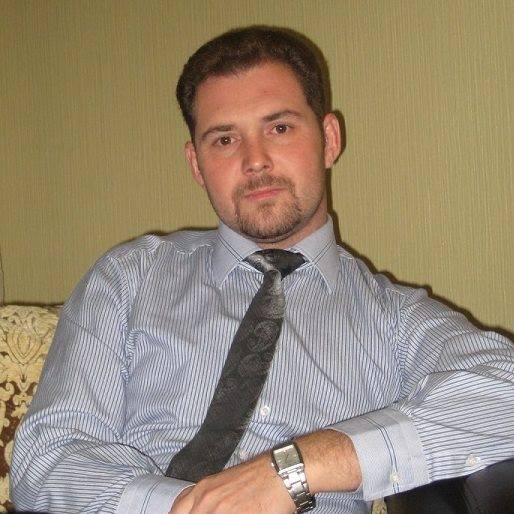
The head of the Owl information and analytical center , Alexander Verkhovsky and the lawyer of the Agora human rights organization, Ramil Akhmetgaliev, discuss what cases anti-ethno-extremist legislation is necessary and why in Russia it can be used against any person who has its own opinion:
Alexander Verkhovsky: In the November Resolution of the Supreme Court, it is written that when deciding on the orientation of the person who posted the information, one should proceed from the totality of all circumstances and take into account the "context, form and content of the information posted, the presence and content of comments." This is very clumsy from the point of view of the usual language, in particular, there is no word “repost”, it is not very clear what kind of person who has placed the information, but they apparently meant repost. I remember the discussion that was on the working group, and there we talked about the fact that the context should be taken into account, we need to take into account how the one who made repost expressed his attitude. This is better than nothing, and the Supreme Court, at least shows that you need to take into account different circumstances, and not just read a directly published piece of text, ignoring everything around, as we are still done usually. As far as they can accept this for execution, this, of course, is a question.
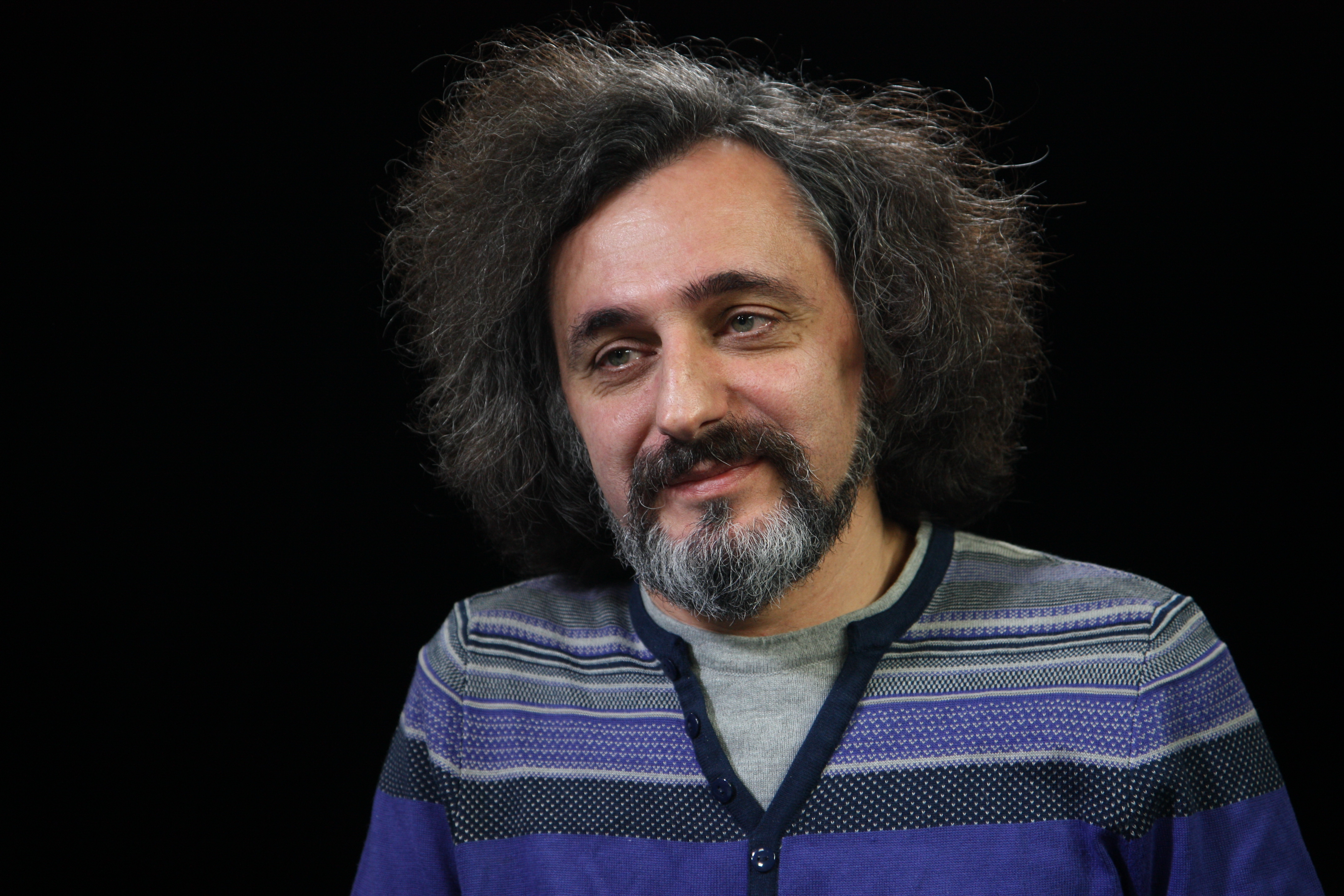
- Ramil, you, as a practicing lawyer participating in cases related to extremism, what do you think: how much can the courts really soften the practice?
Ramil Akhmetgaliev: I am a little more pessimistic. What needs to be taken into account in such matters - I, as a lawyer and as a practitioner who received a higher legal education, will say: these are all issues of the fourth course of the law faculty. It is necessary to take into account intent, context, and so on - these are issues of proof, tactics and methods of investigation, proving in the trial of certain circumstances. This applies not only to extremist affairs, it concerns any matter. You cannot judge any formalism, and this or that text itself does not automatically become extremist. It is necessary to take into account many, many factors. For especially incomprehensible lawyers, this position was already explained by the European Court of Human Rights, which also says that it is necessary to take into account many, many factors: who said, where he said, for whom he said, for which audience and so on.
You cannot judge any formalism, and this or that text itself does not automatically become extremist
In general, the anti -ethnic group in spirit was originally anti -discriminatory law, and today this line between the anti -discrimination and anti -terrorism is blurry, that is, we have an extremist, a terrorist - everything seems to be in hearing, but not every citizen and not every judge in principle can explain what it is and what is different. When they tried to put officials into social groups as a particularly poorly protected or particularly protected group, this practice was to be broken to some extent, including active actions in specific cases, thanks to some extent the Plenum of the Supreme Court, when he accepted the compromise. As far as I remember, in 2011 there were very stormy debates in the Plenum on this issue: whether it is necessary to directly indicate in the resolution that officials cannot be considered a social group. But this practice again began to gain momentum, there are no changes in this direction yet. For example, a well -known case: in Krasnoyarsk they are trying to recognize atomes to the social group . As for separatism, the article is new, but the practice has already been developed on it. And I would say that it does not correspond to the constitution, because any conversation about separatism, including critical statements that certain territories are attached, or must be separated, or possibly separate, automatically become criminally punishable. If we turn to the Shanghai Convention to combat terrorism, separatism and extremism , in which ours actively took part, separatism is understood only for a violent change in territorial integrity, calls for it. The second element (this is again from the law enforcement): Any calls should be real and executable. Because, look, the case of Moroshkin in Chelyabinsk is a person recognized as insane, and his actions were recognized as socially dangerous. Moroshkin wrote something there, the examination recognized him as insane. Well, who will follow him? Well, you can’t judge a person for this! Or Kashapov , who in Tatarstan casts doubt on the legality of the adopted certain decisions. He discusses, he did not lead the crowd behind him, and the crowd will not follow him. Why judge him for this, punish and send him to places of imprisonment? This is wrong, it does not correspond to the constitution. In this case, the line between the need to protect public interests and the protection of the right to freedom of speech is violated here.
- Now it seems that extremism, separatism, terrorism - everything is collected in one pile, and with this, you said, it is not very easy to figure it out. Now, if we speak more global than dangerous, for example, extremism? Why do you need his persecution by law? What should it be? Where does the line of really necessary legislative regulation go?
Alexander Verkhovsky: This word - extremism is very wide. The Shanghai Convention, which Ramil mentioned, has written the definition of extremism, terrorism, separatism associated with the use of violence, but it also says that this does not prevent states in their legislation determine this somehow wider. The states determine this wider. It is clear that if people, say, are preparing a terrorist attack, murder for some political reasons or something like that is a criminal activity. And it will be a criminal activity anywhere. This can be called the word "extremism", you can not call it, but still we are talking about criminal activity. Questions arise when it comes to statements, public statements, which, in the broad sense of the word, are incentive. Not when they specifically incite, this is just a form of complicity in a crime, and when, referring to the general public, they call for something: to the coup, to the pogrom, to the revolution. What and how the state should stop here? There is a huge world discussion in this regard, but more or less authoritative world lawyers agree that the persecution for such statements should occur only in some special circumstances, when many factors coincided and show an increased public danger of this statement. We have this criterion - increased public danger - is not in a clear way. In some places it is not respected directly in the law.
There is an Anton Nosika case: a person called for carpet bombardments, to kill women and children in a massive order. This is bad from a moral point of view, and from the point of view of the legality of whom did he call?
Here, with an article on the calls to separatism, the mentioned plenum of the Supreme Court even aggravated the situation. It says that if the accused called for some kind of unlawful actions in order to separate some territory, then he must be judged for calls to the illegal actions that he described. In practice, it turns out, even if he did not call for any illegal actions, but simply spoke out in the spirit that it was necessary to separate some area from the Russian Federation, then this is already a crime in itself. Not only is there no question of violence, at all about any illegal calls - but this is a rather serious crime. Of course, this should not be in the law. Where exactly the line should take place is very controversial. My position: the line should take place where it is about calls for violence and really realistic calls. There are many known cases as the Anton Nosika matter: a person called for carpet bombing, to kill women and children in a massive order. This is bad from a moral point of view, and from the point of view of the legality of whom did he call? If the readers of their blog, so they not only can not bomb Syria, they do not see the Syrians alive anywhere. And if he called on the governments of some countries, whether it is our country or the USA, they definitely do not listen to Anton Nosik. Therefore, the social danger of his statements, in general, is zero. This is what is completely ignored. Therefore, in our country last year, more than 500 sentences were issued for public statements of an extremist nature, and this is an incredible figure. In Western countries, they are calculated in pieces per year, and then not everyone. This is a rare case, we must try very hard to get into the relevant articles that are there too. Our account went hundreds. Despite the fact that most of these statements from an ethical point of view are completely unacceptable, these people spoke nasty things, but these are nasty things that need to be evaluated somehow differently, and not in the Criminal Code.
Ramil Akhmetgaliev: Take the latest events related to the Crimea. To discuss, praise, highly appreciate all decisions related to joining is not punishable. But any discussions where this decision is called into question is already criminally punishable. On certain topics, one can speak only positive things, and negative, critical - it is impossible. As for terminology, I am not ready to say for sure, but, as far as I know, in a number of European states the term "extremism" is not used at all. And in general, I am a supporter of the return to the original idea, when the provisions of the Constitution and the anti-extremist law were developed in the early 2000s. That is, the anti -exploration law should be anti -discrimination law in essence, spirit. It should be aimed at protecting human rights and freedoms from any controversial discrimination. Terrorism today, if I am not mistaken, is legislatively a variety of extremism. This is generally a separate sector, even according to the object another - we are talking about the normal functioning of certain state bodies, state structures, officials, public figures, and public institutions. To date, these are all the plenums of the Supreme Court, in my opinion, only an attempt to somehow straighten the situation. Of course, no one can raise the question really and really achieve changes in legislation, but if we speak theoretically about solving the problem, you need to return to the original positions. There is anti -discrimination legislation with its circle of protected relations, and there is anti -terrorism legislation, both within the state and beyond. And in principle, general international standards for both anti -discrimination and anti -terrorism - they are developed and there are. You do not need to invent a bicycle.
- If you look at the affairs related to extremism that are now: this is a blogger Sokolovsky from Yekaterinburg, who is judged by extremism for rollers and fishing, these are complaints about the library of Ukrainian literature and all these cases of reposts. As far as I understand, there is an opinion that now, in fact, according to extremist articles (280s, 282nd), any person can be attracted, there would be a desire. How much, from your point of view, the current legislation gives such an opportunity? How convenient is it to keep in such a suspended state of all people? And how much is it used now for reprisal, for example, with political opponents?
Alexander Verkhovsky: Of course, it is used. The question is simply that these opponents can, say, often do not like it either. According to our observations, the vast majority of people who pass these articles “for public statements by an extremist nature” are people of either some racist views, or these are supporters of the armed jihad who preach it. There are, of course, different, including the mentioned Kashapov or Sokolovsky. There are relatively few such things, but this life also does not decorate our life. That is what all around is intimidating. The legislation was originally not very clear for what. It does not seem to me that from the very beginning it had such a purely positive anti -discrimination message, but I would like to. And I completely agree with Ramil: it would be better to transfer it to these rails somehow. But the Russian Federation repeatedly in any international forums, in the UN committees, for example, they made recommendations to adopt a comprehensive anti-discrimination legislation, but for some reason the Russian Federation did not want to. Instead, it has this complex anti -excess. Yes, it's not good. In addition, we have completely exotic things in the legislation.
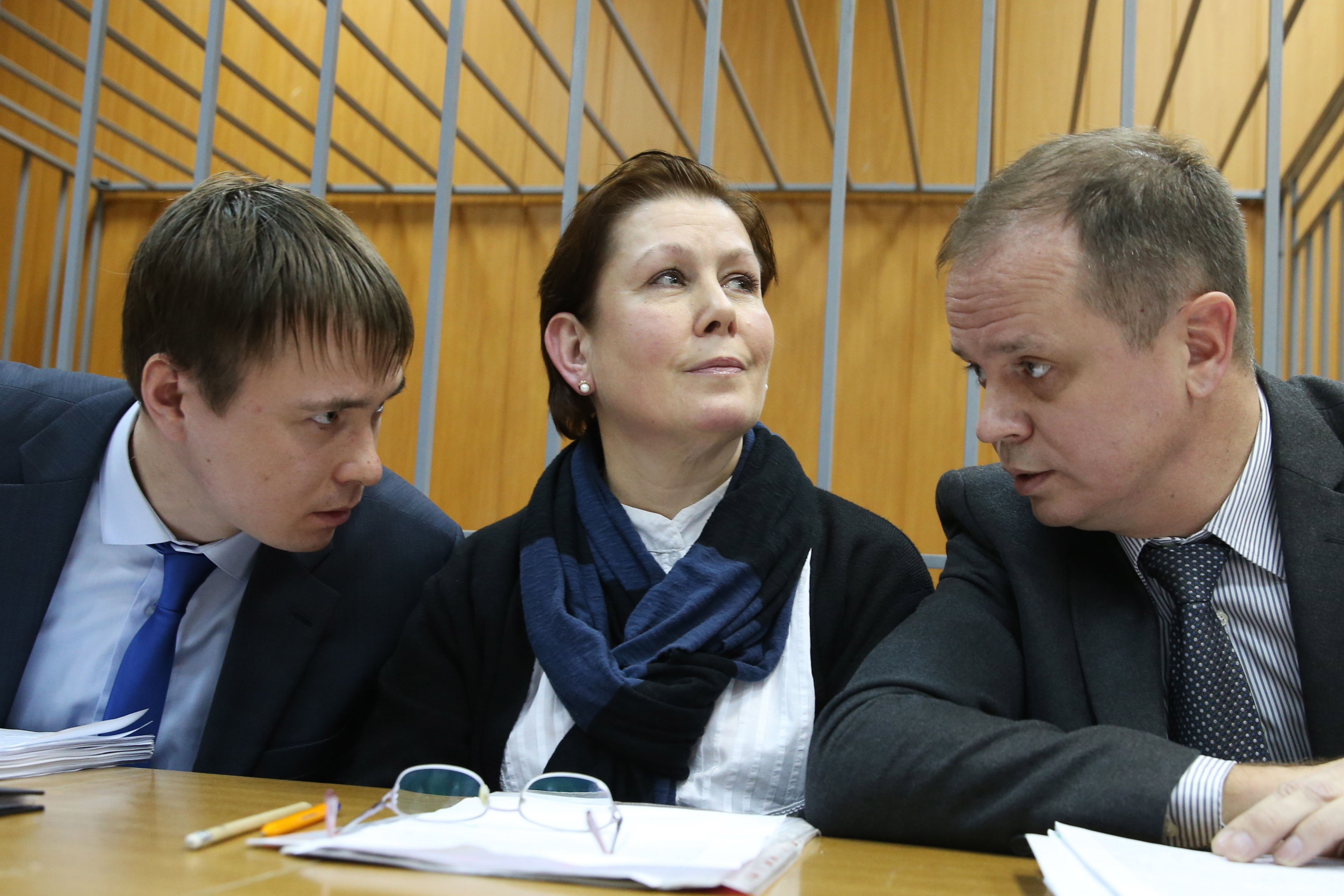
The story about the library is not only a story about the library of Ukrainian literature, it is a story about hundreds of libraries that have problems with the prosecutor's office due to the fact that they have stored or can be stored from this notorious list of extremist materials. There is no such list in any normal country, because it is an absurd mechanism. In principle, he cannot benefit, but he brings a lot of harm. I'm not even sure that he benefits a political regime. But he is undoubtedly very useful for district prosecutors to build reporting, how they are fighting with extremism. It is difficult to evaluate how much this is the readiness of people to speak out publicly. But it seems to me, according to some observations that yes, it suppresses that people of various views and varying degrees of determination feel some pressure. The law enforcement is such that it is completely impossible to understand who will come to the next time. Chaos is created. Если задача государства в идеале при противодействии каким-то радикальным группировкам заключается в том, чтобы провести какую-то черту, красную линию, что вот досюда мы терпим, а дальше нет, все, не терпим, то этой красной черты нет. Никто ее не понимает: ни самые радикалы, ни законопослушные граждане, ее невозможно увидеть.
Один и тот же следователь сидит, один и тот же человек принимает решение по одной и той же фразе, сказанной в схожих обстоятельствах, и там и здесь на митинге, но тут есть состав, а там – нет
Рамиль Ахметгалиев: Эффект и результат, в том числе и для самой власти, сомнителен. Видно, что закон применяется выборочно, когда надо и когда не надо. Очень большой блок дел, которые возбуждаются большей частью для отчетности и необходимости поддержания тех или иных показателей. Есть дела, которые являются делами некоего акта устрашения, выборочного применения. У нас одно из свежих дел – в Ульяновске, Данилы Алферьева , очень интересное. Он на одном из публичных мероприятий процитировал одно высказывание по поводу "ждем только приказ, команды фас" и так далее. И там было имя-отчество Зюганова, что он от него ждет. На самом деле, изначально это высказывание слово в слово, вплоть до запятой, было сказано представителями другой организации, и там упоминался Владимир Владимирович. И в действиях и высказывании того, кто первый это сказал, нет экстремизма, а в действиях этого – есть экстремизм к соцгруппе "чиновники". Один и тот же следователь сидит, один и тот же человек принимает решение по одной и той же фразе, сказанной в схожих обстоятельствах, и там и здесь на митинге, но тут есть состав, а там – нет. Ничего хорошего именно для власти в такой политике по применению этого законодательства нет. По большому счету, в рамках этого законодательства, да и в целом в России на сегодняшний день – всюду какие-то фронты: здесь фронт, там фронт, тут враги, тут внешние враги, тут внутренние враги. Общество пытаются поделить искусственно на своих и чужих, врагов и не врагов, столкнуть между собой. Попытка спровоцировать гражданскую войну, революцию внутри общества. Кто от этого в выигрыше? Сама власть, если она революции не хочет? Да, конечно, есть результат на сегодняшний день, что на некоторых это влияет, влияет довольно-таки сильно, они вынуждены отказываться от каких-то публичных высказываний, десять раз обдумать то или иное слово, может быть, где-то не сказать. Но в долгосрочной перспективе такая политика ни до чего хорошего не доведет.