
Translated material
Three generations of music
Why composers turned out to be philosophers and where to get a new listener
The Russian listener is special, its taste was formed by complex, often conflicting circumstances. Firstly, a large number of music schools and the teaching technique accepted there have raised a persistent feeling of dislike for all classical, among others-the habit of the same music and the ability to understand it. On the other hand, protracted concerts of the symphony orchestra on TV and ballet as a prelude to the tragic event by the mass viewer instilled hostility to large musical forms.
The inviolability of the classics was not so much soothing as it frightened, although it became a common background - three programmatic radio stood in almost every kitchen. Conservative and Philharmonic halls were visited by musicians and an advanced intelligent audience, which did not clap between the parts of the same essay and knew how to scream "BIS".
The inviolability of the classics was not so much soothing as it frightened
But even this enlightened listener, as well as the musicians themselves, remained at the level of the nineteenth century public - simply because the new academic music in Soviet Russia, if it was performed, is exclusively in a narrow professional circle. “The composers played a mass of all kinds of composers,” recalls the artistic director of the Moscow Philharmonic, composer Alexander Tchaikovsky, “and the authorities, of course, was crooked, but it was our professional club.”
Foreign composers of our time were not known not only by ordinary listeners, but also by the musicians themselves. In many educational institutions, before Pores, they teach from textbooks written in Soviet times. “My teacher Nikolai Nikolayevich,” says the composer Iraid Yusupov, “gathered us in his country house and let Nino, Berio, Shtokhausen listen. It was unofficial, and we did not tell anyone that we listened.”
Of course, the main role here was played by Soviet ideology, based on the tastes of the then party members - the notorious “confusion instead of music” about the opera Dmitry Shostakovich (article in the newspaper Pravda of the Thirty -sixth year). The audience itself was quite ready for the perception of the new, evidence of this, the concerts of Sergei Prokofiev in the late twenties, whose success, in fact, convinced him to return to Russia.
We did not tell anyone that we listened
Nevertheless, modern academic music in Soviet Russia existed, however, for the most part in scores in writing. Therefore, in the early 90s, as soon as it became possible, composers of the older generation, such as Edison Denisov, Sofya Gubaidullia, Alfred Schnitka leave to work abroad. Middle -generation composers from the association of modern music are also sent there. Thus, the lack of demand and, accordingly, orders for essays, plus a small number of performers with the right skills, deleted from the Russian posters of almost a century of modern music, including foreign music.
Nevertheless, starting from the 90s, modern music in Russia was performed by the efforts of the studio of new music, formed on the basis of the Moscow Conservatory, and the Moscow ensemble of modern music, the collective of which performed a lot in the regions. However, the new listener appeared only when the works of modern composers went beyond the threshold of academic halls. This was many contributed to the unification of the independent composers of Soma ("Material Resistance"), which appeared in 2005, which included Dmitry Kurlandsky, Sergey Nevsky, Alexei Syumak, Anton Safronov and other Russian authors.
It is curious that modern composers compose not only the relevant, consonant with the current life of the work, but remain almost the only philosophers in the art market, thinking about the eternal.
Composers of three generations talk about music and signs of time - Sergey Slonimsky , Yuri Kasparov and Alexander Khubeev .
Beatya boy
Sergey Slonimsky
If we talk about the freedom of creativity, then it was neither under the Soviet regime, nor now, sorry, for frankness. Because if you ask for any means for art, then you need to give a rollback to the official on whom it depends. And as in Soviet times, the authors of the symphonies were set as an example, especially patriotic, songs, so now the authors of quartets and sonata are put as an example of pop music or commercial musicals, an easy -to -and -firing stage, etc. In the sense of access to the halls. I personally do not believe the ratings, but the whole policy of the first channels of television is based on them. Therefore, nothing serious from music is allowed to the mass viewer, with rare exceptions, if it is a conductor or soloist particularly close to the first persons of the state.
I must say that in Soviet times all the time they were looking for anti -Soviet in the texts that we used. I remember how a very sweet man is the director of a music publishing house, Lieutenant Colonel, said: “Here you write -“ The twentieth century ... is still homeless, // Even worse than the life of a haze // (even more blacker and huge // Shadow of Luciferov’s wing). ”But the 20th century is the century of the Great October Revolution.” I say: "But this is not me, but Alexander Blok." “No,” says, “Blok is a great Russian poet. And here you write -“ How often do you cry -you and I -// Above your miserable life! // Oh, if you knew, friends, // Cold and the darkness of the coming days! ” -what, he is about the October Revolution? This is not he!” Not only in the texts, but also in music, they searched for the undermining of the foundations. If a quarter of the tone, if they play on strings, if the artists of the quartet go during performance, if there is no traditional tonality, there is no traditional form, etc., etc., it means this is no longer like classical Russian music, which is supposedly based on socialist realism.
In the newspaper "Soviet Culture" I was a whipping boy many times. Because I have not yet had any posts, some power that scares journalists. But now in the newspaper Kommersant, I’m exactly the same boy for whipping, only on the other side. They write about the same music: “This is typical Soviet music, old Soviet music,” absolutely ignoring that there are quarters of tones, that they play on strings, that Petersburg is surrealized in the composition of “Petersburg visions” that the suffering of the Jewish people in ancient Judea or the tragic state in Russia is poetized. Not a word about it! According to the newspaper "Kommersant" - typical Soviet music with musty melodies.
Music as a science
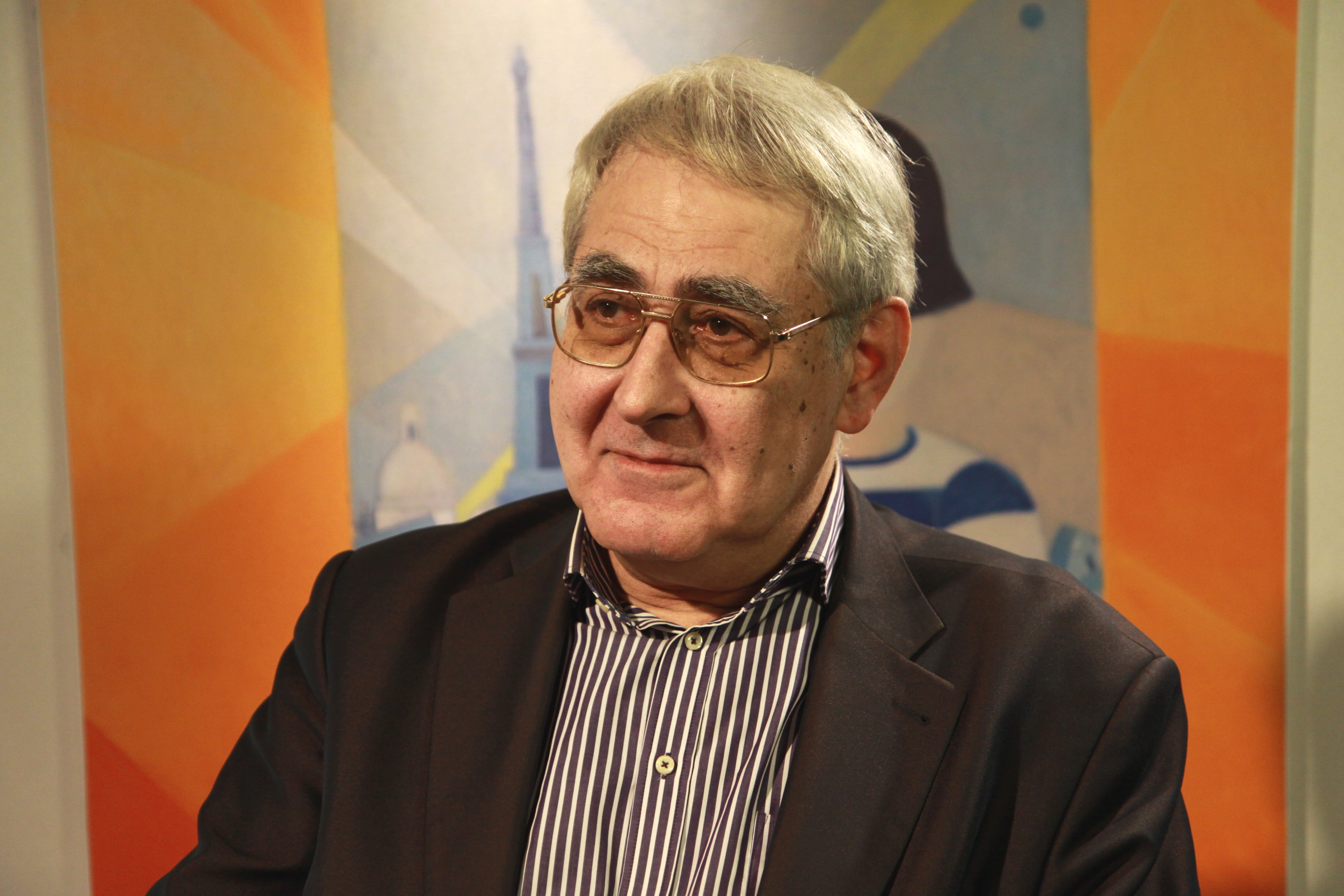
Yuri Kasparov
With music as with science - there is a fundamental science and applied. The fundamental makes discoveries, opens something new. And then other specialists come and these discoveries adapt to our lives. The same in art. There is an academic art and applied art. Both that and the other are equally important for people. Those who are engaged in academic art, in particular, academic modern music, make further discovery. And everything that happens in the field of applied art is based on what was done in the field of academic art. When any now famous composer, say, Baroque - Bach, or Beethoven, Mozart created their masterpieces, it cannot be said that they were accepted with enthusiasm.
Mozart lived at the same time with Salieri, but now Salieri almost do not play. Sometimes you hear his works on the Orpheus radio, for example, and terribly amazed that Salieri was much more famous than Mozart. Mozart Premiere Figaro, for example, was modest. There was no triumph, there was no close! And Salieri wrote the opera "Tarar" and it was just a splash!
There are composers who do not matter - people like their music or do not like, they talk to God. But most composers want them to understand that their music sounds in philharmonic, at festivals. For example, Luciano Berio, the famous Italian composer, he was on a salary, that is, his life was quite easy and seemingly problems with money. But he wanted to convey to the listener, not only Italian, but world, modern music. Therefore, he puts a thrombonist in a clown's costume. And he with a stupid face comes out with this thrombone and begins to run according to some kind of structure, smile at the public. And I like it. It is necessary to find new ones or use old forms in order to start a communicative function with the public. Necessarily!
Freedom from institutions
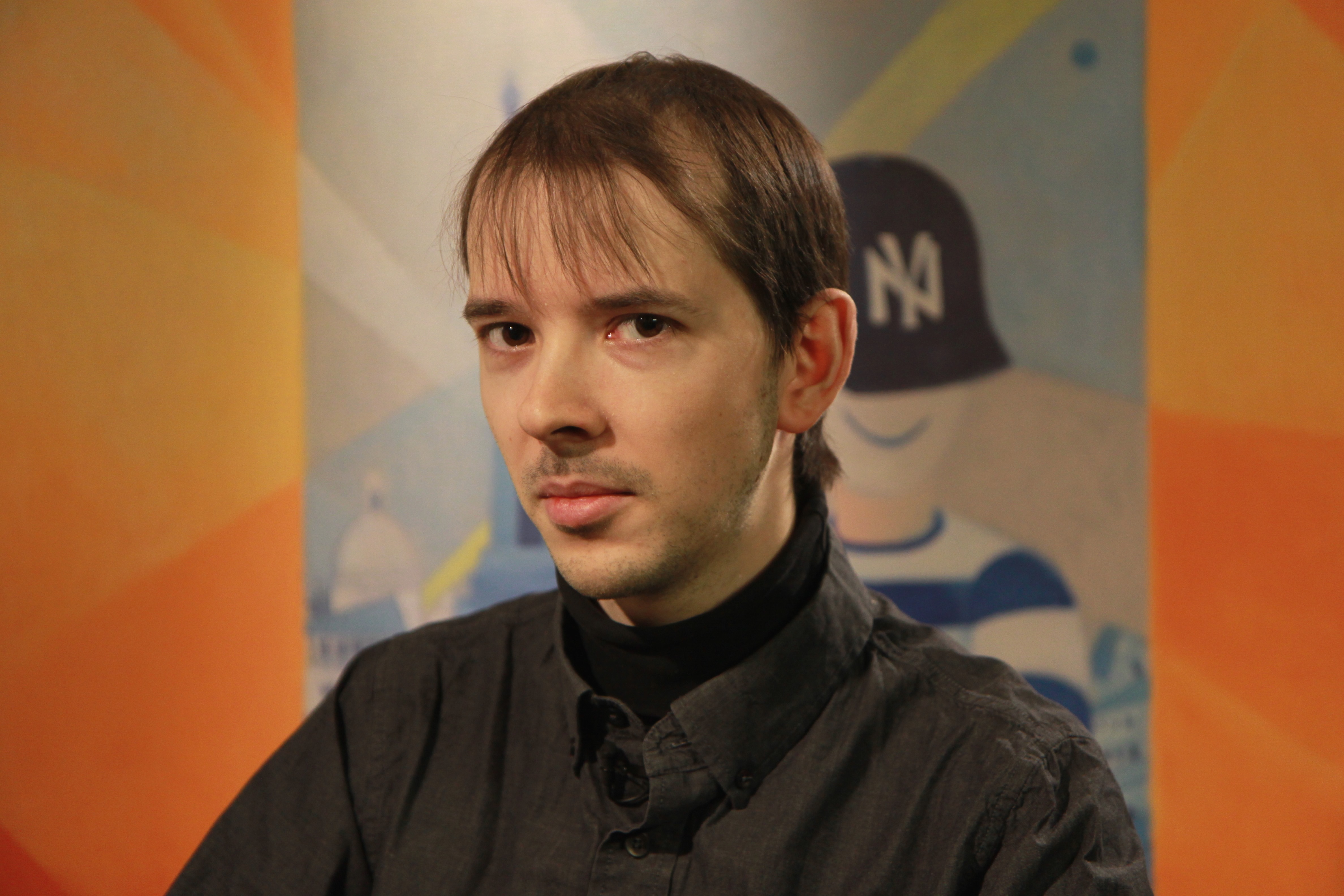
Alexander Khubeev
One way or another, the socio-economic situation that develops around the author has an impact on creativity, because the music passes through the prism of the author’s worldview. It is difficult for me to say now what kind of peace was before me, since I was born in 1986. But I think that the keyword for the musicians of my generation is “freedom”, which young authors have now. We can do absolutely everything that we want, what we consider important.
True, in Russia there is no order system that is abroad. Various funds work there, budget financing, for example, in France, 750 thousand euros are allocated every year only from the country's budget, not to mention private orders. And all this information is available, any composer can apply. There is nothing like this in Russia, and many talented authors from my generation leave abroad not only to continue their studies, but also to work. Just because there are very few material, institutional capabilities in our country in order to continue this business.
If we talk about ideas, then, for example, at some point I was interested in the topic of anti-utopia, which, in my opinion, is quite vital. Not that it was implemented somewhere, but this is a problem that bothered many playwrights, directors during the twentieth century. A lot of works were written, but in music I did not find examples of some realization of this topic. Therefore, I decided to turn to this topic. And thus used it. On the other hand, our work is to some extent connected with social and political problems. Yes, music is the most abstract of the arts. Nevertheless, the very images and ideas can find the embodiment in music too.
I must say that the lack of institutions and pressure from the older generations of composers positively affects creativity. If we talk about the educational program, then even in the early 2000s there were very few modern music. And there was practically no foreign modern academic music, simply because most of the textbooks and materials have been used since Soviet times, and then this music was simply not recognized. My teacher in Perm in a music college showed only what was in his personal materials. And I had to look for information on the Internet, which then only appeared.
But the music is changing over time. If we turn to history, the farther, the more the authors begin to work in detail with the party, indicating more and more details. Say, in Bach’s music there was practically no dynamics. Then more and more elements began to be added, and this led to the fact that now, probably, a global trend has arisen, when the authors imagine the process of performing their music completely - how it will look in space, how it will sound, develop. And now the composer is not only the author of music, but also in a sense, the director, because it represents its visual part. There is music, maybe not only heard, but also seen-in the form of a performance, with the involvement of the video, in collaboration with the video artist.