
Translated material
New intellectual correctness
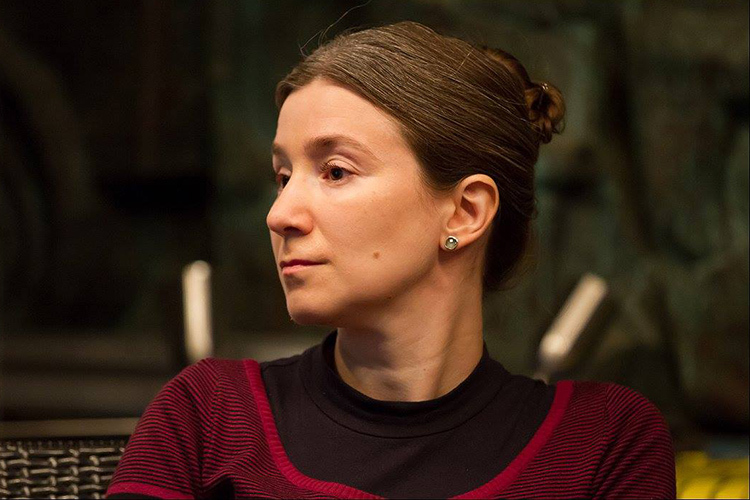
The discussion of intellectuals, provoked by an interview with political scientist, Ekaterina Shulman, Rosbalt, unexpectedly brought Russian academic science to a new level of publicity. As economist Konstantin Sonin formulated on his Facebook,
“Hello, the new academic world. Who does not understand-by the link below-a leading (with a huge margin), a specialist in political science in the country [Grigory Golosov] criticizes one of the most interesting commentators (and also a scientist-political scientist) [Ekaterina Shulman]. Someone sees this quarrel and negativity-and I see a full-fledged new level. Finally, in Russian political science, public discussions can be conducted in which opponents are seriously based on data and modern methods ... "
In the Russian public sphere, it really does not happen that researchers and experts discuss the use of scientific terms and its influence on the understanding of everyday life. But if the polemic about hybrid modes and anocracy is fresh, fascinating and probably productive, then in form it, unfortunately, is a marvelous old world.
The response to the interview with Schulman is strikingly well fits into the concept of “ Mensplaining ”. Dear political scientist, the author of serious analytical texts, expresses his opinion-and there are more experienced, more knowledgeable and more understanding political scientists-male and begin to explain violently that the political scientist is lying and that everything is not at all so (many of the opinions voiced during the discussion are collected on the Radio Liberty website ).
The term "MENSPLININING" consists of English words Man and Explaining and sometimes translated into Russian as "male explanations." Although this concept is only a few years, it has already managed to change its meaning. Initially, muzzleing was meant a condescending-patronizing tone and consciously simplified formulations used by a man in a conversation with a woman. This value of the term “Menspleying” was often criticized as a simplified way of counterargument based on the gender of the interlocutors - they say, this is all political correctness prohibiting the meaningful to argue with the representative of the discriminated social group. Therefore, gradually the gender component of the concept has faded into the background - it is now believed that men and women can be “menplayers”. It is believed that this makes it clear the term, makes it useless. In my opinion, such a meaning is revealed by the patriarchal ingredient, which in fact all the cultural layers are impregnated.
Here is how Grigory Golosov begins to comment on the interview of a colleague-political scientist: “And once again about the work of Catherine Shulman ...” The word “creativity” in this context obviously belittles the work of Schulman, forcing not only her opinion on a specific topic, but also, on the whole, her wealth as an expert and a scientist. At the same time, this stains all subsequent, serious and reasonable, Voosov’s arguments in the shade of personal hostility to the virtual interlocutor.
Political scientist Alexander Morozov, who also actively argued with Schulman on Facebook, ends his post with the following phrase: “In short, of course, Shulman is a pretty and optimistic woman, but here it is clearly visible that all this is extremely incorrect“ political science ”, which is bad precisely what is used by the academic dictionary for completely disorienting goals.” It turns out that Ekaterina Shulman is a “pretty and optimistic woman” who understands almost nothing in political science.
There are enough examples of such public discussions: take at least a recent interview with Andrei Konchalovsky Katerina Gordeeva, where the director communicates with the journalist: “And you take your head in your hands and think about twenty years - and you will also change. Thinking people often change their point of view ... ”Here, an eijism, for a thinking person, is also mixed with muzzleing.
In the era of post -truths, even the most reliable knowledge and reasonable opinions can be questioned, and therefore, when protecting its position, there is a great temptation to switch to personality - such a way is often easier than a balanced and thoughtful explanation, a conversation with an interlocutor on an equal footing. The problem is that such a road will not lead to the formation of a public discussion, nor to the emergence of a “new academic world”.
You can, of course, dismiss this thought, hanging the label of excessive leftist on it. But in a situation where the facts are constantly called into question, the form in which we are convinced of their existence becomes as important as the content of the argument. When scientists argue, trying to find new knowledge during the discussion, formulate an previously unknown fact, the form of their conversation is becoming primary. This is not political correctness, but a new intellectual correctness, mandatory for scholars. And wives.