
Translated material
Syrian patient
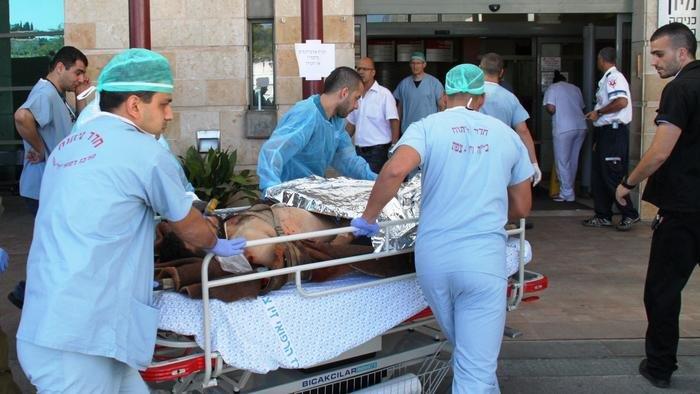
Israeli doctors have already cured more than 800 Syrians who suffered in a civil war that lasted since 2011. Some of the "Syrian patients" go to Israeli hospitals unconscious. Realizing where they found themselves, these people sometimes demand to send them back immediately, but more often go home with gratitude for their help and with the changed idea of the neighbors, whom they considered their whole life their sworn enemies.
"How could he condemn him for simply expressing his opinion? Although many in Israel think so in Israel, this is true." Dr. Salman Zarka , director of the Ziv Hospital located in the north of Israel, listens in surprise from me the history of the trial over the Russian blogger Anton Nosik . In October 2016, the Presnensky court of Moscow fined a nose by half a million rubles (later a fine was reduced to 300 thousand) for a post in a LiveJournal called "Wipe Syria from the Face of the Earth." In that record, the Nosik, a citizen of Russia and Israel, expressed his readiness to say thanks to anyone who will translate the name of the post to life: “Over the past 70 years, the Middle East has not seen anything from Syria except aggression, wars, cannibalism, devastation and grief. Until 2011, they have exported all this horror to neighboring states, since 2011 they themselves have been stuck in them, and it’s not a sorry for them.” Dr. Zarka categorically disagree with this position of the nose and other Israelis, who believe that Syria needs to apply the rule “the worse than us, the better for us”: under his leadership in “Ziv”, the program for the Israeli government for the provision of medical care to the Syrians living in the territories adjacent to Israel has been operating.
After the War of the Day of 1973, the border of Israel and Syria (from the UN point of view, this is only a temporary "ceasefire") passes through Golan heights. Compared to the northern border of the Jewish state, which more than once became a place of skirmishes and full -scale battles of the Israeli army and militants of the Hezbollah group, in the Golan in recent decades it was relatively calm. With the outbreak of civil war in Syria, this calm was violated - in the immediate vicinity of the border, the battles of the army of Bashar al -Assad and the armed Syrian opposition began. In 2013, two years after the outbreak of war, Assad was forced to withdraw the main part of his army units from the Golan heights in order to transfer them to Damascus and other points of the country, maintaining control over which was more important for the Syrian president.
Now, after 4 years, almost the entire Syrian part of the Golansk heights is controlled by the anti-Asadian opposition and the Jabhat al-Nusra detachments, which is often called the "Syrian branch of al-Qaeda." A small territory in the south of Golan, near the border with Jordan, is occupied by the grouping of the "Brigade of the Martyr Yarmuk" , who swore allegiance to the "Islamic state". Mines, released by the Assad by the rebels, are constantly flying to the Israeli side, and the Israeli military periodically undergo shelling from the territory controlled by ISIS. Israel reacts to this with point response blows: only in 2016 he had to attack the positions of Assad and ISIS troops more than 10 times (not counting the air strikes in the Hezbollah infrastructure and the Syrian army in other areas of Syria).
Map of Syria's territory with various forces, January 2017. Territories near the Golan heights, controlled by the rebels and the "Jabhat al-Nusra" are marked yellow and are located in the lower left corner of the map. A small gray triangle between the cities of Kuneitra and Daraa - seduced by the ISIS "Brigade of the Martyrs Yarmuk":
Updated Isw Map: Control of Terrain in #SYRIA . The Full Situation Report, Highlighting Key Development, Will Be Released Soon ... Pic.twitter.com/3qn3xag8i5
- ISW (@thedyofwar) January 5, 2017
But this is not the only reaction of Israel to the Civil War in Syria. A few tens of kilometers from the border is the city of Tsfat , and in it the largest hospital in the north of the country, founded back in 1910, when these lands were part of the Ottoman Empire. Over the years of the Civil War, more than 800 citizens of Syria were treated here in Syria, both injured as a result of hostilities and those who simply remained in their own country without the opportunity to receive medical care. Dr. Zarka has been the post of director of the hospital for the past two years. He came to this work from the post of head of the medical service of the Israeli Defense Army. Both in the medical service of the army and in the Ziv hospital, Zark became the first Druze ever appointed to such a high post. Its belonging to this ethno -confessional group , whose representatives are scattered throughout the Middle East, are especially interesting in the context of the story of the treatment of wounded Syrians in Israel. Many Druze in the north of Israel oppose such a practice, arguing that fighters of the Syrian opposition do not stop attacking their brothers living in Syria. The peak of this discontent was the Druzov attack in June 2015 on an army ambulance, which brought the wounded Syrians from the border to the Ziv hospital. The crowd threw the car with stones, pulled the wounded out of it and linked them.
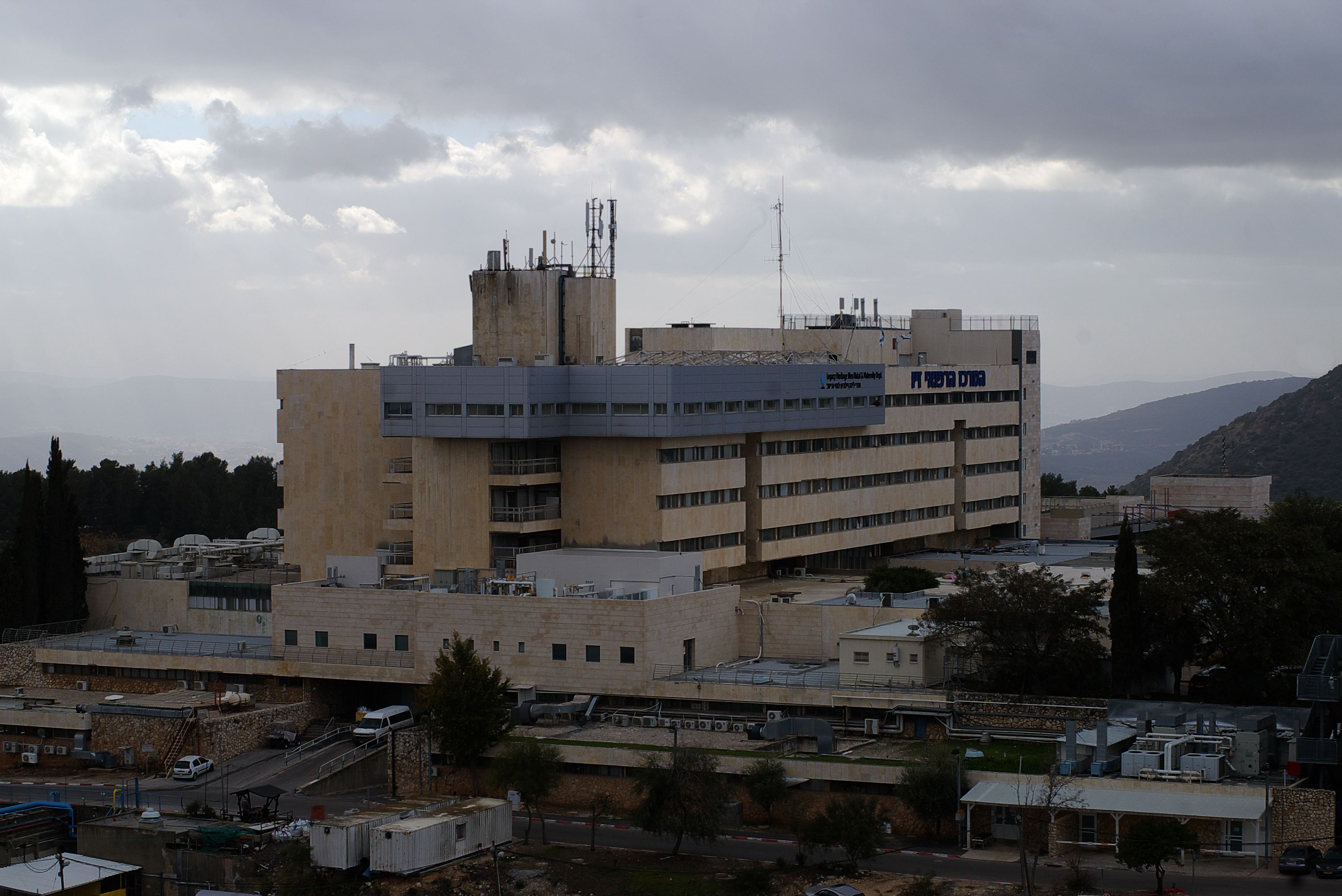
Despite all these vicissitudes, Salman Zarka continues to care for the preservation of the Syrians treatment program in Israel, records video features with a call to philanthropists to sacrifice funds for its financing (the state covers only 2/3 of expenses) and finds the time for meetings with journalists in its dense graphics.
- Dr. Zarka, how did it all start? You were already the director of Ziva when the first patients from Syria were brought here, or not yet?
- It began in 2013. Then I was still a colonel of the Israeli army, the head of her medical service. I have been working in Ziva for the past two years. But I began to engage in humanitarian operations even before I came here.
- Whose idea it was - to treat Syria citizens in Israel?
- This happened suddenly, in mid -February 2013. Seven Syrians with injuries of varying severity, from average to heavy, to Shabbat, on Saturday morning, approached our border and asked one of our soldiers about medical care. This soldier decided to help them and called them to the place of military doctors. He was provided with first aid, after which they were evacuated to Ziv. Here they were operated on, hospitalized for about 10 days, and after that all seven were returned to Syria. In fact, the military and doctors in Ziva simply saved their life. After that, we decided to assess the situation and decide what we will do with the next wave of the wounded. Should we close the border for them? Or should they help them? In Israel, serious disputes unfolded on this subject. Most of the Israelis consider the Syrians sworn enemies, especially those who remember the war day. And since they are enemies, then you need to close the border and just wait for the situation to improve on the other side. But there were other arguments. For example, religious, because all religions prescribe to save the life of the one who needs it. The Jewish people, in addition to this, is still very strong in the memory of the Holocaust. After what happened to themselves, it is unacceptable for the Jews to stay away, just stand and watch how someone stands on their border, bleeds and dies. Another argument, perhaps, was my profession - the profession of a doctor. We give the oath of Hippocrates, the oath of Rambam (Jewish philosopher and doctor of the 12th century), who prescribe to save life to people. So I am very glad that in these disputes it was decided to continue to provide medical assistance and help the Syrians who come to our border. We do not go to Syrian territory, but those wounded and sick who come to our border, we provide the necessary medical care.
- How do they get to the border? Who are these people?
- The situation in Syria is changing every day. What is happening on the other side of the border is a real disaster. I do not think that we can confidently talk about who is “good” there and who is “bad”. These are just people who were left without medical care in their country, because 70% of doctors and medical personnel fled from Syria since the start of the war. They have to overcome all the borderline obstacles from the Syrian side, then they approach the border, and then our soldiers, a paramedic team and a military doctor come to this place. They produce triage, medical sorting, and decide who, after providing first aid, can be sent back, and who needs additional treatment. The wounded are evacuated to the Army ambulances in hospitals in the north of Israel, mainly to the Ziv hospital.
- As far as I know, is there even a field hospital, deployed by Israel on the border with Syria?
- I used to. I was lucky to participate in the humanitarian mission to deploy it. The first wave of the wounded taught us that those who were injured in medium and high severity may not survive the transportation to the hospital. If you have patients with severe bleeding or injuries of the abdominal cavity, they need to be operated immediately. Since the main goal of our humanitarian mission is to save lives, and this task does not tolerate delay, we decided to deploy a field hospital right on the border, with operating rooms and intensive care . About a year later, we realized that people who come to the Israeli border and turn for help for the most part do not need urgent operations. Either they somehow managed to get emergency assistance in Syria, or, unfortunately, they could not get to the border, because they simply did not survive for the time that is required for this. Mostly people began to come to the border who needed complex, but not emergency treatment, for example, with complex bone fractures. We could calmly have time to deliver such patients to Ziv. So two and a half years ago we decided to close the mobile hospital on the border.
- Have you had to deal with injuries received as a result of air raids or mortar shelling?
- We have gained extensive experience in treating injuries and wounds received in the war in Ziva, because wounded Israeli soldiers were brought here, especially during the Second Lebanese War. But those Syrians who get to us have much more complex injuries. Perhaps due to the fact that they take a lot of time to get here. We have to deal with much more complex cases, lesions of several organs, complex orthopedic problems. The experience that we receive is not in vain: last year we arranged a seminar for doctors from around the world, dedicated to the treatment of injuries and injuries received during the fighting.
- Who finances this program? Israeli government?
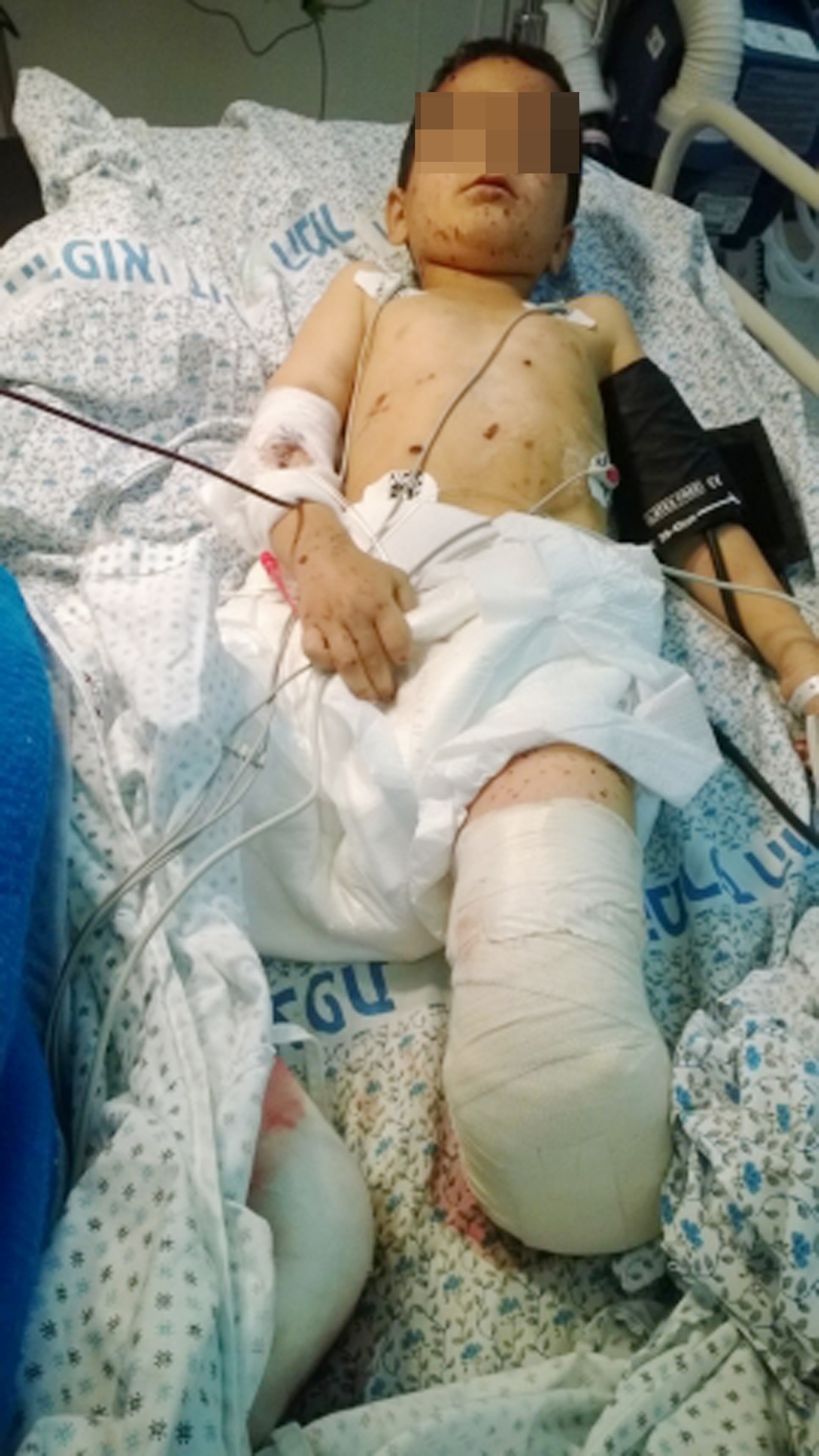
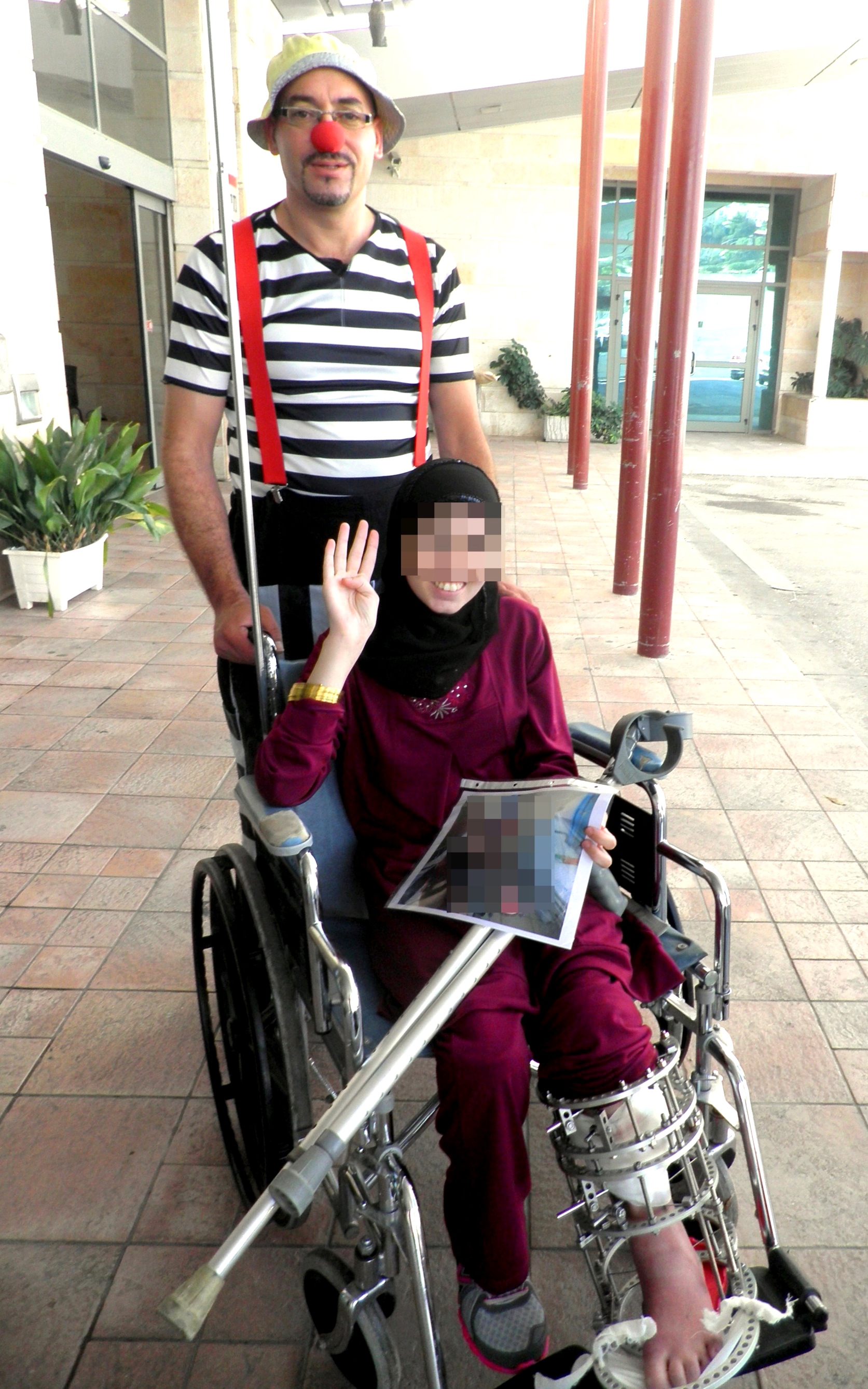
- For the most part, yes. This was not our decision - to start treating the Syrians, it was a decision of the government. But several points should be noted. Firstly, we decided to provide medical assistance to Syria citizens according to the same standards that we apply to the Israelis. When we are talking about the standards of humanitarian medical care, it mainly refers to the salvation of life, but not an improvement in its quality. Let me explain what it means. You have a patient who urgently needs partial leg amputation. If you want to save his life, you amputated it, this is only one operation. After the operation, you will hospitalize it for two days, after which he returns to Syria - alive, but, unfortunately, without a leg. This meets the standards of humanitarian medical care. But this is not a standard in Israeli medicine. Our standard is to try to save this leg. To save it, you need a lot of operations, about ten, then you need to hospitalize the patient for 2-3 months, conduct a rehabilitation course, install special devices that will support the bone - instead of just dripping it. And then he will return to Syria not just alive, but on his own legs!
We decided this: we have only one treatment standard - it doesn’t matter, for the Syrians or for Israelis
Here, in Israel, in Ziv, we decided this: we have only one treatment standard - it doesn’t matter, for the Syrians or for the Israelis. At the same time, the treatment of Israelis costs us cheaper than the treatment of Syrians. Israelis most often accompany members of their families to the hospital. The Israeli citizen lies in the hospital for several days, after which it can be written out: the rest of the necessary care will be provided to him by relatives and friends. All medicines for this will be paid as part of state insurance, after 2-3 months the patient only needs to come to the hospital again, to the outpatient department so that we can see and check his condition. The Syrians come to us alone, without relatives, and in order not only to save their lives, but to return their previous quality of life, we are forced to hospitalize them for a long time. It is much more expensive. Here, in Ziv, I have a special social worker. His name is Faris, he speaks in Arabic, and his task is to support these people while they are here. Maybe one of them is lonely, and someone is afraid of the fact that he had to come to Israel, to the country that they considered their enemy all his life. The government pays me for the treatment of Syrians as much as for the treatment of Israelis. We cover all additional expenses due to charitable contributions from philanthropists and just good people who help this humanitarian project continue.
- Do you think that the Israeli government will continue to finance this project further?
- I believe that it will continue. I’m not sure that they will allocate more funds, so we will continue to use the support of good people.
- I would like to return to the question of who these people who come to the border and seek medical help? Who is more among them: women, children, men, old people? As you yourself said, the situation in Syria is constantly changing, the fighting in the territories bordering Israel, then they calming down, then flare up. Does this affect the contingent of those who turn to you for help?
- When it all began, there were mainly wounded - from shells, bullets, collapsed buildings and so on. Over the years, this situation has changed. As I said, the Syrian healthcare system collapsed, leaving many people without the opportunity to receive medical care, without medicines, without medical personnel. Therefore, people began to come to the border for ordinary medical help. We already had 19 pregnant women from Syria who gave birth to their children in Ziva. Children come to the border with Israel who need medicines for themselves and their sick parents. A few months ago, we treated a Syrian girl with diabetes who came there because she needed insulin. We examined her, she, together with my mother, lay in our hospital for several months, until we sent her back with a half -year reserve of medicine. A half -month supply of insulin does not fit into the hospital’s budget, for this, donations are needed. But we simply have no choice, we cannot help but help in such a situation.
-And from whom are these donations mainly, who are these “good people”, about whom you said: Arabs-Muslim, Arabs-Christian, Jews, non-religious citizens?
In recent weeks, perhaps due to terrible photos and videos from Aleppo, more and more people call us and offer the hospital their help
- Donations come from all of them. In recent weeks, perhaps due to terrible photos and videos from Aleppo, more and more people from Israel, representatives of various faiths and beliefs, call us and offer the hospital their help so that we can treat Syrians. A few weeks ago I returned from the United States, and many people there, especially those living in Miami Israelis, support and help the Ziv hospital support this project.
- What do you feel when you are forced to send the Syrians who have passed the treatment, especially children, back to Syria, where the war continues?
-Firstly, none of them want to stay in Israel. At least I have not met such. All of them want to return to Syria, to their families. Of course, we are very concerned about what will happen to them there, whether they can survive. Therefore, we try to give them medicine, the necessary clothes, sometimes even food. But we are no less concerned about their safety if someone finds out that they were treated in Israel. Therefore, we give them medicines without packaging, and prescribe recipes in English. On all the things that they take with them, there should not be a single word in Hebrew, so as not to expose them to risk. On the other hand, when we see how people get better, get to their feet after difficult injuries, my doctors and I feel satisfaction from the fact that we were able to help them.
– Сами эти люди – они рассказывают, где и как получили свои ранения или травмы? Если это молодые мужчины, признаются ли они, что воевали? И важно ли это для вас?
На вещах, которые они забирают с собой, не должно быть ни единого слова на иврите
– Для нас как для медиков важно понять, как было получено ранение, чтобы поставить правильный диагноз, понять, на что обратить особенное внимание и назначить нужное лечение. Если у пациента кровотечение из брюшной полости, нам надо знать, в результате чего оно возникло. Лечение будет разным, если это проникающая рана или огнестрельное ранение, или если это ранение получено при взрыве. Если это взрыв, например, надо обратить особое внимание на другие органы, которые тоже могли при нем пострадать. Это единственная причина, по которой мы задаем вопрос: "Что случилось?" Нас не интересует, в каком районе Сирии это случилось, к какой из воюющих группировок принадлежит пациент, какую религию он исповедует. Важно понимать, что порой мы даже не можем быть уверены, как зовут пациента. Мы спросим его, и он может ответить, что хочет. Мы же не проверяем у них паспорта.
– То есть для вас не имеет значения, если человек, попав к вам, сам скажет: "Меня зовут так-то, я воевал, к примеру, за "Свободную сирийскую армию" (одна из группировок умеренной сирийской оппозиции. – РС)? Я слышал здесь, в Израиле, упреки в ваш адрес, что вы якобы даже лечите бойцов ИГИЛ.
– Я как директор больницы, или в бытность главой медицинской службы армии, не занимаюсь и не занимался этими вопросами. Но я верю, что Армия обороны Израиля в состоянии понять, принадлежит ли человек к той или иной группировке. Я их не спрашиваю, а если они сами мне рассказывают, не делаю на этот счет никаких записей в медицинских документах. Это не имеет отношения к способу лечения. Если к моему персоналу, которым я очень горжусь, в приемное отделение попадает пациент, он остается для них в первую очередь пациентом.
– Сколько всего сирийцев прошло через "Зив" за время, что действует эта программа? Сколько их находится здесь сейчас, когда мы с вами разговариваем?
– Всего более 800 человек. Каждый день – от 12 до 15. Эта цифра постоянно меняется.
– Их кто-то охраняет?
- Yes. Их охраняет военная полиция, это не больничный персонал. Это и для их безопасности, и для того, чтобы кто-то из них вдруг не отправился в путешествие по Израилю. Они здесь только для того, чтобы получить лечение.
– Вторая Ливанская война, о которой вы говорили, была уже почти 10 лет назад. Вы говорили про накопленный во время нее опыт лечения ранений, но с тех пор в медицину пришло новое поколение врачей, у которого этого опыта нет. Можете ли вы сказать, что лечение сирийцев, пострадавших во время боевых действий, полезно для ваших врачей и с этой точки зрения, с точки зрения приобретения нового опыта на случай новой войны, участником которой может оказаться сам Израиль?
– Если бы я мог выбирать для своих врачей, с какими травмами и ранениями им работать, я бы не выбрал для них такой доли. Травмы и ранения, с которыми к нам поступают пациенты из Сирии, действительно очень и очень сложные. Но поскольку у нас действительно появился такой опыт, к нам приезжают перенимать его врачи со всего мира. В нашем ортопедическом отделении часто гостят врачи из США, Дании и других стран, которые учатся у нас лечить сложнейшие случаи полученных на войне ранений.
– Кто из сирийских пациентов, чья история запомнилась вам больше всего за то время, что вы руководите этой больницей?
– Таких историй много. Но я расскажу одну. Это история женщины, которая живет в Сирии примерно в 6 километрах от нашей границы. Однажды ночью по ее дому выстрелил танк. Две комнаты были разрушены полностью, двое ее детей были серьезно ранены, но ей удалось вытащить их из-под обломков. Жители ее деревни сказали ей идти на запад, в сторону израильской границы, потому что там ей и детям окажут помощь, после чего она сможет вернуться со своими детьми домой. Они приехали сюда, мы вылечили ее и детей, фактически спасли их от неминуемой гибели. Перед тем как отправиться домой, она настояла, чтобы я и мои врачи приняли ее приглашение однажды приехать к ней в деревню, чтобы мы все могли отпраздновать это счастливое спасение. Я верю, что однажды мир обязательно придет на эту землю и я смогу принять ее приглашение.