
Translated material
"There is everywhere, in every line, this Kolyma cold"
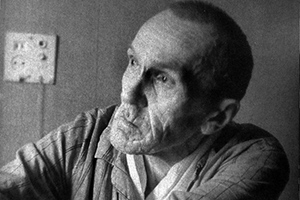
The plots associated with the first editions of the Kolyma Stories are a spot of shame on the Russian cultural layer.
The first book of Shalamov’s prose saw the light in Cologne in German in 1967. She was followed by collections for Afrikans in Cape Town and French in Paris. In 1973, Kolyma Stories were published in Dutch in Brussels. In 1975-again in German in Munich. A year later, they are published, and then reprinted in Rome in Italian. Then it follows several publications in translations into French in Paris and on English in New York. During the life of Shalamov abroad, thirteen books of his prose in six languages of the West are published - and only one in Russian. But who compiled and published this Russian collection? It was his Polish Jew Mikhail Geller, and released the Polish emigrant OPI publishing house in London.
The first book of Kolyma Stories was published in the USSR in 1989. By that time, the light of forty collections of Shalamovskoy prose in ten languages had seen abroad, four of them in Russian-two reprints of the London volume and the book “The Resurrection of Littleness”, these are the latter, finally, in the Russian emigrant publishing house Ymca-Press, where Shalamov handed over the manuscript of Kolyma Stories back in 1968. The manuscripts perished without a trace, and the recipient did everything so that this incident was completely forgotten. The Geller London collection was based on the Gulleu Pole, who was transferred by the novel by Roman, Andrzei Stypulkovo list of Kolyma Stories, which Shalamov sent to America back in 1966. Where is this manuscript or its copy? The analysis of the London volume shows that in the hands of Geller there were at least three full collections of the KR in the author’s version; So they entered the book. Therefore, the Guly had at least three books of Kolyma Stories - the cycle of the same name and collections “Artist of the Shovel” and “Left Bank”. All this can be reconstructed; It is remarkable, however, that the manuscripts themselves, like the whole history of the first editions of Kolyma Stories in Russian, in which they are written and for the carriers of which they were primarily intended, are not interested in anyone. They are probably not interested in the reason that for everyone who should be interested, this is the history of their shame, for the history of culture is part of it.
Two foreign Russian books provided the main prosaic texts of Shalamov at the disposal of translators into English, French, Polish, Swedish, Hungarian, Serb -School. The West recognized Shalamov not from the publications of Irina Sirotinskaya, he recognized him from the collections compiled by Mikhail Geller. The history of the appearance of the first of them, “Kolyma stories”, is known at least in general terms (I note, shamefully general). The history of the appearance of the second until recently was unknown at all, not counting Geller’s mention of Moscow friends who collected the manuscripts of Shalamov for him.
Who are these Moscow friends?
In the biography of Shalamov and the ordeals of his Kolyma epic of such white spots, which it seems no longer possible to fill. I was lucky. In the note by the poet Vladimir Khokhlev on one of the countless literary sites, I read about the former Muscovite, dissident and also poet Vladimir Ryaboon, who was living in Holland, collecting the Shalamov manuscripts for the book “The Resurrection of Littleness”. The surname Ryabokon did not say anything to me, I remembered her among the names of those few people who looked after Shalamov in the almshouse, well, with this name, an introductory word was signed for a selection of Shalamov’s poems in the newspaper Russian Thought of July 1988. Just in case, I scored Khokhleva asking me to send me the address of Vladimir Ryabokon, he kindly responded, after which I wrote off with the mysterious Amsterdam, and we held a few rich conversations on Skype. It is unnecessary to say that I am very grateful to Vladimir for the responsiveness and solving of the appearance of the second book of Shalamov prose in Russian.
Below is the authorized text of this interview.
Dmitry nothing
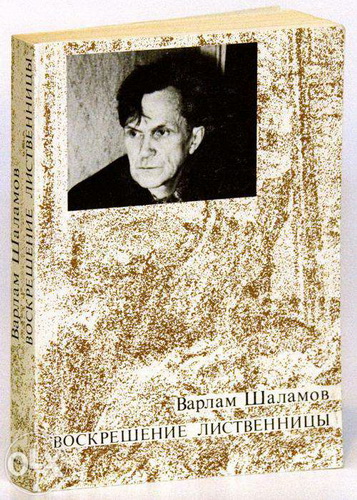
- Hello, Vladimir. You know, I was very surprised to hear from you in the previous conversation that Shalamov’s collection “The Resurrection of Language”, released in 1985 in Paris, was compiled by you. I was sure that his compiler was Mikhail Geller. There is his preface, but your name is not mentioned.
- I am completely not offended by Mikhail Yakovlevich, I have no complaints about him. This is a crystal pure soul person who helped dissidents a lot, the victim himself. Thank God that he had ties with the “Imka Press” through Nikita Struve and all this was published. Well, all the more huts. There was no need to persuade anyone, everyone understood that this should be done. No, no complaints. Moreover, any mention-then, before Gorbachev’s perestroika, the names of people who participated in the creation, compilation of the book of Varlam Tikhonovich would inevitably entail some repression from the KGB. This, in my opinion, is obvious.
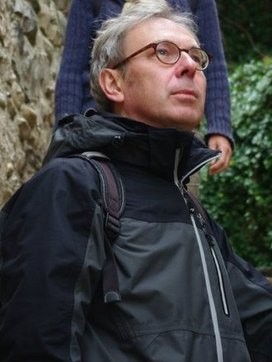 Vladimir Ryabokon
- Yes, you are right, of course.
- I remember that it was even discussed. He asked: do you want your name to stand there? I said: no, please, do not put my name or those who help me. Let it be such an nameless work.
- Please tell us about the nursing home. How did you get there? How did you know that Shalamov is there?
-I learned this from Lena Zakharova-Khinkis shortly after the funeral of Nadezhda Yakovlevna Mandelstam, where, in fact, we met. She told me that her father, the famous translator Viktor Hinkis, visited the nursing home, which contains Shalamov, and saw what nightmarish conditions they were. Then the initiative passed to us. It was the eighty -first year. We then met with Lena, it seems that it was the Tushinskaya metro, we got on the bus towards the planner, where this boarding school was located. Alas, I forgot many details, of course.
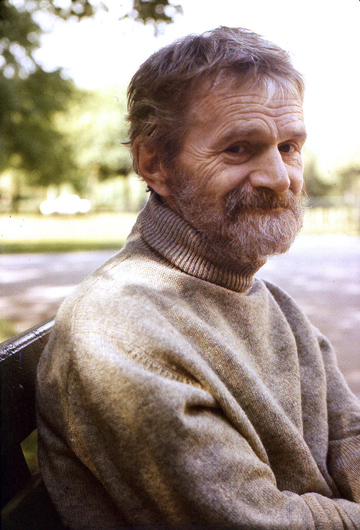 Alexander Morozov, Leningrad, 1989
- Do you not remember Alexander Morozov in the nursing home?
“What are you, Sasha Morozov, I still remember.” When we cleaned, changed clothes, washed, drove Shalamov to the toilet ... Upon the arrival, we spoke our names loudly, and he felt our faces with his hands, he had such a manner associated with his illness. He had a waffle towel eternally tied around his neck. With a waffle towel on my throat, I remembered it. So, when we came and cleaned in the ward 244, if I am not mistaken, Sasha Morozov was several times, three or four times, then he independently came on some separate days. And he, literally falling to Shalamov’s ear, recorded poems, and every poem spent a day and a half or two-it was very difficult to disassemble the words. I don’t remember that he was cleaning something there, he was engaged mainly with this communication, recordings of poems.
- What impression did the mimic of Shalamov, the difficulty of speech made? I mean - purely emotionally?
- At first it was, of course, a creepy phenomenon. But then we got used to it. We knew that this is a disease, a mask actually, and an absolutely pure person was hiding behind this mask. It was painful to break through this mask to it, especially poetry ...
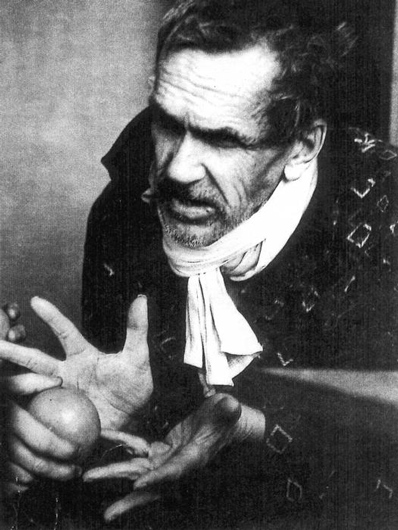 © shalamov.ru Varlam Shalamov in the Nursing House
- Didn't scare? It was not so repulsive that a desire arose, well, to eliminate this contact?
- No, this was not. At least I judge myself. I saw that this person should definitely communicate, because if not us, then who else can help him? There was no repulsive impression, it was scary. It is scary that the era did with him, the people surrounding him. How they brought him to such a state. That was scary ... We wanted to have time. We understood that every day it could end. Therefore, we tried to regularly come there, in my opinion, we even had some kind of priority. At first, Lena Hinkis and I came together, and then divided.
- What impression did this six -meter room make it?
- A rather strange question. It was, if not a camera ... I don’t remember whether there were no bars on the windows there. A tiny room with two beds placed along the walls, between the beds of the nightstand ...
- So was another bed?
- Yes. She remained empty, and we sat on this bed or folded some things. I remember that on the first visit Lena brought pajamas and we changed into this pajamas.
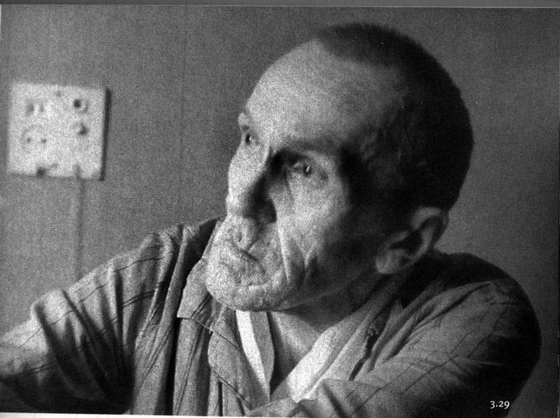 © Shalamov.ru Varlam Shalamov in the Narex House, 1979
- It turns out that there was no place left there at all?
- There was still a toilet with a sink. Outside the door.
- And the chair?
“I don’t remember if there were still chairs there.”
- Well, let's say when Morozov talked with Shalamov for hours ...
- There is still a meter between the beds, he sat on the floor, squatting, very close to him. He had a notebook and a pen, I don’t remember, a ballpoint pen or pencil. In any case, very close to him, practically leaning. Maybe he sat on the bed, most likely sat on his bed and tried to hear something.
- It also characterizes Morozov. Not every person will agree to record poetry in such conditions.
- Well, throw it. What does it mean "disagree." It was an extreme situation. Sasha Morozov is a Russian intellectual. There was no squeamishness. In front of him was a dying man, a wonderful writer, a poet, and, of course, Morozov tried to hear properly, legibly. I saw it. If I came at this time, he showed me with signs that I would not interfere. I saw how this process is happening. It was something so unlike the usual versification when a person is tormented to find a word, looking for a metaphor ... It was physical flour. His body, already completely exhausted, became part of some kind of poetic phrase, it literally filled with this. He made some dull sounds, and it was evident how his body was changing. And looking at it was terrible. Yes, scary. Sasha felt some words in these sounds, it was a long process. It was important for Shalamov to push this out, pushing it out of this shell, as if ending, the words that form poetry.
- How did you learn about Shalamov’s transfer to an institution for psycho -chronic, about his death?
- Lena called me, immediately. Then we met, began to somehow mobilize friends.
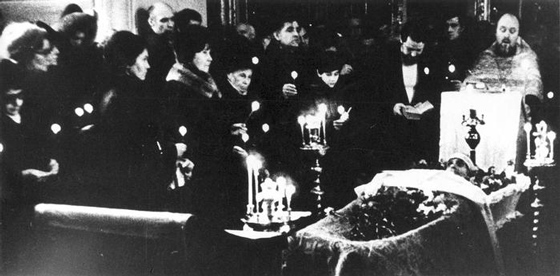 © Shalamov.ru Funny Varlam Shalamov, 1982
- I understand that after the nursing home you saw Shalamov already on the funeral service?
- Yes, in the church, on the funeral.
- Do not remember who was present there?
“You know, it’s rather strange: I don’t even remember which church he was buried in.” I remember that Nadezhda Yakovlevna [Mandelstam] was buried in the church at the River Station. And where the Shalamovs were buried ... I have already forgotten a lot.
- Thirty -three years have passed.
- I have been very little to the topic of Shalamov since then. Made some publications, wrote an article; That's perhaps that’s all.
- Do you remember the funeral?
- Yes, it was in the same place where Nadezhda Yakovlevna Mandelstam was buried a year and a half before. It was the Kuntsevo cemetery. I remember a lot of things. As they drove: it was a funeral of such a bus in which pioneers are transported to the pioneer camps, such shorts of such shorties. And on the windshield flashed. They asked to shoot this photo, and after some bickering, the driver shot. There was another funny moment there. On this day you know who else was buried? Tsviguna [1] .
- Is this a gabist which?
- Yeah. There were generally a lot of amazing coincidences. This is the same Zvigun, the son -in -law of Shchelokov, all these weapons shots, such ceremonial.
- What, the funeral processions of Shalamov and Zvigun coincided?
- Yeah. This is some kind of madness. This era was present in the act of death.
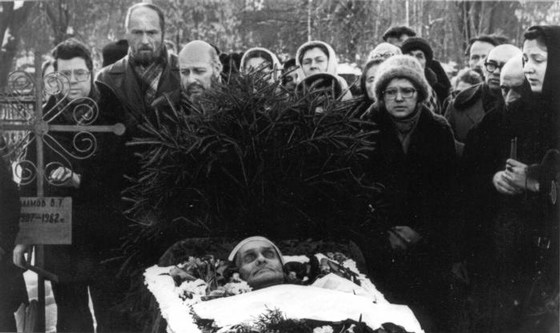 © Shalamov.ru Funny Varlam Shalamov, 1982
- How many people were at Shalamov’s funeral? Well, approximately.
- Hundreds of three, probably.
- Hundreds of three?!
- Or two. Quite a lot of people were present.
- The photographs look much smaller. And I still read the numbers ... from fifty to one hundred and twenty people. Do you think much more?
-You know, how much time has passed ... I have the funeral of Shalamov in consciousness merged with the funeral of Nadezhda Yakovlevna Mandelstam. There was certainly more.
- Yes, most likely, it was overlapped. When did you read Kolyma Stories?
- It was the end of the seventies. Immediately after the "Archipelago".
- Do you mean the book published in 1978 in London at OPI ?
- Yes, I read this book.
- Not samizdat manuscripts?
- No, a book. I read books. Then I had a huge number of books ... such a fat brick - “Kolyma stories”. I had fifteen copies of this book. Fresh, smelling of typographic paint, just received from the American embassy and delivered them to the addresses accordingly.
- When did you decide to assemble the second book of Shalamov’s prose for Geller? How did you have this initiative? How did you even go to Mikhail Geller - as the initiator of the publication of the second book? Or did he find you? How did this second book arise?
- Why exactly Mikhail Yakovlevich? Either someone advised me, or I myself saw that it was possible. Now I do not begin to say. But the fact that it was necessary to collect the remaining manuscripts, to find the stories of Shalamov, there was no doubt about me, I understood that it was just for the future, for the country, in the end, for memory, for conscience. That such stories should read everyone who considers himself Russian. By golly. There is everywhere, in every line, this Kolyma cold. These stars are trembling larch. Cold, making his way to the bones. I don't say this figuratively. When I read, all this horror was felt. Oxygen was pumped out of the air. All. There were only cold, stars, barking dogs and these deaths in the snow.
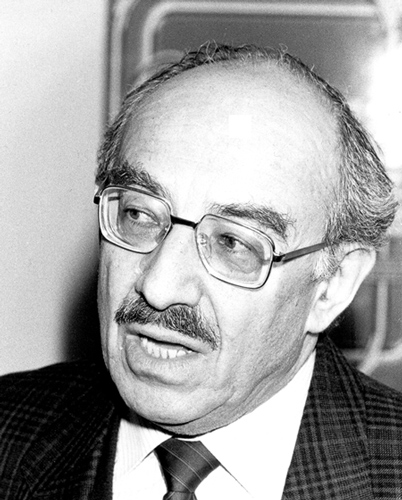 Mikhail Geller
- So, Geller received a finished collection from you along with the autograph of the Shalamov autobiography and took it to the publishing house. I understood correctly?
- Yes. I received a part from Varlam Tikhonovich. He left me the addresses where the people he trusted. It was partly near Moscow, in the suburbs, and then. I went to these addresses. One city had to go all night. These were manuscripts scattered in different places. I acted on the basis of a certain logic-where to go, how to introduce myself, so as not to be scared ... Some stories coincided, but there was always something new. This was the Fourth Vologda. Yes, I received many addresses directly from Shalamov.
- Did he dictate?
- I don't remember. He, in my opinion, was recorded. So completely clumsy handwriting. And I traveled to these addresses.
- And who exactly stored these manuscripts? Now, probably, you can call names. The storage of samizdat is no longer incriminated.
- You know, Dmitry, I have to disappoint you. Too many years have passed, and I no longer remember the names.
- So, you collected manuscripts ...
- These were not only manuscripts. Also tape films.
- Do you mean films dictated by Shalamov?
- Yes, stories. In different places. We had Natalya Vladimirovna Kind Rozhanskaya. There were quite a few films. This is the sixties. He read quite a lot there, and these bobbins are preserved. Despite ten to fifteen years. They did not even show off. A tape recorder must be stored in special conditions, at a special temperature. But she did not crumble, although sometimes it sounded deafly. And then we deciphered it. A terribly long, by the way. Some stories - about chess, for example - I remember. It was very difficult.
- And, therefore, some stories are reprinted from the films. How did you select the texts for the new collection? Did you compare the founded London volume found with the content of the already released?
- Of course. So that it is not repeated.
- And how did the story “Squirrel” hit the collection in the cycle “Tales of childhood”? Shalamov himself placed him in Kolyma’s stories.
- Varlam Tikhonovich had all this together. "Tales of childhood." And I decided not to violate this structure. I did not change anything. Although, maybe this is some kind of mine. We then did not think about textology, did not fit with such scrupulousness. This is what was collected, deciphered from tape recorders. There were still poems. But, as far as I remember, Geller said that it is not worth turning on the poems that he has these verses. Something like that. I wanted to send poems, many verses. They were printed on cigarette paper or on an ordinary such already yellowed paper, a fourth-fifth copy, pale all this looked.
- That is, you handed over to Geller an almost ready -made book. Through whom, you will not say?
- I said - through American diplomats.
- And in the form in which you handed it away, did she go out?
- Yeah. I attracted a collection of philologists. For clarity: these were Larisa Iosifovna Bogoraz, her son - Sanka Daniel, Evgenia Emmanuilovna Pechuro and Emma Botvinnik [2] . This circle of people, all friends. And partly people from the Institute of Russian Language and Literature, because there were films of the impossible quality, we invited them to hear them together - our friends, people close to human rights movement; One could be sure that they would not report to any KGB.
- It turns out a real editorial board.
- Yes, sure. I myself picked it up.
- And this volume you collected you handed over to Geller as the quality of the final option.
- Yes. It seemed to me that this is such a postscript for published "Kolyma stories." Well, the additions are significant.
 Vladimir Ryabokon, 1985
- Still not significant! A story, a dozen and a half stories, autobiography ... How much time did it take to search for manuscripts and compile a collection?
- Almost even during the life of Shalamov, from the eighty -first year eighty -fourth, almost three years. Geller received him from me in the eighty -fourth year, possibly in the fall. И дал знать открыткой, которая до меня дошла. Что там было на открытке… Фонтан, какая-то площадь, голуби. И написал про то, что Париж в зелени, плоды, жарко. Это означало, что сборник получен. Она у меня где-то в архиве, эта открытка.
— А саму книгу вы получили?
— Получил один экземпляр. Или два. Не помню сейчас. Помню, что когда я в первый раз приехал в Париж в восемьдесят восьмом и встретился с Михаилом Яковлевичем, мы были с женой, Дафной, сидели часа три, он нас кормил, разговаривали, — вот тогда он дал мне довольно много экземпляров. И еще дали в редакции «Русской мысли». Там была комната с изданными в «ИМКА-пресс» произведениями, они их обычно посылали через кого-то в Россию.
— Вы знали Ирину Сиротинскую?
— Видел ее несколько раз и даже разговаривал с ней, но не скажу, что мы были знакомы.
— Меня вот что интересует. Архив Шаламова ведь перешел к ней, она забрала его в ЦГАЛИ перед отправкой Шаламова в дом престарелых. Он у нее там лежал. В общем, все, что вы где-то по клочкам собирали, рассказы с магнитофонных лент расшифровывали, — у нее все это было в ЦГАЛИ. Вы знали, что архив у нее?
— Знал, конечно. Все знали, что она сидит сиднем на этом архиве и никого не подпускает.
— Обращались к ней?
— Как-то раз к ней подходил. Не помню, при каких обстоятельствах. Не помню точно, была ли она на поминках. Нет, на поминки она, по-моему, не пришла. Нет-нет, на поминках ее не было. Не помню, где мы пересеклись, я сказал: «Это же все-таки наследие Шаламова. Неужели вы думаете, что сами сможете во всем этом разобраться? Как можно это вот так держать? Вы же понимаете, что речь идет о серьезном писателе, его произведения должны быть опубликованы». Я тогда хотел какие-то вещи попросить у нее. Ну, знал, что это вряд ли получится. Для публикации на Западе, естественно, потому что прекрасно понимал, что в Советском Союзе это невозможно. В общем, понятно, чем закончился разговор.
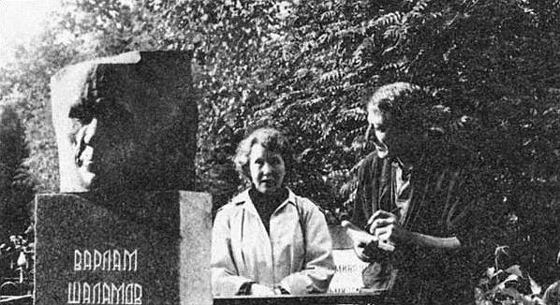 © shalamov.ru Ирина Сиротинская на могиле Варлама Шаламова
— Какая была реакция?
— Испуганная. Она не очень хотела разговаривать… И больше я… Нет, помню, году в 87—88-м был какой-то литературный вечер, посвященный Шаламову. Там выступало много людей. Был Фазиль Искандер, был мой приятель и друг Геннадий Айги. Да, 88-й. И она туда пришла.
— Не на этом вечере выступали Наталья Кинд, Юлий Шрейдер?
- Yes. И она там присутствовала. Такое у меня ощущение. Помню как бы боковым зрением.
— В одном из интервью она говорила, что это она поставила памятник на могиле Шаламова и его оплатила.
- This is not true. Мы сложились и это сделали. Федот Федотович Сучков входил в наш круг. Я его рукопись переправил на Запад, ее там опубликовали. Он ведь был еще и писателем. Надгробный памятник был данью уважения великому писателю. Какие деньги. Не понимаю, о чем вы спрашиваете.
— Ну, бронза, отливку надо сделать. Хоть маленький, но все-таки памятник.
- Yes, sure. Отлить — это производство, безусловно, в домашних условиях не сделаешь. На это просто все складывались. Это настолько естественно. Я давал деньги, другие давали, трешку, пятерку.
— Вы знали Наталью Столярову? В шестидесятые годы у нее были довольно тесные отношения с Шаламовым.
— Да, знал. Его стихи ей положительно не нравились. Это я очень хорошо помню. А прозу его Наталья Ивановна считала выдающейся.
— После смерти Шаламова до перестройки, пока вечера его не стало возможным проводить официально, отмечались в каких-то формах юбилеи Шаламова, смерти его, рождения? Было что-нибудь подобное? Частным образом, конечно.
— Знаете, возможно, мы встречались год спустя после похорон. На год смерти Варлама Тихоновича. И тоже у Натальи Владимировны Кинд. И, по-моему, даже на второй год. А потом это стало уже невозможно. Знаете, плотная слежка такая. Я даже мало к кому приходил в гости.
— Как это выглядело наглядно?
— За мной постоянно ходило несколько пар. Довольно часто мужчина с женщиной, изображали семью или влюбленных. Я к этому привык. Слежка была повсеместна. Когда я заходил в подъезд... Обычно, знаете, в Советском Союзе повсюду стояли застекленные стенды с газетами, они пристраивались и читали газеты — то с одной стороны, то с другой. Я заходил в подъезд, они поднимались. Как правило, этажом выше и этажом ниже — на всякий случай. Чтобы контролировать. Так было постоянно в течение многих лет, с 82-го до 88-го, пожалуй. Когда мы с Саней Подрабинеком начали делать «Экспресс-хронику», первое в СССР периодическое информационное издание, как бы наследие «Хроники текущих событий», это было уже у меня на квартире. Мы печатали «Экспресс-хронику». Машинисткой у нас была Вера Лашкова , которая перепечатывала первые экземпляры «Архипелага ГУЛАГ» еще до того, как они попали на Запад. Потом я пригласил Володю Корсунского, Петю Старчика, и нас стало четверо. А так мы с Саней Подрабинеком вдвоем, это наша идея. Конечно, опасность была. Конечно, это нервировало мою маму, у нее больное сердце было.
— Вы упоминали о магнитофонной бобине, переданной вами после смерти Шаламова на «Радио Свобода» . Несколько лет назад они транслировали отрывки из этой программы 1982 года. Запись была сделана на поминках Шаламова. Хочу уточнить. На поминках в доме Натальи Кинд? Поскольку поминки справлялись в нескольких местах.
— Да, это были поминки у Натальи Владимировны Кинд.
— Что представляла собой эта бобина? Ведущий на «Радио Свобода» только сказал (я имею в виду, в повторной, сравнительно недавней передаче), что к ним попала вот эта магнитофонная запись, как бы вроде она попала неизвестно откуда.
— Что значит... (Смеется.) Здрасьте. Ее отправила Анн Гэрэлс, тогда я ей передал. Она была шефом американской телекомпании «Эй-би-си ньюз», моей близкой подругой. И она отправила непосредственно в Мюнхен, где располагалась штаб-квартира «Радио Свобода». Я передал ей это в апреле восемьдесят второго года, и буквально через десять дней она уже стала звучать в эфире, причем прозвучала раз пять, может быть, шесть, вплоть до каких-то чисел мая. Они назвали это «магнитиздатом». Она у меня целиком на CD , [Владимир] Тольц мне ее из архива «Радио Свобода» прислал в ноябре 2009 года из Праги. Программу эту полностью составлял я — по ночам в радиорубке московского театра «Современник», где я работал в это время пожарным. Мне помогал звукооператор Сережа Платонов в качестве специалиста по фонограммам. Там была хорошая аппаратура, шведская. Никого не было, никто не мешал. Мирно, культурно, по ночам в течение двух месяцев. А потом — он же резал, это же пленка была, я ее получил от Натальи Владимировны Кинд — я собрал обрезки в большой целлофановый пакет, вынес из театра и упрятал в большом мусорном ящике подальше на улице. Следы уничтожены (смеется) . А введение к этой программе я записывал у себя дома. Квартира моя прослушивалась, сделать это в другом месте возможности не было, и я записывал эту преамбулу в ванной, включив воду. Я по радио даже не узнал вначале свой голос. Там же вода лилась, а в Мюнхене, на «Свободе», они шумы решили убрать и в результате вытянули мой голос, ну, не совсем соответствующий моему (смеется) . Потом, правда, начал узнавать.
— Из этой программы в интернете, к сожалению, есть только фрагменты — те, что транслировались по «Свободе» в передаче к столетию со дня рождения Шаламова.
— Я ее послал в Москву в «Мемориал», а как уж «Мемориал» с этим поступил, я не знаю.
— Будем надеяться, что эта запись в полном виде станет доступна не только работникам архива. Большое спасибо, Владимир.
Июль—август 2015 г.
[1] Цвигун Семен Кузьмич (1917—1982); с 1939 года — работник НКВД—МГБ—КГБ, в последние годы курировал Пятое (борьба с идеологическими диверсиями) управление КГБ; по официальной версии, застрелился 19 января 1982 года. Автор книг и киносценариев о разведчиках.
[2] Евгения Эммануиловна Печуро (1914—2002); философ (Витебск, Москва); Uch. ВОВ; sore. ФБОН, журн. «Вопросы истории», Ин-та философии АН; Uch. в деятельности Фонда помощи политзаключенным (не ранее 1974—1980-е?); подверглась преследованиям: допросы (кон. 1940-х), обыск по делу С.Д. Ходоровича (1983), «предостережение» по «Указу» (1983). Один из инициаторов книг «Сахаровский сборник» (1981), «Заступница» (1997) (информация из блога Фонда помощи политзаключенным).
Ноэми Марковна Ботвинник. «Ноэми Ботвинник, дочь питерского историка М.Н. Ботвинника, биохимик по образованию, пронзительно умная, рассудительная и одновременно эмоциональная, играла важную, по-настоящему не оцененную роль в правозащитном движении, хотя “на поверхности” не была широко известна. Она помогла устроить судьбы множества людей, передала на Запад массу самиздатских документов, ездила в магаданскую ссылку С. Ковалева и в 80-х годах была на волосок от посадки (обыски в квартире были в 80-м, 85-м и 86-м гг.). Семья дружила с А. Марченко, Л. Богораз, Ю. Гастевым. А когда Ковалев после своего десятилетнего срока в 84-м году вернулся и находился под надзором, Борис и Эми искали ему квартиру в Калинине, помогали обустроиться там и принимали в Москве. В их квартире на Моссельмаше всегда кто-то гостил» ( Виталий Помазов. «Скажем спасибо и этой судьбе. Воспоминания нижегородского диссидента о 1970-х — 1980-х годах» ).