
Translated material
Syrian landing
New Gazeta found documentary evidence confirming the training of Russian military personnel to participate in a land surgery in Syria
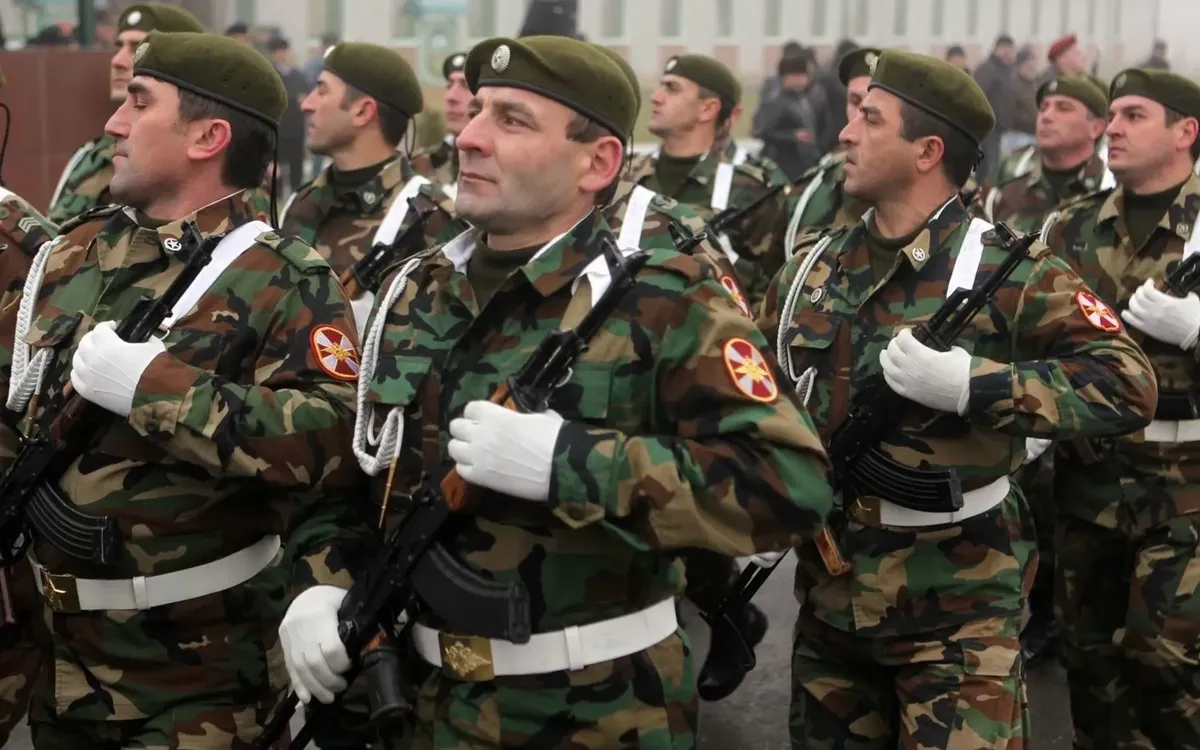
One of the employees of the former special regiment of the Ministry of Internal Affairs. Akhmat Kadyrov (the Bettime as well-known as the North battalion and now part of the 46th Separate Emergency Brigade (Debal) of the Federal Service of the National Guard (FSVG), I sent two brochures to Novaya Gazeta. According to the source, these brochures are distributed among military personnel of the Sever battalion for work with the personnel of the 46th Purchase FSVang.
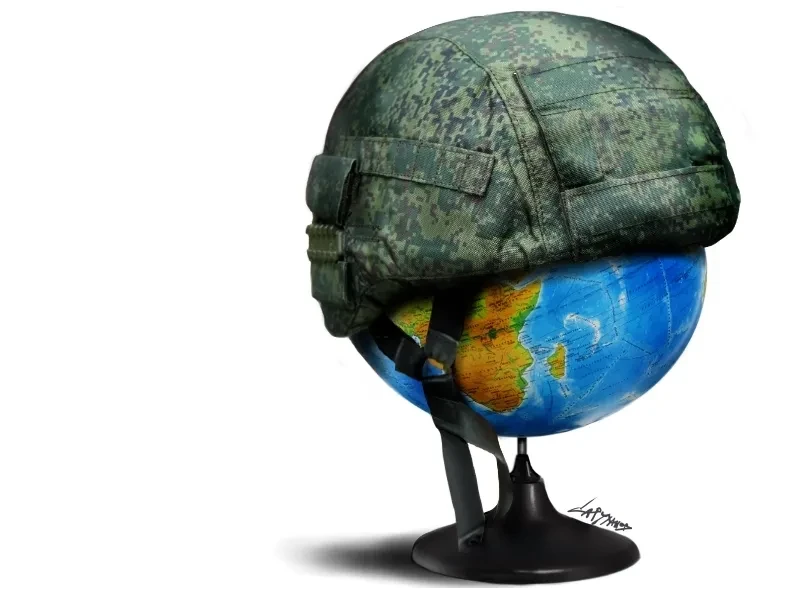
"Visual translator" from Arabic
The first brochure is called "Visual Translator (Syrian Arab Republic)." The cover of the brochure depicts the emblem of the Armed Forces of the Ministry of Defense-the red-white-blue star. This brochure looks like a color layout. The information is presented in the form of thematically structured pictures: the map of the Middle East, the Syria map, the transfer to Arabic (transcription in Russian) of numbers and phrases necessary for communicating with local residents and receiving information from them about the location, weapons and actions of the enemy. The same goal is thematic pictures that allow you to describe the appearance (race, height, gender, age and clothes of people), to navigate the rank of military personnel of the Syrian army (according to epaulets with different number of stars and planks), determine belonging to illegal armed formation, a specific example of military equipment, weapons, an object of transport, etc. This is a visual aid - a maximum of illustrations, the minimum of the text - apparently, should contribute to orientation on the terrain of Russian military and establishing contact with local military and civilians.
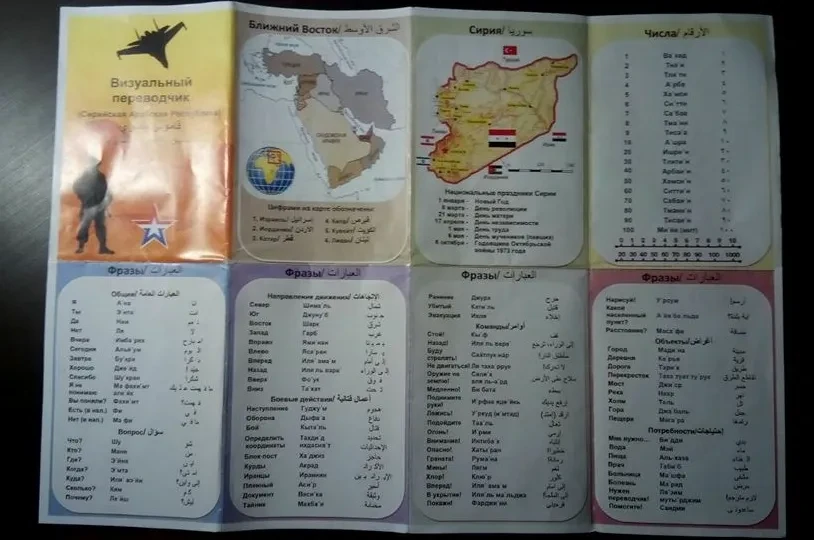
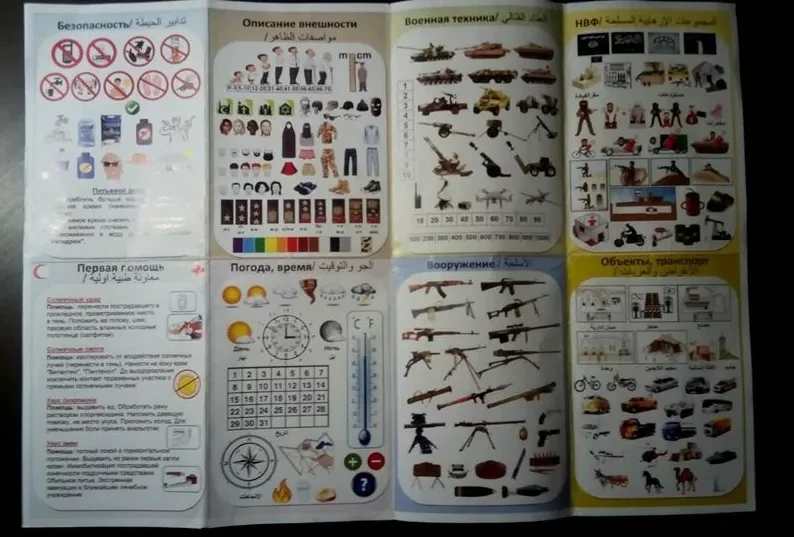
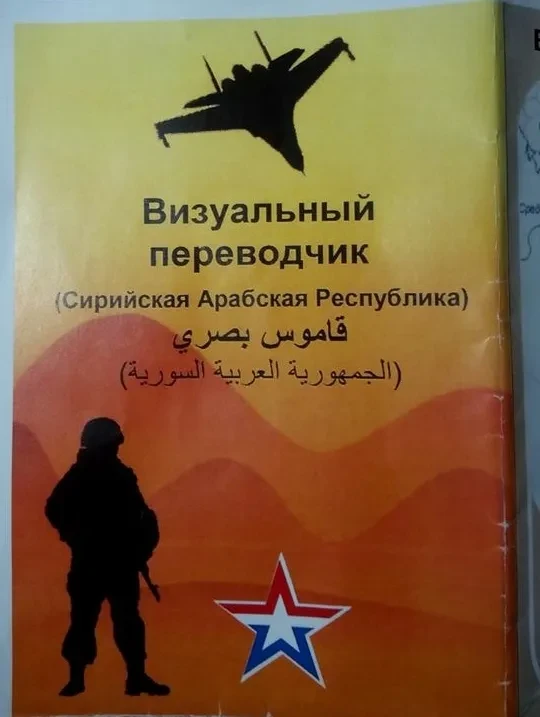
The emblem on the cover - a characteristic star - most likely indicates that this brochure is prepared by the relevant unit of the Ministry of Defense.
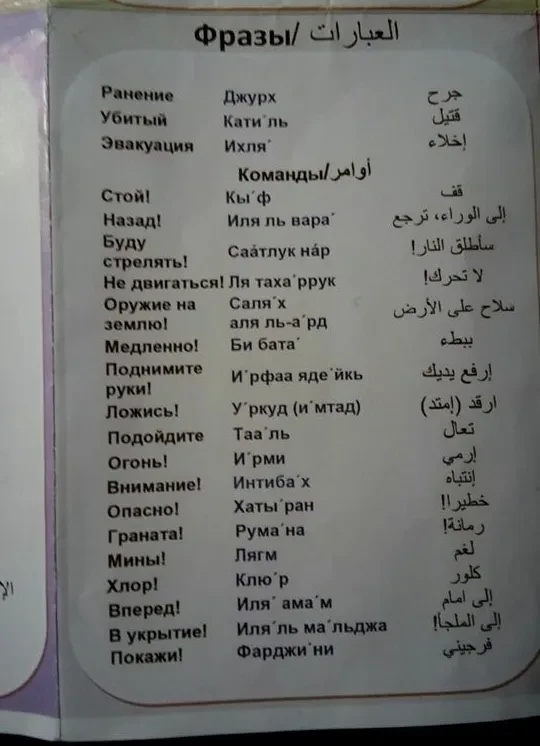
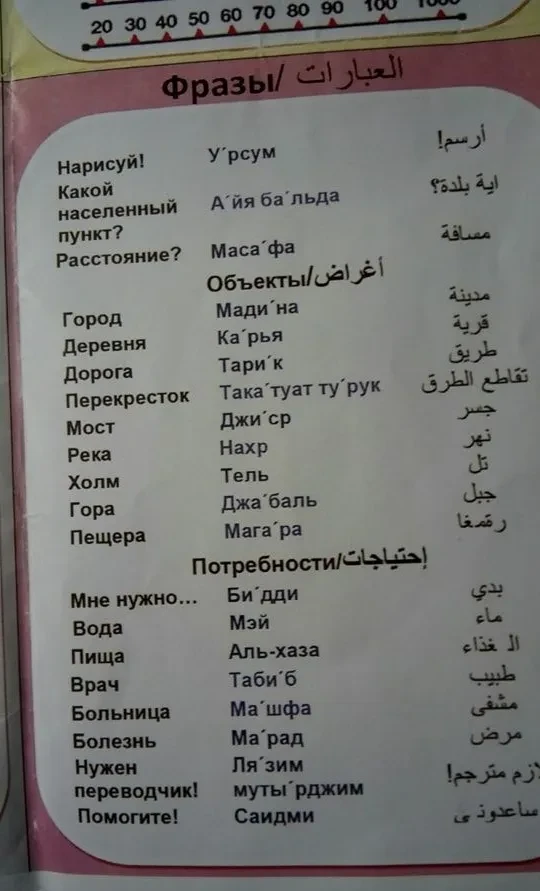
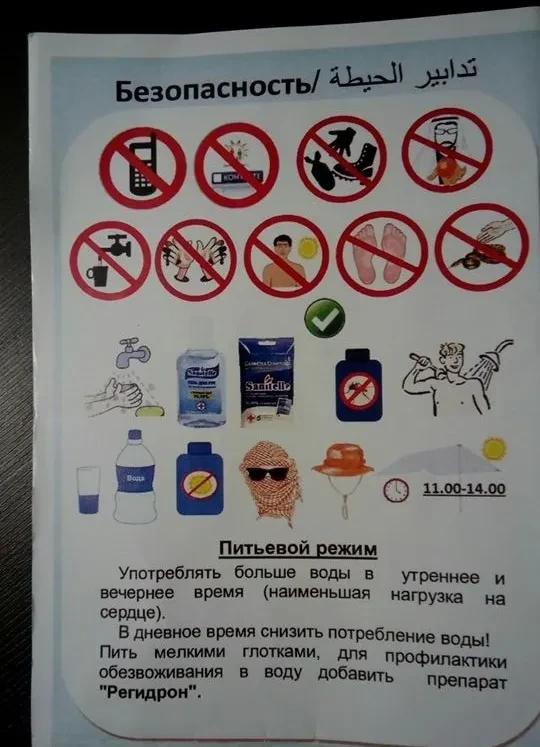
The specialists with whom the New Gazeta consulted compared this brochure with memos for internationalist warriors who fought in Afghanistan. Such memos, the codes of the Afgha warriors, is easy to find on the Internet. In the preparation of “Afghan” memos, a similar principle of presentation of information was used: the illustrative series dominates the text; They also provide a geographical, political, linguistic, legal, etc. necessary for orientation. information.
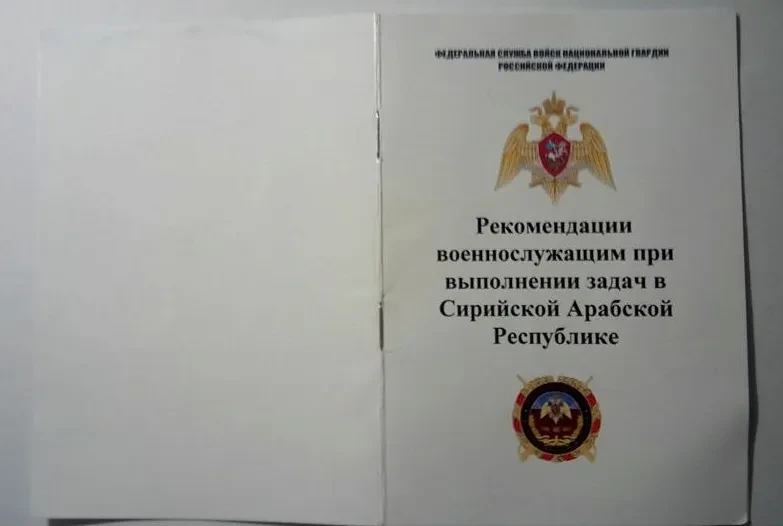
The second practical manual, transferred by Novaya Gazeta, is a white ten -prayer A5 and almost no illustrations. It is called "Recommendations to the military when performing tasks in the Syrian Arab Republic."
The brochure contains several chapters that give brief information about the country where fighting is conducted: geographical information, language, holidays, currency, customs.
In this regard, the recommendations again very much resemble those who received Soviet internationalists in Afghanistan. In general, the developers of the brochures borrowed a lot from the Soviet military agitprop: up to the paragraphs about a naked torso, which should not even go on the beach. At the same time, there are extremely few practical tips useful in new circumstances. One of the mainly and universal ones is likely:
Exposure from the brochure
“If one of the Syrians behaved inappropriately, for example, led, rude or tried to pester, then you can say the word“ Muhabarat ”. It means something like "Organization of state security, intelligence, police." At the same time, the local residents usually scare and subside "(The spelling of the original is preserved - ed. ).
How successful is such a practical advice and how much it really can ensure the security of the representative of the Russian military contingent in Syria is a controversial issue. “Mukhabarat” is a common name for numerous Syrian special services that have earned the most gloomy reputation among the population of Syria. It was the fierce actions of the Syrian special services in 2011 that led to the beginning of the Civil War in the country; These actions (illegal arrests, torture, executions, executions of the civilian population during demonstrations, etc.) The international human rights organization Human Rights Watch qualified as crimes against humanity.
In the course of five years of the Civil War in Syria, which Russia, in fact, occupied one of the parties to the conflict, was especially “famous for” the “shibikha”-a half-naval formation consisting of Alavite volunteers. Alavites are a religious branch in Shima, as you know, Syria President Bashar al -Assad belongs to him.
“Shibikha” are the detachments of the militia that turned into the main punitive forces of the Syrian regime. Currently, it is Shibikha, as well as mercenaries from Afghanistan, Pakistan and, most importantly, Iran (Shiite country) conduct cruel large -scale laid in the territories conquered from the Syrian Free Army, which represents the armed opposition to the ruling regime. These stripping, according to international experts, are very close to the definition of “genocidal”. The reason for this qualification is in the nature of the conflict. At the end of 2012, the UN report described the war in Syria as a “open religious conflict”: the militia of the Alavites and its Shiite allies fight against mainly Sunni rebel groups.
In Syria, a religious minority rules - Alavites, while the vast majority of the population are Sunnis.
At the moment, a religious minority in Syria is trying to maintain power over the majority, consciously relying on the demographic factor (intensifying the efforts of depopulation, that is, the extermination of the population, in the part of the country where anti -government sentiments are most common and deep).
About this, for example, writes in his article "What follows from the bloody battle to Aleppo?" One of the best experts in Syria, senior analyst in the non -governmental organization "International Crisis Group" Noah Bonxie. In other words, a huge international resonance and criticism of Russia was caused not so much by our military aid in Aleppo, but by the policy of the Assad regime in relation to civilians and the fact that Russia creates conditions for interfaith clearance and closes the eyes of these crimes. The Air Force even drawn an analogy between Aleppo and the infamous events in Srebrenitsa in 1995.
There is a very sensible paragraph in a brochure born of Russian troops: “In Syria, a difficult political situation is currently in Syria, so refrain from sharp statements in the field of politics of this country or do not affect this topic at all.” But how then is it worth evaluating the council of military personnel to identify themselves as an employee of the Syrian Mukhabarata?
Who is the scout and who is the spy?
In the second part of the brochure, “Recommendations for military personnel when performing tasks in the Syrian Arab Republic” are explained who to consider the conflict participants, who are combatants, militias, mercenaries, how to distinguish a military journalist from a spy, and a spy from a scout. These definitions are very intricate.
Exposure from the brochure
“In accordance with the norms of international humanitarian law, any person from the armed forces of the party in the conflict falling into the power of the opposite side at a time when it is engaged in espionage, has no right to the status of a prisoner of war, and they can handle it as a spy, that is, it can be subjected to criminal persecution.Unlike a spy, a scout, that is, a person from the armed forces of the party in the conflict, which, on behalf of this side collects or tries to collect information on the territory controlled by the nasty side, is not considered a person engaged in espionage, if, in this way, it wears the branded clothes of its armed forces. Thus, in case of captivity, the scout has the right to the status of a prisoner of war. ”
From the content of the brochure, which is distributed to Russian military personnel, the most important question follows: what tasks are actually posed to our military personnel in Syria if they need to be able to determine who is the combatant, who is a mercenary, who is a spy and who is a scout? What is interesting: in this brochure there is not a word about terrorism, although it is international terrorism and the struggle with it that the main goal of Russia's military presence in Syria.
Who is the author?
If the first “Visual Translator” brochure does not have the output and we can only indirectly judge the customer - by the emblem of the Ministry of Defense on the cover, then the second brochure has very clear indications of departmental affiliation. Namely - at the very top of the cover of the brochure, it is indicated: the Federal Service of the Troops of the National Guard of the Russian Federation.
In addition, there are two emblems on the same cover-the emblem of the National Guard and the Emblem of the 46th Separate Brigade of the Special Purpose of the National Guard forces.
The composition of this particular brigade includes two Chechen battalions "South" and "North" (among the last military personnel and these brochures were widespread).
On the 9th page of the pamphlet at the end of the text there is a signature: "Branch for radar 64." The signature is deciphered, apparently, as follows: the department for work with the personnel of the 64th separate special purpose brigade. However, the 64th separate brigade of the special forces of the National Guard does not exist. It can be assumed that a typo is made in this brochure - instead of 46, 64 is written. Another assumption is also possible: the error in the brigade number was intentionally made. If this brochure gets into a public space, this mistake will enable the departments to disown it and call it a fake. The central argument is obvious: the 64th fsvang defeat does not exist in nature.
The New Gazeta paid special attention to this moment and doubled its source. However, other military personnel of the 46th brigade confirmed the fact of the mass distribution of both brochures among personnel, as well as the fact of active training of the Chechen troops of the 46th of the National Guard for the Syrian business trip. (An important detail: 46th brigade multi-ethnic, dominate among military personnel of the brigade of the faces of Slavic nationalities.)
The problem, however, is that by national legislation the limited use of the National Guard forces in military conflicts (including with the aim of combating international terrorism) outside the Russian Federation is provided for by only one document - a collective security agreement. But Syria is not a member of the CSTO.
comment
Peter Zaikin
Former military personnel of the Interior Ministry of Internal Affairs of the Russian Federation, lawyer
- I understand why they want to send military personnel of the National Guard to Syria. Although communicating with my former colleagues, I did not hear about the facts of training troops of the National Guard for the performance of service and combat missions in Syria, there are no available information about preparing for the land operation in Syria of the National Guard troops in other regions, except Chechnya. ( Novaya Gazeta has not yet been able to detect the spread of these brochures in other units of the National Guard. But maybe this is a matter of time. - EM ))
But the situation with Palmyra showed that even without involving the airborne troops, as a rule, the most prepared in the system of the Ministry of Defense, Russia effectively helps Assad to conquer the captured territories from the enemy (whoever it is). However, the Syrian regime is obviously not able to hold these territories. Unlike military personnel of the Ministry of Defense, the “internal troops” were better prepared precisely for the war in the city.
To carry out the reflections, to suppress local foci of resistance, to ensure the security of the rear of the army and maintain a police order.
Why the formation of the 46th separate brigade of the National Guard began the formation precisely with the Chechen battalions-it is also clear. Thus, two hares will be killed. It is generally accepted that it is with the Chechens, after two military campaigns, more experience in suppressing the partisan war. This is the first. The second - thus could find the application of the "Kadyrov Army", which the head of Chechnya imprudently scared the whole country.
However, having analyzed the open basis of Russian regulatory documents, we can clearly say: the legal law of the National Guard for use in Syria does not contain legal grounds for the formation of the military contingent. In Syria, only military personnel of the Ministry of Defense and special forces of the FSB can be used. This is not applicable to the National Guard.
If the military personnel of the “Chechen battalions” of the 46th separate brigade of the National Guard will be sent to Syria as the “National Guard”, such a decision of the president will not be based on existing federal laws and the Constitution of Russia.