
Translated material
"We will read the Minister between the lines"
The Gaidar forum ended in Moscow. Economists argued about taxes and the role of the state in the economy
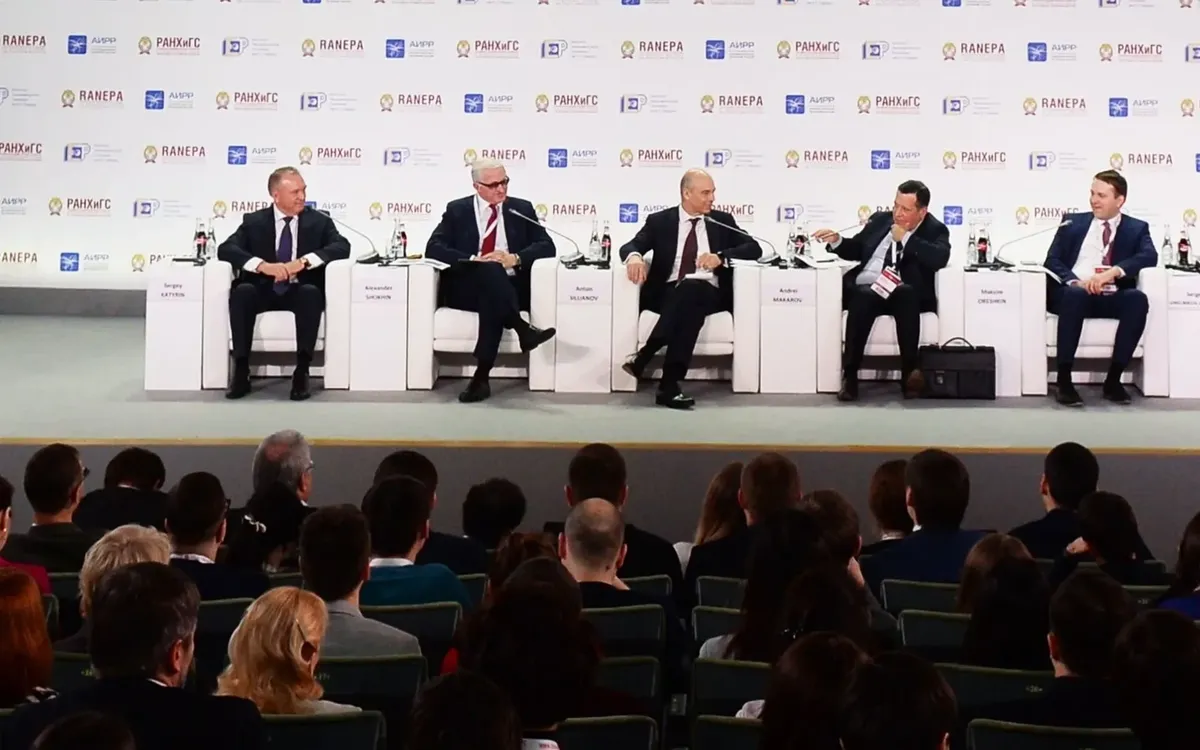
The last day of the Gaidar forum was opened by a rhetorical question: “Who, except for Vladimir Mau (rector of the RANEPA, one of the organizers of the forum. - A. Kh.) Could the idea came up with the idea of setting a key session for a Saturday morning?” - “Nasty” by the chairman of the State Duma committee on budget and taxes Andrei Makarov. The subject of the discussion that Makarov modulated was the parameters of the new tax reform - it should be prepared before the presidential election and enter into force in 2019. Despite the morning time and a non-working day, the conversation turned out to be not only important, but also quite vigorous-in a sense it was a good show.
At the beginning of the conversation, Maxim Oreshkin, the 34-year-old Minister of Economic Development and the ex-deputy Minister of Finance, tried to tell the audience how the change of departments influenced his views: “They ( views on the economy.- A. X. ) become wider. Taxes affect not only the budget, but also all economic activity, on the general macroeconomic situation. ” Makarov such an answer seemed too abstract; He quickly interrupted the minister, but assured the audience that he "would be dispersed by the middle of the conversation and begin to say what he was thinking."
It happened or not is difficult to say. But subsequently, several funny dialogues of the following, for example, content took place between Makarov and Oreshkin:
Makarov: We create privileges for state -owned companies, and then we refer to the fact that they have a special status. This is fine?
Oreshkin: You need to try to avoid distorting elements in the economy.
M.: The public sector occupies 70% of GDP in Russia. What effectiveness can we talk about? In your software interviews, you did not comment on this.
O.: It was necessary to read between the lines. Competition is the key to economic growth.
M.: So you still need to abandon state-owned companies, or are they effective?
O.: I would not give general answers. I can say that the last 5-7 years have not led to greater efficiency.
M.: So, we will read the words of the minister between the lines.
The next check for sincerity was the head of the Ministry of Finance Anton Siluanov .
Both representatives of the economic unit of the Cabinet of Ministers said that during the nearest three -year -old, the tax burden on the business should not increase. “Apparently, the ministers poorly read the United Russia program, in which we wrote down that the tax burden needs to be reduced,” said Alexander Shokhin, president of the Russian Union of Industrialists and Entrepreneurs. - We need a jerk, a radical improvement in the business climate and a decrease in fiscal load. Without this, we are facing an inertial scenario. ” This can be done without loss for the budget by expanding the tax base in the future, said Shokhin.
Siluanov hastened to say that he, of course, was “for”, but all this is “theoretical explanations”: “What expenses will we have to reduce? And what to pay salaries and pensions now, <if the tax base grows only in the future>? " The level of tax seizures in Russia is at the level of 32–33% of GDP, in Kazakhstan - 25% of GDP, in India - 20% of GDP, but these countries do not carry such budgetary obligations. “If we want a worthy social policy and a strong army, then someone must pay for it,” said Siluanov.
Makarov was clearly satisfied with what was happening. “I don’t even remember this. This is a discussion with the participation of ministers on the air! ”
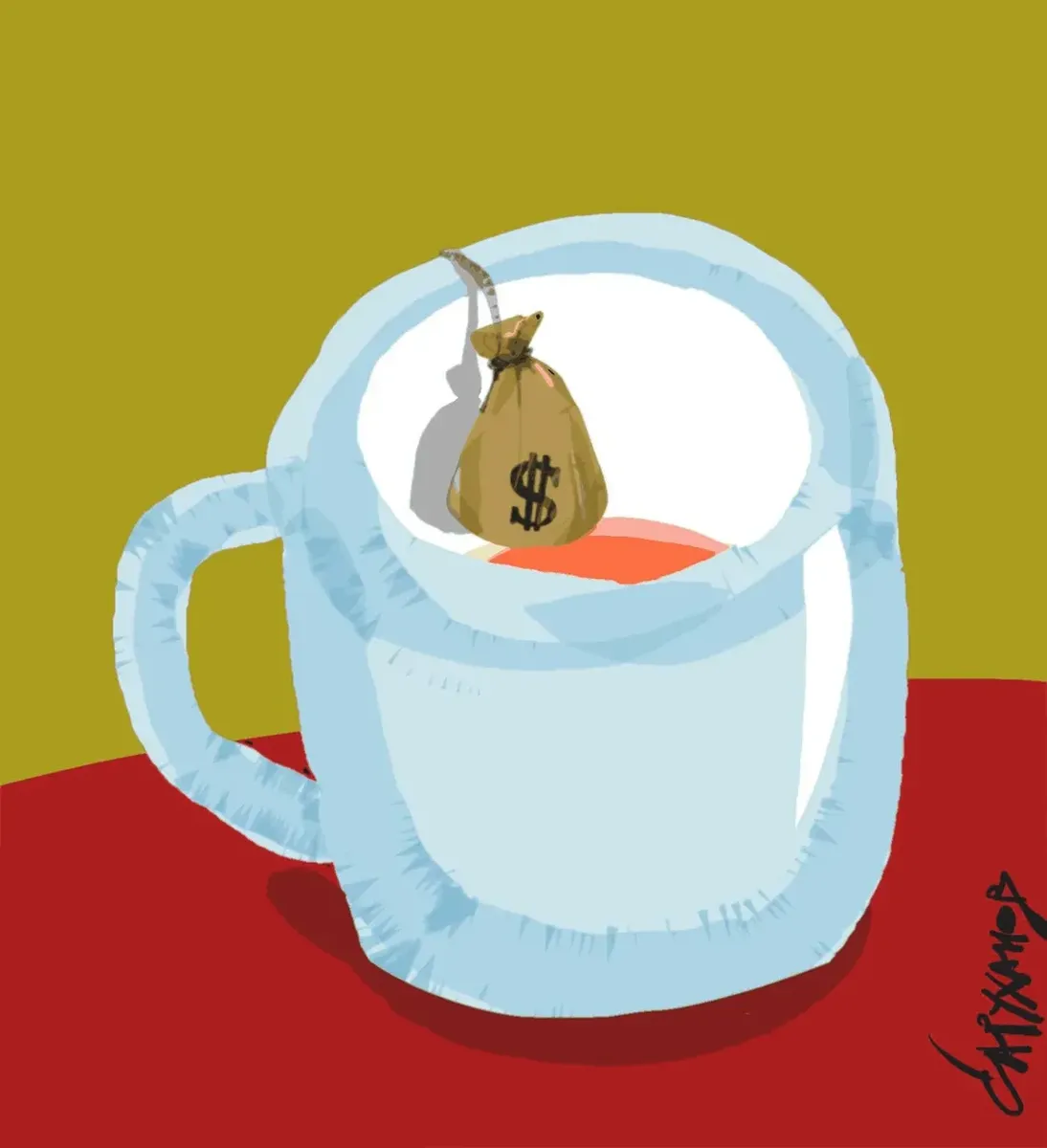
The next thesis of Maxim Oreshkin was already more specific: for those who work in the official economy, the tax load should go down. “If the business is completely“ white ”, then for him the load, of course, is high. Nowhere in other countries there is no such load on the wage fund as in Russia. But these taxes pay mainly state -owned companies, large business and part of the average. ” If you reduce the volume of the shadow economy, then you can get the same amount of taxes at lower rates, the minister concluded.
We need to talk about reducing direct taxes and increasing indirect ones, supported a colleague of Siluanov. “Insurance premiums in the amount of 30% and plus also personal income tax are extremely many for the wage fund.” Their reduction leads to the withdrawal of companies from the shadows and increasing their competitiveness in the world market-this was shown by the experiment to provide tax benefits to Russian IT companies. At the same time, oil companies receiving superprofits need to be deprived of benefits (however, this was supposed to happen for a long time), and instead of the tax on mineral mining tax added income tax.
The progressive scale of personal income tax at the session was not discussed: on the first day of the forum, Prime Minister Dmitry Medvedev closed this topic, saying that she was not on the Kabmin’s agenda, and asking his colleagues “not to declare the opposite”.
In addition to Russian-speaking speakers, the hall was attended by a tax specialist in the organization for economic cooperation and development (OECD) of Graciel Lynn Perez-Navarro . "How do you like our discussion?" - Makarov turned to her by the end of the first hour of the panel. “The discussion goes very frankly, as I see, and this is good,” the expert answered, laughing. She noted the success of the Russian authorities in the fight against the shadow economy and in improving income administration, but emphasized that this is not enough:
“For business, the number one problem is not taxes. This is political stability, lack of corruption, certainty in the application of laws and dispute resolution mechanisms. So I propose to look at the problem more comprehensive. ”
The atmosphere at the session really contributed to some frankness. Anton Siluanov , for example, revealed one of the principles of budget policy, which is applied in his department as a “life hack”: “There is a simple tool: when a request for additional money comes to the Ministry of Finance, then if there is no justification, we need to divide the amount by two and say what we will think more.”
The question that was discussed later sounded like the name of a separate panel for government members: "Small business: will we study or let it live?" Siluanov said that small entrepreneurs are important to the economy because of jobs, and not as a source of budget replenishment. Small business needs a very simple tax regime and a minimum of reporting: "I bought a patent - trading." “The first consensus position of the participants in the discussion: the best for business is not to touch it. Unfortunately, we will most likely fail to succeed, ”Makarov summed up.
Under the curtain of the session, the participants agreed to continue the “public and honest discussion” and by the spring to create a preliminary draft future reform. Shokhin formulated a frame for future disputes: it is necessary to fix the total fiscal load at the current level, and all “donastices” (in particular, a change in the structure of taxes) carry out the restriction. In order to stimulate economic growth, the government may offer some tax “exchange”: for example, reducing insurance payments while increasing VAT.
In his final speech, Makarov insisted that next week introduce a bill on the creation of a single document to parliament, which would unite issues of tax, customs and budget policy. The head of the Ministry of Finance Anton Siluanov tried to dismiss, referring to the fact that the exact date was already details, but under the pressure of the persistent presenter he was forced to surrender. “Everything has been uttered publicly, people have the opportunity to check us in a real time. So trust is born, ”Makarov finished with a slight pathos. The fact that it was the participants of the Gaidar forum that talked about trust (and it was a popular topic in these three days), we have to recall more than once.