
Translated material
Magic in a tablet
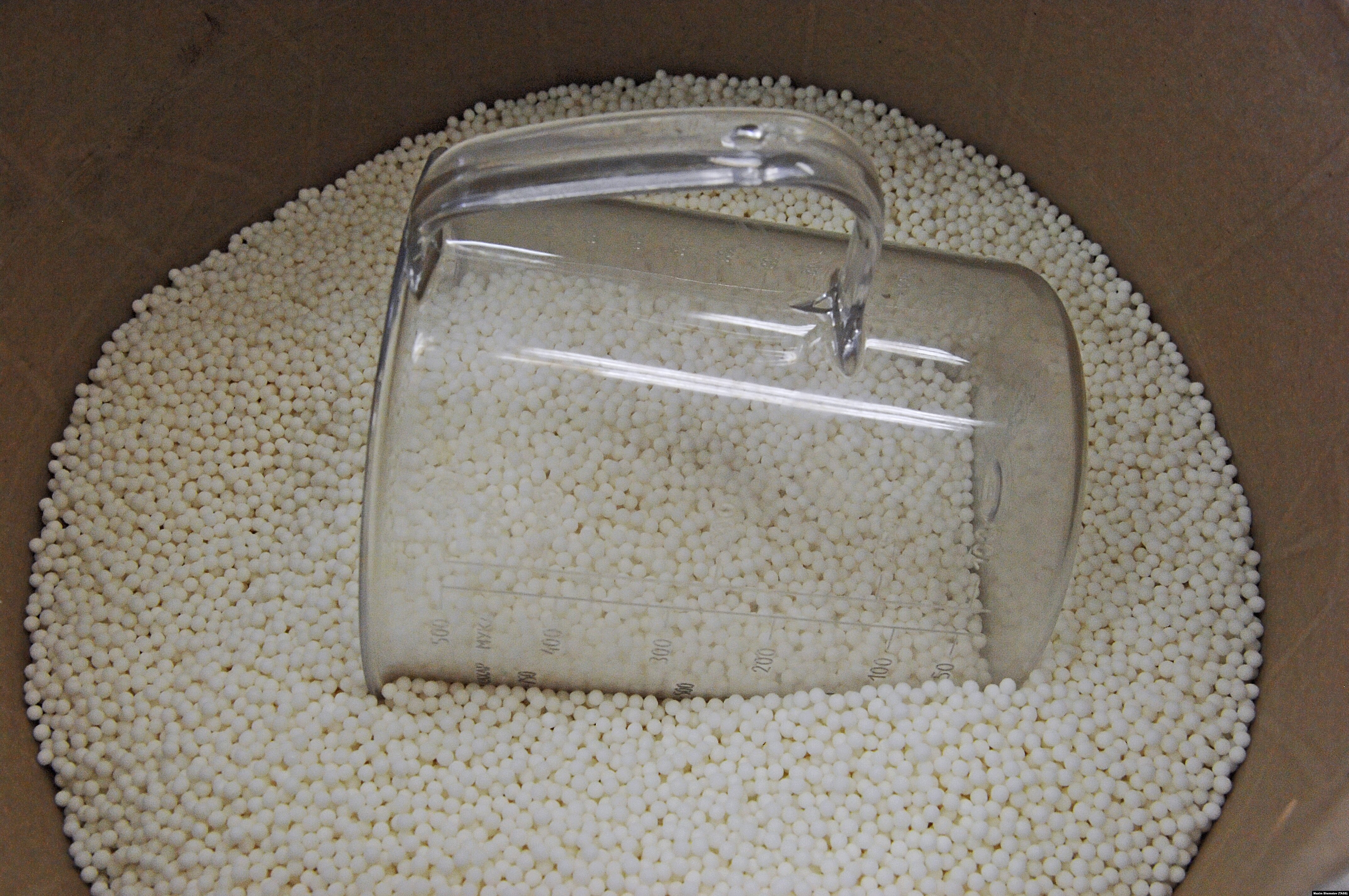
Why do people believe in homeopathy?
Sergey Medvedev: Today we will talk about homeopathy: in what sense is it a legacy of the past and is that thing that humanity takes in the 21st century? Our guest is Asya Kazantseva , a scientific journalist, laureate of the Enlightener Prize . In the outgoing days of 2016, the lawsuit of the National Council on Homeopathy to the magazine "Around the World" was rejected: they demanded from the magazine and from you, Asya, to refute the article "Dissolved Magic", which was considered attacks on homeopathy.
Asya Kazantseva: Yes, they wanted to publish a refutation - a seven -page text about the memory of water, which was completely impossible to read. That is, they wrote something science-like, and this was supposed to make on an inexperienced reader the impression that homeopathy has some kind of scientific base. This is the innovation of the XX - XXI centuries: homeopathy is trying to pretend to be science and this sometimes misleads people.
Sergey Medvedev: And there are at least some scientific justifications, people with scientific degrees who confirm the conclusions of homeopathy?
Homeopathy is trying to pretend to be science and this sometimes misleads people
Asya Kazantseva: Individual people with scientific degrees are found ... This year there was a completely shameful story when a man named Epstein, who produces supposedly scientific homeopathy, was admitted to the Academy of Sciences. Honestly, this is a great defeat for enlightenment and a great shame for the Academy of Sciences.
But the fact is that in science it is not very important what individual people think, because individuals can have a variety of human motives - for example, financial. It is important that publications are said in reviewed magazines.
When we evaluate the adequacy of any treatment method (it doesn’t matter, homeopathy, real medicine, acupuncture or anything), we always need to answer two questions. The first question: Are there any understandable physical, biological and chemical principles by which this method works? And the second question: what are the results of clinical trials show?
If we take a normal medicine, for example, penicillin, we will see that he is passing this test on both points. On the one hand, we understand how exactly penicillin acts on the cell wall of the bacteria, what happens to it, why it dies. And on the other hand, we see that the people we began to treat penicillin from bacterial diseases recover better than people whom we do not treat or which we give placebo.
Homeopathy does not have a clear scientific justification
But homeopathy on both points fails this test. On the one hand, she does not have a clear scientific justification. All that is based on is the scientific concept of the 18th century. And on the other hand (and this is even more important), when we take two groups of people with the same disease, and one of them is treated with homeopathy, and the second is just sugar balls, the condition of the patients, of course, improves in both groups, but improves equally well.
Sergey Medvedev: This is a placebo effect.
Asya Kazantseva: Yes, first of all, the placebo effect. The brain is a complex organ that can control the condition of the rest of the internal organs, can regulate our endocrine and immune systems. There are all sorts of funny experiments: for example, an anesthetic placebo leads to the production of his own endorphins in the brain, respectively, a person really becomes less. If it gives him substances that block the work of the endocrine system, then this effect ceases to work.
Sergey Medvedev: That is, a placebo is a scientifically proven thing.
Asya Kazantseva: On the other hand, placebo should not be overestimated, because large medical tests usually show that the placebo works very well if a person evaluates the severity of his symptoms, and works quite poorly or even does not work at all if we talk about objective outpatient indicators.
A placebo is a scientifically proven thing
Sergey Medvedev: Let's remember where homeopathy came from.
Asya Kazantseva: In the XVIII century, everything was quite bad with medicine. Traditional medicine treated people with bloodletting, mercury and arsenic drugs - sometimes it helped, but more often a person became even worse. Samuel Ganeman , a German doctor, at the end of the 18th century, was quite rightly disappointed in the adequacy of modern medicine and began to think, read, translate. He translated a treatise called Materia Medica. In this treatise, he read about the anti -inflammatory properties of the Khinn tree bark, and it occurred to him to conduct an experiment. Being healthy, he took the bark of the Hinn tree, and his temperature rose and a fever began, and most likely this was due to the individual characteristics of the body.
Sergey Medvedev: Just personal allergies, intolerance.
Asya Kazantseva: It is likely because it is not the most typical picture of symptoms. And on this basis, he deduced the general principle - "treatment like similar." The main idea of homeopathy is that if some substance causes symptoms in a healthy person, then the disease with these symptoms should be treated with this particular substance. That is, if you have accepted some substance, and you began to feel sick, then nausea must be treated with this substance.
Sergey Medvedev: But in infinitely small doses.
The good news is that homeopathy is relatively safe
Asya Kazantseva: The good news is that homeopathy is relatively safe, because there is still the second principle - dynamization of medicinal power. The point is to breed and shaking, breeding and shaking until there are practically no molecules of the active substance in the solution. If we read the documents regulating homeopathy, then there will be a completely terrible list of permitted substances. There is Naftalin, arsenic, Strichnin, various drugs based on mercury and arsenic. It is assumed that they once left for some healthy, and he became ill, so they decided to make medicine from them. But, fortunately, they all get divorced to such concentrations that they no longer have any effect on the body.
Sergey Medvedev: Here the best comparison is Vera, the Church. There is a certain church of homeopathy you have encountered. By the way, I think that they probably chose the wrong attack line - it was necessary to take a new law on the protection of the feelings of believers. Apparently, they insulted believers in homeopathy.
Asya Kazantseva: Then they themselves would have to admit that this is just Vera, but they still try to mimic under science.
There are not a single molecule of the active substance in any tablet
I mentioned Epstein, who suddenly became an academician - he works at the Material Material. They are very funny: they have homeopathy, for which they have achieved the right to write from the Ministry of Health on it that this is homeopathy. They are disguised as normal medicines. Their instructions written: the active substance 0.03 grams, that is, a completely normal dose, but there is a small footnote where it is written that these are active forms of the active substance, and there is another footnote to another page of the instructions (in very small letters), where it is already written that this is the active substance in a concentration of ten per minus degree of nanograms per gram. That is, not a single molecule of the active substance in any tablet.
Sergey Medvedev: And in this material that they wanted to print, we are talking about the same memory of water, that there are some infinitely small doses that store the memory of the effect of active substance. This reminded me of what the new children's ombudsman Kuznetsova - Telegonia, the memory of the uterus said ...
Asya Kazantseva: Then she seemed to abandon her words.
Sergey Medvedev: It seems to me that this is from the same series. In my opinion, they tell women's consultations, in the lessons of sexual education, children were told ...
Asya Kazantseva: Telegony is a rather funny pseudo -scientific concept about the influence of sperm of the first partner on your future children. People who promote this mythology (and often - realizing themselves that this is mythology), hopes that morality will increase from this, that people will marry virgins.
Sergey Medvedev: And the first partner will be the last.
Asya Kazantseva: But, on the other hand, if we believe that telegonia works, then we just need to try to lose virginity with someone cool, with those who, perhaps, will not marry us, will not raise children, but he is some Nobel laureate or one of the athletes ...
The basic principles of homeopathy are two: the principle of similarity and the principle of breeding
Sergey Medvedev: So, there are two basic principles of homeopathy: the principle of similarity and the principle of breeding.
Asya Kazantseva: This is called the "principle of dynamization": it is assumed that the medicine will become stronger if you breed it endlessly. Ganeman wrote about this, but Hanemann was possible, because he wrote about this at the end of the 18th century, when it was not yet known that we could calculate the number of molecules in one prayer of the substance. Now we can firmly know that in 18 grams of water, for example, exactly 6.02 per ten in the 23rd degree of water molecules, that is, simply according to the Mendeleev table based on molecular masses of any substances, you can calculate how many of these substances. The number of Avogadro from a school textbook in chemistry for the seventh class is just a coefficient for transferring molecular mass to a regular one, which allows you to calculate the number of molecules of any substance. This number is very large, but not endless.
Homeopaths take one hundredth part of a solution of substance, dilute it with 99 parts of water, then take one hundredth of this solution, diluted 99 parts of water, and each time they fall by two orders of magnitude - we remove two zero, and we have 23 zero. Therefore, it turns out that as soon as we make such breeding 12 times, the probability that at least one molecule will be present in the solution will already be negligible.
Homeopathy is a pure placebo for which people are ready to pay big money
Sergey Medvedev: That is, homeopathy is a placebo in pure form, for which people are ready to pay a lot of money?
Asya Kazantseva: Yes. In addition, there is an important concept called "regression to the middle." If we take some people and examine them in some extreme state, for example, when they are sick, and then we will evaluate their health in two weeks, then the state of health in the group will be better better because people usually recover, return to their normal state.
It must be understood that medicine has appeared recently, and before that, the human race for many centuries mainly survived simply due to the fact that we have an immune system and a tendency to recover. If you, being sick, have begun to take some medicine ...
Sergey Medvedev: ... then we attribute your recovery to this medicine.
Asya Kazantseva: The human brain is “sharpened” to seek causal relationships-this is important, thanks to this we have achieved a lot in life. But, unfortunately, the human brain strives to look for causal relationships so much that sometimes he does it where it is not necessary.
Sergey Medvedev: We attribute the consequences of non -existent reasons. But, on the other hand, there is also feedback: if homeopathy or any placebo really has such a strong inducing, hypnotizing effect, maybe this right to recognize them?
The human brain is "sharpened" to look for causal relationships
Asya Kazantseva: None of us, journalists, calls for completely prohibiting homeopathy, to put it outlawed. We just want people to understand that in this case they use a placebo.
There are two problems. The first problem is that people sometimes buy homeopathy, thinking that this is a real medicine, and spend a lot of money on it. There are statistics that residents of Russia spend about three billion rubles a year on Oscillococcinum . And this is a separate ridiculous story about one inventor who saw some white hesitating things under his color microscope, called them gallokoki and decided that they caused flu. It was 1918, then there was no electron microscope and was not known about viruses. Today we know that the flu is caused by viruses, and no one has ever seen these white "gallokoks", in addition to the doctor. Nevertheless, this did not prevent him from making a medicine on their basis, and it has been sold for three billion a year in Russia for a hundred years now.
For a long time he was looking for who has these Oscillocoki, and found them in the blood of patients with a variety of diseases. At first he was going to make a cure for cancer, but he himself was convinced that this medicine did not help from cancer, and instead decided to make a medicine for influenza from the same substance, because the flu at least passes.
Sergey Medvedev: But these are not charlatans - this is at least a sincere misconception ...
A certain number of homeopaths believe in homeopathy, but for someone this is just a matter of money
Asya Kazantseva: Damn him ... I fully admit that a certain amount of homeopaths believe in homeopathy, but for someone this is just a matter of money.
Sergey Medvedev: How does a homeopath work work? You can come to him with ready-made symptoms, or does he begin to draw out of a person any symptoms during the conversation?
Asya Kazantseva: The attractiveness of homeopathy is that a lot of time is devoted to homeopathic techniques. They ask a person about everything, and they have a concept: "We are treating not a disease, but a patient." In their reference book, drugs in which there are the most bizarre symptoms, there are indications that such a medicine should be prescribed to a person who has interest in death, but this is a person who is afraid of black dogs, and this is a person who often freezes. This all stretches, of course, not from the Middle Ages, but from long -standing historical times, and there is a lot of household mythology and magic, which makes an impression on the patient: they listen to him, they talk to him for a long time. Of course, this enhances the placebo effect, which is already.
Sergey Medvedev: Does magical thinking work in homeopathy?
Asya Kazantseva: We can say so. The principles of the device of homeopathic preparations themselves, of course, are magical. This is a magical principle of treatment like that: if a substance causes symptoms in a healthy person, then he should heal the patient from this. And of course, breeding in itself is a magical principle: no matter how much we make a substance, still something will remain there. When Ganeman came up with all this, critics were already told to him even then: after all, you will divorce, and there will be no active substances. He said: no, let the mathematician explain to them that there are no such small numbers that cannot be divided even less; Something can never turn into nothing. For Ganeman, this was normal because it was the XVIII century. In the XIX century, this already became abnormal, because molecules were discovered.
Sergey Medvedev: In the twentieth and 21st century, we see how old archaic recipes and methods work. But, probably, the adherent of homeopathy cannot be logically refuted, he will say: but it helped me.
The attractiveness of homeopathy is that a lot of time is devoted to homeopathic techniques
Asya Kazantseva: Real medicine conducts clinical trials. The person says "but it helped me" - yes, of course, it helped a person just like if he had not been treated with homeopathy. His illness simply passed because people usually recover.
In clinical trials, you need to find people with the same disease, half of them are treated, for example, with homeopathy, and half - just sugar balls over which no magical passes were made. Improvements will be in both groups. The question is to see if there will be more improvements in a group with homeopathy than in a group with a placebo. If in this way to check normal drugs, then they usually work better than a placebo. If you check homeopathy in this way, then it usually works the same way.
There are several tricks with which homeopaths are trying to make scientific research, as if confirming the effectiveness of homeopathy. First of all, you can take very small samples. A significant part of the studies in which homeopathy seemed to show success is research for 10, 20, 30 people. It is clear why this is happening - this is how statistics work. If you boil a coin a thousand times, then you will fall about fifty to fifty eagles and a decrees, but if you boil ten times, then it can quite calmly fall eight times with an eagle or eight times by a bars. If you then choose only those trials where the coin fell eight times the right side, you can scientifically say that you have a magic coin that falls out by eagle and a decisure not with a probability of fifty to fifty.
Sergey Medvedev: I recall the beginning of the film "Rosencrantz and Guildenstern" Tom Stoppart: a person throws a coin, and it all the time falls out of the eagle for a day.
Психологические эффекты действительно могут улучшать самочувствие пациента
Ася Казанцева: И вторая история в том, что психологические эффекты действительно могут улучшать самочувствие пациента. Гомеопаты иногда проводят такие испытания: берут людей, назначают им индивидуальные лекарства. Половина получает индивидуальные лекарства, а половина – плацебо, и в обеих группах выздоравливают одинаково хорошо. Но в некоторых исследованиях, выпущенных гомеопатами, есть такая забавная оговорка: если мы видели, что нашему пациенту не помогло наше гомеопатическое лекарство, то мы еще раз общались с ним в течение часа и назначали ему другое лекарство.
Гомеопаты очень любят статью, в которой якобы показано, что гомеопатия лучше помогает от депрессии, чем антидепрессанты. Когда гомеопатия не помогала, как честно написано в середине этой статьи, гомеопат проводил с пациентом еще час. То есть на самом деле они доказали, что когда пациент много общается с врачом, он чувствует себя лучше, чем когда он с ним не общается.
Сергей Медведев: Я и сам сталкивался с какими-то спортивными травмами, и очень часто мне прописывали "Траумель гель". Сколько денег я на него извел, а это же чистая гомеопатия…
Ася Казанцева: Да, это гомеопатия. Но, с другой стороны, там есть какая-то масляная основа, и возможно, что она в сочетании с массажем, который вы сами себе проводите, растирая колено, оказывает больший эффект, чем если бы вы вообще не лечились.
Сергей Медведев: Может ли врач прописать гомеопатическое средство?
Бывают ситуации, когда врач понимает, что болезнь на самом деле лечить не надо
Ася Казанцева: С одной стороны, есть не очень компетентные врачи, которые никогда не вникали в то, что такое гомеопатия, на каких принципах она основана, и они могут искренне считать, что это нормальное, адекватное проверенное лекарство.
С другой стороны, в общении с пациентами бывают ситуации, когда врач понимает, что болезнь на самом деле лечить не надо. Простуду, например, лечить бесполезно. Против гриппа есть несколько не суперэффективных средств, а против простуды – вообще никаких, потому что простуду вызывают триста разных вирусов, и экономически совершенно бессмысленно пытаться каждый раз определить, какой это вирус, и разработать к нему лекарство. Простуда проходит сама. Но если у вас, например, на приеме молодая мать, которая волнуется, что у ее ребенка простуда, и очень хочет что-нибудь сделать, то есть психологический смысл в том, чтобы назначить ей сахарные шарики. Это заведомо лучше, чем назначать антибиотики, потому что вирусное заболевание бесполезно лечить антибиотиками, это только поспособствует появлению большего количества приспосабливающихся к ним бактерий. А так вы назначаете заведомо безопасные, неработающие сахарные шарики: мать успокоилась, ребенок тоже успокоился…
Гомеопаты часто спрашивают: а как же гомеопатия действует на детей и на животных? Дело в том, что есть эксперименты, в которых обычные сахарные шарики тоже действуют на детей и животных, и это объясняют с помощью нескольких гипотез. Прежде всего, у ребенка или у животного может быть условный рефлекс на основе предыдущего опыта лечения.
Сергей Медведев: Ему что-то давали, и было хорошо...
Ася Казанцева: Кроме того, дети и собаки чувствительны к настроению родителя или хозяина, и когда родитель (или хозяин) думает, что он сделал все, что нужно для лечения, он успокаивается, и ребенок тоже успокаивается и выглядит более здоровым. И третье: такие вещи обычно оценивают по опросам родителей или хозяев животных – это они говорят, что помогло. На самом деле, может быть, ребенку или собаке не стало лучше, но родитель думает, что стало, и он счастлив. А поскольку платит родитель, то важнее всего убедить именно его.
Сергей Медведев: А может ли гомеопатия навредить?
Люди могут, теряя драгоценное время, обращаться к гомеопатии в случае серьезных заболеваний
Ася Казанцева: Большая проблема состоит в том, что люди могут, теряя драгоценное время, обращаться к гомеопатии в случае серьезных заболеваний, против которых есть настоящие лекарства. Год назад был большой скандал, вся медицинская общественность стояла на ушах, когда "Российская газета" опубликовала рекламную статью о том, что гомеопатия якобы может быть эффективна против онкологии. Было очень большое массовое возмущение, врачи и научные журналисты писали кучу открытых писем в "Российскую газету", в правительство и так далее с требованием все это отозвать. Но эта история ничем не закончилась.
А вторая проблема связана с тем, что иногда гомеопатией называют препараты, в которых все-таки есть какие-нибудь действующие вещества.
Сергей Медведев: БАДы, например – это гомеопатия?
Ася Казанцева: БАДы – это отдельная история. Есть настоящие лекарства – это то, что должно проходить клинические испытания, доказывать свою эффективность и безопасность. И есть БАДы – в эту группу входят, в том числе, нормальные вещества – например, витамины, которые тоже квалифицируются как БАДы. Но кроме того туда входят все эти бесконечные экстракты растений и прочая так называемая тайная древнекитайская медицина, которая никогда не была проверена научными методами.
Покупая БАДы, вы просто покупаете кота в мешке, про которого ничего не знаете
БАДы – это то, что делается для упрощенной процедуры регистрации, там может быть что угодно, они могут быть совсем бесполезны, могут быть полезны, а могут быть вредны. То есть вы просто покупаете кота в мешке, про которого ничего не знаете.
И еще одна группа – это гомеопатия, которая тоже проходит упрощенную процедуру регистрации. Ни в одной стране гомеопатии не нужно доказывать свою клиническую эффективность вследствие невозможности это сделать. Ей нужно просто показать, что она не токсична, после чего ее выпускают на рынок и продают в настоящих аптеках.
Сергей Медведев: Провизор обязан говорить: "я вам даю гомеопатическое лекарство"?
Ася Казанцева: Даже если он это скажет, многие люди не знают, что такое гомеопатия, не знают, что это не настоящее лекарство.
Но в последнее время все меняется. Скажем, недавно Торговая палата США обязала производителей гомеопатии писать, что ее эффект не доказан. То есть она ехидно сказала: вы, производители гомеопатии, считаете, что к вашим препаратам нужно относиться как к лекарствам – замечательно, давайте мы будем к ним относиться как к лекарствам, но для лекарства нужно проводить доказательства эффективности; попробуйте провести для ваших препаратов доказательства эффективности, а когда у вас ничего не получится, пишите на упаковке, что доказательств эффективности не было. Возможно, это нарушит рынок гомеопатии.
Сергей Медведев: Чего бы вы хотели добиться своей просветительской деятельностью – какой формы государственного регулирования, какого знания у потребителя?
Полностью запрещать гомеопатию все-таки не стоит
Ася Казанцева: У меня нет готового мнения по поводу того, как должно работать государственное регулирование. Возможно, полностью запрещать гомеопатию все-таки не стоит именно потому, что она может использоваться в тех случаях, когда человека не нужно лечить. При этом гомеопатию желательно контролировать и проверять ее состав. Производители говорят, что в ней нет ничего, кроме воды, сахара и памяти воды, но на самом деле иногда бывают скандалы, связанные с тем, что в гомеопатию тайно подмешивают какое-то действующее вещество.
В 2014 году, например, в Америке был скандал с антибактериальными препаратами, в которых обнаружили подмешанный пенициллин. Производитель, правда, уверял, что он специально не добавлял туда пенициллин, что он у них случайно вырос в процессе ферментации (и тем самым признал, что у них в чане с сахарными шариками есть плесень). И дело не в том, что такое лекарство начало помогать против бактериальных заболеваний, а в том, что есть люди, у которых аллергия на пенициллин.
Сергей Медведев: То есть, по всей видимости, следовало бы в аптеках отдельно продавать проверенные лекарства и гомеопатические?
Ася Казанцева: Да. В светлом будущем – лучше все проверенное, но этот процесс перестраивается медленно.
Архаизация мышления, которую мы наблюдаем в разных сферах российской жизни, много лет существует и на аптечных полках
Сергей Медведев: Речь идет о более широкой проблеме. Архаизация мышления, демодернизация, которую мы наблюдаем в разных сферах российской жизни, много лет существует и на аптечных полках. Хочу пожелать нашим слушателям в этом новом году не болеть. Но если уж заболели, то проверяйте и знайте, чем вы лечитесь, и желательно лечиться при помощи науки, а не непроверенной мистики и магии.