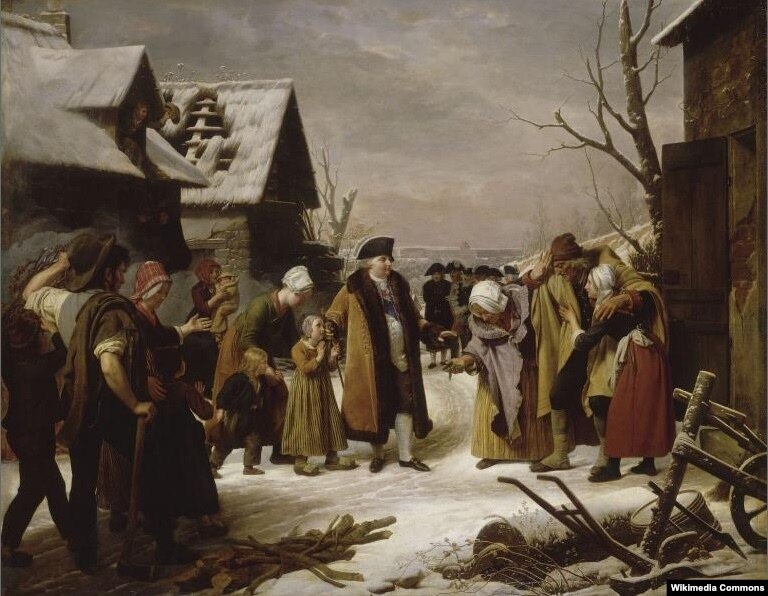
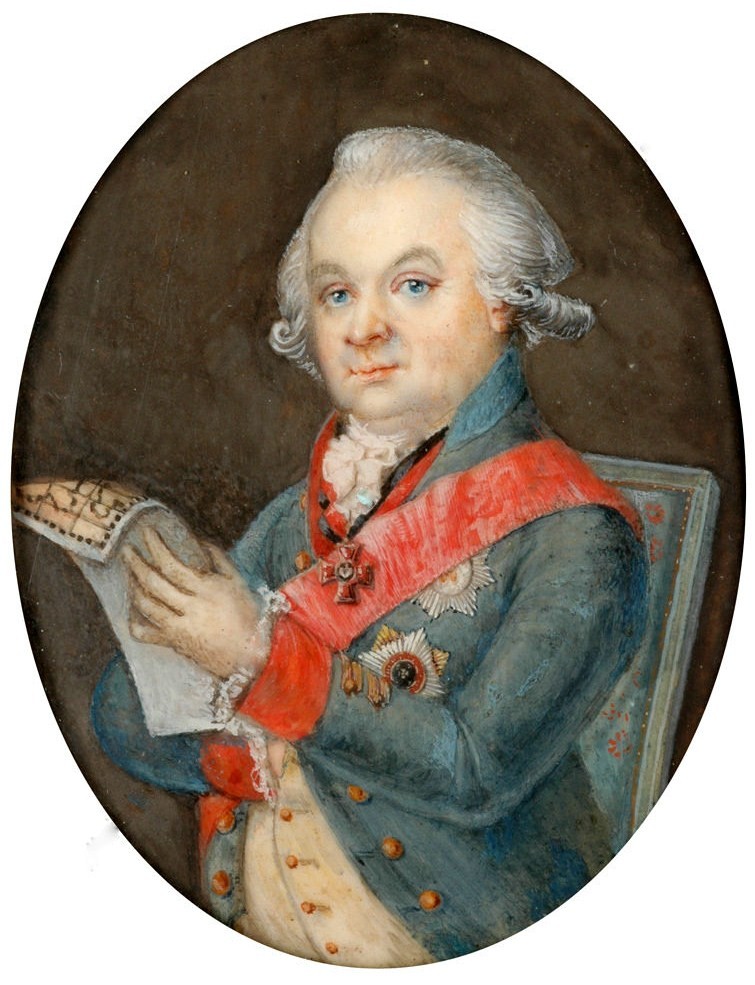
"Louis XVI, who gives alms to the peasants of Versailles in the winter of 1788." Artist Louis Ersan. 1817
In the discussion of Russia's intervention in the American electoral process, the name of the “citizen of the wife” - the ambassador of revolutionary France to the United States - as an example of similar unacceptable actions was repeatedly mentioned. He really, in violation of all the norms of diplomatic etiquette, was engaged in frank propaganda, tried to drag America into the war with England, quarreled the members of the President of Washington, and almost made the American Maidan. In the end, Washington was forced to demand his replacement. But before being in America, his wife served in St. Petersburg, he turned the guards officers to his revolutionary faith and was declared an unwanted face. A bright but forgotten figure.
Edmond Charles Zhenya was of minor and made a career thanks to his own abilities and family ties. He was the ninth and last child of an official of the Ministry of Foreign Affairs Edm Jacques Zhenya. Sr. wife held the post of head of the translation bureau, but his functions went far beyond this framework. He carefully monitored the events in the North American colonies and was considered a specialist on this issue. His awareness was very appreciated by Minister Etienne Francois de Shuazel, who pursued anti -English policy. With the replacing Shuazel Vergenna, his wife's position was further strengthened-he became the closest adviser to the Minister of Minister.
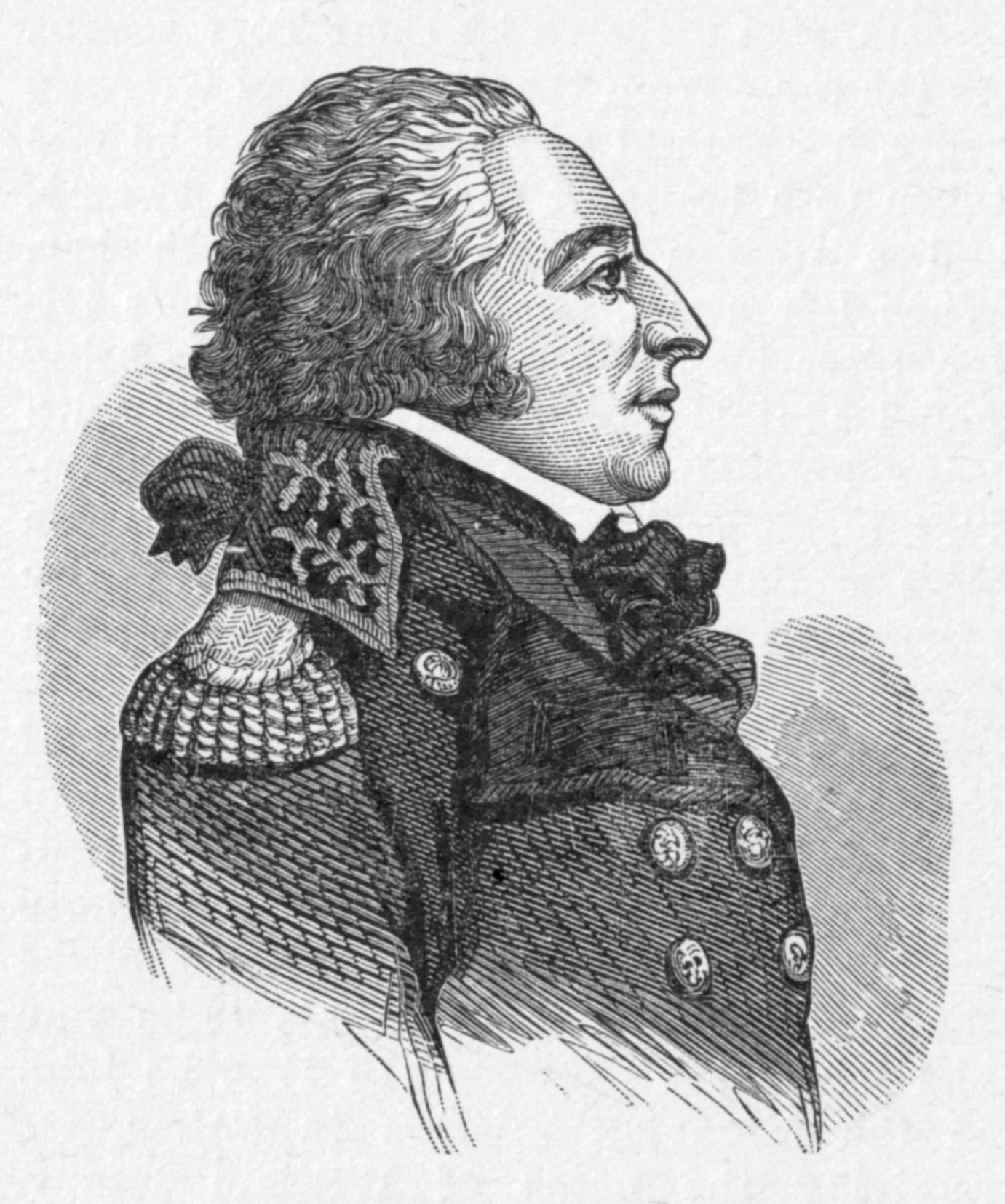
Edmond Charles Zhenya (1763-1834). Harper's Encyclopædia of United States History. 1905
Edmond grew up in an atmosphere of adoration and admiration. He was a damn about his family and from the diapers used to the thought of his exclusivity. However, his father took up his education and education early. French historian Claude Muazi writes about this:
The mother considered by the mother as the gift of the Sun, Edmond was during the first years of his life the object of the unceasing attention of his older sisters and all home ones. All his whims forgave him. He would be incorrigibly spoiled if his father personally had not undertook to form his character and mind.
Edmond's education received brilliant. At the age of 12, he fluently read and explained in five languages, not counting the ancients, engaged in natural sciences, music and singing, took the lessons of fencing, dancing, riding. Meanwhile, one of his sisters, known in history as Madame Campan, served at the Versailles court: she was a reverement of the daughters of Louis XV, and under Louis XVI became the first punisher of Maria Antoinette. In the person of Queen, Edmond acquired his benefactor. Thanks to her, young polyglot - 14 years old - was appointed an oral translator to the brother of King Count Provensky. It was Sinekura, but thanks to her, Edmond got access to the princes and began to accompany his father on his trips to the European capitals.
In 1778, fifteen -year -old Edmond was introduced to Voltaire. The 84-year-old elder returned from exile. A young official of a foreign board Denis Fonvizin, who was then in France, reported this event:
The arrival of the Volter to Paris has exactly such an action in the people, as it were, the descent of some deity on Earth. The reverence provided to him does not differ from adoration. I am sure that if deep old age and weaknesses did not aggravate him and he would like to preach now a new sect, then all the people turned to him.
A pilgrimage began to the famous sage. Voltaire's blessing was the last squeak of Parisian fashion. Another Parisian celebrity, Benjamin Franklin, led to Voltaire his grandson. Voltaire, losing his hand on the young man’s head, as if he said: "God and freedom." To which John Adams sarcastically remarked: "Two old actors on the stage of the theater of philosophy and frivolity."
"Voltaire blesses the grandson of Franklin in the name of God and freedom." Artist Pedru America (Brazil). 1889-1890
By the time Edmond to his wife appeared before Voltaire, the elder could no longer speak, but, according to his wife himself, signs made it clear that he would consider the translation of the history of the reign of the Swedish Eric XIV as an “interesting historical document”.
The formation of a young man of that era was considered incomplete if he did not take a large foreign trip, moreover, independent. Edmond Charles Zhenya went on a trip in 1780, at the age of 17, with a pack of letters of recommendation and in the uniform of the dragoon. This tour turned his head. He is warmly accepted by the French ambassadors. He seems to be monarchs. Ladies are crazy about the young handsome man.
But in September 1781, his wife suffered a blow to his wife: unexpectedly died the Sr. wife, and 18-year-old Edmond became the head of the family. The family had two houses, a good departure and the staff of the servants, but the father left Edmone 100 thousand livres of debt and no reliable position. Already on the day of his father’s death, he wrote to the Minister Verzhenna:
Overwhelmed by the deepest and most sincere sorrow, let me, Monsieur, to outline the cruel situation of the mother, who, with the death of her husband, has lost its existence sources, and the unfortunate position of the son, who cannot expect another fate than that he appeals to your kindness.
Vergenn reported on official zeal and unusual abilities to his wife Jr., and Edmond took his father's place. Like his father, he was very interested in American affairs. He accompanied John Adams during his visit to the court. He was instructed to draw up a daily report on events in North America on the basis of messages of the European and American press. He was on the tip of the then diplomatic anger of the day - negotiations about the world in which Madrid and Hague participated in addition to London, Philadelphia and Paris and which ended with the signing in Versailles in September 1783 of the Parisian world, meaning the recognition of the independence of the United States.
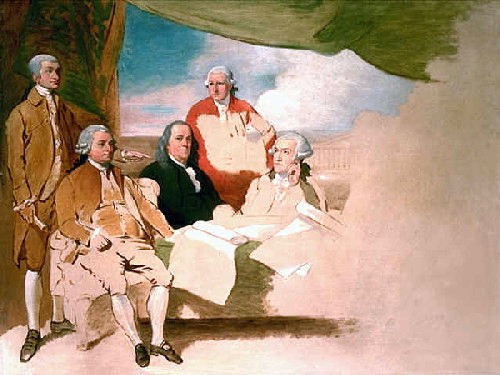
"American delegates to sign a preliminary peace agreement with England." The unfinished canvas of Benjamin West. 1783-1784. From left to right: John Day, John Adams, Benjamin Franklin, Henry Lawrence and the secretary of the mission, William Temple Franklin, is the same grandson of Franklin, who blessed Voltaire.
But in February 1787, Fortune turned away from his wife: his patron of Vergenn died. The new minister of Count de Montmoren America was not interested in. Wife found himself in the backyard of the ministry. And six months after the death of Vergenna, he received a notification that his position was being reduced. Madame Campan in his memoirs claims that his brother's career collapse was the result of intrigues of the Anglofil Party in the Ministry.
Edmond was desperate. He was assigned a temporary salary, and then only out of particular mercy. Meanwhile, all paternal debts have not yet been paid. The family began to sell the situation. The loving sister Madame Campan managed to exhaust for her brother through the queen the place of the secretary of Count de Segur, the ambassador of France in St. Petersburg.
At the end of 1787, Edmond Charles Zhenya went to the country completely unknown to him.
I liked the young assistant. He wrote about him:
His appearance, his manners and the ability to conduct a conversation completely meet the commendable reviews that gave me the faces of him whose letters he brought.
Louis Filip de Segur 24-year-old volunteer participated on the side of the North American colonies in the war for independence, was not alien to the ideas of enlightenment and freedom. However, he was also a secular man and managed, despite the policy of Paris, which was not uniform in relation to Russia, to establish excellent relations with the empress.
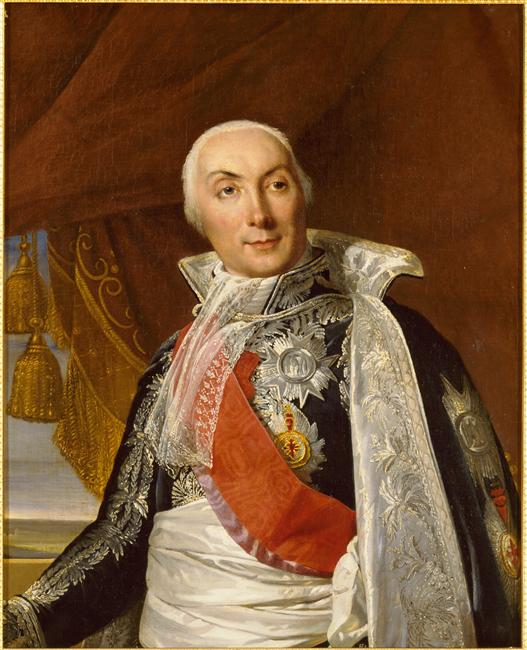
Count Louis-Filipp de Segur. Unknown artist
Segur entered the close circle of Catherine, chatted with her easily on the "small Hermitages", as the evenings of this narrow circle were called, amused her and, among the few other diplomats, accompanied her on a trip to the Crimea. Catherine wrote a Grimm about him:
I am not surprised by the reputation of G. de Segur, a young and brilliant intermediary, who was able to find the Versailles cabinet-apparently, it was acquired by justice, and probably it is the best of all that we have from your places. It is difficult to be more amiable and have more intelligence. He seems to like us: he is cheerful like a finch. He writes for us poems and songs.
But gradually the empress cooled to him. The reason was that from the perlustrated Correspondence of Segur, it revealed that his courtesy lies deep contempt for Russian despotism. In the notes of the office secretary of Ekaterina Khrapovitsky there is a note of August 3, 1789. The Sovereign read the opened letter of Segur to the Marquis de Lafayet, in which he congratulates the addressee on the capture of the Bastille, and is indignant :
Can a royal minister write like that? .. He congratulates him on a happy revolution, which was made by the inept of some ministers, the severity of taxes and the irritated pride of parliaments.
The count, for his part, was eager to return to Paris to see everything with his own eyes and take a personal part in the events. He asked for a vacation for several months. The farewell audience of the Empress was cold-formal.
Edmond Charles Zhenya remained in St. Petersburg to the attorney in France’s affairs until the appointment of a new ambassador. But the marquise d'Osmon appointed to this post was in no hurry to arrive at the service station, and his wife remained the head of the diplomatic mission for three years.
He had great and formidable events in his homeland, and the young diplomat was forced to follow them in the press and the stories of visitors. He adored the king and especially the queen, but gradually his eyes evolved. At first, he perceives the revolution negatively. “Very reasonable measures are being taken,” he reported to Montmoren about the situation in the Russian capital, “so that the information about the unrest that is so depressed by France and causes painful convulsions from it.” “We showed Europe a sad picture of all the disasters that the anarchy entails,” he wrote in a letter in January 1790. However, a year later, he sent to Paris the text of the oath for loyalty to the new regime.
After the unsuccessful flight and arrest of the royal family, his wife was in a difficult situation. “Despite the fact that I am extremely caution, my situation becomes more and sadder every day,” he reports to the Minister in July 1791. Three days later, he sends a new report:
Freedom terrifies the despots of Europe; They would like to connect to destroy it, but the peoples who use it are closely connected and repulse this aspirations. For a long time I could not learn the directions of the new Constitution. The investigations of the revolution frightened me, but now I am quite committed to the system that the people chose.
So Edmond Zhenya turned into a constitutional monarchist.
Mormorene was annoyed by his reasoning to his wife. He pointed to him: "I ask you not to talk about our revolution neither good nor bad."
The mood of the attorney was not a secret for the empress. Although he used a very complex cipher in his correspondence, this cipher managed to hack. But this merit does not belong to the head of the encryption service of the Empire, the natural scientist and mathematics of the French Espinus. The key to secret acquired the Russian ambassador to Paris Ivan Simolin.
Ivan Simolin (1720-1799). Artist Ferdinand de Mays. 1790
In June 1790, he informed Vice Chancellor Count Osterman:
An unexpected and extreme need forced one official of the Foreign Department of Foreign Affairs to offer me through G. Mashkov (Secretary of the Embassy. - V.A.) his services and to attest to the complete devotion to our court. I considered useful and even absolutely necessary in the interests of the empress not to miss such a favorable case for us to enlist a reliable source of information. The above official began by delivering me a cipher used by G. wife when his correspondence with Count de Montmoren, and the cipher of the latter for correspondence with the aforementioned attorney in business - these ciphers are completely different.
So Catherine began to read all the correspondence to her wife, as well as to receive through Simolin from his agent the content of reports sent by the attorney with the opportunity or eliminated the per lustration in a different way. These reports testified to the activity unacceptable for the diplomat. In October 1791, Simolin informed Osterman:
Mr. Wife in his penultimate letter reported the extreme difficulty in spreading the ideas of their holy revolution in Russia, but that he nevertheless had already managed to seduce many guard officers.
In December of the same year, the news came from Paris even more alarming: as if his wife "created a party of friends of mankind in St. Petersburg and that he found here a significant number of sufficiently firm people who could stop the empress in her plans" (that is, the plans of the joint armed intervention of the European powers in order to suppress the revolution).
Almost certainly his wife in the dispatches exaggerated his successes in the propaganda of the revolution. Nevertheless, it remained that Russian society perceived events in France with burning interest, and sometimes with sympathy.
Knowing the image of his wife’s thoughts and the oath signed by him, the empress announced that since Louis XVI is not free, she could not deal with his attorney. His wife was in isolation. He was not invited to the court and refused to accept in a foreign board. He was not expelled from the empire only because Catherine needed her ambassador to Paris to observe the development of events. When Simolin reported that the wife was sent to the wife of new trendy letters, Catherine ordered: "But the wife would be accredited again, then just declare that nothing would be accepted from him."
My behavior will prove that you can love freedom and adore the king
In such an ambiguous position, his wife remained almost 11 months. The sister wrote to him about the upcoming democratization of the diplomatic corps, and his wife hoped for a quick increase in service and at the same time demonstrated his commitment to a new system in every possible way. In particular, he made major donations for the maintenance of the national guard, and when Madame Campan made him a remark that his zeal was excessively, answered her:
I am a patriot not by calculation, but in good conscience, as always. I love freedom, I hate violence, and the rules of my behavior are based on a civil oath. I am faithful to the last sigh of the law, nation and the king.
In another letter to his sister, he asks:
Tell the queen about my feelings and tell her that I will shed my blood to protect her with the same readiness as to protect the constitution.
And finally, in the third:
My behavior will prove that you can love freedom and adore the king.
On the fields of one of such messages, Catherine personally deigned to draw:
Yes, this is crazy in the full sense of the word.
Some researchers believe that Catherine used his wife to misinform the French government through authorized leaks and, not without pleasure, read information from “reliable sources” in his reports. On the other hand, it cannot be denied that despite the strictest order of the empress, sources, and in very high areas, the wife had. It is necessary that Catherine did not give pleasure to the passages from the display of his wife, who are related to her personally - not as a monarch, but as a woman: "Catherine II is noticeably lowered; she sees it, and she takes possession of melancholy ...", "The state of health of the empress is inspired by fears ..." The family secrets of the Russian autocrats did not take refuge - her dislike of this and the character of this and the nature of this The son (at the Gatchina court there were ladies who maintained a short relationship with his wife until the Grand Duke Pavel Petrovich forbade this to his retinue):
The Grand Duke in everything goes in the footsteps of his unfortunate father, and if the heart of the Grand Duchess is not the temple of all virtues, then he will once experience the same fate as Peter III, and he expects this, tells it to her ... He is gloomy, grunting, does not trust anyone. The courtiers hate him, the military is moaning under his command from his petty severity. The guard does not love him, and, as soon as he enters the throne, innumerable revolutionary movements will undoubtedly put an end to the brilliant period of the reign of Catherine.
But the grandchildren of Catherine Alexander and Konstantin Pavlovichs inspire his wife with sympathy and interest. Here, for example, a message from June 1792:
Persons assigned to the upbringing of young great princes, absorbed, like the whole courtyard, the idea, that the empress hates our constitution, carefully avoided talking about her to their august pupils and even refused to satisfy their curiosity about the situation of France. But what was their amazement when they heard a few days ago that in. K. Alexander started a discussion about human rights and other provisions of our social contract. One was asked from the other who could explain all this so well to the Grand Duke, everyone swore that he did not concern these issues, and finally decided to ask him to reveal this secret. Alexander kindly satisfied their curiosity and, with all the innocence of his age, informed them that this grandmother told them about the French constitution on all its points, explained the reasons for the revolution of 1789, but recommended that they capture all this in her heart and not tell anyone.
Учитывая "дней Александровых прекрасное начало", под которым Пушкин разумел увлечение молодого царя либеральными идеями, рассказ вполне правдоподобен.
Есть данные, что и Жене, а до него Сегюр пользовались услугами и тайных информаторов. На копии одной из депеш французского поверенного в делах, в которой тот сообщал, что Екатерина ответила резким отказом на предложение изгнать из России всех французов, императрица написала: "Наверное, Жене имеет какого-то осведомителя в моей комнате, мне кажется, я догадываюсь, кто это".
Храповицкий в своих записках сообщает:
Дан секретный указ Шешковскому и мне, чтоб, взяв коллегии иностранных дел надворного советника Вальца, допросить в сношениях его с иностранными министрами и не знает ли он того же за другими? Ибо от Симолина получена из Парижа выписка о расходах по иностранному департаменту, в коей показано на него в 1787 г. 60 т. ливров, да в трех последующих годах по 6 т. в каждый.
Степан Шешковский – обер-секретарь Тайной канцелярии, которому поручалось расследование важнейших дел о государственных преступлениях: Пугачева, Радищева, Новикова. Он снискал позорную известность и не был принят в высшем российском обществе.
В своем указе Екатерина строго предупреждала о неразглашении обстоятельств дела:
Допрос его нам представьте, произведя дело сие с крайнею и непроницаемою тайной, да отнюдь не забирая и не требуя ни оговоренных, ниже каких-либо от кого бы то ни было справок без точного нам доклада и нашего повеления.
Из перлюстрированного донесения прусского посла в Петербурге Гольца было известно, что чиновник Иностранной коллегии Иван Вальц сотрудничает и с этим посольством. Вальца арестовали. На допросе он клялся "ужасными клятвами" в невиновности: секретарь прусского посольства пытался подкупить его, но тщетно, французская же ведомость о выплате ему гонораров – "сущая неправда". Дело продолжения не получило: Екатерина повелела в административном порядке выслать его в собственное имение в Пензу под надзор местных властей.
Имена двух своих агентов Жене выдал сам в шифрованном донесении, не зная, что шифр взломан. Летом 1792 года, когда по Европе пронесся слух, что Россия направляет к берегам Франции военную эскадру для высадки десанта в Нормандии, поверенный докладывал в Париж, что на каждом русском корабле будет его осведомитель, руководить же этой агентурой будут двое:
Это два молодых морских офицера, один голландец, другой француз по происхождению, рожденный в Англии по безрассудству Людовика XIV, но опять сделавшийся французом, благодаря мудрости наших новых законов и отеческой доброте Людовика XVI. Имя первого Луск, а второго Шатонёф. Не из выгоды они будут нам служить, а из ненависти к деспотизму, любви к свободе и в надежде попасть в наш флот. Оба с отличием служили России, имеют почетные дипломы, уважаемы товарищами и начальниками.
Шатонеф был адъютантом вице-президента Адмиралтейств-коллегии графа Чернышева и действительно имел доступ к государственным тайнам.
Я имею основания подозревать, что мои письма задерживаются или перехватываются
В депешах Жене то и дело встречаются ссылки на "надежные, но совершенно секретные" и "очень верные" источники. Его осведомленность о настроениях императрицы, ее планах и последних новостях при дворе была действительно необыкновенной, хотя часто он становился жертвой преднамеренной дезинформации. К концу своего пребывания в России Жене начал догадываться, что его переписка перлюстрируется:
Я имею основания подозревать, что мои письма задерживаются или перехватываются.
Таким образом, "война утечек" велась обеими сторонами с той лишь разницей, что Екатерину живо интересовали донесения Жене, а министра Монморена и сменившего его Лессара – ни в малейшей степени.
Когда Жене впал в немилость у Екатерины, многие его знакомые почли за долг порядочного человека не прерывать знакомства с ним. "При дворе, – сообщал Жене в одном из писем, – есть смелые люди, которые открыто защищают меня; особенно в гвардии у меня много друзей, молодежь вся за меня". Подобные утверждения в его переписке встречаются не раз.
В феврале 1792 года Екатерина решила отозвать из Парижа посла Симолина. Война европейских монархий с революционной Францией стремительно приближалась. Однако в марте, с разницей в 15 дней, сначала скоропостижно скончался австрийский император, брат Марии-Антуанетты Леопольд II, затем был убит заговорщиками король Швеции Густав III. По Европе пронесся слух, что обе смерти – дело рук "французских демагогов" и что на очереди Екатерина.
Густав III и Екатерина II в 1783 году. Миниатюра Корнелиуса Хойера
В донесении из Берлина сообщалось и имя французского агента, замышляющего убить русскую самодержицу, – Бассевиль. Екатерина приняла эти сведения как нельзя более всерьез. Пограничной страже было приказано смотреть в оба. В Петербурге прошли допросы и обыски французов. Здание французского посольства было, по словам Жене, "окружено сыщиками". "Агенты, – писал он, – распускают по всему городу и особенно среди народа слухи, что друзья конституции, объединясь с якобинцами... намереваются отравить императрицу". Говорили, что злоумышленники скрываются в посольстве.
Но Бассевиль как в воду канул. Посольство осталось неприкосновенным. В июне того же 1792 года Жене получил высочайшее предписание покинуть пределы империи в восьмидневный срок, что он с величайшим облегчением и исполнил.
В своих записках граф де Сегюр напишет об Эдмоне Жене:
At the request of the queen, they gave me a young man who used her protection, Mr. Zhenya, brother of Ms. Campan. He was smart, educated, knew several languages and was talented, but very dust. Впоследствии он был увлечен революцией и назначен партией жирондистов посланником в Американские штаты...
Именно о его пребывании в США мы и собираемся рассказать во второй части.
***
В работе над этим очерком использованы, помимо указанных в тексте, следующие публикации и работы историков:
Французская революция 1789 г. в донесениях русского посла в Париже И. М. Симолина / Вступительная статья "Царизм и французская буржуазная революция 1789 г. по донесениям И. М. Симолина" и общая редакция Н. Лукина. Публикация, архивная справка и перевод текстов Е. Александровой. "Литературное наследство", т. 29/30. М., 1937
Богоявленский С. Россия и Франция в 1789-1792 гг.: По материалам перлюстрации донесений французского поверенного в делах в России Эдмона Жене. "Литературное наследство", т. 33/34. М., 1939
Штранге М. М. Русское общество и французская революция 1789-1794 гг. M., 1956
Гладышев А. В. Юность дипломата: Э. Ш. Жене. Журнал Саратовского ГУ "История и историческая память", № 1, 2910
170 лет назад, 16 октября 1846 года, в Бостоне, штат Массачусетс, была проведена первая в истории хирургическая операция под наркозом.
Kipling has a poem "Anthem of Physical Pain" that makes you forget about mental agony:
When, oblivion mother, Берешься Ты за гуж, Heavy oppression to remove Ты можешь с наших душ...
Having tasted your services Познаешь благодать: You are a pack of hellish torment Able to curb!
(Translation of Evgeny Feldman)
But for Robert Burns, who wrote the "Ode of toothache", this pain was comparable to hellish torment:
And I'm sure that in hell Where in the highest trial Я непременно попаду (В том нет сомнений!), Ты будешь первою в ряду Моих мучений.
(Translation by Samuel Marshak)
Если правда то, что Владимир Маяковский написал поэму "Флейта-позвоночник" в ночь, когда у него болели зубы, весь ее пафос предстает в ином ракурсе:
If the truth is that you are God, My God, если звезд ковер тобою выткан, If this pain, Multiple daily, тобой ниспослана, господи, пытка, судейскую цепь надень. Жди моего визита. I'm neat не замедлю ни на день. Listen, Almighty Inquisitor!
The International Dentist Day is celebrated on February 9, on the day of the death of the Great Martyr Apollonia of Alexandria, who, as reports in their "History of the Church," Eusebius Caesarean, pagans "beat the jaws, knocked out all their teeth; they arranged a fire outside the city and threatened to burn it alive, if she did not utter her blasphemous apologies. Apollo, and he was slightly reflected, reflected slightly to the side, jumped from the run into the fire and burned down. "
And not without reason, Count Tolstoy, who knows how to give his heroes according to his merits, makes the Count of Vronsky, who showed us “strong continuous teeth”, to suffer in the final tooth pain, from which one salvation is to die in the war with the Turks.
– Я рад тому, что есть за что отдать мою жизнь, которая мне не то что не нужна, но постыла. Someone will come in handy. - And he made an impatient movement of a whining from the non -permanent, aching pain of the tooth, which prevented him from even talking with the expression with which he wanted.
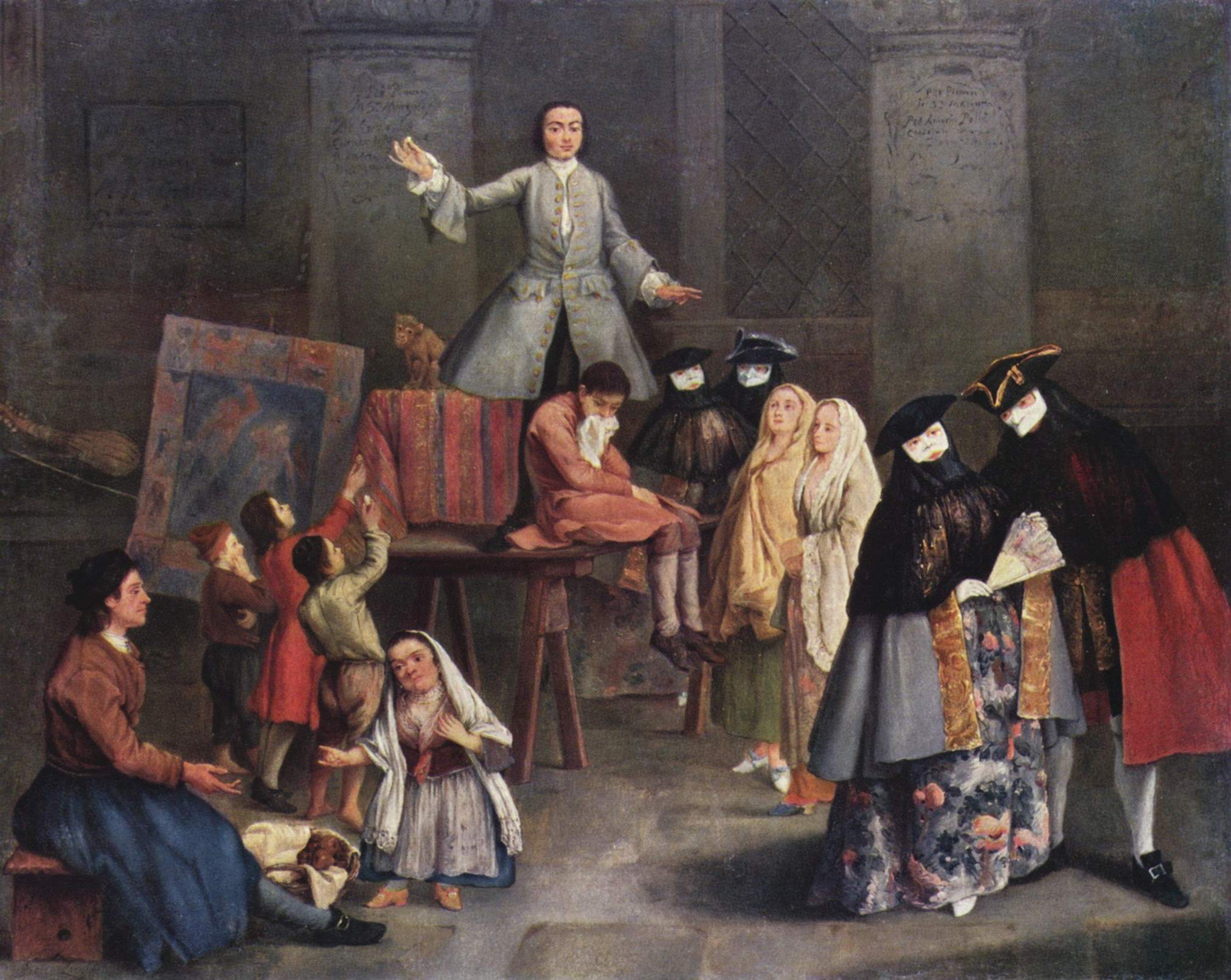
Пьетро Лонги. Dentist. The second half of the 18th century
"Избавление от боли при хирургических операциях – это химера. Нелепо пытаться избежать ее. Нож и боль неотделимы в сознании пациента. Мы должны приучить себя к этому принудительному сочетанию". Так сказал в 1839 году знаменитый французский хирург Альфред Арман Луи Мари Вельпо. Но в январе 1847 года он делал в парижской Академии доклад об эфирном наркозе. Между этими двумя датами разыгралась бурная драма великого открытия.
Maybe there is nothing surprising in the fact that the dentists invented anesthesia, who at that time did not have the right to be called doctors. Дилетанты нередко совершают открытия.
До изобретения анестезии средством притупления боли в медицине был месмеризм. В популярной литературе Франц Антон Месмер изображается как шарлатан. He deserved this title quite. His doctrine of animal magnetism turned out to be pseudoscience, the surroundings of his healing sessions were a performance. However, he laid the foundation for scientific hypnotism and psychotherapy. And this is rather a rule in the history of science: there was a time when astronomy and astrology, chemistry and alchemy were one science.
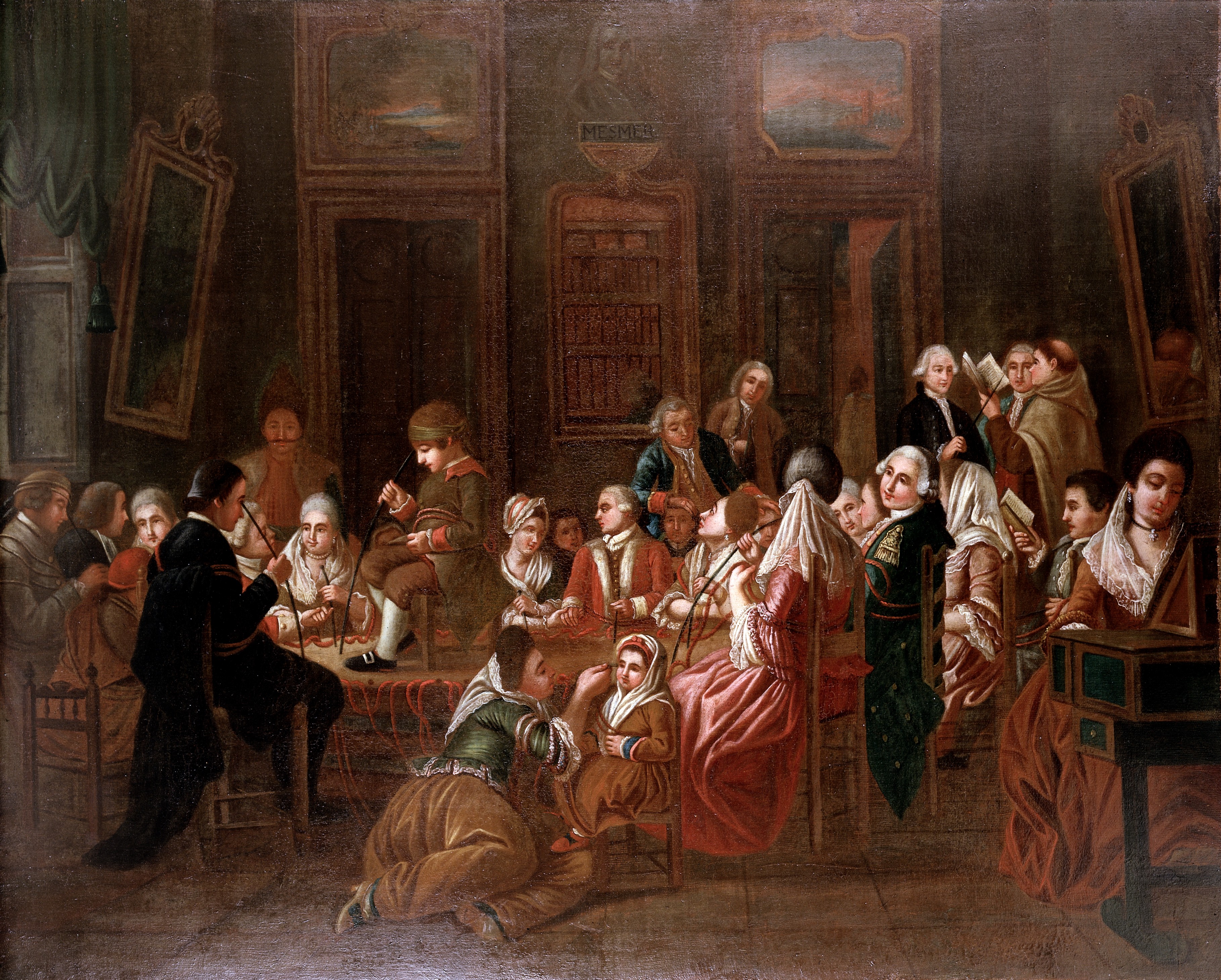
Человек с высшим медицинским образованием (он получил его в Вене, его диплом подписал лейб-медик императрицы Марии Терезии Герард ван Свитен), Месмер увлекся изучением воздействия на организм магнитов. In order to strengthen the weak magnetic field of the metal and increase the throughput of his office, the healer built a device called Baquet ("ears" or "loohan"). It was a container filled with water, which was previously charged with his magnetism by Mesmer himself. Собственно, лохань Месмера представляла собой гигантскую Лейденскую банку – электрический конденсатор с выходящими из него металлическими стержнями. Patients applied the ends of the rods to sore spots. At the same time, the healer acted on them with his gaze, the passes of the hands and the entire atmosphere of the room, which included the unearthly sounds of glass harmonics.
Fragment from the film by Roger Spottiswood "Mesmer" (1994). In the role of Mesmer - Alan Rickman.
Месмер покровительствовал юному Моцарту. In gratitude, the maestro inserted the scene of magnetotherapy into his opera "All women do this." True, the comedy scene - Mozart, apparently, did not believe in Mesmerism.
Воображение без магнетизма может вызвать судороги, а магнетизм без воображения ничего не в состоянии вызвать
Постепенно Месмер понял, что на пациентов воздействует не столько магнитное поле, сколько его собственная сила внушения. But he, of course, could no longer abandon his theory and his entourage. В 1784 году Людовик XVI назначил комиссию для исследования месмеризма. В комиссию вошли химик Антуан Лавуазье, астроном Жан Сильвен Байи, ботаник Антуан Лоран де Жюссье, четыре врача, в том числе Жозеф Игнас Гильотен, и Бенджамен Франклин – американский посол в Париже, естествоиспытатель и изобретатель громоотвода. По странному стечению обстоятельств, Лавуазье и Байи впоследствии были обезглавлены аппаратом, изобретенным Гильотеном, да и сам доктор едва ускользнул от ножа машины своего имени.
Вердикт комиссии гласил, что "воображение без магнетизма может вызвать судороги, а магнетизм без воображения ничего не в состоянии вызвать", а посему необыкновенный эффект сеансов Месмера "должно объяснить прикосновениями, воображением и тем автоматическим рефлексом, который побуждает нас против воли переживать явления, действующие на наши чувства".
Magnetism was debunk, but hypnotism remained. Ученик Месмера Арман-Мари-Жак де Шансанэ, маркиз де Пюисегюр научился вводить людей в гипнотический транс. Врачи, называвшие себя месмеристами, применяли гипноз в своей практике, в том числе хирургической. В литературе описаны операции, проведенные под гипнозом, – это главным образом удаление опухолей, различные ампутации и, конечно, удаление зубов. According to the descriptions, these operations took place painlessly.
One of these doctors became the hero of the novel by Alexander Dumas "The Mysterious Doctor":
The doctor ... smiled and, approaching the patient, looked intently into his eyes, extended his hand over him and ordered him to fall asleep.
Трое врачей с усмешкой переглянулись; They, living far from Paris, reached them, vague rumors about Mesterism, but they never saw him in action. К их немалому удивлению, больной тотчас повиновался приказу и крепко заснул. Доктор взял его за руку и спросил мягким, но властным голосом: "Вы спите?" Убедившись, что больной в самом деле спит, он тотчас достал инструменты и так же невозмутимо, как если бы имел дело с трупом, принялся за операцию. The doctor promised that she would take ten minutes: as if nine minutes later, her leg was amputated and taken away from the room, the bloodied sheet was replaced by clean, the patient was shifted to another bed, the wound was tied; Moreover, to the great amazement of three doctors, a sick, waking up on the orders of the doctor, smiled.
(Translation of Vera Milchina)
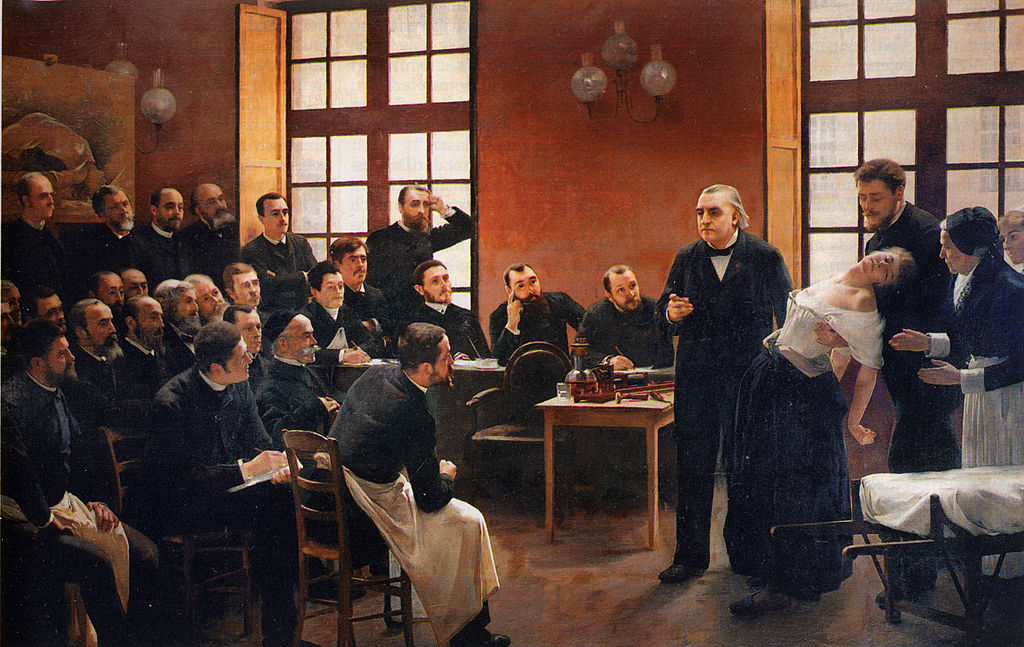
Антуаном Бруйе. Clinical lesson in the Salpetrier hospital. 1887
Впоследствии психиатр Жан-Мартен Шарко практиковал гипноз для лечения своих пациентов.
But not all doctors have hypnotic abilities. У зубного врача Уильяма Мортона их определенно не было. In poverty of his parents, he did not receive a real medical education. The dentist in those days was just a dental hairdresser or a callous operator. When your teeth hurt, you will go to the dental. Morton graduated from the College of Tooth Surgery in Baltimore and, wanting to improve in his craft and gain practical experience, met already practicing a self-taught dentist Horace Wells. Они открыли на паях зубоврачебный кабинет в Бостоне, но дело пошло не шибко, и спустя год, в ноябре 1843-го, партнеры расстались.
Experiencing a panic fear of the instrumentation of the dentist, few dared to not tear out sick teeth at all, but to treat them
Morton continued to improve. He received a full -fledged higher medical education at Harvard. Главным, что его волновало в профессиональном отношении, были невыразимые мучения пациентов. Никакие рекламные ухищрения не могли заставить публику забыть душераздирающие ассоциации, связанные со словом "дантист". Испытывая панический страх перед инструментарием зубного врача, мало кто вообще отваживался не вырывать больные зубы, а лечить их. They went to the dentist’s office as in a torture chamber. But it is precisely regular treatment, and not emergency removal, can provide the doctor with constant practice. Morton perfectly understood that the only way to achieve this is to dull the pain during dental operation. Он неустанно экспериментировал с различными химикалиями на себе самом, домашних животных, добровольцах.
Тем временем Хорас Уэллс, переселившись в Хартфорд, штат Коннектикут, занимался аналогичными поисками. In December 1844, he had a chance to attend the view of the "professor" of Kolton. Гарднер Квинси Колтон был на самом деле недоучившимся студентом-медиком, разъезжающим по стране с лекциями и демонстрацией воздействия на человека "веселящего газа" – оксида азота. Вдыхая газ, участники опытов Колтона впадали в состояние, схожее с опьянением. They came into excitement, began to unconsciously dance, wave their hands, lead a furious dispute with a non -existent opponent. Others defeated drowsiness and immunity to physical pain. In front of the venerable audience, a volunteer from the hall, a young pharmacist, breathing in a “funny gas”, gave him a leg and, judging by his behavior, did not experience any pain.
The technology was primitive. Gas was pumped into the bull bubble
Наутро после представления Уэллс явился к Колтону в гостиницу и предложил ему сотрудничество. To begin with, he offered himself as a patient: his colleague John Riggs had to remove his healthy indigenous tooth, and Colton performed the functions of an anesthetist. The operation was remarkable. Уэллс был уверен, что нашел нужное вещество. В течение следующего месяца Уэллс и Риггс удалили около дюжины зубов с обезболиванием оксидом азота. The technology was primitive. The gas was pumped into the bull bubble and from there on a wooden tube entered the patient's oral cavity. At the same time, the assistant clamped the nostril to the patient.
Having launched to use the “funny gas”, Wells decided that it was time to share his discovery with humanity. Приехав в Бостон, он рассказал о своих опытах Мортону. Вместе они отправились к солидному ученому, химику и минералогу Чарльзу Томасу Джексону, но тот, сам экспериментировавший с газовым наркозом, категорически не одобрил идею. Wells, however, did not heed the warnings.
The organizer of the public demonstration was a professor of surgery of Harvard University Henry Bigelou. Он и главный хирург Массачусетской главной больницы – основного клинического учреждения Гарвардской школы медицины – Джон Коллинз Уоррен ассистировали Уэллсу, который удалял зуб студенту-добровольцу. Триумфа, однако, не вышло. The patient shouted in pain, and medical students from indignation.
In the film of Preston, Starge "Great Moment" is reproduced by this scene. In the role of Khoras Wells - Lewis Jin Hadt.
Вернувшись в Хартфорд, Уэллс удрученно описал случившееся в интервью местной газете:
Unfortunately for experience, the gas bag was mistaken too quickly, and the patient was only partially under the influence of gas when a tooth was removed from him. Он засвидетельствовал, что испытал боль, хотя и не такую острую, как обычно при операции. За неимением других пациентов, на которых можно было бы продолжить опыт, демонстрация была закончена, и некоторые заявили, что присутствовали при надувательстве. И это вся благодарность, какую я получил за свою безвозмездную работу!
Вскоре он погрузился в сон, а когда очнулся, боль прошла
Причина провала состояла, по всей видимости, в том, что Уэллс поторопился. Он провел слишком мало операций под наркозом и не умел рассчитывать дозу и концентрацию газа в зависимости от организма и физического состояния конкретного пациента. Во всяком случае, Колтон, который во время калифорнийской золотой лихорадки ринулся искать золото, но на нашел, в 60-е годы в партнерстве с двумя дантистами организовал стоматологическую компанию и разбогател на операциях с обезболиванием оксидом азота.
Что касается Мортона, то он продолжал экспериментировать, стал заядлым месмеристом, но, как уже сказано, был лишен гипнотического дара. He tried to apply alcohol, opium for pain relief. Finally, Charles Jackson advised him an ether. Subsequently, he argued that he discovered the painful properties of the sulfur ether by pure chance. Надышавшись у себя в лаборатории парами хлора, он почувствовал себя дурно. Наутро горло все еще саднило, грудь болела. Джексон смочил в эфире полотенце, положил его себе на рот и нос и начал ингаляцию. Вскоре он погрузился в сон, а когда очнулся, боль прошла.
Morton recalled that in his student years he participated in the so -called "etheric leafracks" - parties at which students inhaled the air and fell into a state of causeless fun.
Жена Мортона Элизабет в отчаянии видит свою любимую золотую рыбку неподвижно лежащей на лабораторном столе мужа
The outstanding Soviet surgeon Sergey Yudin has an essay "Images of the past in the development of surgical pain relief." The author tells in detail the history of the discovery of Dr. Morton. Это не строго научное сочинение, а, скорее, полубеллетристика – в нем есть даже прямая речь героев. К сожалению, Юдин не ссылается на свои источники, порой грешит идеологическими штампами и допускает фактические неточности. Но некоторые эпизоды так выразительны и обаятельны, что от их пересказа невозможно удержаться. Such, for example, is a scene in which Mortona Elizabeth’s wife in despair sees his favorite goldfish lying on her husband’s laboratory table. The fish was assigned by the ether and, returning to the aquarium, came to life.
However, Morton's experiments were ambiguous. The broadcast acted differently in the same, seemingly conditions. He turned to Jackson for consultation (the relationship by this time became stretched), and he indicated the reason: you should not buy air in different pharmacies - only an anesthesia is suitable only for the air of the highest degree of cleaning, which is sold in pharmacies of Burnett & metCalf Chemical Co. Pharmacist Joseph Barnett became the only air supply for Morton's experiments.
There are various information about his profession: he is called a merchant, a musician, and a confectioner
After a new series of experiments on himself, Morton rejoiced: he found the desired concentration and duration of inhalation of the ether. On the same day, by evening, a patient with acute toothache appeared in his reception. It was Ebenezer Hopkins Frost. О его профессии существуют различные сведения: его называют и купцом, и музыкантом, и кондитером. According to the latest archival research , he was a baker and at the same time not alien to music: he was in the Boston society of Handel and Haydn, and in the necrogue he was called "a well -famous music teacher."
His face acquired a normal color. Наконец он очнулся и воскликнул: "Аллилуйя!"
Frost suffered terribly and asked to “magnetize” it before the operation (this is what the hypnotic effect on the patient of a meterist) was then called then). Morton announced to him that he had something better. He put Frost in a dentist chair, moistened his handkerchief with ether and began anesthesia. The patient lost consciousness very quickly. It was necessary to delete a "tightly sitting small root tooth."
Morton later described this event in dramatic colors - he, however, excuses him that he performed at a school for girls. По словам Мортона, сразу после операции пациент "побелел как полотно" и начал сползать с кресла на пол. Мортон увидел перед собой бездыханное тело. With trembling hands, he in despair grabbed Frost by the gate and began to shake. Фрост рухнул в кресло. His face acquired a normal color. Наконец он очнулся и воскликнул: "Аллилуйя!" “He was a good methodologist,” Morton said, “and I wanted to sing“ Hallelujah ”with him. There was no dry thread on me. I was terribly scared - I was afraid that he died.”
Эбенезер Фрост, напомним, состоял в обществе любителей Генделя, так что в восторге он вполне мог пропеть самое известное место из "Мессии". He signed the certificate of the following content:
Настоящим удостоверяю, что я обратился к доктору Мортону в 9 часов пополудни сего дня, страдая от невыносимой зубной боли. Доктор Мортон взял свой носовой платок и пропитал его приготовленным им составом, коим я дышал с полминуты, а затем уснул. Спустя мгновение я очнулся и увидел, что мой зуб валяется на полу. I have not experienced the slightest pain. After that, I stayed in his office for another 20 minutes and did not feel any unpleasant consequences of the operation.
The authenticity and truth of the certificate was certified by the assistant Morton Grenville Hayden and the Daily Journal reporter Albert tennie. Документ датирован 30 сентября 1846 года.
On the canvas of the British painter Ernest Board, who captured this event, two witnesses of the operation (left) and the assistant Morton Grenville Hayden, holding a kerosene lamp, are visible. Эта лампа вполне могла стать причиной пожара, ведь эфир – легко воспламеняющееся вещество.
В оставшееся время он провел еще несколько удачных операций, но ручаться за результат не мог
Наутро в Daily Journal появилась заметка в несколько строк, благодаря которой об операции узнали крупнейшие бостонские медицинские светила – Генри Бигелоу и Джон Коллинз Уоррен. They invited Morton to demonstrate their art in the same audience of the same Massachusetts hospital, where Horas Wells so shamefully failed. The test was scheduled at 10 a.m. on October 16.
Мортона охватило неописуемое волнение. On this day, his fate was decided. In the remaining time, he carried out several more successful operations, but he could not vouch for the result. Вместо платка он решил применить стеклянный ингалятор. Его жена рассказывает :
On the eve of the operation, my husband worked on his inhaler until one or two in the morning. Я помогала ему, не помня себя от тревоги... Мне сказали, что произойдет одно из двух: либо опыт провалится и муж станет посмешищем всего мира, либо он погубит пациента и будет отвечать за убийство. И хотя я питала беспредельную веру в своего мужа, мне казалось невероятным, что такой молодой человек (ему в то время было всего 27 лет) окажется умнее умудренных ученых мужей, перед которыми ему предстояло проделать свою демонстрацию.
Схему ингалятора с клапаном, который препятствовал выдыханию газа, начертил для Мортона известный бостонский натуралист и доктор медицины Огастас Эддисон Гулд. Вообще создается впечатление, что за Мортона переживал и помогал ему весь город.
Doctors and students who filled the amphitheater of the audience are used to the heartbreaking cries of patients during operations
At the appointed hour, Morton did not appear in the audience - until the last minute he was busy with his inhaler. Bigelou and Warren have already begun to lose patience when Morton finally appeared before them. Тотчас ему преподнесли сюрприз: пациенту, которого приготовили для демонстрации, предстояло отнюдь не удаление зуба, а операция по поводу врожденной сосудистой опухоли на шее, захватившей уже челюсть и край языка. Пациентом этим был 20-летний печатник Эдвард Джилберт Эббот. Он вдохнул газ, потерял сознания и оставался неподвижным, пока доктор Уоррен иссекал опухоль. Зрелище было необыкновенное. Врачи и студенты, заполнившие амфитеатр аудитории, привыкли к душераздирающим воплям больных во время операций. But this one took place in complete silence.
Когда пациент пришел в себя, доктор Уоррен спросил, что он чувствует. "Вроде как шея расцарапана", – молвил Эббот. Уоррен обернулся к аудитории и провозгласил: "Джентльмены, это не жульничество!"
Для Уильяма Мортона этот великий момент стал лишь началом драмы. Ряд историков медицины, и в их числе Сергей Юдин, изображают первооткрывателя наркоза алчным и беспринципным дельцом, озабоченным жаждой наживы. Существуют работы психологов, полагающих, что он был одержим нарциссизмом. Дело в том, что он попытался запатентовать свое открытие. There was nothing shameful in this. Но его приоритет стали оспаривать Чарльз Джексон и Хорас Уэллс, а потом в Джорджии объявился хирург Кроуфорд Вильямсон Лонг, заявивший, – и представивший доказательства – что он применяет эфирный наркоз с 1842 года. Jackson showed special persistence, calling Morton a falsifier and a fraudster who stole his fame.
It was necessary to identify a partially cremated body along the teeth and bones
In 1850, Morton and Jackson again fell into newspaper headlines. Они встретились на громком судебном процессе об убийстве бостонского богача Джорджа Паркмана. This was one of the first trial in the history of forensic trials, in which a judicial medical examination played a decisive role. Предстояло по зубам и костям идентифицировать частично кремированное тело. Уильям Мортон выступал экспертом защиты. He argued that according to the remaining remains it is impossible to establish the identity of the victim. Charles Jackson was a witness to the prosecution. Мортону не удалось убедить присяжных.
The defense lost the case. Обвиняемый был осужден и повешен.
In fact, Morton was not at all so greedy as they are often portrayed. Under the terms of the patent, which he never received, charitable medical institutions were given the right to use his method free of charge. В годы Гражданской войны он записался добровольцем в армию Севера и участвовал в качестве анестезиолога в тысячах операций в военно-полевых условиях. Он трижды обращался к Конгрессу с петицией о материальном вознаграждении, подкрепленной свидетельствами авторитетных медиков, добился аудиенции у президента Франклина Пирса. But his attempts remained unsuccessful: Jackson and Wells insisted that the discoverers of anesthesia were them.
В июле 1868 года, запутавшийся в долгах и изнуренный летним зноем, Уильям Мортон сидел вместе с женой в экипаже, пересекавшем нью-йоркский Центральный парк. Suddenly, he ordered the coachman to stop and rushed to the nearby pond to "refresh", but fell without reaching. A blow was enough - apparently, hemorrhage in the brain. Он скончался на больничной койке 48 лет от роду. According to another version, he was overcome by anger after he read an article on Charles Jackson as a discoverer of etheric anesthesia in the magazine.
Once in a fit of madness, he ran out into the street and doused two prostitutes with sulfuric acid
Horas Wells, having suffered a defeat with the "funny gas", went on to experiments with chloroform. За неимением добровольцев он экспериментировал на самом себе. In the end, he was drug addiction and began to lose his mind. Once, in a fit of madness, he ran out into the street and doused two prostitutes with sulfuric acid. He was detained. В тюремной камере, без наркотиков, у него наступило просветление, и он осознал свой поступок. Wells persuaded the convoy to take him home to take razor. At home, he breathed chloroform, cut off his femoral artery with a razor and bleeding. Подействовал ли наркоз при этом последнем опыте, история умалчивает.
Charles Thomas Jackson experienced both rivals. В 1847 году он был назначен руководителем проекта по геологическому исследованию бассейна озера Верхнее, где ожидалось открытие крупнейшего в мире месторождения меди, однако не оправдал ожиданий и был снят с должности. In the future, he proved himself an exemplary bitch. In addition to etheric anesthesia, he insisted that he invented the method of production of nitro -cellulose ("gun gunpowder") and telegraph and first studied the physiology of digestion. Он утверждал, что эти достижения незаслуженно приписаны швейцарскому химику Кристиану Фридриху Шёнбейну, изобретателю Сэмюэлю Морзе и физиологу Уильяму Бомонту. It all ended sadly. В 1873 году он был помещен в приют для душевнобольных, где и скончался в 1880-м.